

Recovering from knee surgery brings uncertainty for many New Hampshire patients who wonder how to manage pain effectively while rebuilding strength and mobility. Early mobilization combined with structured physical therapy creates the foundation for successful outcomes, yet knowing which steps to prioritize can feel overwhelming. This guide walks you through each recovery phase, from immediate postoperative care through long-term rehabilitation, helping you regain function safely and return to daily activities with confidence.
Table of Contents
- Prerequisites: Preparing For Your Knee Surgery Recovery
- Step 1: Early Postoperative Care And Mobilization (Days 1-7)
- Step 2: Progressive Physical Therapy And Strengthening (Weeks 2-12)
- Step 3: Pain Management Strategies Throughout Recovery
- Common Mistakes And How To Avoid Them
- Expected Recovery Outcomes And Timeline
- Safety Warnings And When To Seek Medical Help
- Learn About Advanced Knee Recovery Options At Nowak Orthopedics
- How Long Does It Take To Recover From Knee Surgery?
Key takeaways
| Point | Details |
|---|---|
| Early physical therapy within 48 hours improves outcomes | Starting rehabilitation quickly reduces hospital stays by 1-2 days and increases knee flexion significantly within six weeks. |
| Multimodal pain management reduces opioid reliance | Combining cold therapy, non-opioid medications, and prescribed analgesics can decrease opioid use by up to 40% while controlling discomfort. |
| Progressive strengthening restores function over 12 weeks | Consistent physical therapy attendance and gradual exercise progression rebuild muscle strength and improve range of motion safely. |
| Avoiding activity advancement too quickly prevents setbacks | Respecting weight-bearing restrictions and following your rehabilitation timeline reduces swelling risk and protects healing tissue. |
| Regular communication with your care team improves safety | Scheduled follow-ups and prompt reporting of concerns reduce complications and readmission rates by approximately 40%. |
Prerequisites: preparing for your knee surgery recovery
Success starts before surgery when you gather essential tools, knowledge, and support systems. Understanding your specific procedure helps you align expectations with your surgeon’s rehabilitation plan, making each recovery phase clearer.
Arrange your home environment before surgery to minimize fall risks and mobility challenges. Place frequently used items within easy reach, remove tripping hazards like loose rugs, and ensure adequate lighting throughout walking paths. Acquire mobility aids such as crutches, a walker, or a cane based on your surgeon’s recommendations.
Prepare pain management tools including prescribed medications, ice packs or cold therapy systems, and over-the-counter options approved by your care team. Keeping these supplies organized and accessible reduces stress during early recovery when discomfort peaks.
Schedule your initial physical therapy expectations sessions before undergoing surgery. Establishing this relationship early allows therapists to assess baseline function and create personalized exercise plans aligned with your knee services procedure type.
Plan follow-up appointments with your surgeon for wound checks, suture removal, and progress monitoring. Having these dates confirmed before surgery eliminates scheduling confusion during recovery.
Pro Tip: Create a recovery calendar marking physical therapy sessions, medication schedules, and follow-up appointments. Visual tracking helps you stay organized and motivated throughout the rehabilitation journey.
Step 1: early postoperative care and mobilization (days 1-7)
The first week after surgery establishes your recovery foundation through careful wound management, controlled movement, and effective pain control. Physical therapy initiated within 48 hours significantly improves outcomes by preventing stiffness and promoting circulation.
Follow these critical early care steps:
- Begin gentle range-of-motion exercises under professional guidance within 24 to 48 hours after surgery
- Apply cold therapy to the surgical site for 15 to 20 minutes every two to three hours while awake
- Elevate your leg above heart level when resting to minimize swelling and promote fluid drainage
- Follow weight-bearing restrictions precisely as instructed by your surgeon to protect healing tissue
- Monitor the incision site daily for signs of infection including increased redness, warmth, or drainage
Cold therapy application decreases swelling volume by 35% compared to recovery without consistent cooling, reducing both discomfort and inflammation during critical healing days. Regular icing sessions complement prescribed pain medications and reduce reliance on stronger analgesics.
Implement multimodal pain management combining ice, elevation, non-opioid medications like acetaminophen or ibuprofen, and prescribed opioids only as needed for breakthrough pain. This approach minimizes opioid consumption while maintaining adequate comfort levels.
Starting movement early feels counterintuitive when your knee hurts, but controlled mobilization prevents scar tissue formation and maintains joint lubrication that supports long-term function.
Incorporate stretch therapy techniques taught by your physical therapist to gently restore flexibility without stressing surgical repairs. These early movements prepare your knee for more intensive strengthening exercises in subsequent weeks.
Report any unusual symptoms to your surgical team immediately, including fever above 101 degrees Fahrenheit, sudden pain increases, or wound changes beyond expected post-surgical appearance.
Step 2: progressive physical therapy and strengthening (weeks 2-12)
Transitioning from early mobilization into structured rehabilitation requires commitment to consistent therapy attendance and gradual exercise progression. Guided stretch therapy improves knee range of motion by 10 to 15 degrees within four weeks when performed regularly.
Your rehabilitation program should include:
- Passive and active-assisted range-of-motion exercises advancing toward full knee extension and flexion
- Quadriceps strengthening through straight leg raises, quad sets, and terminal knee extensions
- Hamstring and calf exercises balancing muscle development around the joint
- Proprioception training improving balance and joint position awareness
- Functional movement patterns preparing you for daily activities and eventual return to sports or work
Quadriceps strength directly correlates with knee stability and functional recovery. Building this muscle group speeds your return to walking, stair climbing, and other weight-bearing activities by approximately 25%.
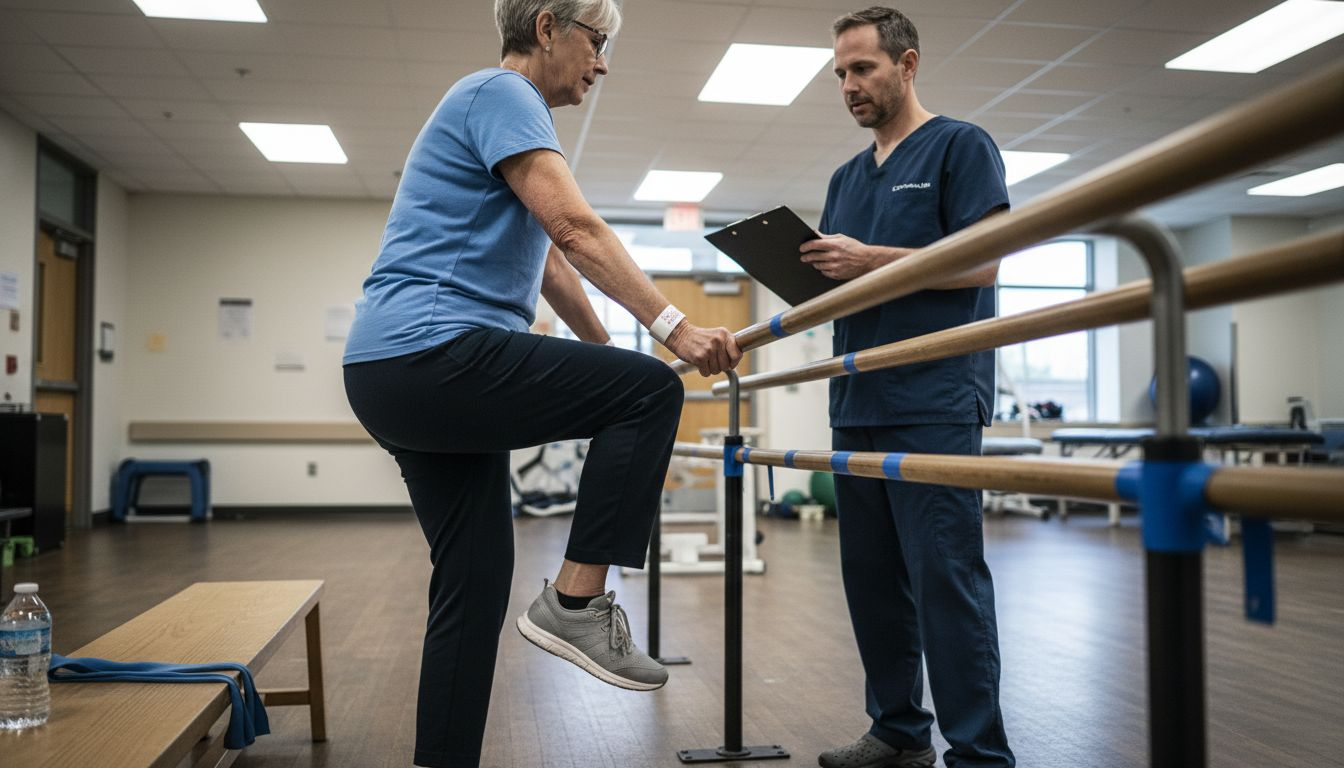
Pro Tip: Track your range of motion measurements weekly using a simple goniometer or smartphone app. Seeing measurable progress motivates continued effort during challenging rehabilitation phases.
| Recovery Phase | Typical Range of Motion | Primary Focus | Expected Milestones |
|---|---|---|---|
| Weeks 2-4 | 0-90 degrees flexion | Pain control, gentle stretching | Independent transfers, reduced swelling |
| Weeks 5-8 | 0-110 degrees flexion | Strengthening, balance training | Walking without assistive devices |
| Weeks 9-12 | 0-120+ degrees flexion | Functional exercises, endurance | Return to most daily activities |
Avoid advancing activity intensity or duration too quickly, as overexertion increases swelling and inflammation that delays progress. Respect your body’s signals and communicate discomfort levels with your therapist to adjust exercise difficulty appropriately.
Regular sessions at facilities offering comprehensive knee therapies ensure proper technique and progression oversight. Professional supervision prevents compensatory movement patterns that could create new problems while recovering from surgery.
Incorporate guided stretch therapy between formal physical therapy sessions to maintain flexibility gains and reduce muscle tension throughout your rehabilitation journey.
Step 3: pain management strategies throughout recovery
Effective pain control balances comfort with safety, allowing you to participate fully in rehabilitation while minimizing medication risks. Multimodal approaches combining multiple pain relief methods reduce opioid consumption by up to 40% compared to medication-only strategies.
Implement these evidence-based pain management techniques:
- Continue regular cold therapy application during the first four to six weeks, especially after exercise sessions
- Use prescribed non-opioid anti-inflammatory medications to control baseline discomfort and swelling
- Reserve opioid medications for severe pain episodes, tapering use as healing progresses
- Practice relaxation techniques including deep breathing and meditation to reduce pain perception
- Maintain consistent sleep schedules, as adequate rest significantly impacts pain tolerance and healing rates
Cold compress therapy remains effective beyond the immediate postoperative period. Cryotherapy benefits extend through early rehabilitation by managing exercise-induced inflammation and supporting tissue recovery between therapy sessions.
Pain that increases steadily rather than improving over time signals a problem requiring medical evaluation. Distinguish between expected post-exercise soreness and warning signs of complications.
Consider regenerative medicine options including platelet-rich plasma (PRP) injections that reduce inflammation and support tissue healing. Orthobiologic injections offered at specialized facilities provide additional healing support for patients experiencing persistent inflammation or delayed recovery.
Explore comprehensive treatments available through a dedicated regenerative clinic where advanced therapies complement traditional rehabilitation approaches. These options particularly benefit patients with underlying conditions affecting healing or those recovering from complex procedures.
Discuss pain management concerns openly with your healthcare team rather than suffering silently or self-adjusting medication dosages. Your care providers can modify pain control strategies to better match your individual response and recovery progression.
Common mistakes and how to avoid them
Recognizing frequent recovery errors helps you navigate rehabilitation more successfully while preventing setbacks that extend healing timelines. Many complications arise from well-intentioned actions taken without proper guidance.
Avoid these common pitfalls:
- Advancing weight-bearing or activity levels faster than prescribed, risking increased swelling and potential graft or repair failure
- Skipping physical therapy sessions due to pain or scheduling conflicts, losing momentum that delays functional recovery
- Ignoring weight-bearing restrictions completely or interpreting them loosely, compromising surgical repair integrity
- Discontinuing pain medication abruptly without tapering, causing rebound pain that limits movement
- Failing to communicate concerns about pain levels, swelling changes, or functional limitations to your care team
Strict adherence to weight-bearing protocols protects healing tissue during vulnerable early recovery phases. Partial weight-bearing means exactly what your surgeon specifies, not a gradual increase based on how you feel each day.
Maintain consistent communication with your surgical care team through scheduled follow-ups and prompt reporting of unexpected symptoms. Early intervention for developing complications prevents minor issues from becoming serious setbacks.
Pro Tip: Set phone reminders for medication doses, ice application sessions, and exercise routines. Consistency matters more than intensity during knee surgery recovery, and automated prompts help maintain your rehabilitation schedule.
Seek knee recovery guidance from qualified professionals rather than comparing your progress to others or following generic online advice. Individual factors including age, procedure type, and overall health significantly influence appropriate recovery pacing.
Recognize that temporary setbacks happen even with perfect adherence. A single day of increased swelling does not indicate failure, but patterns of worsening symptoms require professional evaluation and potential treatment adjustments.
Expected recovery outcomes and timeline
Understanding typical recovery milestones helps you gauge progress and maintain realistic expectations throughout rehabilitation. Individual results vary based on procedure complexity, overall health status, and rehabilitation adherence.
Research shows that 80% of partial knee replacement patients regain functional mobility allowing independent daily activities by six months post-surgery. Neuromuscular strength often improves significantly within 12 weeks when patients maintain consistent therapy attendance and home exercise completion.
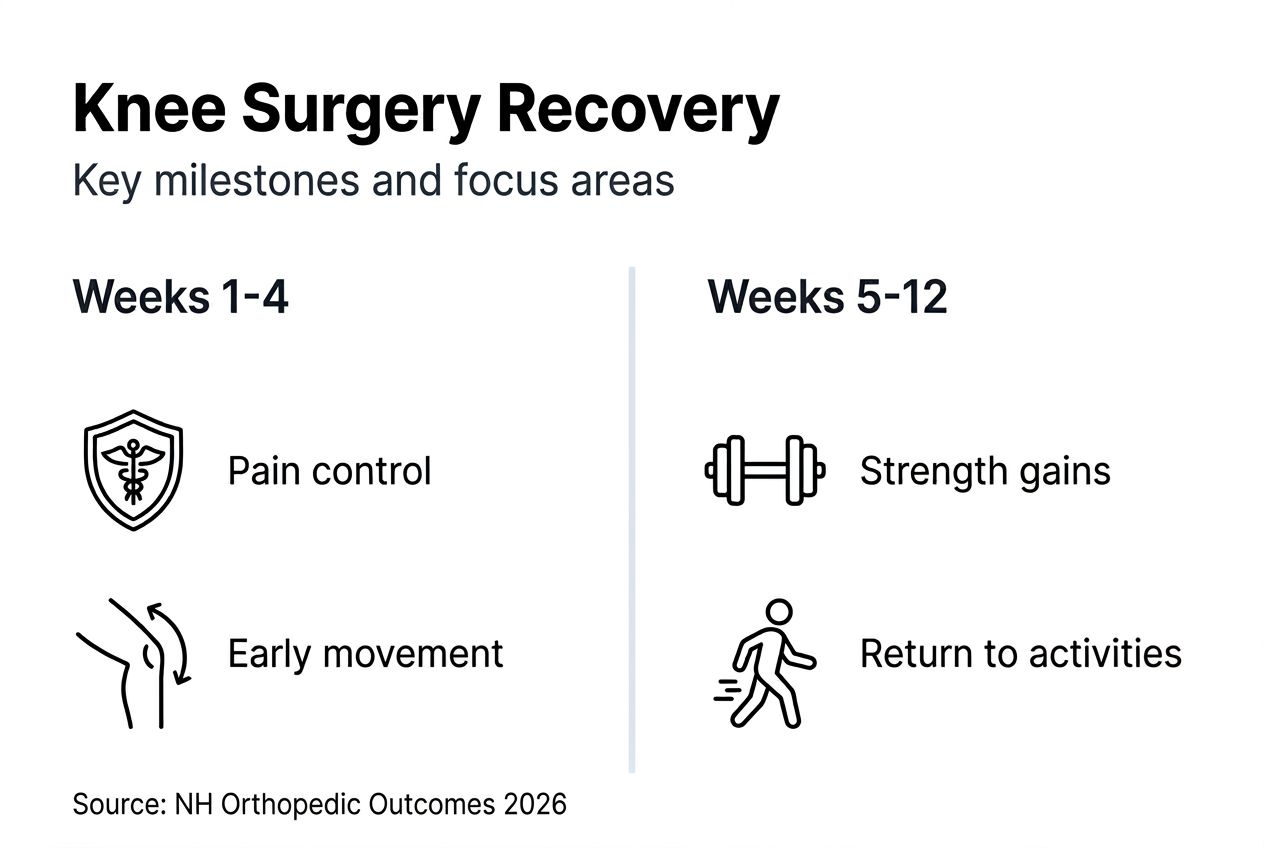
Early rehabilitation directly correlates with better outcomes. Patients beginning physical therapy within 48 hours demonstrate approximately 15 degrees improved knee flexion by six weeks compared to those delaying therapy initiation.
| Timeline | Expected Function | Rehabilitation Focus |
|---|---|---|
| 2 weeks | Limited household mobility with assistive device | Wound healing, basic range of motion |
| 6 weeks | Walking short distances, basic self-care independence | Progressive strengthening, increasing flexibility |
| 3 months | Most daily activities resumed, minimal assistive device use | Functional exercises, endurance building |
| 6 months | Return to recreational activities, full daily function | Sport-specific training if applicable, maintenance |
Regular follow-up appointments reduce complications and hospital readmission rates by approximately 40% by enabling early detection and treatment of developing problems. These visits provide opportunities to adjust rehabilitation plans based on your individual progress.
Track your knee recovery outcomes against evidence-based benchmarks while recognizing that your unique circumstances may shift specific timelines. Consistent improvement over weeks and months matters more than matching arbitrary milestone dates.
Patients who maintain realistic expectations experience less frustration and better overall satisfaction with surgical outcomes. Recovery involves gradual progress with occasional plateaus rather than steady linear improvement.
Safety warnings and when to seek medical help
Recognizing warning signs early prevents minor issues from progressing into serious complications requiring intensive intervention. Understanding which symptoms warrant immediate attention versus routine follow-up discussion protects your long-term recovery.
Contact your surgeon or seek urgent medical evaluation for:
- Increasing swelling, redness, or warmth around the surgical site beyond expected post-operative levels
- Fever above 101 degrees Fahrenheit accompanied by chills or general malaise
- Sudden sharp pain during weight-bearing or giving-way sensation in the knee
- Drainage from the incision site, especially if cloudy, foul-smelling, or increasing in volume
- Calf pain, warmth, or swelling suggesting possible blood clot formation
Report worsening pain that intensifies rather than gradually improving over the recovery timeline. While some discomfort accompanies healing, escalating pain signals potential complications requiring evaluation.
Trust your instincts about your body. If something feels wrong beyond normal post-surgical discomfort, contact your care team rather than waiting to see if symptoms resolve independently.
Keep all scheduled follow-up appointments even when recovery seems to progress smoothly. Professional assessment detects subtle issues not apparent to patients and allows timely intervention before problems escalate.
Avoid prolonged opioid use extending beyond the acute pain phase, typically two to four weeks post-surgery. Extended opioid consumption increases dependency risk and may actually delay healing by affecting immune function and tissue repair processes.
Access comprehensive sports medicine services for specialized evaluation if you experience persistent functional limitations preventing return to desired activity levels. Expert assessment identifies specific deficits requiring targeted treatment.
Act promptly when recognizing infection signs or graft instability symptoms. Early antibiotic treatment or surgical revision when necessary produces significantly better outcomes than delayed intervention after complications worsen.
Learn about advanced knee recovery options at Nowak Orthopedics
Your recovery journey benefits from specialized treatments supporting healing beyond traditional rehabilitation approaches. The regenerative clinic at Nowak Orthopedic Associates offers cutting-edge therapies that reduce inflammation and accelerate tissue repair through your body’s natural healing processes.
Explore orthobiologic injections including platelet-rich plasma therapy designed specifically for New Hampshire patients recovering from knee procedures. These treatments complement physical therapy by addressing persistent inflammation and supporting optimal healing conditions.
Access the full range of orthopedic services available to optimize your recovery trajectory. From expert-guided rehabilitation programs to advanced regenerative medicine options, comprehensive care supports your journey back to full function and active living.
How long does it take to recover from knee surgery?
How long does it take to recover from knee surgery?
Recovery timelines vary based on procedure type, individual health status, and rehabilitation adherence. Most patients regain significant functional mobility within six months, though full recovery may extend to 12 months for complex procedures. Early physical therapy participation improves outcomes and often shortens overall recovery duration by preventing complications and maintaining joint mobility.
What are the best pain management techniques after knee surgery?
Multimodal pain management combining cold therapy, non-opioid anti-inflammatory medications, and prescribed analgesics provides optimal relief while minimizing opioid dependency risks. Regular ice application during the first six weeks reduces swelling and discomfort effectively. Limit opioid use under medical supervision, tapering dosage as healing progresses to avoid prolonged dependency.
When should I contact my doctor during recovery?
Contact your surgeon immediately if you experience increasing swelling, redness, or warmth beyond expected post-surgical levels, or if pain worsens rather than gradually improving. Seek urgent medical attention for sudden knee instability, giving-way sensations during weight-bearing, fever above 101 degrees, or any drainage from the surgical site. Prompt communication prevents minor issues from developing into serious complications.
Can I return to sports after knee surgery?
Many patients successfully return to recreational activities and sports following complete rehabilitation, typically between six and 12 months post-surgery. Your return timeline depends on procedure type, sport-specific demands, and achievement of strength and mobility benchmarks. Work closely with your physical therapist and surgeon to progress through sport-specific training safely before resuming full athletic participation.