

Choosing the right orthopedic surgeon can mean the difference between a smooth recovery and months of unnecessary pain. Adults in New Hampshire facing joint pain or sports injuries often struggle to evaluate surgeons effectively, leading to delayed healing or complications. This guide walks you through verifying credentials, assessing experience, preparing consultation questions, and comparing treatment options so you can make a confident, informed decision that gets you back to your active life faster and safer.
Table of Contents
- Understanding Orthopedic Surgeon Credentials And Specializations
- Evaluating Surgeon’s Experience And Patient Outcomes
- Preparing For Your Consultation: Essential Questions To Ask
- Exploring Treatment Options: Surgical And Non-Surgical Approaches
- Understanding Costs And Insurance Considerations
- Avoiding Common Mistakes When Choosing An Orthopedic Surgeon
- Expected Outcomes And Recovery Timelines
- Explore Expert Orthopedic Care And Advanced Treatments In New Hampshire
- FAQ
Key takeaways
| Point | Details |
|---|---|
| Verify board certification | Board-certified surgeons have significantly lower complication rates and must maintain continuing education requirements. |
| Prioritize high-volume surgeons | High surgical volume correlates with better patient outcomes and fewer revisions, especially for complex procedures like ACL reconstruction. |
| Prepare targeted questions | Asking specific questions improves decision confidence by 40% and ensures you understand all treatment options. |
| Explore non-surgical options | Regenerative therapies improve symptoms by 30-50% and may delay or prevent surgery entirely. |
| Verify costs and insurance | Financial transparency reduces unexpected expenses by 45% and prevents stressful billing surprises. |
Understanding orthopedic surgeon credentials and specializations
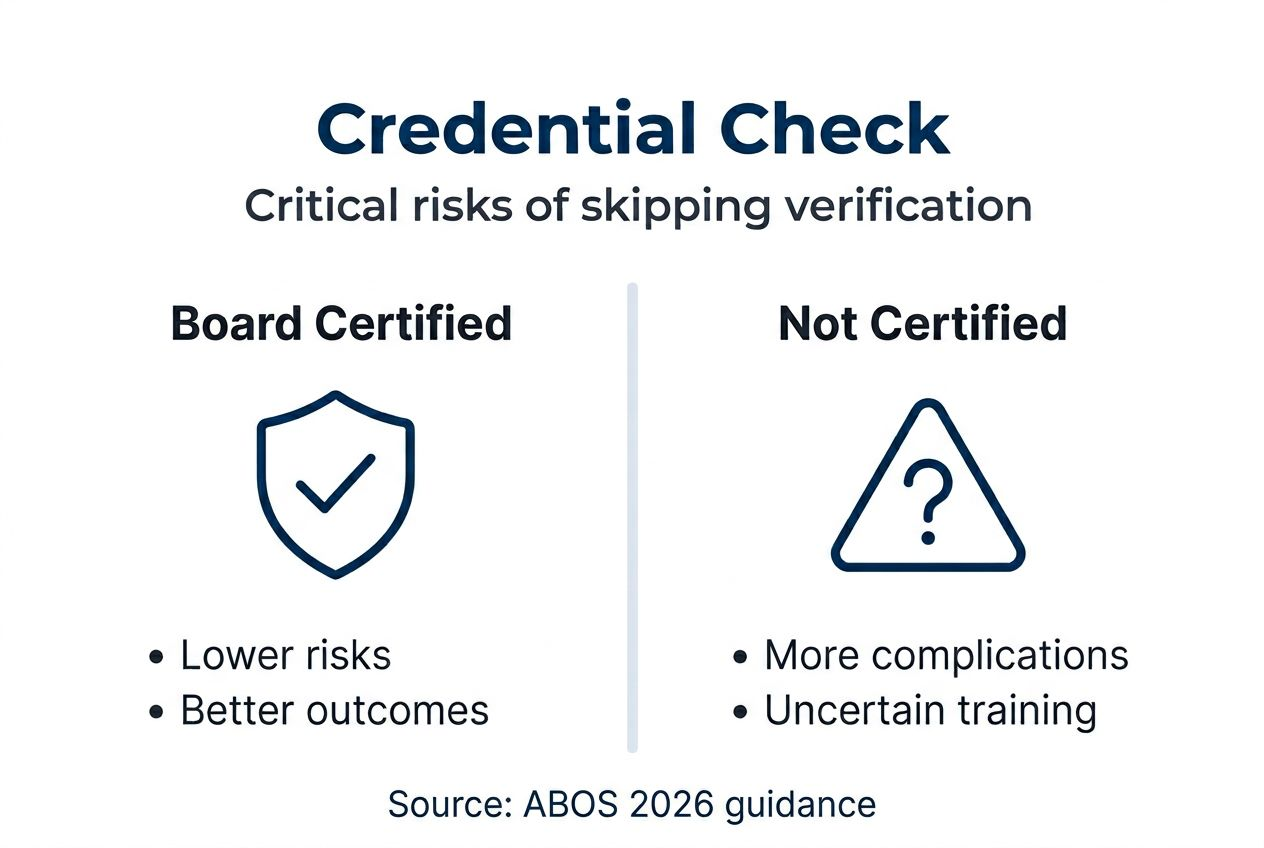
Board certification serves as your first and most critical checkpoint when evaluating any orthopedic surgeon. The American Board of Orthopaedic Surgery (ABOS) certification confirms that a surgeon has completed rigorous training, passed comprehensive exams, and maintains ongoing education in their field. Board-certified orthopedic surgeons have significantly lower complication rates compared to non-certified practitioners, making this credential non-negotiable for safe, expert care.
Fellowship training takes specialization even further. After completing orthopedic residency, many surgeons pursue an additional year of intensive training in subspecialties like sports medicine, joint reconstruction, or hand surgery. This advanced education means your surgeon has spent thousands of extra hours mastering specific techniques for conditions like yours. A sports medicine fellowship, for example, provides deep expertise in ACL reconstruction, meniscus repair, and rotator cuff surgery that general orthopedic training alone cannot match.
Matching the surgeon’s specialization to your specific condition dramatically improves outcomes. Consider these key areas:
- Knee specialists for ACL tears, meniscus damage, or cartilage restoration
- Shoulder experts for rotator cuff injuries, SLAP tears, or instability issues
- Hand and wrist surgeons for carpal tunnel, trigger finger, or fracture care
- Elbow specialists for tennis elbow, golfer’s elbow, or nerve compression
Surgeons without board certification present elevated risks. Some practitioners may have medical licenses but lack the specialized orthopedic training and ongoing competency verification that ABOS certification requires. Always verify credentials using the official ABOS lookup tool before scheduling any procedure.
Pro Tip: Check the ABOS website directory to confirm your surgeon’s certification status and see their fellowship training details in under two minutes.
Evaluating surgeon’s experience and patient outcomes
Surgical volume directly predicts your chances of success. Research shows surgeons performing higher volumes achieve better outcomes with fewer complications and revisions, particularly for complex procedures. High-volume ACL reconstruction surgeons, for instance, achieve up to 25% fewer revision surgeries than their low-volume peers. When interviewing surgeons, ask how many procedures like yours they perform annually. Numbers matter because repetition builds muscle memory, refines technique, and exposes surgeons to a wider range of anatomical variations.

Patient satisfaction scores and documented outcomes reveal real-world performance beyond credentials. Review platforms, hospital quality databases, and practice websites often publish satisfaction ratings and complication statistics. Look for consistent patterns across multiple sources rather than isolated reviews. A surgeon with 95% patient satisfaction across hundreds of cases demonstrates reliability that a few glowing testimonials cannot.
Minimally invasive arthroscopic techniques offer measurable advantages over traditional open surgery. Arthroscopy uses small incisions and camera guidance to repair joints with less tissue damage, shorter hospital stays, and faster recovery times. Surgeons experienced in arthroscopic shoulder, knee, and elbow procedures typically achieve better cosmetic results and lower infection rates. Ask whether your surgeon routinely uses arthroscopic approaches for your specific condition.
Consider these outcome indicators when researching surgeons:
- Revision surgery rates (lower is better, typically under 5% for most procedures)
- Infection rates (should be under 1% for elective orthopedic surgery)
- Patient-reported pain relief at 6 and 12 months post-surgery
- Return to sport or work timelines compared to national averages
“The difference between an average surgeon and a high-volume specialist can mean six months less recovery time and a dramatically lower chance of needing a second surgery. Experience isn’t everything, but it’s the strongest predictor of success we have.”
Patient reviews deserve attention but require context. Exceptional bedside manner matters for your experience, but clinical outcomes matter for your health. Balance both when making your final decision.
Preparing for your consultation: essential questions to ask
Walking into a surgeon consultation without prepared questions wastes your opportunity to gather critical decision-making information. Asking specific questions improves patient confidence by 40% and ensures you understand every aspect of your care. Your consultation should feel like an interview where you’re evaluating the surgeon as much as they’re evaluating your condition.
Start with questions about the surgeon’s direct experience with your specific problem. Generic orthopedic experience doesn’t translate to expertise in your particular injury. Ask exactly how many times they’ve performed the recommended procedure in the past year and what their success rates look like. Request details on their complication rates and how they handle unexpected issues during surgery.
Non-surgical alternatives deserve equal discussion time. Many conditions respond well to regenerative therapies, injections, or structured physical therapy before surgery becomes necessary. Ask whether your surgeon offers or recommends options like platelet-rich plasma (PRP), orthobiologic injections, or targeted rehabilitation programs. Surgeons who present multiple treatment pathways typically provide more patient-centered care than those who immediately recommend surgery.
Recovery expectations need clear definition upfront. Ask these targeted questions:
- What does the typical recovery timeline look like week by week?
- When can I expect to return to work, sports, or daily activities?
- What does physical therapy involve and how long will I need it?
- What are the most common complications and how often do they occur?
- What happens if the first surgery doesn’t fully resolve my problem?
Postoperative care planning reveals how supported you’ll be after surgery. Inquire about pain management protocols, follow-up appointment schedules, and how quickly you can reach the surgeon if problems arise. Surgeons with robust post-op support systems typically achieve better outcomes because they catch and address issues early.
Pro Tip: Write your questions on your phone or a notepad before your appointment and check them off as you get answers. This simple step ensures you don’t forget critical topics when you’re nervous or overwhelmed by medical information.
Don’t hesitate to ask about the surgeon’s philosophy on treatment. Providers who listen to your goals, acknowledge your concerns, and explain options in plain language create partnerships that lead to better satisfaction and outcomes.
Exploring treatment options: surgical and non-surgical approaches
Orthopedic care offers a spectrum of interventions ranging from conservative therapies to advanced surgical procedures. Understanding this full range helps you make treatment decisions aligned with your recovery goals and lifestyle needs. The best surgeons present options rather than pushing a single solution.
Arthroscopic surgery represents the gold standard for many joint conditions. Using tiny incisions and specialized cameras, surgeons can repair torn meniscus, reconstruct ligaments, remove damaged cartilage, and fix rotator cuff tears with minimal tissue disruption. Patients typically experience less post-operative pain, shorter hospital stays, and faster returns to activity compared to traditional open surgery. For knee treatments like ACL reconstruction or meniscus repair, arthroscopy often allows same-day discharge and walking within hours.
Regenerative medicine provides powerful non-surgical alternatives that many patients overlook. Non-surgical regenerative therapies improve joint function by 30-50% and may delay surgery for months or years. Platelet-rich plasma (PRP) injections concentrate your body’s healing factors and inject them directly into damaged tissues to accelerate repair. Orthobiologic injections use similar principles to reduce inflammation and stimulate tissue regeneration without incisions or downtime.
| Treatment Approach | Recovery Time | Ideal Candidates | Key Benefits |
|---|---|---|---|
| Arthroscopic Surgery | 6-12 weeks | Structural damage, failed conservative care | Precise repair, faster recovery than open surgery |
| PRP Injections | 2-6 weeks | Early arthritis, tendon injuries | Non-surgical, uses body’s healing factors |
| Physical Therapy | 8-16 weeks | Minor injuries, prevention | Strengthens support structures, no procedures |
| Orthobiologic Therapy | 4-8 weeks | Chronic pain, inflammation | Reduces inflammation, promotes regeneration |
Integrative treatment planning combines multiple approaches for optimal results. Sports medicine services often layer therapies strategically. You might start with PRP to reduce inflammation, add targeted physical therapy to build strength, and reserve surgery only if conservative measures don’t achieve your functional goals. This stepped approach avoids unnecessary procedures while keeping all options available.
Physical therapy accelerates recovery whether you choose surgical or non-surgical treatment. Structured rehabilitation programs restore range of motion, rebuild muscle strength, and retrain movement patterns that prevent re-injury. Surgeons who integrate PT into treatment plans from day one typically achieve better long-term outcomes.
Personalized care means matching treatments to your specific anatomy, activity level, and recovery goals. A competitive athlete’s ACL reconstruction differs from a recreational hiker’s approach. Your surgeon should discuss how different options align with your lifestyle and what you want to accomplish.
Understanding costs and insurance considerations
Orthopedic surgery costs vary wildly depending on procedure complexity, facility fees, anesthesia, and geographic location. The same ACL reconstruction might cost $15,000 at one center and $35,000 at another. This price variability makes upfront research essential to avoid financial shock. Financial transparency reduces unexpected expenses by 45%, giving you control over your healthcare spending.
Insurance verification prevents the most common billing surprises. Before scheduling any procedure, confirm that your surgeon participates in your insurance network. Out-of-network providers can leave you responsible for thousands of dollars in balance billing even when insurance pays a portion. Call your insurance company directly and ask about your specific procedure code, deductible status, and out-of-pocket maximum.
Preauthorization requirements catch many patients off guard. Most insurance plans require advance approval for orthopedic surgeries, injections, and even some imaging studies. Your surgeon’s office should handle this process, but verify they’ve received authorization before your procedure date. Skipping this step can result in complete claim denials and full patient responsibility for costs.
Detailed cost estimates should include every component:
- Surgeon’s professional fee for the procedure itself
- Facility or hospital charges for operating room use
- Anesthesiologist fees for sedation and monitoring
- Pre-operative testing like MRI, X-rays, or bloodwork
- Post-operative physical therapy and follow-up visits
- Medical equipment like braces, crutches, or cold therapy units
Request written estimates that break down these categories individually. Bundled quotes that lump everything together make it impossible to compare providers or identify inflated charges. Reputable practices provide transparent pricing and help you understand your financial responsibility before you commit.
Payment plans and financing options expand access to necessary care when upfront costs seem prohibitive. Many orthopedic practices partner with medical financing companies that offer interest-free periods or extended payment terms. Ask about these programs during your consultation if cost concerns might delay treatment.
Transparent cost communication builds trust between you and your surgeon. Providers who openly discuss pricing, insurance coverage, and payment options demonstrate respect for your financial situation and commitment to accessible care.
Avoiding common mistakes when choosing an orthopedic surgeon
Skipping credential verification ranks as the most dangerous shortcut patients take. Assuming every doctor calling themselves an orthopedic surgeon has proper training and certification can lead to preventable complications. Some practitioners hold medical licenses but lack board certification or completed orthopedic residencies. Always use official lookup tools to confirm ABOS certification before proceeding with any surgeon.
Neglecting experience and outcomes research leaves you gambling with your recovery. Many patients choose surgeons based solely on convenience, insurance participation, or office location without investigating surgical volume or complication rates. This approach ignores the strongest predictors of success. Spend time researching each surgeon’s track record with your specific procedure before making appointments.
Not asking about alternative treatments results in unnecessary surgery in 20-30% of cases. Surgeons naturally recommend what they do best, which often means surgery. Patients who don’t explicitly ask about non-surgical options like PRP, physical therapy, or activity modification may undergo procedures that weren’t medically necessary. Always request a full discussion of conservative treatments before agreeing to surgery.
Overlooking insurance and cost details creates financial stress that compounds recovery challenges. Failing to verify network participation, obtain preauthorization, or request detailed estimates frequently results in unexpected bills ranging from hundreds to tens of thousands of dollars. These mistakes are entirely preventable with upfront communication.
Follow this checklist to avoid the most common pitfalls:
- Verify board certification through official ABOS databases, not practice websites
- Research surgical volume and outcomes for your specific procedure
- Ask explicitly about non-surgical alternatives during consultations
- Confirm insurance participation and obtain preauthorization in writing
- Request itemized cost estimates covering all procedure components
- Read patient reviews but weight clinical outcomes more heavily
- Trust your instincts if communication feels rushed or dismissive
Pro Tip: Create a comparison spreadsheet tracking credentials, experience, treatment options, and costs for each surgeon you consult. This organized approach reveals clear differences and prevents decision paralysis when choosing between qualified providers.
Rushing the selection process because of pain or anxiety leads to regrettable choices. Take the time to thoroughly vet surgeons even when symptoms feel urgent. Most orthopedic conditions allow days or weeks for careful evaluation without compromising outcomes. The surgeon you choose now will influence your quality of life for years.
Expected outcomes and recovery timelines
Recovery timelines vary significantly based on procedure type, surgical technique, patient age, and commitment to rehabilitation. Understanding realistic expectations prevents frustration and helps you plan time off work, arrange help at home, and set appropriate return-to-activity goals. Surgeons who provide specific, evidence-based timelines demonstrate transparency and experience.
ACL reconstruction typically requires the longest recovery among common sports injuries. Most patients need 6-9 months before returning to competitive sports, though walking without crutches usually happens within 2-4 weeks. Initial physical therapy focuses on reducing swelling and regaining range of motion, then progresses to strength building and sport-specific training. Athletes who rush this timeline face significantly higher re-injury rates.
| Procedure | Walking Independently | Return to Work | Return to Sports | Full Recovery |
|---|---|---|---|---|
| ACL Reconstruction | 2-4 weeks | 4-8 weeks (desk job) | 6-9 months | 9-12 months |
| Meniscus Repair | 1-2 weeks | 2-6 weeks | 3-6 months | 4-6 months |
| Rotator Cuff Repair | N/A (shoulder) | 2-4 weeks (modified) | 4-6 months | 6-9 months |
| Carpal Tunnel Release | Immediate | 2-4 weeks | 6-8 weeks | 3-4 months |
Success indicators extend beyond pain relief to include functional improvements. Effective treatment should restore your ability to perform daily activities without discomfort, return to recreational sports or exercise, and prevent future joint deterioration. Surgeons should define these measurable outcomes upfront so you can track progress objectively.
Integrative recovery approaches combining surgery with regenerative therapies and structured rehabilitation achieve superior results. Following knee surgery recovery, patients who combine surgical repair with PRP injections and guided physical therapy often return to activity weeks faster than those relying on surgery alone. This comprehensive approach addresses inflammation, promotes tissue healing, and rebuilds strength simultaneously.
Realistic goal setting prevents disappointment and supports adherence to recovery protocols:
- Week 1-2: Focus on pain management, wound healing, and gentle range of motion
- Week 3-6: Progress to weight-bearing and basic strengthening exercises
- Week 7-12: Build functional strength and begin sport-specific movements
- Month 4-6: Gradual return to higher-impact activities with ongoing therapy
- Month 6-12: Full return to sports with maintenance strengthening program
Understanding that healing happens in phases helps you appreciate small victories and stay motivated through plateaus. Some patients feel discouraged when progress slows after initial improvements, but this pattern reflects normal tissue remodeling. Enhancing sports recovery naturally through nutrition, sleep, and stress management supports your body’s healing timeline.
Patient compliance dramatically influences outcomes. Following your surgeon’s restrictions, attending all physical therapy sessions, and progressing activities gradually makes the difference between excellent and mediocre results from identical procedures.
Explore expert orthopedic care and advanced treatments in New Hampshire
Nowak Orthopedic Associates brings board-certified expertise and comprehensive treatment options to New Hampshire patients facing joint pain and sports injuries. Dr. Roger B. Nowak combines fellowship-trained surgical skills with advanced regenerative therapies, offering you the full spectrum of care discussed throughout this guide. Whether you need arthroscopic shoulder repair, ACL reconstruction, or non-surgical orthobiologic injections, our Hampton practice provides personalized treatment plans focused on getting you back to the activities you love.
Our regenerative clinic services include PRP therapy, SoftWave treatment, and guided stretch therapy designed to accelerate healing and potentially avoid surgery entirely. We also offer specialized sports medicine services for athletes at every level, from weekend warriors to competitive players. Explore your treatment options with a team committed to evidence-based care, transparent communication, and exceptional outcomes.
FAQ
How can I verify an orthopedic surgeon’s board certification?
Use the American Board of Orthopaedic Surgery online directory to check certification status by entering the surgeon’s full name. The database shows certification dates, fellowship training, and subspecialty credentials. Verify that fellowship training aligns with your specific condition for optimal expertise match.
What questions should I ask during my orthopedic surgeon consultation?
Ask about the surgeon’s annual volume for your specific procedure and their complication rates compared to national averages. Inquire about non-surgical alternatives, expected recovery timelines, and what happens if initial treatment doesn’t fully resolve your problem. Request details on postoperative care support and pain management protocols.
Are non-surgical treatments effective for joint pain?
Non-surgical options like PRP and orthobiologic injections improve symptoms and function by 30-50% in many patients with early-stage arthritis or tendon injuries. These therapies can delay or prevent surgery while reducing pain and inflammation. Success depends on injury severity, patient age, and treatment consistency.
How do I avoid unexpected costs when choosing an orthopedic surgeon?
Verify insurance network participation and obtain written preauthorization before scheduling any procedure. Request itemized cost estimates covering surgeon fees, facility charges, anesthesia, and rehabilitation. Confirm your deductible status and out-of-pocket maximum to understand total financial responsibility upfront.