

Many people in New Hampshire put off treating hand pain because they assume surgery means weeks of immobility, a large incision, and a slow, painful recovery. That assumption is outdated. Minimally invasive techniques like endoscopic carpal tunnel release and ultrasound-guided releases now reduce recovery time and complications compared to traditional open surgery. Whether you are dealing with the numbness of carpal tunnel syndrome or the locking sensation of trigger finger, today’s procedures are faster, safer, and more effective than ever before. This guide walks you through the most common hand conditions, the techniques used to treat them, and what real recovery looks like.
Table of Contents
- Common conditions addressed by hand surgery
- Minimally invasive hand surgery techniques explained
- Comparing procedure outcomes and recovery timelines
- Choosing the best treatment: Surgery vs. injections
- Patient satisfaction, quality of life, and special considerations
- Expert orthopedic care for hand pain in New Hampshire
- Frequently asked questions
Key Takeaways
| Point | Details |
|---|---|
| Faster recoveries | Minimally invasive hand surgeries enable a much quicker return to activity compared to traditional approaches. |
| High success rates | Procedures like ECTR and ultrasound-guided releases achieve over 97% success for common conditions. |
| Surgery outperforms injections | For carpal tunnel syndrome, modern surgical treatment delivers superior long-term outcomes versus steroid injections. |
| Tailored approaches | Your anatomy and medical history may impact the best surgical option, especially for severe cases. |
| Expert care matters | Choosing an experienced orthopedic team ensures optimal results and satisfaction after hand surgery. |
Common conditions addressed by hand surgery
Hand pain is not a single problem. It shows up in different ways depending on the underlying condition, and understanding what you are dealing with is the first step toward finding the right treatment. Our hand treatment services cover a wide range of diagnoses, but two conditions stand out as the most frequently treated surgically.
Carpal tunnel syndrome (CTS) occurs when the median nerve, which runs through a narrow passageway in the wrist called the carpal tunnel, becomes compressed. Symptoms include numbness, tingling, and weakness in the hand, often worse at night or during repetitive tasks. Left untreated, it can lead to permanent nerve damage.
Trigger finger happens when inflammation narrows the tendon sheath around a finger’s flexor tendon, causing the finger to catch or lock when bent. It can be painful and limit your ability to grip or perform everyday tasks.
Other conditions that may require surgical intervention include:
- Fractures of the hand or wrist bones
- Tendon injuries from trauma or overuse
- De Quervain’s tenosynovitis, which affects the tendons on the thumb side of the wrist
- Ganglion cysts that cause pain or restrict movement
Ultrasound-guided releases for trigger finger and carpal tunnel involve small punctures with high success rates, making them a compelling option for patients who want effective treatment with minimal disruption to their daily lives.
Minimally invasive hand surgery techniques explained
Understanding your condition is one thing. Knowing how modern techniques actually fix it is another. Three procedures have emerged as the leading minimally invasive options for hand surgery, each with strong evidence behind it.
Endoscopic carpal tunnel release (ECTR)
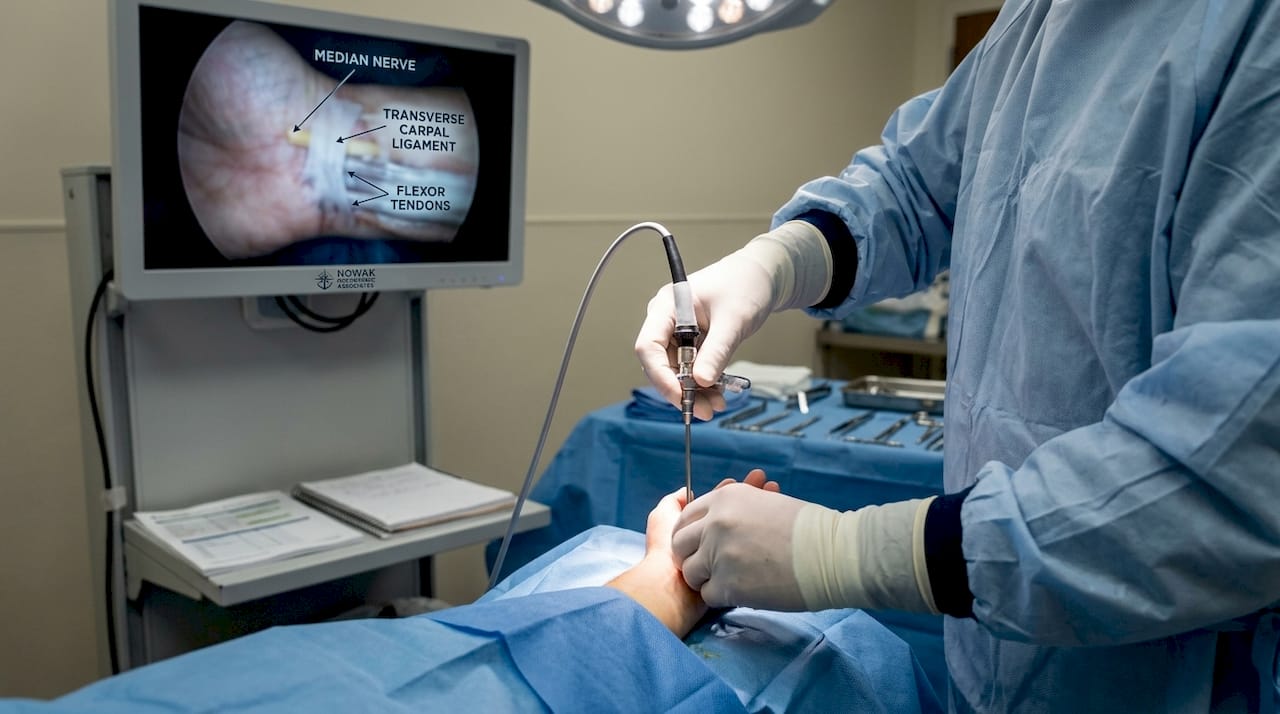
ECTR uses a small camera called an endoscope inserted through a tiny incision in the wrist. The surgeon views the carpal tunnel on a monitor and cuts the transverse carpal ligament to relieve pressure on the median nerve. No large incision is needed. ECTR achieves outcomes comparable to open surgery with faster return to work, improved grip strength, and higher patient satisfaction.
Ultrasound-guided carpal tunnel and trigger finger release
This technique uses real-time ultrasound imaging to guide a needle or small blade to the exact site of compression or restriction. Because the surgeon can see the structures clearly, the incision is minimal, often just a small puncture. A network meta-analysis found that ultrasound-guided carpal tunnel release produced the highest patient satisfaction and the shortest return-to-work time among all techniques studied, while the double tunnels technique showed the lowest rate of adverse events.
Percutaneous trigger finger release
This approach uses a needle inserted through the skin to divide the constricted tendon sheath without a formal incision. It is performed in an office or outpatient setting and requires minimal anesthesia.
Here is a quick comparison of the three main techniques:
| Technique | Incision size | Typical recovery | Key advantage |
|---|---|---|---|
| Open surgery | 2-4 cm | 4-6 weeks | Widest visualization |
| ECTR | 1-2 small ports | 1-3 weeks | Camera-guided precision |
| Ultrasound-guided release | Needle puncture | 1-2 weeks | Highest satisfaction |
| Percutaneous trigger finger | Needle puncture | 1-2 weeks | Office-based, fast |
For those exploring how minimally invasive approaches apply beyond the hand, our minimally invasive surgery guide covers joint conditions throughout the body.
Pro Tip: Ask your surgeon specifically whether ultrasound guidance will be used during your procedure. Real-time imaging significantly reduces the risk of accidental nerve or vessel injury during release procedures.
Comparing procedure outcomes and recovery timelines
Knowing what the surgical procedures involve is important. But what patients in New Hampshire really want to know is: how quickly will I get back to my life?
Ultrasound-guided releases carry a 97% success rate and allow most patients to resume strenuous activity within just 2 weeks. That is a significant improvement over traditional open surgery, which typically requires 4 to 6 weeks before patients can return to physical work.
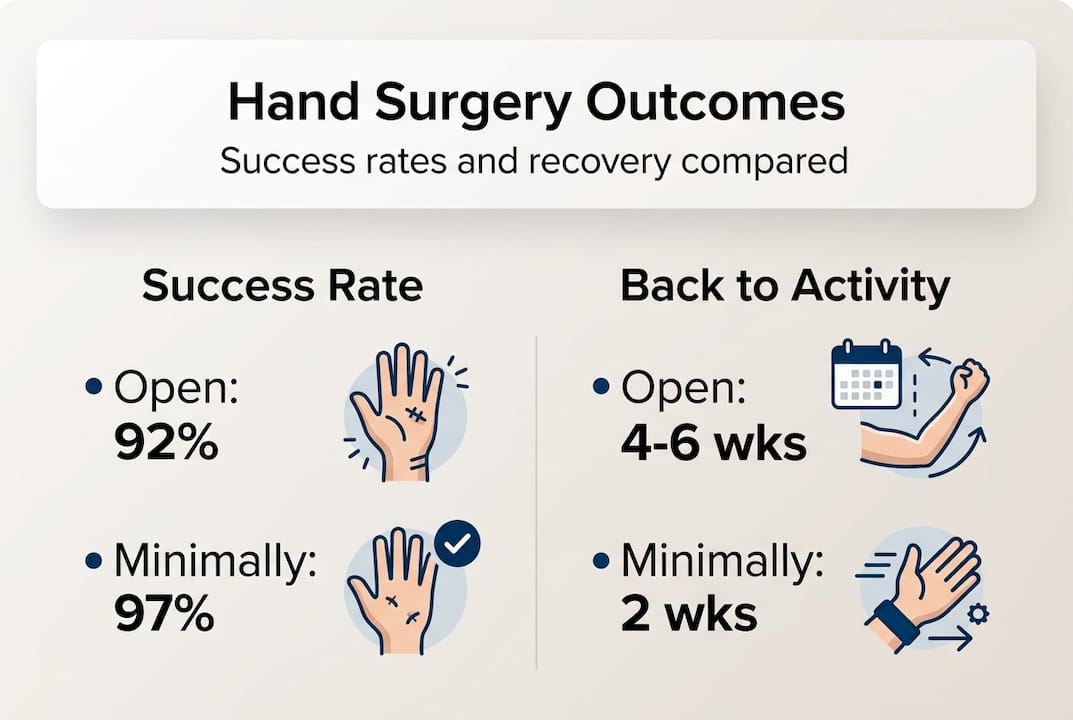
For trigger finger specifically, percutaneous release shows a 97.6% success rate, earlier return to work than open surgery, and low recurrence with no nerve injuries reported over a 42-month follow-up period. Those are reassuring numbers.
Here is a summary of what to expect:
| Procedure | Return to light work | Return to strenuous activity | Long-term success rate |
|---|---|---|---|
| Open carpal tunnel release | 2-4 weeks | 4-6 weeks | ~90-95% |
| ECTR | 1-2 weeks | 2-3 weeks | ~90-95% |
| Ultrasound-guided CTR | 1 week | 2 weeks | 97% |
| Percutaneous trigger finger | 1-2 weeks | 2 weeks | 97.6% |
Key things to keep in mind during recovery:
- Swelling and mild soreness are normal in the first few days
- Grip strength typically improves steadily over 4 to 8 weeks
- Physical therapy or guided stretching may be recommended to restore full function
- Scar sensitivity is less common with minimally invasive approaches
Pro Tip: Starting gentle finger movement exercises early, as directed by your surgeon, can meaningfully speed up your return to full hand function. Ask about our stretch therapy program as part of your recovery plan.
For athletes or active individuals, understanding how recovery fits into a broader rehabilitation plan is essential. Our sports injury recovery workflow and resources on minimally invasive elbow treatments offer additional context for staying active during recovery.
Choosing the best treatment: Surgery vs. injections
Many patients try steroid injections before considering surgery, and that is often a reasonable first step. Corticosteroid injections reduce inflammation around the median nerve or tendon sheath and can provide meaningful short-term relief. However, the evidence is clear about their limitations over time.
For carpal tunnel syndrome, surgery outperforms injections significantly at 18 months: 61% of surgical patients showed recovery compared to 45% in the injection group. More telling, 57% of the surgery group recovered without needing any further treatment, versus only 13% in the injection group.
Here is how to think through the decision:
- Try injections first if your symptoms are mild to moderate and you have not had them for long. They can confirm the diagnosis and provide temporary relief.
- Consider surgery if symptoms have persisted for more than 6 months, if you have significant weakness or numbness, or if injections have stopped working.
- Act sooner rather than later if nerve conduction studies show moderate to severe compression. Prolonged compression can cause permanent nerve damage that surgery cannot fully reverse.
- Discuss your lifestyle with your surgeon. Someone who uses their hands heavily for work or hobbies may benefit from surgical resolution rather than repeated injections.
For more on how injections fit into a broader orthopedic treatment plan, see our overview of joint pain relief injections.
The goal is not to push patients toward surgery. It is to make sure you have accurate information so you can choose the treatment that gives you the best long-term outcome for your specific situation.
Patient satisfaction, quality of life, and special considerations
Surgical success is not just about whether the procedure worked technically. It is about whether you feel better, function better, and are glad you had it done. Satisfaction data from recent research is encouraging.
A network meta-analysis confirmed that ultrasound-guided carpal tunnel release produces the highest patient satisfaction scores and the fastest return to work of any technique currently available. Patients consistently report reduced pain, improved sleep, and better hand function within weeks of the procedure.
That said, not every patient is a candidate for the same approach. Some situations call for a different strategy:
- Severe carpal tunnel syndrome with significant nerve damage may be better served by open surgery or ECTR, which allow the surgeon more direct access and visualization
- Patients with diabetes may have altered tissue healing and anatomy, making percutaneous techniques less predictable in some cases
- Complex anatomy or prior surgeries in the hand or wrist may require open approaches for safety
- WALANT anesthesia (wide awake local anesthesia no tourniquet) is an emerging option that allows patients to remain awake during the procedure, enabling real-time feedback and reducing anesthesia-related risks
WALANT and percutaneous techniques are expanding the range of patients who can benefit from minimally invasive care, including those who might not tolerate general anesthesia well.
Pro Tip: Before your consultation, write down how your hand symptoms affect your daily life, including sleep, work tasks, and hobbies. This helps your surgeon understand the full impact and tailor a treatment plan that fits your goals.
You can review hand surgery outcomes and the full range of hand procedures we offer to better prepare for that conversation.
Expert orthopedic care for hand pain in New Hampshire
If hand pain is limiting what you can do at work, at home, or during the activities you enjoy, you do not have to keep managing it on your own. At Nowak Orthopedic Associates in Hampton, NH, Dr. Roger B. Nowak and our team specialize in minimally invasive surgical techniques for carpal tunnel syndrome, trigger finger, De Quervain’s release, and more. We build individualized treatment plans that may start with non-surgical options and progress to surgery only when it is the right choice for you. Explore our comprehensive services and treatments, learn more about our hand procedure specialists, or visit our regenerative clinic to see how PRP, SoftWave therapy, and other non-surgical options may support your recovery. Contact us today to schedule a consultation.
Frequently asked questions
How long does it take to recover from minimally invasive hand surgery?
Most patients can resume daily activities within 1 to 2 weeks after minimally invasive hand surgery. Ultrasound-guided releases specifically allow resumption of strenuous activity within 2 weeks, which is significantly faster than open procedures.
Are injections or surgery better for carpal tunnel syndrome?
Surgery offers stronger long-term results. At 18 months, 61% of surgical patients recovered compared to 45% who received injections, and far fewer surgical patients needed additional treatment.
What are minimally invasive options for trigger finger?
Trigger finger can be treated with percutaneous or ultrasound-guided releases. Both approaches show over 97% success with minimal complications and quick return to activity.
What can I expect in terms of pain or complications after surgery?
Minimally invasive techniques generally result in lower pain levels and fewer complications than open surgery. The double tunnels technique shows the lowest adverse event rate, while ECTR and ultrasound-guided releases both carry high satisfaction scores.
Who should consider open surgery instead of minimally invasive?
Open surgery or ECTR may be the better choice for patients with severe nerve compression, diabetes, or complex wrist anatomy. Severe CTS or diabetes can make percutaneous techniques less predictable, and your surgeon will guide you toward the safest option.