

Joint pain and sports injuries have a way of quietly taking over your life. You stop hiking, skip the gym, or dread walking down stairs. If you’re living in New Hampshire and searching for real relief without going under the knife, you’re not alone. The good news is that most orthopedic conditions respond well to non-surgical care when it’s done right. This guide walks you through tested, evidence-backed treatment steps you can explore with your provider at Nowak Orthopedic Associates.
Table of Contents
- Understanding your non-surgical options
- Step 1: Start with physical therapy and exercise
- Step 2: Medication and pain management strategies
- Step 3: Advanced non-surgical therapies and weight management
- Verifying results and adapting your plan
- Why personalization matters more than protocols in non-surgical care
- Take the next step with Nowak Orthopedic Associates
- Frequently asked questions
Key Takeaways
| Point | Details |
|---|---|
| Start with physical therapy | Supervised exercise and PT form the safest, most effective foundation for orthopedic pain relief. |
| Use medications strategically | NSAIDs and acetaminophen can ease pain, but always follow dosing guidance and consult your provider. |
| Consider advanced options carefully | Injections and regenerative therapies may help if other treatments fall short, but results vary and require expert input. |
| Track your progress | Setting clear goals and tracking outcomes with your specialist improves your odds of recovery and avoiding surgery. |
Understanding your non-surgical options
Non-surgical orthopedic care covers a wide range of approaches, and knowing the landscape helps you make smarter decisions with your provider. Broadly, treatments fall into four categories: medications, injections, physical therapies, and regenerative options.
NSAIDs and acetaminophen are considered first-line pharmacological options for joint pain and sports injuries. They’re often the starting point before anything more involved is considered. For orthopedic injections, corticosteroids offer short-term relief, while hyaluronic acid and PRP are available options with mixed evidence depending on the condition.
| Treatment | Common use | Expected relief | Frequency |
|---|---|---|---|
| NSAIDs / acetaminophen | General joint pain | Days to weeks | Daily as needed |
| Corticosteroid injection | Inflammation flares | Weeks to months | Every 3 to 6 months |
| Hyaluronic acid injection | Knee osteoarthritis | Months | 1 to 5 sessions |
| PRP injection | Tendon and joint injuries | Months | 1 to 3 sessions |
| Physical therapy | Most joint conditions | Long-term | Ongoing |
When is each approach typically tried?
- Medications first, for mild to moderate pain
- Physical therapy early and alongside other treatments
- Injections when PT and medications aren’t enough
- Regenerative therapies for persistent or complex cases
- Surgery only when conservative options have been exhausted
Your treatment path should always be personalized. What works well for one patient may not be the right fit for another. Review all joint procedure examples to better understand the range of options available.
Step 1: Start with physical therapy and exercise
Physical therapy is almost always the right place to start. It’s not just about stretching or using resistance bands. Structured PT addresses the root cause of your pain by correcting movement patterns, rebuilding strength, and reducing stress on damaged joints.

Conservative care prioritizes the body’s natural healing with PT and exercise first, before medications or injections are introduced. This isn’t just a preference. It’s backed by strong clinical evidence.
Here’s how a structured PT process typically works:
- Assessment by a licensed physical therapist to identify strength deficits, range of motion limits, and movement faults
- Personalized PT plan built around your specific condition, activity level, and goals
- Supervised sessions where a therapist monitors your form and adjusts intensity
- Home exercise program to reinforce progress between clinic visits
- Reassessment at regular intervals to track improvement and update the plan
Physical therapy also plays a key role in preventing future injuries. Strengthening the muscles around a joint reduces load on the cartilage and connective tissue, which lowers your risk of re-injury. This is especially important for athletes and active adults in New Hampshire managing sports medicine concerns.
Pro Tip: Keep a simple symptom journal during PT. Note your pain level before and after each session. This data helps your provider fine-tune your plan faster and gives you a clear picture of your progress over time.
For more context on how treatments for osteoarthritis are structured, the Arthritis Foundation offers helpful guidance that aligns well with what we see clinically.
Step 2: Medication and pain management strategies
Once PT is underway, strategic pain management can help you stay consistent with your rehab and improve your daily comfort. The goal isn’t to mask pain permanently but to manage it well enough that you can stay active and engaged in your recovery.
NSAIDs and acetaminophen remain the most evidence-supported first-line medications for joint and sports injury pain. Topical NSAIDs, applied directly to the skin over the joint, are a good option for people who want to minimize systemic side effects.
Corticosteroid injections work by reducing inflammation directly at the source. They can provide weeks to months of relief and are particularly useful during flare-ups that interrupt your PT progress.
Medication do’s and don’ts:
- Do take NSAIDs with food to protect your stomach lining
- Do use the lowest effective dose for the shortest time needed
- Do discuss all medications with your provider before starting
- Don’t rely on pain medications as a substitute for PT
- Don’t exceed recommended doses of acetaminophen, especially if you drink alcohol
- Don’t ignore side effects such as stomach pain, swelling, or changes in blood pressure
Statistic callout: Corticosteroid injections typically provide pain relief lasting several weeks to a few months, making them a useful bridge while other therapies take effect.
For a full overview of orthopedic treatments available at our practice, or to review clinical guidance on UpToDate OA treatments, both resources can help you prepare for your next provider conversation.
Step 3: Advanced non-surgical therapies and weight management
When PT and medications provide only partial relief, advanced non-surgical options may be the right next step. These therapies target healing at a deeper level and are especially relevant for chronic joint conditions.
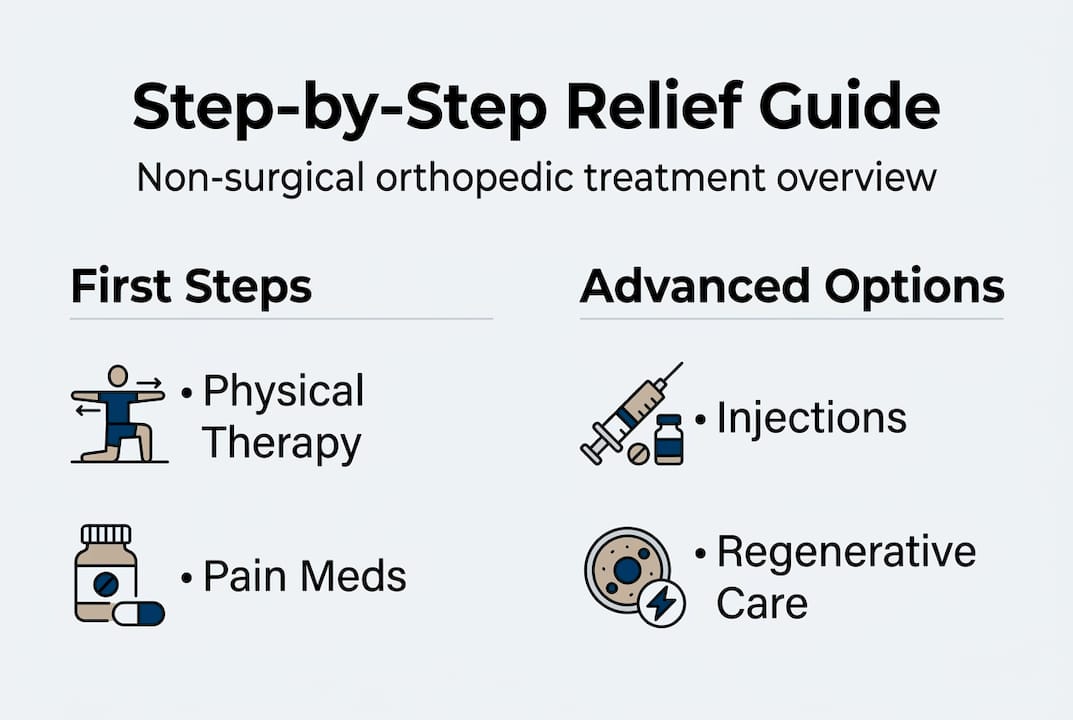
Regenerative therapies such as PRP, stem cells, and exosomes promote natural tissue healing, though long-term efficacy is still being studied and they are not considered first-line treatments. That said, many patients experience meaningful improvement, particularly with PRP injections for tendon and joint conditions.
| Modality | Mechanism | Expected benefit duration |
|---|---|---|
| Corticosteroid injection | Reduces inflammation | Weeks to months |
| Hyaluronic acid injection | Lubricates joint fluid | Several months |
| PRP injection | Stimulates tissue repair | Months to over a year |
| SoftWave therapy | Acoustic waves promote healing | Months |
Weight management is one of the most powerful and underused tools in joint care. Weight loss is strongly recommended for overweight adults with a BMI of 25 or higher who have knee osteoarthritis, because even modest reductions in body weight significantly reduce joint stress and pain.
Even losing 10 pounds reduces the force on your knee joint by roughly 40 pounds with each step. That kind of load reduction can make a measurable difference in pain and function.
Pro Tip: When starting advanced therapies, set a specific functional goal with your provider, such as walking two miles without pain or returning to recreational tennis. Concrete goals make it easier to evaluate whether a treatment is working.
Explore the full range of options at our regenerative orthopedic therapies clinic to learn which approach may suit your situation.
Verifying results and adapting your plan
Starting treatment is only part of the process. Tracking your progress and adjusting your plan over time is what separates good outcomes from great ones.
Here’s a simple process for monitoring your recovery:
- Set measurable goals at the start, such as pain scores, walking distance, or return to sport
- Log symptoms weekly using a pain scale and note any functional changes
- Review with your provider every four to six weeks to assess progress
- Adjust the plan based on what’s working, adding or modifying therapies as needed
- Escalate if necessary if pain persists or function declines despite consistent effort
Benchmarks to watch for with common treatments:
- Pain reduction of 2 or more points on a 10-point scale after 6 to 8 weeks of PT
- Improved walking distance or stair tolerance within 4 weeks of injection therapy
- Shockwave WOMAC scores show average improvement of 30 points, a clinically meaningful reduction in osteoarthritis symptoms
- Return to low-impact activity within 8 to 12 weeks of starting a structured program
If you’re not hitting these benchmarks, it doesn’t mean you’ve failed. It means your plan needs updating. Review joint procedure outcomes with your provider to understand when more interventional options, including surgery, may become the right conversation.
Why personalization matters more than protocols in non-surgical care
Protocols are useful. They give providers a structured starting point and help ensure no important step is skipped. But here’s what we’ve seen time and again: patients who follow a standard protocol without personalization often plateau early.
The reason is straightforward. Two people with knee osteoarthritis may have completely different pain triggers, activity goals, and healing responses. One patient may respond beautifully to personalized orthopedic care combining PRP with guided PT, while another needs weight management and targeted injections first. Evidence is always evolving, and what works is shaped by biology, lifestyle, and motivation. Real results come from ongoing dialogue between you and your provider, not from checking boxes on a standard plan.
Take the next step with Nowak Orthopedic Associates
If you’re ready to move from information to action, Nowak Orthopedic Associates is here to help. We work with patients across New Hampshire to build individualized treatment plans that match your pain profile, activity level, and recovery goals. From orthobiologic injections to regenerative therapies and advanced joint procedure options, our team offers the full spectrum of non-surgical and surgical care. Whether you’re an active adult or a competitive athlete, explore our treatment for athletes resources and contact us to schedule a consultation.
Frequently asked questions
What is the best non-surgical treatment for knee osteoarthritis pain?
Physical therapy and NSAIDs are strongly supported as first-line options, and weight loss is strongly recommended for overweight adults with knee osteoarthritis to reduce joint stress. Your provider can help you combine these approaches for the best outcome.
How long do corticosteroid injections last for joint pain?
Corticosteroid injections typically provide weeks to months of pain relief, making them a helpful short-term bridge while other therapies like PT take effect.
Are emerging treatments like PRP or stem cells proven effective?
PRP and stem cell therapies show promise for tissue healing but do not yet have long-term proven results and are not considered first-line treatments for most conditions.
Can non-surgical treatments fully replace surgery for joint pain?
Most patients see significant improvement without surgery, but conservative care treats surgery as a last resort, meaning some cases may eventually require surgical intervention when other options have been exhausted.