

TL;DR:
- Orthopedic surgeons focus on diagnosis and non-surgical treatments to prevent unnecessary surgery.
- Advanced tools like arthroscopy, FEM planning, and AI improve surgical precision and outcomes.
- Patient lifestyle factors such as weight and smoking significantly impact recovery success.
Most people assume that seeing an orthopedic surgeon means surgery is inevitable. That assumption stops many adults in New Hampshire from getting the help they genuinely need. The reality is that orthopedic surgeons spend much of their time keeping patients out of the operating room. From precise diagnosis to physical therapy coordination and regenerative treatments, their role is far broader than most people realize. This guide explains what orthopedic surgeons actually do, how they approach your care, what modern tools they use, and what you can do to get the best possible outcome.
Table of Contents
- What does an orthopedic surgeon actually do?
- Diagnosis and treatment: From conservative care to advanced surgery
- Cutting-edge tools: Innovations and modern strategies
- What impacts results? Risks, expectations, and your role
- A fresh look at what truly makes orthopedic care effective
- Connect with advanced orthopedic care in New Hampshire
- Frequently asked questions
Key Takeaways
| Point | Details |
|---|---|
| Comprehensive care | Orthopedic surgeons guide patients from diagnosis through non-surgical and surgical treatment for joint and musculoskeletal issues. |
| Modern innovations | Advanced tools like arthroscopy, robotics, and AI are improving outcomes but still rely on personalized surgeon expertise. |
| Patient involvement | Lifestyle factors and following rehabilitation plans significantly affect recovery and success. |
| Prioritize non-surgical | Most orthopedic cases are managed with non-surgical methods before considering surgery. |
What does an orthopedic surgeon actually do?
An orthopedic surgeon is a specialist trained to evaluate, diagnose, and treat conditions affecting bones, joints, muscles, tendons, and ligaments. Their work begins long before any surgical decision is made. As Nowak Orthopedics explains, orthopedic surgeons diagnose musculoskeletal conditions like joint pain, sports injuries, and degenerative diseases using exams, x-rays, ultrasound, and MRI, prioritizing non-operative rehabilitation before minimally invasive surgery.
In practice, that means most patients start with a thorough physical exam and imaging review. From there, the surgeon maps out a care path that often begins with non-surgical treatments such as physical therapy, activity modification, anti-inflammatory medications, or targeted injections. Surgery is considered only when conservative options have been fully explored.
Orthopedic surgeons also work closely with physical therapists and other specialists. Understanding the physical therapy process helps patients see how rehab fits into the broader treatment plan. Here is what a typical orthopedic evaluation involves:
- Medical history review: Onset, duration, prior treatments, and lifestyle factors
- Physical examination: Range of motion, strength, stability, and pain response
- Imaging: X-rays for bone structure, MRI or ultrasound for soft tissue detail
- Shared decision-making: Discussing goals, risks, and realistic expectations together
- Care coordination: Referrals to physical therapy, pain management, or regenerative medicine as needed
Pro Tip: Bring a written list of your symptoms, when they started, and what makes them better or worse. This helps your surgeon build an accurate picture faster and tailor your plan from the first visit.
Diagnosis and treatment: From conservative care to advanced surgery
The path from your first appointment to a final treatment plan follows a logical sequence. Orthopedic surgeons are trained to match the intensity of treatment to the severity of the condition, which protects patients from unnecessary procedures.
Here is how that process typically unfolds:
- Initial evaluation: Physical exam combined with imaging to confirm the diagnosis
- Conservative care: Rest, activity modification, physical therapy, and oral medications
- Targeted injections: Corticosteroids, hyaluronic acid, or platelet-rich plasma (PRP) for persistent pain
- Minimally invasive options: Arthroscopic procedures when conservative care has not resolved the issue
- Surgical intervention: Reserved for structural damage that cannot heal without repair
Outcomes data supports this stepwise approach. Research on joint procedure outcomes shows strong results when the right procedure is matched to the right patient. For example, 83% of patients report successful results one year after arthroscopic partial meniscectomy, and 94.7% of ACL reconstruction patients achieve a clinically meaningful improvement in knee function scores.
The goal is never to rush toward surgery. A well-planned conservative program often resolves pain and restores function without ever entering an operating room.
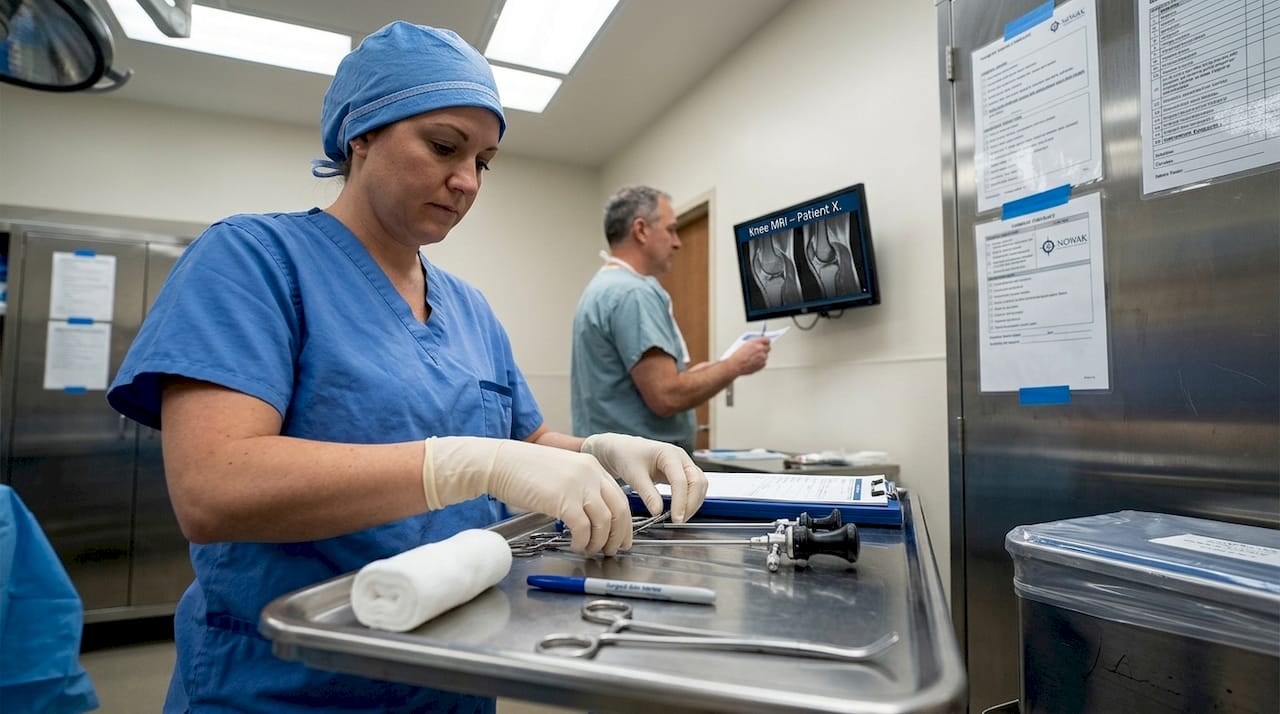
For patients who do need surgery, arthroscopy and minimally invasive surgery offer smaller incisions, less tissue disruption, and faster recovery compared to traditional open procedures.
Cutting-edge tools: Innovations and modern strategies
Orthopedic surgery has advanced significantly in recent years. The tools available today allow surgeons to plan more precisely, operate with greater accuracy, and reduce recovery time for patients.
Arthroscopy remains one of the most important advances. It allows surgeons to visualize and treat joint problems through tiny incisions using a small camera. You can compare how this applies to different joints by reviewing shoulder vs. knee arthroscopy procedures, or learn how elbow arthroscopy addresses complex elbow conditions.
Beyond arthroscopy, finite element modeling (FEM) is changing surgical planning. FEM planning improves fixation strength dramatically, with load-to-failure results of 1,050N compared to 442N using conventional methods, while also reducing the cognitive demand placed on surgeons during complex cases.
Artificial intelligence and augmented reality are also entering orthopedic practice. AI automates imaging analysis and augmented reality supports real-time surgical navigation, though researchers note that training data bias and validation gaps still need to be addressed before these tools are fully standardized.
| Technology | Primary benefit | Current limitation |
|---|---|---|
| Arthroscopy | Minimally invasive visualization | Requires specialized training |
| FEM surgical planning | Higher fixation strength and precision | Not yet universally adopted |
| AI imaging analysis | Faster, automated diagnosis support | Potential training data bias |
| Augmented reality navigation | Real-time intraoperative guidance | Validation still in progress |
Pro Tip: Ask your surgeon which planning or navigation tools they use and why. A confident, experienced surgeon will explain their approach clearly and help you understand how it benefits your specific case.
What impacts results? Risks, expectations, and your role
Surgical skill and advanced technology matter, but they are not the only factors that determine how well you recover. Patient-specific variables play a powerful role in outcomes, and many of them are within your control.
Research shows that higher BMI, smoking, and older age predict worse outcomes after orthopedic procedures. Obesity triples the risk of requiring revision surgery, and lateral or root meniscal tears are associated with lower success rates regardless of technique. Not every patient is a good candidate for minimally invasive surgery, and an honest surgeon will tell you that directly.
Here is what you can actively do to improve your results:
- Optimize your weight before elective procedures to reduce stress on joints and lower complication risk
- Stop smoking at least six weeks before surgery to support tissue healing and reduce infection risk
- Complete your prehab by following a rehabilitation-first approach before surgery when recommended
- Follow your rehab plan after surgery without skipping sessions or rushing return to activity
- Communicate openly with your care team about pain levels, progress, and any setbacks
For athletes, the stakes are especially clear. Reviewing the athlete care workflow shows how structured return-to-play protocols protect against reinjury and support long-term performance.
| Patient factor | Impact on outcome |
|---|---|
| BMI over 30 | Triples revision surgery risk |
| Active smoking | Slows healing, increases infection risk |
| Completing prehab | Improves post-surgical function |
| Rehab adherence | Strongly linked to return-to-activity success |
A fresh look at what truly makes orthopedic care effective
We see a pattern in patients who do exceptionally well after orthopedic care, and it rarely comes down to which specific procedure they had. The patients who recover fastest and most completely are the ones who treat their care as a partnership, not a passive experience.
High-tech tools and surgical expertise matter. But pre-surgical rehab, lifestyle preparation, and consistent follow-through after treatment often separate good outcomes from great ones. The newest procedure is not automatically the right one for you. What matters is a plan built around your specific anatomy, goals, and risk profile. We believe that honest, individualized guidance is the most powerful tool in orthopedic care.
Connect with advanced orthopedic care in New Hampshire
If joint pain, a sports injury, or a degenerative condition is limiting your daily life, you do not have to navigate it alone. At Nowak Orthopedic Associates, we offer a full range of services and treatments designed to match your needs, from regenerative medicine to minimally invasive surgery. Explore joint procedure options to understand what may apply to your condition, or learn how our sports medicine program supports athletes at every level. Contact us to schedule a consultation and take the first step toward lasting relief.
Frequently asked questions
What conditions do orthopedic surgeons treat in New Hampshire?
Orthopedic surgeons treat a wide range of conditions including joint pain, sports injuries, degenerative diseases like osteoarthritis, and trauma-related musculoskeletal injuries affecting the shoulder, knee, elbow, and hand.
Is surgery always required when seeing an orthopedic surgeon?
No. Most orthopedic conditions are first managed with non-operative rehabilitation, including physical therapy, medications, and injections, with surgery considered only when conservative care has not provided adequate relief.
How do advanced techniques like arthroscopy benefit recovery?
Arthroscopy and other minimally invasive techniques use small incisions to reduce tissue disruption, which typically results in less post-operative pain and a faster return to normal activities.
What can patients do to improve their surgery outcomes?
Optimizing body weight, quitting smoking before surgery, completing a prehab program, and following your post-surgical rehab plan consistently are among the most effective ways to improve recovery and reduce complication risk.