

TL;DR:
- Treatment decisions depend on thorough diagnosis, patient goals, and injury severity.
- Arthroscopic surgeries offer minimally invasive options with quicker recoveries for certain joint injuries.
- Joint replacement is recommended when conservative treatments fail and joint damage is severe.
Choosing the right orthopedic treatment when you’re dealing with joint pain or a sports injury can feel overwhelming. Should you try physical therapy first? Is surgery necessary? Which procedure fits your specific situation? These are questions we hear constantly at Nowak Orthopedic Associates, and the answers depend on far more than just your diagnosis. This article walks you through how procedure decisions are made, what your most common options look like, and what recovery actually involves so you can move forward with confidence.
Table of Contents
- Criteria for choosing an orthopedic procedure
- Arthroscopic surgeries: Minimally invasive for quicker recovery
- Joint replacement: When and why it’s considered
- Specialized procedures: Advanced repair and reconstruction
- Recovery strategies: Maximizing outcomes after orthopedic surgery
- A new era in orthopedic decision-making: Personalization over protocol
- Explore your orthopedic options with expert support
- Frequently asked questions
Key Takeaways
| Point | Details |
|---|---|
| Procedure choice matters | The best orthopedic procedure depends on your specific injury, lifestyle, and recovery goals. |
| Arthroscopy speeds healing | Minimally invasive arthroscopic surgeries often mean smaller scars and faster return to activity. |
| Personalized approaches work best | Individualized alignment and recovery plans now outperform one-size-fits-all protocols. |
| Recovery is crucial | Physical therapy, pain management, and following ERAS protocols maximize long-term outcomes. |
| Advanced procedures offer solutions | For complex injuries, advanced reconstruction or specialized repairs lead to strong results. |
Criteria for choosing an orthopedic procedure
Every treatment decision starts with a thorough diagnosis. That means a physical exam, a detailed conversation about your symptoms, and imaging such as X-rays or MRI to confirm what’s happening inside the joint. Without that foundation, even the best procedure won’t deliver the results you need.
Several factors shape which path makes sense for you:
- Age and activity level: A 28-year-old competitive runner has different needs than a 65-year-old who wants to walk comfortably.
- Type and severity of injury: A partial tear responds differently than a complete rupture.
- Previous treatments: If you’ve already tried injections or physical therapy without lasting relief, that changes the conversation.
- Personal goals: Returning to competitive sports requires a different standard of repair than returning to daily activities.
Conservative care, meaning non-surgical options like therapy, bracing, or injections, is almost always explored first unless the damage is severe. Recovery strategies emphasize multimodal analgesia, physical therapy, and surgery for severe cases after conservative failure. Knowing this upfront helps set realistic expectations about your timeline and what each stage of care will involve.
Pro Tip: Before your consultation, write down your pain triggers, what makes it better, and what activities you want to return to. This gives your surgeon the clearest possible picture of your goals.
Arthroscopic surgeries: Minimally invasive for quicker recovery
Arthroscopy is a surgical technique that uses a small camera and tiny instruments inserted through very small incisions. Instead of opening the joint completely, the surgeon works through these small portals, which means less tissue disruption and a faster return to normal life.
Common arthroscopic procedure examples include:
- Meniscus repair or resection: Addresses tears in the knee’s cartilage cushions
- ACL reconstruction: Rebuilds the anterior cruciate ligament using a graft
- Rotator cuff repair: Reattaches torn shoulder tendons
- Labral repair: Fixes the cartilage ring stabilizing the shoulder or hip
- SLAP repair: Targets the top portion of the shoulder labrum
In New Hampshire, minimally invasive procedures for knee, shoulder, and hip sports injuries are among the most frequently performed, with many patients returning to work within one to two weeks depending on their job demands. The benefits are real: smaller scars, less post-operative pain, and shorter hospital stays.
That said, arthroscopy isn’t the right fit for every injury. Severe bone loss, complex fractures, or advanced joint degeneration may require a more involved approach. An arthroscopy comparison of shoulder versus knee procedures can help you understand what to expect for each joint.
Pro Tip: Early controlled movement after arthroscopic surgery, guided by a physical therapist, consistently leads to better outcomes than prolonged rest.
Joint replacement: When and why it’s considered
When minimally invasive options aren’t enough, joint replacement, also called arthroplasty, becomes the most reliable path to lasting relief. This procedure removes damaged joint surfaces and replaces them with implants designed to restore smooth, pain-free movement.
Joint replacement is typically recommended when:
- Arthritis pain severely limits daily function
- Conservative treatments have failed over time
- Imaging confirms significant joint space loss
- Quality of life is meaningfully reduced
One of the most important advances in modern joint replacement is alignment technique. Only about 15% of people have a naturally neutral hip-knee-ankle axis, yet traditional mechanical alignment targets that neutral position for everyone. Personalized approaches, including kinematic and functional alignment, match the implant to the patient’s natural anatomy, leading to better joint balance and fewer surgical releases during the procedure.
| Alignment approach | Goal | Best suited for |
|---|---|---|
| Mechanical alignment | Neutral HKA axis | Standard anatomy |
| Kinematic alignment | Restore native joint line | Varied anatomy |
| Functional alignment | Balance soft tissue tension | Complex deformity |
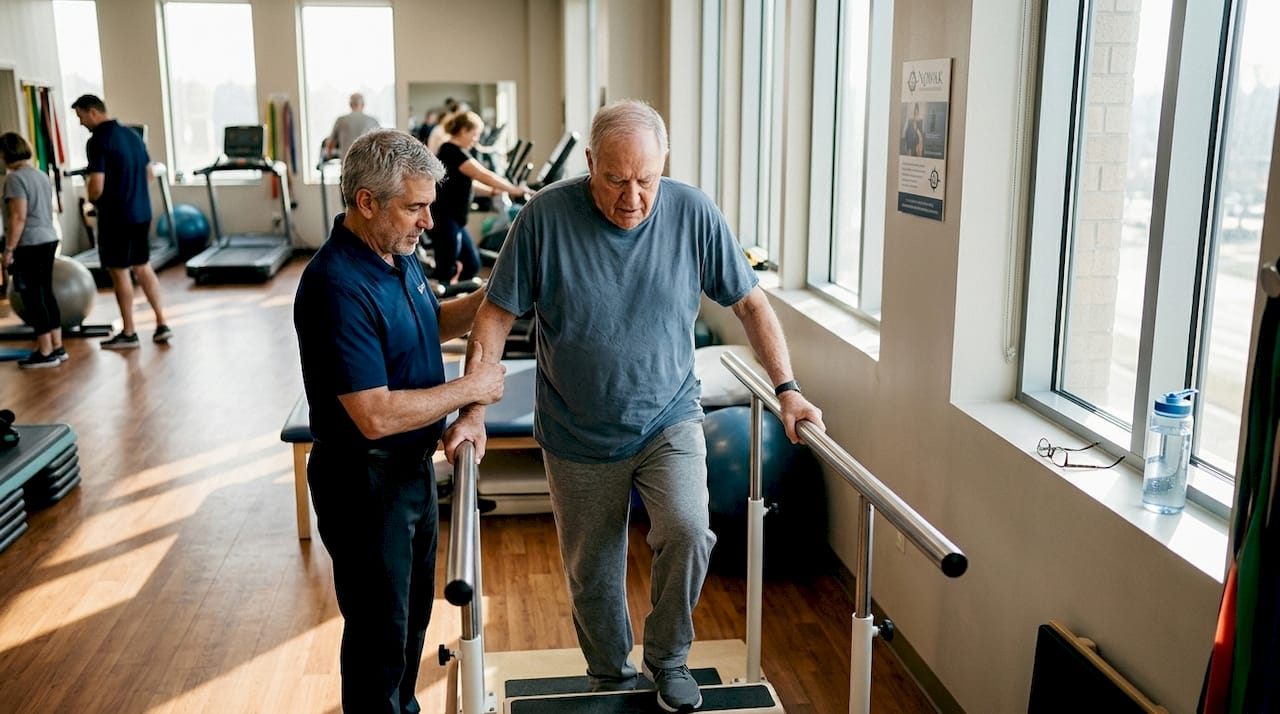
Recovery from joint replacement involves structured physical therapy, gradual activity progression, and close follow-up. Most patients see meaningful improvement in joint procedure outcomes within the first few months.
Specialized procedures: Advanced repair and reconstruction
Some injuries or chronic conditions go beyond what standard arthroscopy or replacement can address. That’s when more specialized techniques come into play.
For the shoulder, the Latarjet procedure transfers a small piece of bone called the coracoid to the front of the shoulder socket (glenoid) to restore stability when significant bone loss is present. Research on 2,258 patients showed a complication rate under 2% in the short term and a revision rate of just 3.6% at two years, making it a reliable option for recurrent instability.
For rotator cuff repairs, surgeons choose between single-row and double-row fixation techniques. Double-row repair recreates a larger contact area between tendon and bone, which can improve healing in larger tears.
For cartilage damage, two common options are:
- Debridement: Removes loose or damaged cartilage tissue to reduce pain and catching sensations
- Microfracture: Drills small holes in the bone beneath the cartilage to stimulate the body’s own repair response
For ligament injuries, reconstruction is often preferred over simple repair in complex cases. Reconstruction replaces the damaged ligament with a graft, which provides more durable stability, especially in multiligament injuries.
The right advanced procedure depends entirely on the patient’s anatomy, injury pattern, and activity goals. There is no universal answer, only the best answer for that individual.
Exploring shoulder and knee repair options in detail can help you ask better questions at your consultation.
Recovery strategies: Maximizing outcomes after orthopedic surgery
Completing a successful procedure is only half the journey. Focused recovery makes all the difference in how well and how quickly you regain function.
The current standard is the Enhanced Recovery After Surgery (ERAS) protocol, a structured approach that begins before your procedure and continues well into your rehabilitation. ERAS-based recovery strategies emphasize multimodal pain management, meaning using several targeted methods together rather than relying solely on opioids, combined with early physical therapy and gradual activity increases.
Here are the key steps in a successful orthopedic recovery:
- Prehab: Physical therapy before surgery strengthens the surrounding muscles and improves post-op outcomes
- Early mobility: Gentle movement within the first 24 to 48 hours reduces stiffness and clot risk
- Multimodal pain control: Combining anti-inflammatories, nerve blocks, and ice minimizes discomfort without over-relying on narcotics
- Structured physical therapy: Progressing through range of motion, strengthening, and functional exercises in sequence
- Monitoring red flags: Sudden swelling, fever, or increasing pain after the first few days warrants immediate contact with your care team
For additional support, recovery without surgery remains an option for many patients, and orthobiologics for pain relief can complement recovery at any stage. A detailed knee surgery recovery guide is also available for those facing knee procedures specifically.
Pro Tip: Prehab, physical therapy completed before your surgery, can cut your post-operative recovery time significantly. Ask your surgeon about starting it four to six weeks before your procedure date.
A new era in orthopedic decision-making: Personalization over protocol
For years, orthopedic care followed rigid protocols applied broadly across patient populations. The assumption was that a standard approach would produce standard good results. But the data tells a different story.
Mechanical alignment may not optimize outcomes for every person. Personalized techniques result in better joint balance and greater patient satisfaction. This isn’t just true for alignment in knee replacement. It applies to every layer of care, from which procedure you choose to how your rehabilitation is structured.
At Nowak Orthopedic Associates, we believe that advanced joint care expertise means asking what is right for this patient, not what works for most patients. You should feel empowered to ask your surgeon about individualized surgical and recovery options at every step.
Explore your orthopedic options with expert support
If you’re living with joint pain or recovering from a sports injury in New Hampshire, Nowak Orthopedic Associates is here to help you find the right path forward. Dr. Roger B. Nowak and our team offer thorough evaluations, advanced surgical techniques, and regenerative treatments tailored to your goals. Browse our full services and treatments, learn how to find an orthopedic surgeon who fits your needs, or discover procedure options matched to your specific condition. We’re ready when you are.
Frequently asked questions
What is the difference between arthroscopic and open orthopedic surgery?
Arthroscopic surgery uses small incisions and a camera, resulting in less post-operative pain and a faster return to activity, often within one to two weeks. Open surgery involves larger incisions and is reserved for more complex repairs that cannot be addressed through small portals.
How long does it take to recover from a joint replacement?
Full recovery typically takes several months, though many patients return to light daily activities within four to eight weeks when following structured ERAS recovery protocols that include physical therapy and multimodal pain management.
When is a joint replacement necessary?
Joint replacement is considered when pain and loss of function persist despite conservative treatments like therapy, injections, and medication. Imaging confirming significant joint space loss is typically part of the decision.
Are advanced ligament or tendon procedures common?
Advanced repair and reconstruction procedures are performed regularly for severe or complex injuries, and they deliver strong outcomes when matched carefully to the right patient and injury pattern.