

TL;DR:
- Knee replacements mainly result from the gradual cartilage wear caused by osteoarthritis.
- Non-surgical treatments like therapy, weight management, and injections can delay or avoid surgery.
- Outcomes are generally positive, with high satisfaction and implant longevity, but timing affects success.
Most people assume knee replacement is something that happens to professional athletes or people who’ve had a serious accident. The reality is quite different. The number one reason adults end up needing a knee replacement is simply the slow, steady breakdown of cartilage over decades of daily movement. That process, known as osteoarthritis, affects millions of Americans over 50. Understanding why knee replacements become necessary, what your options are before surgery, and what recovery actually looks like can help you make confident, informed decisions about your joint health.
Table of Contents
- What causes chronic knee pain and the need for replacement?
- Alternatives to knee replacement: When is surgery recommended?
- Types of knee replacement: Total vs. partial procedures
- Outcomes, risks, and what to expect after knee replacement
- A fresh look: What most people get wrong about knee replacements
- Explore your knee health options with expert orthopedic care
- Frequently asked questions
Key Takeaways
| Point | Details |
|---|---|
| Osteoarthritis is the main cause | Most knee replacements are needed due to cartilage loss and pain from osteoarthritis. |
| Try non-surgical steps first | Physical therapy, weight loss, and injections can delay surgery and improve knee function. |
| Both total and partial options | Your doctor may recommend total or partial replacement based on the pattern and extent of joint damage. |
| Strong long-term results | Modern knee replacements show high satisfaction and durability for most people. |
What causes chronic knee pain and the need for replacement?
Your knee cartilage acts as a shock absorber between the bones of your joint. When that cartilage wears down, bones begin rubbing directly against each other, causing pain, swelling, and stiffness. As noted in a total knee replacement overview, osteoarthritis leads to cartilage breakdown, creating bone-on-bone contact that drives most knee replacement decisions. Rheumatoid arthritis, fractures, and serious ligament injuries can also damage the joint enough to require replacement.
Several risk factors accelerate cartilage loss:
- Age: Cartilage naturally thins after 50.
- Body weight: Every extra pound adds roughly four pounds of pressure on the knee.
- Genetics: A family history of osteoarthritis of the knee raises your risk significantly.
- Previous injury: Old ACL tears or meniscus damage speed up degeneration.
- Repetitive stress: Jobs or activities involving prolonged kneeling or squatting wear cartilage faster.
Not all knee pain means you need a replacement. Many patients manage well for years with the right treatment plan before surgery ever becomes necessary.
Pro Tip: Keeping a simple pain journal, noting when pain spikes and what activities trigger it, gives your orthopedic doctor far more useful information than a single office visit can capture. Reviewing your full knee conditions overview with a specialist helps clarify exactly which part of the joint is affected and why.
Alternatives to knee replacement: When is surgery recommended?
Surgery is rarely the first recommendation. Most orthopedic providers follow a stepwise approach, starting with the least invasive options and moving toward surgery only when those options stop working or when structural damage is severe enough that waiting would cause more harm.
Here is the typical progression of non-surgical orthopedic treatments before surgery is considered:
- Physical therapy and targeted exercise: Strong evidence supports PT for reducing knee pain and improving function. Strengthening the muscles around the knee reduces stress on the joint itself.
- Weight management: Losing even 10 pounds can meaningfully reduce knee load and slow cartilage breakdown.
- Bracing: Unloader braces shift weight away from the most damaged compartment, providing real relief for many patients.
- Corticosteroid injections: These reduce inflammation quickly and can provide relief for weeks to months.
- Hyaluronic acid injections (viscosupplementation): These lubricate the joint and may delay surgery by one to three years in appropriate patients.
As outlined in research on PT for knee arthritis, alternatives including PT, weight loss, and injections are used first to delay or avoid surgery entirely. Surgery is typically considered after three to six months of failed conservative care, or when imaging shows structural damage that won’t respond to non-surgical methods.
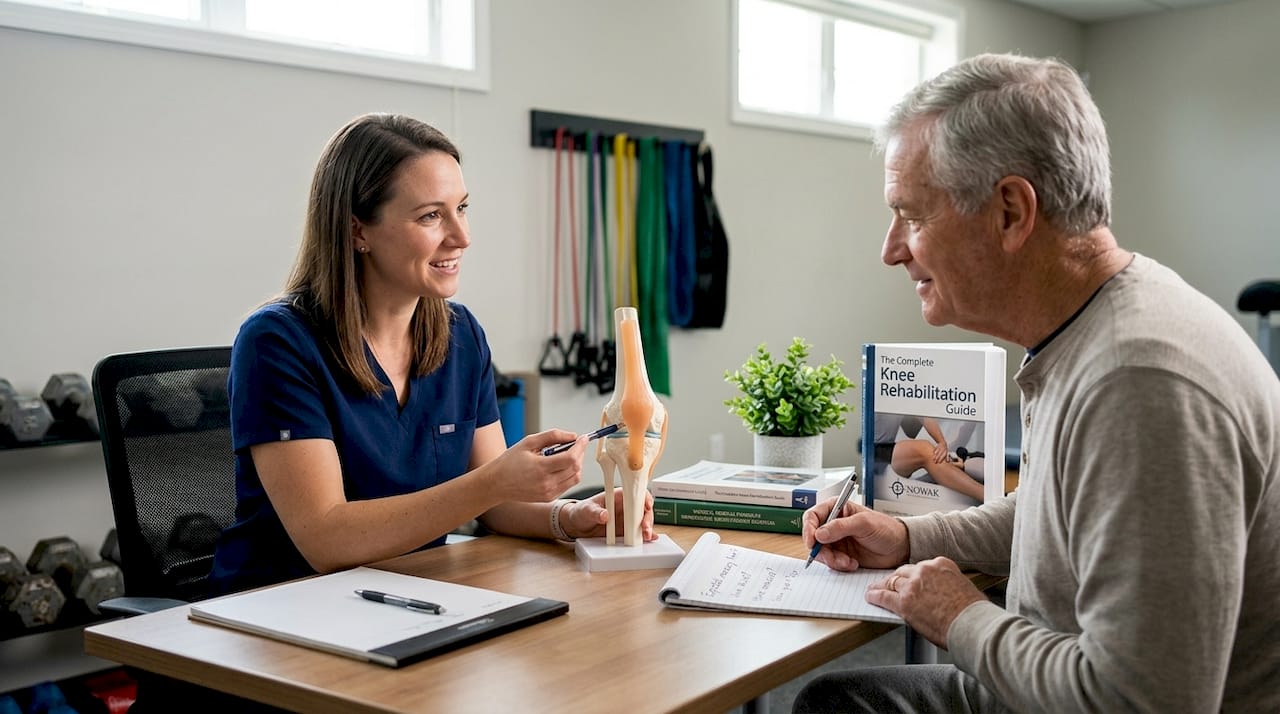
Pro Tip: Ask your doctor specifically about knee joint preservation options before agreeing to any surgical plan. Preservation procedures can sometimes address damage without a full replacement.
Types of knee replacement: Total vs. partial procedures
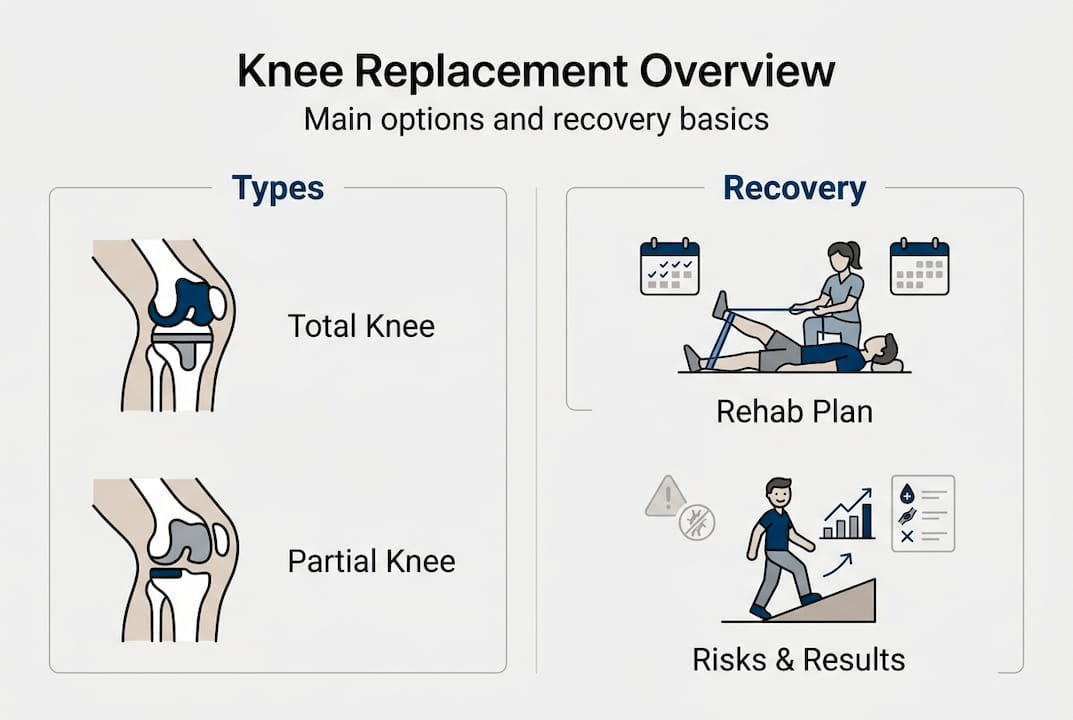
When surgery becomes the right choice, the next question is which type of replacement fits your situation. The two main options are total knee replacement (TKR) and partial knee replacement, also called unicompartmental knee arthroplasty (UKA).
According to knee replacement surgery explained, TKR replaces all three compartments of the knee with metal and plastic implants, while partial replacement targets only the one damaged compartment, preserving healthy bone and ligaments for more natural mechanics and faster recovery.
| Feature | Total knee replacement | Partial knee replacement |
|---|---|---|
| Compartments replaced | All three | One only |
| Recovery time | Longer | Generally faster |
| Bone/ligament preservation | Less | More |
| Best for | Advanced or multi-compartment damage | Isolated osteoarthritis |
| Natural feel | Moderate | Often more natural |
Key considerations when choosing between the two:
- Extent of damage: Multi-compartment or severe disease almost always requires TKR.
- Ligament health: Partial replacement requires an intact ACL for proper joint mechanics, as noted in TKR and UKA biomechanics research.
- Patient age and activity level: Younger, more active patients may benefit from the preserved tissue of a partial replacement.
- Surgeon experience: Partial replacements are technically demanding; outcomes depend heavily on proper patient selection.
Reviewing joint procedure examples and understanding the knee arthroscopy guide can help you ask better questions at your consultation. Research also confirms that partial replacement is as effective as total for carefully selected patients.
Outcomes, risks, and what to expect after knee replacement
Setting realistic expectations before surgery makes recovery far less stressful. The good news is that knee replacement has one of the highest satisfaction rates of any elective orthopedic procedure.
| Outcome measure | Total knee replacement | Partial knee replacement |
|---|---|---|
| Patient satisfaction | 80 to 90% | Comparable for isolated OA |
| 10-year implant survival | 92 to 95% | 91 to 95% |
| 20-year implant survival | ~89% | Data still emerging |
According to research on mid and long-term outcomes, TKR delivers 80 to 90% satisfaction rates and 92 to 95% ten-year implant survival, with partial UKA showing similar results for isolated compartment damage. Patients with rheumatoid arthritis face higher complication rates and require closer monitoring.
Key risks to discuss with your surgeon include:
- Infection at the surgical site
- Blood clots (deep vein thrombosis)
- Implant loosening over time
- Stiffness if rehabilitation is incomplete
Pro Tip: Commit to your physical therapy schedule after surgery. Patients who follow their rehab plan consistently tend to regain mobility faster and report higher satisfaction. Learn more about recovering from knee surgery and the full range of joint pain relief procedures available to support your recovery.
A fresh look: What most people get wrong about knee replacements
Many patients wait far too long before having an honest conversation about surgery. There is a widespread belief that knee replacement is strictly a last resort, something you only accept when you absolutely cannot function. We’d push back on that idea.
Timing matters enormously. Waiting until pain is unbearable, muscle strength is severely diminished, and daily life is completely disrupted can actually make recovery harder. The best outcomes often come from patients who choose surgery while they are still reasonably active and healthy enough to rehabilitate well.
X-rays don’t tell the whole story either. Two patients with identical imaging can have vastly different quality of life. One may walk comfortably; the other may be unable to sleep through the night. Reviewing advanced joint care options with an experienced surgeon means weighing your functional goals alongside the clinical picture, not just waiting for an image to look bad enough.
Explore your knee health options with expert orthopedic care
You don’t have to figure this out alone. At Nowak Orthopedic Associates, our expert orthopedic surgeons work with you to build a personalized plan, whether that means starting with regenerative therapies and physical therapy or discussing surgical options when the time is right. Explore our full range of joint pain relief options or browse all orthopedic services to take the next step toward lasting mobility and relief.
Frequently asked questions
What is the most common reason for knee replacement surgery?
Osteoarthritis, which causes cartilage breakdown and progressive joint pain, is the leading reason patients require knee replacement surgery.
How long do knee replacements typically last?
Most implants achieve 92 to 95% survival at ten years and around 89% at twenty years, with satisfaction rates between 80 and 90%.
Can knee replacement be avoided through non-surgical treatments?
Physical therapy, weight loss, bracing, and injections can delay surgery for years in many patients, though severe structural damage may still require surgical intervention.
What are the main risks of knee replacement surgery?
The primary risks include infection, blood clots, and implant loosening over time, with higher complication rates seen in patients who have rheumatoid arthritis compared to those with osteoarthritis.