

TL;DR:
- Effective elbow pain treatment begins with accurate diagnosis of the underlying cause.
- Most cases respond well to conservative, non-surgical therapies like rest, ice, and physical therapy.
- Surgery and regenerative options are reserved for persistent cases after exhausting stepwise treatments.
Elbow pain can stop you cold. Whether you’re struggling to lift a coffee cup, finish a workday at your desk, or get through a round of golf, persistent elbow pain affects far more than just your arm. It disrupts sleep, limits work, and chips away at the activities you enjoy most. The good news is that effective, evidence-based treatment options exist, and most people do not need surgery to find lasting relief. This guide walks you through a clear, stepwise approach to treating elbow pain, from identifying the cause to exploring advanced therapies available right here in New Hampshire.
Table of Contents
- Identifying the cause of your elbow pain
- Starting with conservative treatments: What works best?
- Advanced options: Injections and regenerative therapies
- Surgical and post-traumatic solutions: Last resorts and specialty cases
- A specialist’s take: Why a tailored, stepwise approach works
- Ready to find relief? Connect with New Hampshire’s elbow specialists
- Frequently asked questions
Key Takeaways
| Point | Details |
|---|---|
| Diagnose accurately | Correct diagnosis is essential for effective and individualized elbow pain treatment. |
| Prioritize conservative care | Most elbow pain improves with rest, physical therapy, and activity adjustments. |
| Know advanced options | Injections and regenerative therapies can help if conservative care fails but have different benefits and risks. |
| Surgery is rarely first-line | Surgical options are reserved for persistent or severe cases and should follow a thorough non-surgical trial. |
Identifying the cause of your elbow pain
Before any treatment can work, you need to understand what’s actually causing your pain. Elbow pain is not a single condition. It’s a symptom with many possible sources, and treating the wrong cause wastes time and delays recovery.
Common causes include:
- Tennis elbow (lateral epicondylitis): Pain on the outer side of the elbow, often from repetitive gripping or wrist extension
- Golfer’s elbow (medial epicondylitis): Pain on the inner side, linked to forearm flexor overuse
- Cubital tunnel syndrome: Numbness and tingling from ulnar nerve compression
- Acute trauma: Fractures, dislocations, or ligament tears from falls or direct impact
- Inflammatory conditions: Rheumatoid arthritis or gout affecting the elbow joint
Self-diagnosis is tempting, but it often leads to ineffective treatment. For example, treating golfer’s elbow with exercises designed for tennis elbow can actually worsen symptoms. Understanding elbow tendinopathy basics helps clarify why these distinctions matter clinically.
You should consider seeing a specialist if your pain lasts more than 3 to 6 weeks, follows an injury, or does not improve with basic rest and ice. A formal orthopedic evaluation process typically includes a physical exam, movement assessment, and imaging when needed. This is what makes individualized treatment possible. In fact, conservative treatments succeed for 80 to 90% of elbow pain sufferers when based on an accurate diagnosis.
Reviewing the full range of elbow conditions treated at an orthopedic practice gives you a clearer picture of what a specialist can address.
Pro Tip: Keep a simple pain log for one week. Note when pain spikes (during typing, lifting, throwing, or after sleep) and share it with your provider. This detail accelerates diagnosis significantly.
Starting with conservative treatments: What works best?
Once you know the likely cause of your pain, conservative treatments are usually the best place to start. Most elbow conditions respond well to a structured, non-surgical plan when followed consistently.
Here is a practical step-by-step starting framework:
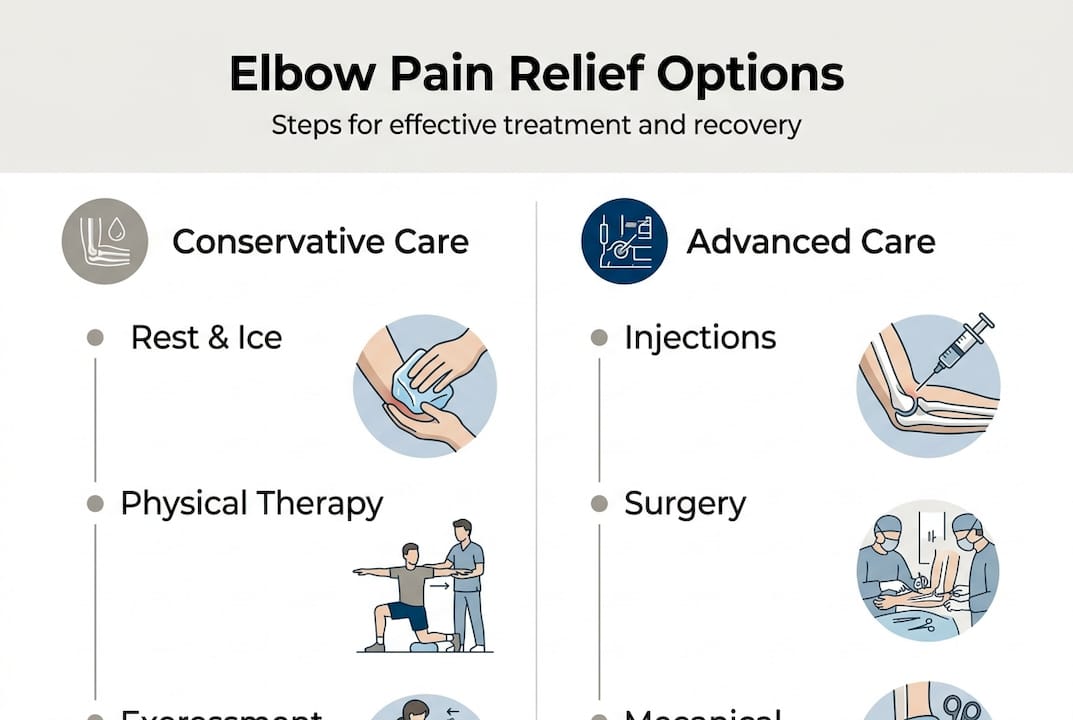
- Rest and activity modification: Reduce or temporarily stop the movements that trigger pain. This is not the same as complete immobilization.
- Ice therapy: Apply ice for 15 to 20 minutes several times daily during the first 48 to 72 hours of a flare-up.
- NSAIDs: Over-the-counter anti-inflammatory medications like ibuprofen can reduce swelling and pain short-term.
- Bracing: A counterforce brace worn just below the elbow reduces tendon stress during activity.
- Physical therapy: Guided eccentric exercises (slow, controlled lengthening of the muscle) are the cornerstone of tendon rehabilitation.
Research confirms that manual therapy and eccentric exercise slightly reduce pain and disability in the short term, particularly for tendinopathy. Understanding what to expect from physical therapy for elbow pain helps you stay committed to the process.
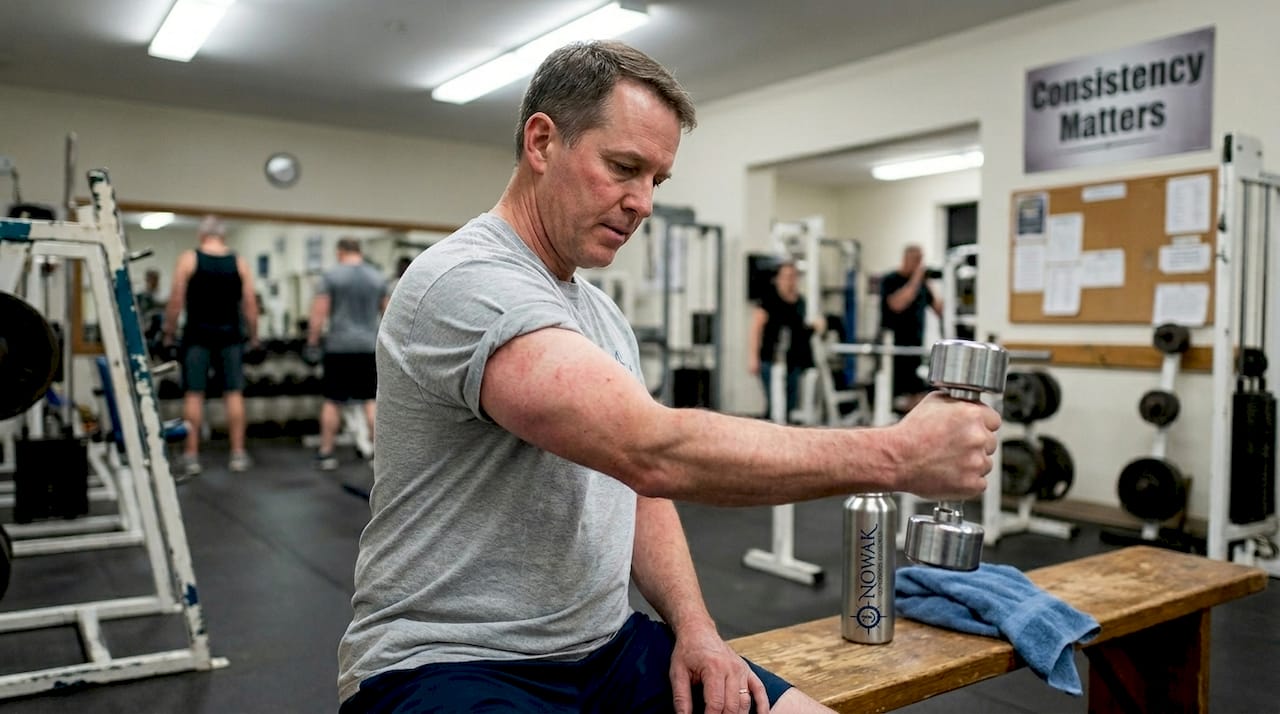
| Treatment | Average recovery time | Primary benefit |
|---|---|---|
| Rest and ice | 1 to 2 weeks | Reduces acute inflammation |
| NSAIDs | 1 to 4 weeks | Pain and swelling control |
| Bracing | 4 to 8 weeks | Reduces tendon load during activity |
| Physical therapy | 6 to 12 weeks | Restores strength and function |
For a broader look at evidence-based treatments, clinical guidelines consistently support this stepwise approach. You can also explore conservative management for elbow pain to understand how orthopedic specialists structure these plans.
Pro Tip: Do not skip the eccentric exercise progressions your therapist assigns, even when they feel uncomfortable. Controlled tendon loading is what drives healing at the tissue level.
Advanced options: Injections and regenerative therapies
If symptoms persist despite home care and physical therapy, advanced treatments may be necessary. Two of the most common second-line options are corticosteroid injections and platelet-rich plasma (PRP) injections.
Corticosteroid injections deliver a powerful anti-inflammatory directly into the affected area. They work quickly and are often covered by insurance. However, repeated injections can weaken tendon tissue over time, and symptom relief may not last beyond a few months.
PRP injections use a concentrated sample of your own blood platelets to stimulate tissue repair. The recovery is slower than with steroids, but PRP injections show better long-term outcomes than corticosteroids for chronic tendinopathy. Learning about new regenerative techniques can help you understand the expanding landscape of options.
At Nowak Orthopedic Associates, PRP injections for elbow pain are offered as part of a broader regenerative medicine approach. Understanding corticosteroid injection risks is equally important before choosing either path.
Before your appointment, consider asking your provider:
- How many injections do you recommend, and how far apart?
- What are the realistic outcomes for my specific diagnosis?
- Is PRP appropriate for my condition and activity level?
- What happens if the injection does not provide relief?
Surgical and post-traumatic solutions: Last resorts and specialty cases
For a small percentage of people, common therapies fail, or injury requires more specialized solutions. Surgery is not a first step. It is a carefully considered option when all else has not worked.
Surgery is reserved for refractory cases after 6 to 12 months of consistent conservative treatment, and early mobilization is strongly preferred after trauma to prevent stiffness and long-term complications. It is also worth noting that surgery shows no clear benefit over non-surgical care in limited randomized controlled trials, which is why it remains a last resort.
Post-traumatic elbow injuries, such as fractures or dislocations, carry unique risks including heterotopic ossification (abnormal bone growth in soft tissue). Reviewing heterotopic ossification precautions helps patients and providers plan carefully after trauma.
Prolonged immobilization after elbow injury significantly increases the risk of permanent joint stiffness. Early, guided movement is not just preferred, it is essential to a full recovery.
Before agreeing to surgery, ask your surgeon these questions:
- Have I truly exhausted all non-surgical options for my diagnosis?
- What specific procedure do you recommend, and why?
- What is the expected recovery timeline and return-to-activity plan?
- What are the risks specific to my age, health, and injury type?
Exploring elbow arthroscopy options and early mobilization strategies can help you have a more informed conversation with your care team.
A specialist’s take: Why a tailored, stepwise approach works
One pattern we see regularly is patients who rush to injections or surgery because they want fast relief. That instinct is understandable. But skipping steps often delays recovery rather than shortening it. Tendons and joints respond to progressive loading and time. When you bypass that process, you can miss the window where conservative care would have resolved the problem entirely.
True orthopedic expertise is not just knowing how to perform a procedure. It is knowing when not to. Most adults with elbow pain find lasting success when they follow a monitored, stepwise plan tailored to their specific diagnosis and lifestyle. At specialist elbow care practices like ours, that individualized matching is the standard, not the exception.
Ready to find relief? Connect with New Hampshire’s elbow specialists
If you’re ready to put this guide into action, local support is available. Nowak Orthopedic Associates in Hampton, NH offers expert evaluation and individualized treatment plans for all stages of elbow pain. From conservative care to advanced regenerative therapies and minimally invasive surgery, our team is equipped to find the right path for you. Explore our advanced joint care guide, learn about elbow arthroscopy solutions, or review all available treatment options for elbow pain. Contact us today to schedule your evaluation.
Frequently asked questions
How long should I try conservative treatment before considering injections or surgery?
Conservative therapy is effective for most patients within 6 to 12 weeks. Only consider advancing to injections or surgery if pain persists beyond that period despite consistent effort.
Are injections or PRP covered by insurance?
Corticosteroid injections are typically covered by insurance, while PRP is often not covered despite growing evidence for its effectiveness. Always verify your specific coverage before scheduling.
What should I avoid during recovery from elbow pain?
Avoid repetitive strain, returning to sports without clearance, and prolonged immobilization. Prolonged immobilization increases the risk of joint stiffness significantly, which can complicate and extend your recovery.
When should I see an orthopedic specialist for elbow pain?
Persistent or traumatic elbow pain requires specialist assessment. Seek care if your pain lasts longer than 3 to 6 weeks, is severe, limits daily function, or follows an acute injury.