

TL;DR:
- Preparing essential supplies and understanding pain management options before surgery facilitate smoother recovery.
- Consistent, multimodal pain control combined with early gentle movement supports optimal healing.
- Active participation and gradual rehabilitation are key to avoiding setbacks and achieving better long-term results.
Recovering from knee surgery is rarely straightforward. Pain, swelling, and limited mobility can make even simple tasks feel overwhelming in the first days and weeks after your procedure. Without a structured plan, recovery can stall or lead to setbacks that extend your time on the sidelines. This guide walks you through the essential steps, from organizing your recovery space to managing pain and rebuilding strength, so you can move forward with confidence and get back to the activities you love.
Table of Contents
- Preparing for recovery: What you need after knee surgery
- Step-by-step pain management strategies
- Safe movement and rehabilitation protocols
- Common mistakes and troubleshooting
- Why most knee surgery aftercare advice misses the mark
- Explore expert orthopedic care for easier recovery
- Frequently asked questions
Key Takeaways
| Point | Details |
|---|---|
| Preparation is crucial | Organizing your post-op environment and supplies in advance aids smoother recovery. |
| Multimodal pain management | Combining methods like NSAIDs, acetaminophen, and nerve blocks reduces pain and opioid reliance. |
| Safe rehabilitation matters | Early movement and structured therapy protocols minimize setbacks and improve knee function. |
| Avoid common mistakes | Monitor symptoms, follow your provider’s instructions, and proactively address complications when they arise. |
| Expert support maximizes outcomes | Consulting with orthopedic specialists gives you access to advanced recovery resources and tailored guidance. |
Preparing for recovery: What you need after knee surgery
A smooth recovery starts before you even leave the hospital. Setting up your home environment and understanding your treatment plan in advance makes a significant difference in how quickly you progress.
Here are the key supplies and tools to have ready:
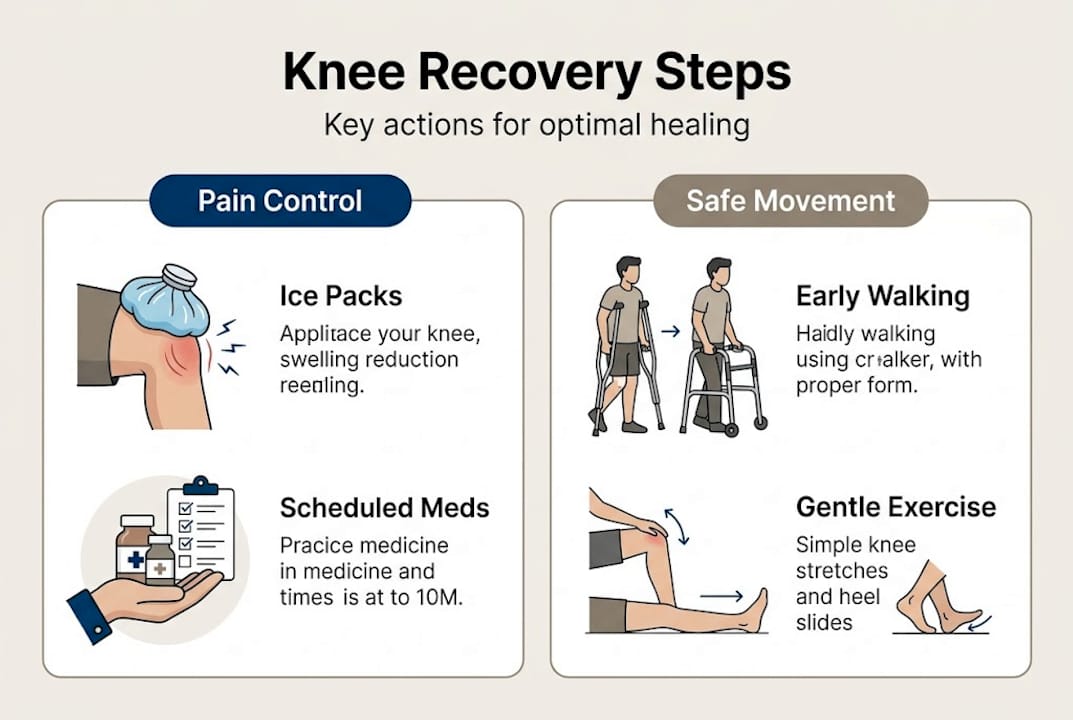
- Cold packs or ice wraps: Reduce swelling and numb localized pain in the first 48 to 72 hours.
- Compression bandages: Help manage swelling and provide light joint support.
- Mobility aids: Crutches or a walker reduce weight on the knee during early recovery.
- Elevated leg support: A wedge pillow or stacked cushions keep your knee above heart level to limit swelling.
- Medications on hand: Your surgeon will likely prescribe NSAIDs (nonsteroidal anti-inflammatory drugs), acetaminophen, and possibly short-term opioids for breakthrough pain.
You will also hear several medical terms during your care. LIA stands for local infiltration analgesia, a technique where pain-relieving medication is injected directly into the knee joint. PCI refers to a peripheral catheter infusion, which delivers continuous pain relief through a small tube. ACB, or adductor canal block, is a nerve block that targets the main sensory nerve of the knee without affecting muscle strength.
Understanding these options helps you have informed conversations with your care team. Pain management uses a multimodal approach, meaning multiple methods are combined to reduce pain more effectively than any single treatment alone. You can explore your knee care services and review a comprehensive recovery guide to plan your full recovery path.
| Approach | Primary benefit | Best use case |
|---|---|---|
| NSAIDs + acetaminophen | Reduces inflammation and baseline pain | All post-op patients |
| LIA or PCI | Continuous localized relief | First 1 to 3 days post-op |
| ACB nerve block | Targeted pain control, preserves strength | Patients needing mobility early |
| Opioids | Breakthrough severe pain | Short-term, when other methods fall short |
Pro Tip: Pack a small bag or bin with all your recovery supplies before surgery day. Minimizing trips around the house in the first 48 hours protects your incision and conserves energy for healing.
Step-by-step pain management strategies
With your recovery essentials ready, the next critical focus is controlling pain using proven strategies. Effective pain control is not just about comfort. It directly supports your ability to move, sleep, and participate in physical therapy.
Follow these steps in sequence:
- Apply ice and elevate immediately after returning home. Use cold packs for 15 to 20 minutes every two to three hours during the first two days.
- Take scheduled medications as prescribed, not just when pain spikes. Staying ahead of pain is more effective than chasing it.
- Use nerve blocks if recommended. Your surgeon may have already placed an ACB before surgery. If so, expect reduced pain for the first 12 to 24 hours.
- Begin gentle movement as soon as your care team approves, typically within 24 hours. Early movement reduces stiffness and supports circulation.
- Reassess and adjust with your doctor if pain is not controlled after 48 hours. Do not wait and hope it improves on its own.
Research shows that ACB patients experience lowest VAS scores and minimal opioid use compared to other nerve block approaches. VAS, or visual analog scale, is the 0 to 10 pain rating scale your care team uses to track your progress. You can learn more about joint pain relief procedures and orthopedic pain relief injections to understand all your options.
Pro Tip: Keep a simple pain log on your phone or a notepad. Record your score before and after medications. This data helps your doctor fine-tune your plan faster.
Safe movement and rehabilitation protocols
With pain managed, you can begin safe movement and structured rehab for the best recovery results. Early mobility is one of the most important factors in avoiding complications like blood clots and joint stiffness.
Here is what a typical progression looks like:
- Day 1 to 3: Ankle pumps, gentle quad sets (tightening the thigh muscle without bending the knee), and short supervised walks with a mobility aid.
- Week 1 to 2: Seated knee bends, straight leg raises, and gradual weight-bearing as tolerated.
- Week 3 and beyond: Strengthening exercises, balance training, and gait retraining with your physical therapist.
Research confirms that continuous LIA or PCI delivers lowest pain scores during post-op days 1 through 3, which directly supports your ability to begin movement sooner. Review rehabilitation protocols and joint procedure outcomes to set realistic expectations for your timeline.
Important: Progress in rehabilitation should always be gradual. Pushing too hard too soon increases the risk of re-injury or prolonged inflammation. If you notice new swelling, warmth, or drainage at the incision site, contact your surgeon immediately.
Also watch for signs of infection: fever above 101°F, increasing redness, or unusual discharge. These require prompt medical attention, not a wait-and-see approach.
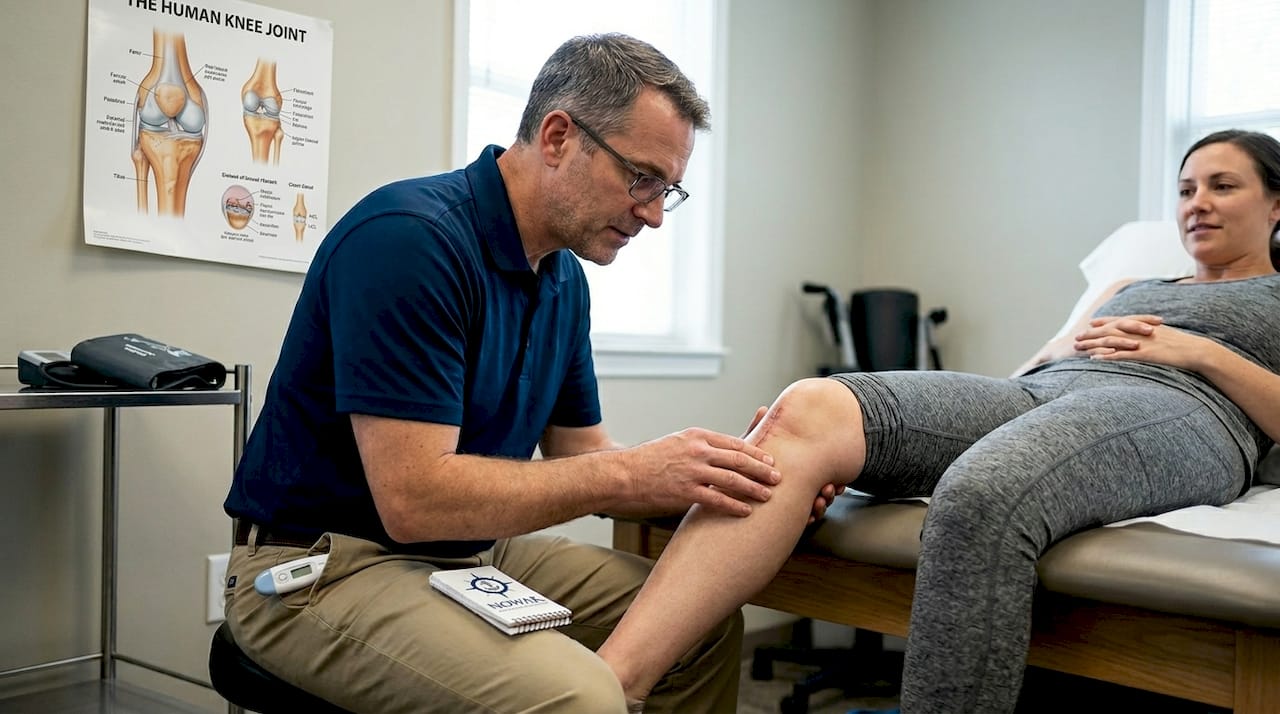
Pro Tip: Communicate every new symptom to your physical therapist, even if it seems minor. Small changes in pain patterns often signal something your care team needs to address early.
Common mistakes and troubleshooting
Even with the best protocols, setbacks happen. Knowing the most common errors helps you avoid them and respond quickly when something goes wrong.
The most frequent mistakes patients make include:
- Skipping scheduled medications because pain feels manageable. Gaps in coverage allow inflammation to build, making pain harder to control later.
- Ignoring early warning signs like increased swelling or warmth, assuming they will resolve on their own.
- Overexerting during therapy by pushing through sharp pain rather than the expected mild discomfort of rehabilitation.
- Stopping physical therapy too soon once pain decreases, before full strength and range of motion are restored.
If you hit a plateau in mobility, talk to your therapist about adjusting the exercise intensity or technique. If swelling spikes unexpectedly, return to icing and elevation and notify your surgeon.
Warning: Relying primarily on opioids for pain control increases the risk of dependence, constipation, and slowed recovery. Multimodal analgesia reduces side effects compared to opioid-only approaches and should be your first line of defense.
For long-term joint health, explore knee joint preservation strategies and review the arthroscopy recovery guide for procedure-specific insights.
Why most knee surgery aftercare advice misses the mark
Most standard recovery advice focuses on what to do, but rarely explains why some patients recover faster than others. The honest answer is patient engagement. Passive recovery, waiting for pain to pass, relying on opioids, and skipping therapy sessions, consistently produces slower results.
Modern evidence is clear: multimodal non-opioid analgesia produces better outcomes than older opioid-first approaches. But the technique alone is not enough. Patients who track their symptoms, ask questions, and actively participate in their rehab consistently outperform those who follow instructions passively.
We encourage you to treat your recovery like a process you manage, not something that just happens to you. Review knee replacement recovery explained to understand what drives the best long-term results.
Explore expert orthopedic care for easier recovery
If you want more support and advanced resources for your knee recovery, professional help is available. At Nowak Orthopedic Associates, we offer advanced orthopedic joint care tailored to your specific procedure and goals. Our team provides individualized rehabilitation guidance, targeted injections, and stretch therapy services to support tissue healing and restore mobility. Whether you need post-op pain management or structured rehab support, our sports medicine expertise ensures you receive care designed to get you moving again safely and confidently.
Frequently asked questions
What is the best pain management approach after knee surgery?
A multimodal approach combining continuous LIA or ACB with scheduled NSAIDs and acetaminophen minimizes pain scores and reduces opioid consumption compared to single-method treatments.
When should I start physical therapy after knee surgery?
Physical therapy should begin as soon as your surgeon advises, typically within the first few days post-op. Early movement protocols improve circulation, reduce stiffness, and support faster functional recovery.
How can I reduce my reliance on opioids after surgery?
Using NSAIDs, acetaminophen, and nerve blocks together as a multimodal pain strategy significantly reduces both opioid consumption and associated side effects like nausea and constipation.
What warning signs should I watch for during knee recovery?
Contact your surgeon immediately if you notice severe or worsening pain, fever, increasing redness, or unusual discharge from the incision. These may indicate infection or other complications requiring prompt evaluation.