

TL;DR:
- The best elbow surgery depends on individual injury, activity level, and recovery goals.
- UCL repair offers faster recovery for acute injuries, while reconstruction suits chronic tears.
- Total elbow arthroplasty is mainly for severe arthritis or complex fractures in older patients.
Choosing the right elbow surgery is harder than most people expect. You may be dealing with a sports injury, a fracture, or years of chronic pain, and each of those situations calls for a different procedure with a different recovery path. The good news is that elbow surgery has advanced significantly, and there are now well-studied options for nearly every type of injury. This guide breaks down the most common elbow surgeries, explains who each one is for, and gives you a clear picture of what recovery actually looks like.
Table of Contents
- Key criteria for choosing elbow surgery
- Ulnar collateral ligament reconstruction and repair (Tommy John)
- Total elbow arthroplasty (replacement)
- Surgical treatment for tennis elbow (lateral epicondylitis)
- Open reduction and internal fixation (ORIF) for fractures
- A fresh take: Matching surgery to lifestyle and recovery goals
- Connect with expert orthopedic care in Hampton, NH
- Frequently asked questions
Key Takeaways
| Point | Details |
|---|---|
| Personalized surgery selection | Choosing the right elbow surgery depends on your age, activity, and injury specifics. |
| High success for athletes | Tommy John procedures have return-to-sport rates above 90% with proper rehab. |
| Arthroplasty risks | Elbow replacements have strict lifting limits and higher complication rates. |
| Fast relief for tennis elbow | Minimally invasive options can offer quicker pain relief for persistent cases. |
| Fracture surgery advances | Latest ORIF techniques use arch plating and encourage early motion for better outcomes. |
Key criteria for choosing elbow surgery
Not every elbow problem requires surgery. Most surgeons will first explore physical therapy, bracing, injections, or other conservative approaches. When those options stop working, or when the injury is too severe to respond to them, surgery becomes the next step.
Several factors shape which procedure makes the most sense for you:
- Age and activity level: A 25-year-old pitcher has different needs than a 65-year-old with arthritis.
- Injury type: Athletic overuse injuries, acute trauma, and chronic degeneration each point toward different procedures.
- Severity and location: Where the damage is and how extensive it is will determine whether a minor repair or a major reconstruction is needed.
- Prior treatment history: Surgery is recommended after failed conservative treatment, especially for athletes with tailored rehab needs.
- Personal goals: Whether you want to return to competitive sport, regain daily function, or simply reduce pain will influence the surgical plan.
One common misconception is that all elbow surgeries have similar recovery timelines and outcomes. They do not. Recovery can range from six weeks to eighteen months depending on the procedure and your individual healing response.
A clear conversation with your surgeon about your goals and lifestyle is just as important as any imaging or test result. Be honest about what you want to get back to doing.
Pro Tip: Before your surgical consultation, write down your top three functional goals, whether that is throwing a ball, lifting at work, or sleeping without pain. Sharing these helps your surgeon recommend the most appropriate procedure.
If you are still exploring non-surgical paths, reviewing elbow pain relief options may help you understand where conservative care ends and surgical care begins.
Ulnar collateral ligament reconstruction and repair (Tommy John)
With criteria in mind, let’s examine one of the most common surgeries for athletes: UCL procedures. The ulnar collateral ligament (UCL) runs along the inside of the elbow and is critical for throwing athletes. When it tears or becomes chronically stretched, pitching or overhead activity becomes painful or impossible.
There are two main approaches:
- UCL repair: Best for acute avulsion injuries where the ligament pulls away from the bone. Recovery is faster, typically around six months before return to sport.
- UCL reconstruction (Tommy John surgery): Used for chronic or mid-substance tears. A tendon graft replaces the damaged ligament, and recovery averages twelve to eighteen months.
- Internal brace augmentation: A newer technique sometimes added to repair to improve stability and shorten rehab time.
| Outcome metric | UCL repair | UCL reconstruction |
|---|---|---|
| Return to sport rate | 88-91% | 88-91% |
| Avg. return timeline | ~6 months | 12-18 months |
| Reoperation rate | ~3% | ~5% |
| Best candidate | Acute avulsion | Chronic/mid-substance tear |
Pro Tip: If you are a throwing athlete diagnosed with a UCL tear, ask your surgeon specifically whether repair with internal brace augmentation is an option. For the right injury pattern, it can cut your time away from sport nearly in half.
Post-surgical sports injury rehab is critical for both procedures. Skipping or rushing physical therapy is the most common reason athletes fall short of full return to sport.
Total elbow arthroplasty (replacement)
Next, consider what happens when arthritis or severe injury requires a full elbow replacement. Total elbow arthroplasty (TEA) replaces the damaged joint surfaces with metal and plastic components, similar to knee or hip replacement.
This procedure is typically recommended for:
- Advanced rheumatoid or osteoarthritis that no longer responds to injections or medication
- Unreconstructable distal humerus fractures, particularly in older, lower-demand patients
- Post-traumatic arthritis following prior injuries or failed surgeries
There are three main implant categories:
| Implant type | Description | Best for |
|---|---|---|
| Linked (constrained) | Hinge connects both components | Ligament deficiency, complex cases |
| Unlinked (unconstrained) | Components not directly joined | Intact soft tissue, lower demand |
| Convertible | Can switch between linked/unlinked | Uncertain intraoperative findings |
Survival rate is 79% at eleven years, with function scores (MEPS) ranging from 80 to 94 and complication rates between 11 and 38%.
After total elbow replacement, patients are advised against repetitive lifting of more than two pounds for life. This is a permanent lifestyle adjustment that must be discussed thoroughly before surgery.
For a broader look at how joint replacement procedures compare, see joint procedure examples or learn more about the elbow arthroscopy guide for less invasive alternatives.
Surgical treatment for tennis elbow (lateral epicondylitis)
For chronic pain and movement limitations from tennis elbow, surgical options can make a big difference. Tennis elbow is caused by degeneration of the tendons that attach to the outside of the elbow. When six to twelve months of conservative care fails, surgery is considered.
Surgical options include:
- Open debridement: The surgeon removes degenerated tendon tissue through a small incision. Reliable and widely performed.
- Arthroscopic debridement: A minimally invasive version with similar outcomes and faster initial recovery.
- Tenotomy: The tendon attachment is released to reduce tension and allow healing.
- Percutaneous tenotomy: Done with a needle or ultrasound-guided tool, this technique causes less tissue disruption.
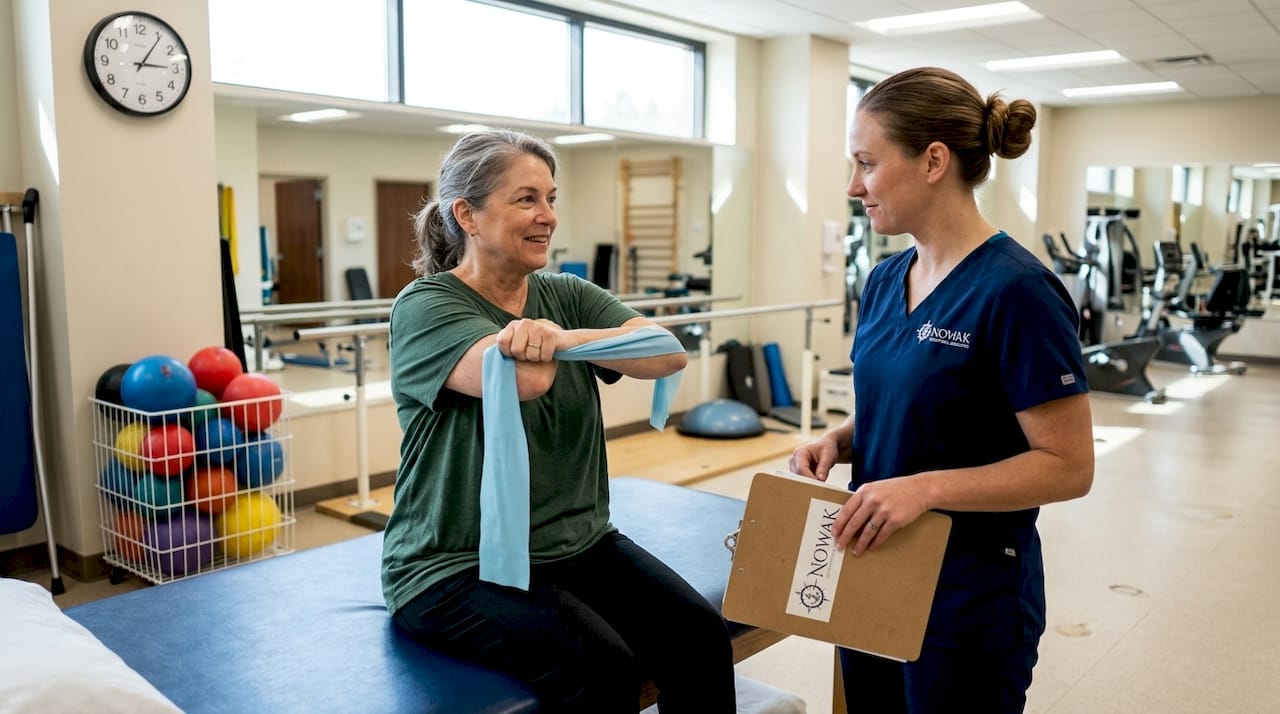
Open and arthroscopic debridement and tenotomy show success rates of 85 to 90% with proper rehabilitation, and percutaneous techniques improve short-term pain relief.
Pro Tip: If you are hoping to return to work or sport quickly, ask about percutaneous options. They typically involve less downtime than open surgery, though long-term outcomes are similar across approaches.
For a deeper look at what minimally invasive care involves, visit minimally invasive elbow surgery facts. You can also learn more about what an elbow orthopedic surgeon does during these procedures.
Open reduction and internal fixation (ORIF) for fractures
For individuals with severe fractures, a different surgical solution is often needed. ORIF is the standard approach for complex elbow fractures, particularly those involving the distal humerus (the lower end of the upper arm bone).
Key points about ORIF:
- Stabilization first: Bone fragments are carefully repositioned and held in place with plates and screws.
- Arch plating: ORIF outcomes rely on stability, and arch plating with distal screws significantly improves fixation in complex fractures.
- Early motion is essential: Starting gentle movement within days of surgery reduces the risk of stiffness, which is one of the most common complications after elbow fractures.
- Long-term outcomes: Most patients regain functional range of motion, though some stiffness or hardware sensitivity may persist.
Pro Tip: If you are recovering from an elbow fracture repair, ask your surgeon when you can begin range-of-motion exercises. Earlier is almost always better for preventing stiffness.
For more on elbow surgical care near you, visit elbow surgeon Hampton NH.
A fresh take: Matching surgery to lifestyle and recovery goals
After outlining each elbow surgical option, let’s step back and consider the bigger picture. The name of a procedure matters far less than whether it fits your life. A 55-year-old teacher and a 22-year-old pitcher may both have UCL injuries, but their ideal surgical paths look completely different.
We often see patients who focus too much on which surgery is “best” in general, rather than which is best for them. Athletes need tailored rehab, and complications like infection and implant loosening are real risks that vary by procedure and patient profile. Realistic expectations and a committed sports injury rehabilitation plan are what separate good outcomes from great ones.
Connect with expert orthopedic care in Hampton, NH
If you are weighing elbow surgery options and want personalized guidance, Nowak Orthopedic Associates in Hampton, NH is here to help. Dr. Roger B. Nowak and our team offer thorough evaluations, detailed procedure explanations, and individualized treatment plans designed around your goals and lifestyle. Whether you need a minimally invasive repair or a more involved reconstruction, we will walk you through every step. Explore our guide to advanced joint care or review our elbow arthroscopy guide to learn more before your visit.
Frequently asked questions
How do I know which elbow surgery is right for me?
Surgeons consider your age, activity level, injury type, and prior treatment history to recommend the most effective procedure. Criteria include injury severity and whether conservative therapy has already been tried.
What is the usual recovery time after Tommy John surgery?
Repair procedures may allow return to sport in around six months, while reconstruction averages 12 to 18 months of recovery before full return to throwing.
What are the risks of total elbow arthroplasty?
The main risks include infection, implant loosening, and nerve injury. Complication rates range from 11 to 38%, and patients must avoid repetitive lifting over two pounds long-term.
Do minimally invasive surgeries for tennis elbow offer faster relief?
Percutaneous techniques often provide quicker short-term pain relief, and success rates reach 85 to 90% across most surgical approaches when combined with proper rehabilitation.