

TL;DR:
- Understanding personal intrinsic and extrinsic risk factors can help tailor injury prevention strategies.
- Neuromuscular training significantly reduces ACL injuries and improves joint stability.
- Regular assessment of muscle balance and adapting warm-up routines for cold weather are essential for safe sports participation.
Missing a full season because of a torn ligament or overuse injury is one of the most frustrating experiences an athlete can face. The good news is that most sports injuries are not random events. For athletes and active individuals across New Hampshire, understanding your personal risk profile and applying research-backed prevention strategies can dramatically reduce the chances of sitting on the sidelines. This guide walks you through exactly how to protect your joints, train smarter, and stay active through every season.
Table of Contents
- Understanding your risks: More than just bad luck
- Train smarter: Proven strategies for injury prevention
- The science of symmetry: Spotting and correcting muscle imbalances
- Environmental checks and routine upgrades for New Hampshire athletes
- Perspective: Why prevention takes more than programs
- Need help putting prevention into practice?
- Frequently asked questions
Key Takeaways
| Point | Details |
|---|---|
| Know your risks | Specific factors—like sex, age, and NH winters—require personalized prevention. |
| Adopt the right training | Multicomponent neuromuscular and proprioceptive routines dramatically lower joint injuries. |
| Fix imbalances early | Spotting strength differences now prevents bigger injuries later. |
| Check your gear and environment | Routine equipment checks and climate-specific habits keep athletes safer year-round. |
| Prevention is ongoing | Continuous adjustment and teamwork yield the best protection long-term. |
Understanding your risks: More than just bad luck
Injury prevention starts with knowing what you are up against. Risk factors fall into two broad categories: intrinsic (things about your body) and extrinsic (things in your environment). Neither category works in isolation, and both deserve your attention.
Intrinsic risk factors include age, biological sex, previous injuries, joint stability, and the specific demands of your sport or position. Extrinsic factors include equipment quality, playing surface, weather conditions, and training load. In New Hampshire, winter sports add a third layer: cold temperatures stiffen muscles and connective tissue, making joints more vulnerable before they are properly warmed up.
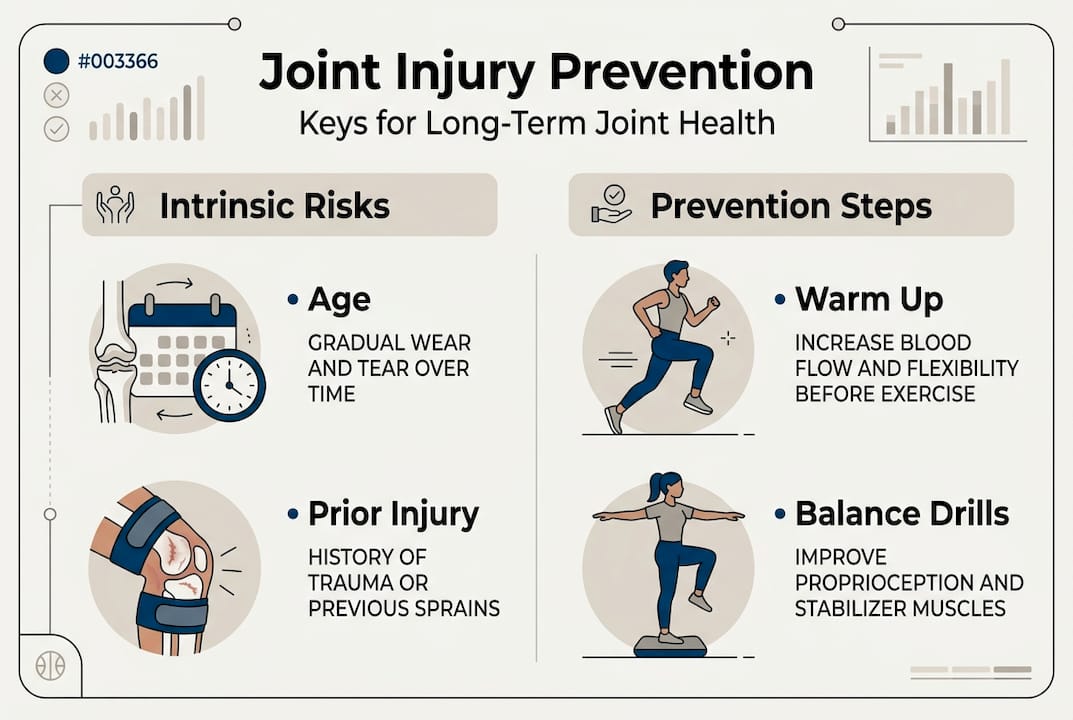
| Risk type | Examples | Prevention tip |
|---|---|---|
| Intrinsic | Age, sex, prior injury, sport position | Individualized screening and rehab |
| Extrinsic | Equipment, surface, training load | Regular gear checks, load management |
| NH-specific | Cold weather, icy surfaces, stiff tissues | Extended warm-ups, insulated gear |
Female athletes face a notably higher ACL injury risk due to anatomical and hormonal factors, and young athletes who play a single sport year-round are at elevated risk for overuse injuries. Multicomponent neuromuscular training programs have been shown to address many of these vulnerabilities directly. Understanding the full range of NH sports injury types can help you match your risk profile to the right prevention plan.
Proper nutrition for athletic performance also plays a supporting role in tissue resilience, often overlooked until an injury has already occurred.
Pro Tip: Before the winter season begins, inspect all equipment for wear and fit. Cold weather makes tissues stiffer and less forgiving, so worn-out gear combined with cold muscles is a recipe for injury.
Train smarter: Proven strategies for injury prevention
Once you identify your unique risks, the next move is adopting prevention strategies that target those vulnerabilities. Not all training programs are created equal when it comes to joint protection.
Neuromuscular training (NMT) is a structured approach that improves how your nervous system controls muscle activation, balance, and joint stability. It goes well beyond traditional strength training by incorporating balance, agility, and movement pattern correction. NMT programs reduce ACL injury risk by 50 to 67%, with the greatest benefits seen in adolescent female athletes. Proprioceptive training, which trains your body’s sense of joint position, reduces ankle sprain recurrence by up to 70%.
| Training type | Key benefit | Best for | Injury reduction |
|---|---|---|---|
| Neuromuscular (NMT) | Improves joint control and movement patterns | Adolescents, female athletes | 50 to 67% ACL risk reduction |
| Traditional strength | Builds raw muscle force | All athletes | Moderate, load-dependent |
| Proprioceptive routines | Enhances balance and joint awareness | Ankle-prone athletes, post-rehab | Up to 70% sprain recurrence reduction |
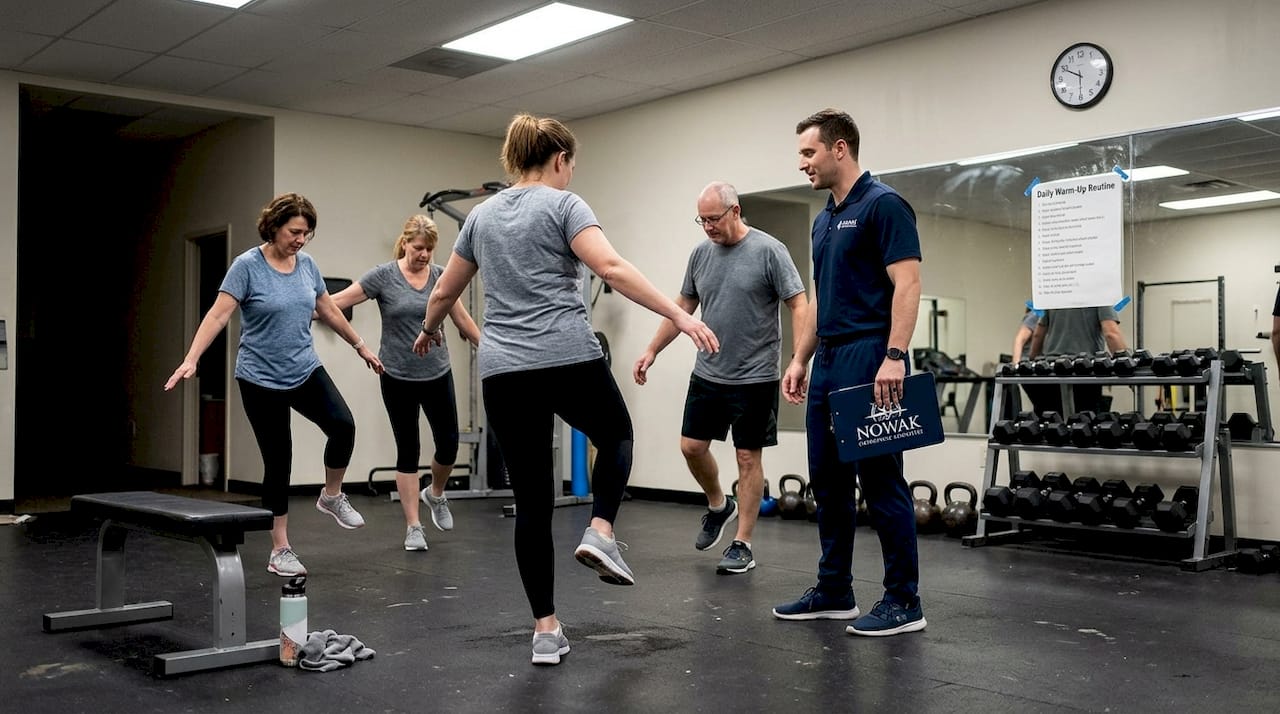
Here is a basic NMT warm-up sequence you can start using today:
- Dynamic hip circles and leg swings (2 minutes)
- Single-leg balance holds, eyes open then closed (60 seconds each leg)
- Lateral band walks targeting hip abductors (2 sets of 15 reps)
- Controlled squat jumps with soft landings, focusing on knee alignment (3 sets of 8)
- Nordic hamstring curls or eccentric hamstring lowering (2 sets of 6)
For athletes recovering from prior injuries, reviewing a sports injury rehab guide can help bridge the gap between recovery and return to full training. If you want to understand what surgical options exist should prevention fall short, joint procedure examples outline what modern orthopedic care can offer.
Pro Tip: Consistency matters more than intensity in prevention training. A 15-minute NMT warm-up done before every session beats an occasional 60-minute protocol done sporadically.
The science of symmetry: Spotting and correcting muscle imbalances
With training strategies in place, next is ensuring your body’s foundation is not setting you up for failure via hidden imbalances. Muscle strength asymmetries are one of the most underestimated injury drivers in sport.
When one side of your body is significantly stronger or more flexible than the other, the weaker side compensates during high-demand movements. Over time, this compensation pattern stresses joints in ways they were not designed to handle. Knee flexor asymmetry greater than 15% increases non-contact injury risk by 3.2 times, and machine learning models using strength asymmetry data can predict injuries with impressive accuracy.
A strength gap you cannot feel today can become the injury that ends your season tomorrow. Screening early is far less costly than months of rehab.
Watch for these warning signs of significant imbalance:
- One leg feels noticeably more fatigued after identical workloads
- You favor one side during squats, lunges, or single-leg exercises
- Recurring soreness concentrated on one side of the hip, knee, or lower back
- Visible differences in muscle size between limbs
- Difficulty balancing on one leg compared to the other
Self-screening is straightforward. Perform a single-leg squat on each side and compare depth, stability, and comfort. A significant difference in any of these areas warrants attention. Corrective exercises such as Bulgarian split squats, single-leg Romanian deadlifts, and targeted hip abductor work can close the gap over four to eight weeks. Reviewing injury types in NH can help you connect specific imbalances to the injuries they most commonly cause. Tracking your athlete BMI benchmarks alongside strength metrics gives a fuller picture of your overall readiness.
Pro Tip: Correct a 15% or greater strength asymmetry before ramping up training intensity. Addressing it early takes weeks; ignoring it can cost you an entire season.
Environmental checks and routine upgrades for New Hampshire athletes
Physical preparation is only part of prevention. Adapting for the New Hampshire environment is the final ingredient that many athletes overlook until they get hurt.
New Hampshire’s winters bring freezing temperatures, icy surfaces, and rapid weather changes. Cold weather reduces blood flow to muscles and tendons, making them stiffer and more prone to tearing under sudden load. Transitioning from indoor to outdoor surfaces, or from turf to ice, also changes how forces travel through your joints.
Never skip your warm-up in cold weather. A 5-minute warm-up in summer becomes a 15-minute necessity when temperatures drop below freezing.
Here is a pre-activity checklist every New Hampshire athlete should run through:
- Inspect boots, cleats, or skates for wear and proper fit
- Check that braces or supports are intact and correctly positioned
- Perform an extended warm-up of at least 12 to 15 minutes in cold conditions
- Hydrate before activity, even in cold weather when thirst signals are reduced
- Assess the surface for ice patches, uneven ground, or wet spots
- After activity, cool down and change out of wet gear promptly to prevent muscle stiffness
For athletes who have had prior surgery or are managing existing joint conditions, the orthopedic surgery checklist offers useful guidance on safe return-to-activity protocols. Supporting your body with proper nutrition tips for recovery after cold-weather training also accelerates tissue repair and reduces next-day soreness.
Perspective: Why prevention takes more than programs
You have learned the step-by-step how. Now for a reality check on what actually makes prevention work long-term.
The honest truth is that no checklist prevents every injury. Bodies change, seasons shift, and training demands evolve. What worked in September may not be enough in February. Context-sensitive, iterative frameworks with stakeholder collaboration consistently outperform static, one-size-fits-all protocols in real-world settings.
The athletes who stay healthiest are not the ones who followed a program perfectly once. They are the ones who revisit their prevention routine every season, communicate openly with coaches and trainers, and seek professional input when something feels off. Building that habit of continuous evaluation, rather than checking a box and moving on, is what separates durable athletes from those cycling in and out of rehab. Pairing that mindset with access to a solid rehabilitation resource for athletes ensures you have a plan when the unexpected does happen.
Need help putting prevention into practice?
If you want expert eyes on your injury prevention routine or need hands-on support, Nowak Orthopedic Associates in Hampton, NH is ready to help. Our team offers individualized assessments, sports medicine care tailored to your sport and goals, and non-surgical options including guided stretch therapy to improve flexibility and joint resilience. For athletes managing existing joint concerns, our advanced joint care services provide a clear path from pain to performance. Reach out to schedule a consultation and keep your season on track.
Frequently asked questions
What is the single most effective routine to prevent sports injuries?
A consistent, tailored multicomponent neuromuscular training routine is proven to reduce ACL injury risk by up to 67%, making it the most evidence-supported prevention strategy available.
How do I know if I have muscle imbalances that might lead to injury?
Signs include uneven fatigue, posture differences, or favoring one side during exercise. A strength test revealing a greater than 15% asymmetry signals a 3.2-fold increase in non-contact injury risk.
Why is winter sports injury risk higher in New Hampshire?
Cold weather stiffens muscles and connective tissue, and winter conditions demand thorough equipment checks and extended warm-ups to protect vulnerable joints.
Does the same prevention advice work for all athletes?
No. Individual factors like age, sex, and sport mean that prevention protocols must be adapted, particularly for female athletes and youth players with elevated ACL and overuse injury risk.