

TL;DR:
- Physical therapy is essential for reducing pain, restoring movement, and strengthening muscles after knee injury or surgery.
- Rehabilitation progresses through phases, focusing on swelling control, mobility, strength, stability, and sport-specific skills.
- Consistent, guided therapy results in better outcomes than rest alone, with tailored protocols for different injuries.
Recovery after a knee injury or surgery is rarely as simple as resting and waiting. Many people assume time alone will restore full function, but physical therapy is essential for pain reduction, restoring range of motion, strengthening supporting muscles, and enhancing functional mobility. Without structured guidance, the knee can lose strength, develop scar tissue, and fall short of full recovery. This guide walks you through how physical therapy works, what each phase involves, what the research actually shows, and how protocols shift depending on your specific injury or procedure.
Table of Contents
- Why physical therapy is the foundation of knee recovery
- Phased rehabilitation: How physical therapy protocols are structured
- What the evidence says: Results you can expect from physical therapy
- When protocols vary: Tailoring physical therapy for specific knee injuries
- Our perspective: What most guides miss about knee physical therapy
- Get expert support for your knee recovery journey
- Frequently asked questions
Key Takeaways
| Point | Details |
|---|---|
| Essential for recovery | Physical therapy is crucial for restoring movement, reducing pain, and regaining function after knee injuries or surgery. |
| Personalized protocols | Phased therapy programs and individualized plans are vital for success across different knee conditions. |
| Better than rest alone | Guided physical therapy outperforms rest or home exercise alone for most patients. |
| Adherence matters | Long-term commitment to therapy and at-home exercises ensures lasting recovery and mobility. |
Why physical therapy is the foundation of knee recovery
Rest has its place in the early days after injury or surgery. But passive recovery, meaning simply avoiding movement and waiting, often leads to muscle weakening, joint stiffness, and prolonged pain. Physical therapy actively counters these problems by targeting the specific deficits your knee develops after trauma or an operation.
The core benefits of structured physical therapy include:
- Pain reduction through guided movement, neuromuscular re-education, and manual techniques
- Restored range of motion by progressively working through stiffness and scar tissue
- Muscle strengthening of the quadriceps, hamstrings, and hip stabilizers that protect the joint
- Improved joint stability so the knee can handle daily loads without compensating
- Enhanced functional mobility for walking, climbing stairs, and returning to sport or work
“Physical therapy is the cornerstone for pain reduction, restoring range of motion, strengthening supporting muscles, improving joint stability, and enhancing functional mobility after injuries or surgeries.”
Following knee surgery recovery strategies that incorporate physical therapy from the start dramatically shortens the recovery timeline. Patients who follow structured PT programs consistently outperform those who rely on rest and home remedies. Understanding post-surgery knee care in detail helps set realistic expectations and keeps you on track. Knowing what to expect from physical therapy before your first session also reduces anxiety and improves adherence.
Phased rehabilitation: How physical therapy protocols are structured
Physical therapy for the knee is not a single, uniform program. It is a carefully sequenced progression that builds on each stage before advancing to the next. Skipping phases or rushing through them is one of the most common reasons patients plateau or re-injure themselves.
Research on rehabilitation phase details outlines a clear progression used in evidence-based clinics:
| Phase | Timeline | Primary goals |
|---|---|---|
| Phase 1 | Weeks 0 to 2/4 | Swelling control, full extension, quad activation |
| Phase 2 | Weeks 2 to 6/12 | Full flexion, gait normalization, light strengthening |
| Phase 3 | Weeks 6 to 12+ | Balance, proprioception, progressive resistance |
| Phase 4 | Weeks 12 onward | Plyometrics, sport-specific or activity-specific training |
Here is how the phased knee therapy protocols translate into real sessions:
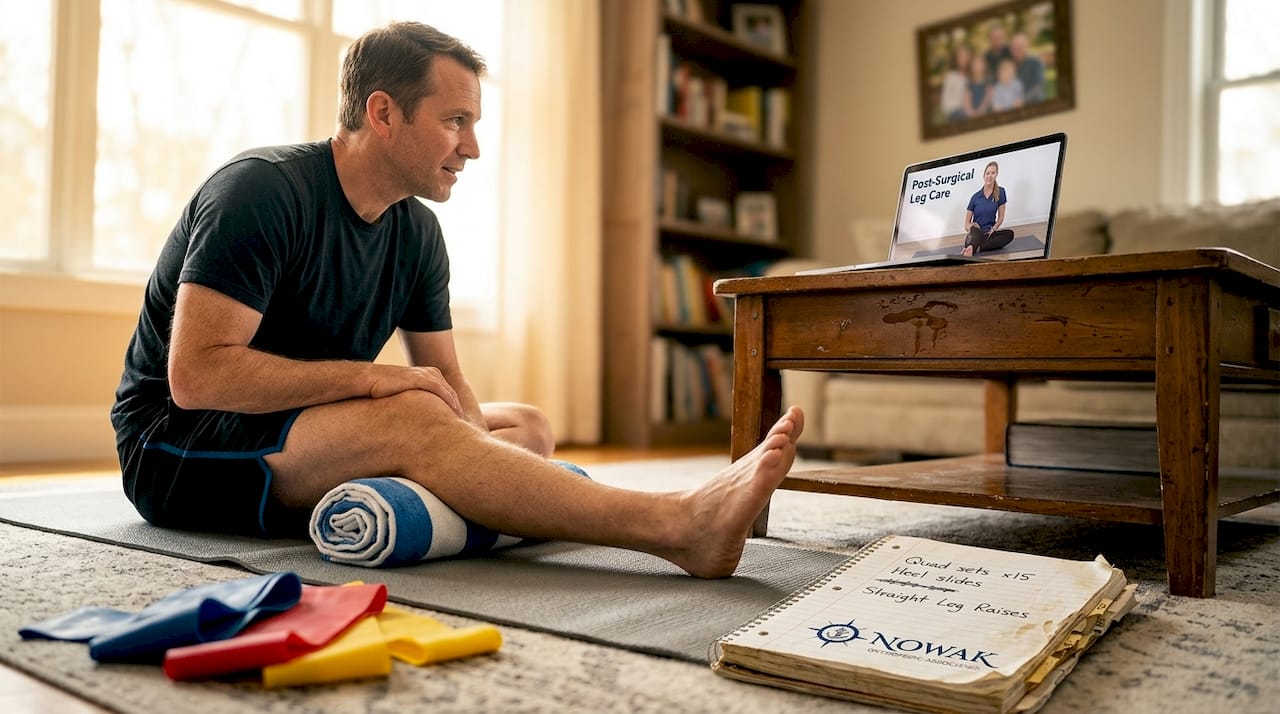
- Early phase: Your therapist prioritizes reducing swelling and restoring full knee extension. Exercises like quad sets, heel slides, and neuromuscular electrical stimulation (NMES) activate dormant muscles without stressing healing tissue.
- Intermediate phase: Once swelling is controlled, attention shifts to restoring full bending of the knee, normalizing your walking pattern, and beginning light strengthening.
- Advanced phase: Balance training and proprioception exercises rebuild the joint’s ability to sense position, which is critical for preventing re-injury.
- Return-to-activity phase: Plyometrics and sport-specific drills are introduced only when strength and movement thresholds are met.
For patients managing osteoarthritis and knee rehab, the phased approach is adapted to avoid flare-ups while still building meaningful strength and mobility.
Pro Tip: Ask your physical therapist what milestone signals readiness to advance each phase. Goal-based progression, not calendar-based progression, leads to safer and more durable outcomes.
What the evidence says: Results you can expect from physical therapy
The research supporting physical therapy for knee recovery is strong and growing. You do not have to take it on faith that PT works. The data is clear.
For knee osteoarthritis (OA), exercise PT reduces pain with an effect size of 0.64 at eight weeks, and those benefits persist for approximately one year. That is a clinically meaningful result, comparable to what many patients achieve with injections, but with fewer risks and longer durability.
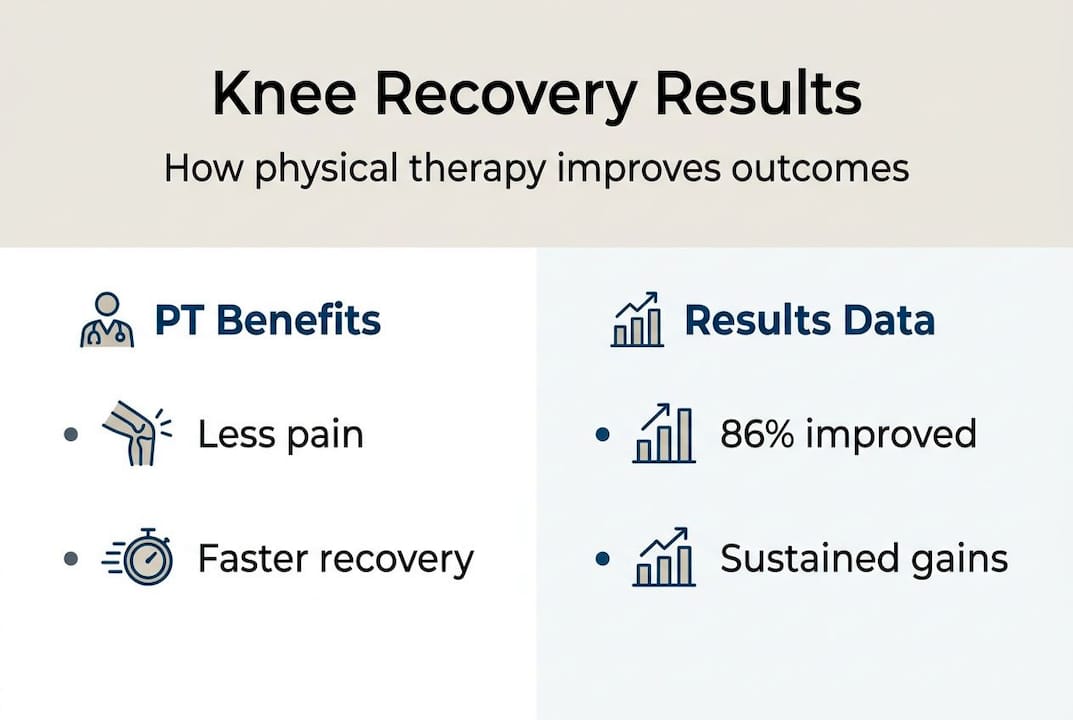
For sports injuries, 73 to 86% of patients report significant improvements in pain, range of motion, and function after completing a structured PT program. A meta-analysis on physical therapy results further confirms these findings across diverse patient populations.
Key comparisons worth knowing:
- PT vs. injections: For meniscal tears combined with OA, PT produces superior one-year pain relief compared to corticosteroid injections alone.
- PT vs. surgery: Randomized controlled trials show PT often matches surgical outcomes for degenerative meniscus tears, without the added risk of accelerating OA progression.
- PT for sports injuries: Up to 86% of athletes return to sport-level function after completing structured rehabilitation.
Exploring sports injury rehab results can help you understand what realistic timelines look like for your specific injury. Learning about knee joint preservation also puts PT in context alongside other non-surgical options available to you.
When protocols vary: Tailoring physical therapy for specific knee injuries
Not every knee injury follows the same rehabilitation roadmap. A meniscus repair, an ACL reconstruction, and a partial knee replacement each require distinct timelines, precautions, and progressions. Treating them identically is a recipe for setbacks.
Research on protocol variations for knee injuries highlights several important distinctions:
- Meniscus root or radial tears: These repairs typically require up to six weeks of non-weightbearing to allow proper healing, which is far more conservative than many patients expect.
- Combined ACL and meniscus injuries: When both structures are repaired, the stricter meniscus precautions take priority, even if the ACL protocol would otherwise allow earlier loading.
- Total or partial knee arthroplasty: After joint replacement, early high-intensity quadriceps strengthening is actually encouraged to prevent the muscle weakness that limits long-term function.
Criteria-based milestones matter far more than hitting a specific week on a calendar. If your quad strength has not returned to a sufficient level, advancing to plyometrics too early risks re-injury. Reviewing post-surgery protocols in advance can prepare you for the road ahead.
Pro Tip: Communicate openly with your therapist about pain levels, fatigue, and any unusual symptoms during each session. Your feedback directly shapes how your program is adjusted, which is just as important as the exercises themselves.
Our perspective: What most guides miss about knee physical therapy
Most resources focus on the clinical side of PT, and rightfully so. But in our experience at Nowak Orthopedic Associates, the patients who recover best are not necessarily the ones with the most favorable diagnoses. They are the ones who stay consistent long after formal therapy ends.
The real challenge with overcoming knee recovery challenges is that motivation tends to drop as pain decreases. Feeling better is often mistaken for being fully healed. That gap between “feeling okay” and “fully restored function” is where most setbacks happen.
Recovery is not finished when you leave the clinic. The exercises you do at home, the consistency you maintain between appointments, and the mindset you bring to the process are what separate good outcomes from great ones.
Get expert support for your knee recovery journey
At Nowak Orthopedic Associates, we understand that no two knee recoveries look alike. Whether you are navigating advanced joint care after surgery or exploring orthopedic recovery options for a new injury, our team builds individualized plans designed around your specific goals and timeline. If you are looking to reduce pain without an operation, our non-surgical relief guide outlines proven alternatives. Contact us today to take the next step toward lasting knee health.
Frequently asked questions
How soon should I start physical therapy after a knee injury or surgery?
Most patients benefit from starting physical therapy as soon as pain and swelling allow, often within days after surgery or injury, following their doctor’s guidance. Phased rehabilitation begins early after surgery to protect healing tissue while preventing muscle loss.
Is physical therapy always necessary, or can I recover with exercises at home?
Supervised physical therapy consistently yields better results than unsupervised home exercise, particularly for regaining full function after a knee injury or operation. PT improves outcomes well beyond what rest or self-directed exercise alone can achieve.
How does PT for a meniscus tear differ from PT for an ACL injury?
Meniscus repairs often require up to six weeks of non-weightbearing, while ACL protocols typically allow earlier weight loading. Meniscus repairs require stricter precautions than most ACL reconstructions, particularly in the first several weeks.
Does physical therapy work for osteoarthritis in the knee?
Yes. PT effectively reduces pain and improves function in knee osteoarthritis, with benefits lasting up to a year for many patients. Effect size of 0.64 at 8 weeks reflects a clinically meaningful level of pain reduction that compares favorably to injection-based treatments.