

TL;DR:
- Many adults believe joint pain inevitably requires surgery, but non-surgical treatments can be effective.
- Physical therapy and regenerative injections like PRP offer lasting relief for joint conditions without surgery.
- Combining therapies and maintaining ongoing management improve long-term outcomes for joint pain.
Many adults in New Hampshire assume that worsening joint pain means surgery is inevitable. That assumption stops too many people from exploring treatments that actually work. Physical therapy, biologic injections, and regenerative therapies have strong evidence behind them, and for a large portion of patients, they deliver real, lasting relief without an operating room. This guide walks through the leading non-surgical strategies, explains what the evidence says, and helps you understand which approach might be right for your situation.
Table of Contents
- Understanding your joint pain: When non-surgical care makes sense
- Physical therapy and movement-based rehabilitation
- Injectable biologic therapies: PRP, hyaluronic acid, and more
- Combining approaches and practical considerations
- What most people get wrong about non-surgical joint pain relief
- Take the next step toward joint pain relief
- Frequently asked questions
Key Takeaways
| Point | Details |
|---|---|
| PT offers proven relief | Exercise-based physical therapy can significantly reduce joint pain and improve function, especially in the short term. |
| Biologic injections expand options | PRP and hyaluronic acid injections provide additional non-surgical choices, often with overlapping benefits and unique strengths. |
| Combination approaches work best | Using multiple non-surgical treatments along with lifestyle changes leads to better overall results. |
| Recognize urgent symptoms | Some joint pain requires prompt medical attention; always watch for hot, swollen joints and severe, sudden pain. |
Understanding your joint pain: When non-surgical care makes sense
Joint pain in adults most often stems from a handful of well-understood conditions. Osteoarthritis is the most common, caused by gradual cartilage breakdown that reduces the cushioning between bones. Overuse injuries develop when repetitive movements strain tendons, ligaments, or bursae around a joint. Inflammatory arthritis, such as rheumatoid arthritis, involves the immune system attacking joint tissue directly.
For most of these conditions, non-surgical orthopedic treatments are a reasonable and well-supported starting point. The key question is whether your symptoms fit the profile.
Non-surgical care is generally appropriate when:
- Pain is moderate and does not prevent basic daily function
- Imaging shows mild to moderate joint changes without structural collapse
- You have not yet tried exercise-based rehabilitation or targeted injections
- Symptoms have developed gradually rather than from acute trauma
However, not every joint problem is safe to treat at home or with conservative therapies alone. Some joint pain requires urgent medical evaluation and is not suitable for purely non-surgical management. Warning signs include a joint that is hot, visibly swollen, and extremely painful, which could indicate infection or a crystal arthritis flare. Sudden severe joint pain following an injury may point to a ligament tear or fracture.
If your joint feels hot to the touch, swells rapidly, or causes fever, seek same-day evaluation. Do not wait.
Pro Tip: Even if you need urgent care first, early physical rehabilitation after medical clearance can significantly speed up your recovery and protect long-term joint function.
Physical therapy and movement-based rehabilitation
Physical therapy is one of the most thoroughly studied non-surgical options available. For adults with knee osteoarthritis in particular, exercise therapy offers significant short-term relief, with measurable benefits extending up to one year. That is not a minor finding. It means a structured program can genuinely change your day-to-day comfort.
Three types of exercise-based therapy are commonly used:
| Type | What it involves | Best suited for |
|---|---|---|
| Strength training | Targeted resistance exercises for muscles around the joint | Most adults with knee osteoarthritis |
| Aerobic exercise | Low-impact activity like walking or cycling | Patients needing weight and cardiovascular support |
| Aquatic therapy | Water-based exercise reducing joint load | Those with severe pain limiting land exercise |
Here is what a realistic physical therapy progression looks like:
- Initial evaluation by a licensed physical therapist to assess strength, range of motion, and movement patterns
- A structured program of 6 to 12 weeks with sessions two to three times per week
- Progress assessment at 6 weeks, with adjustments based on pain and functional improvement
- Transition to a home exercise program to maintain gains independently
Most patients notice improved comfort and function within the first 6 to 8 weeks. However, physical therapy works best when you stay consistent. Dropping sessions early is the most common reason results fall short of expectations.
Pro Tip: Ask your therapist specifically about neuromuscular training, which focuses on balance and movement control. Research suggests it may reduce pain more effectively than strength work alone for some patients.
Injectable biologic therapies: PRP, hyaluronic acid, and more
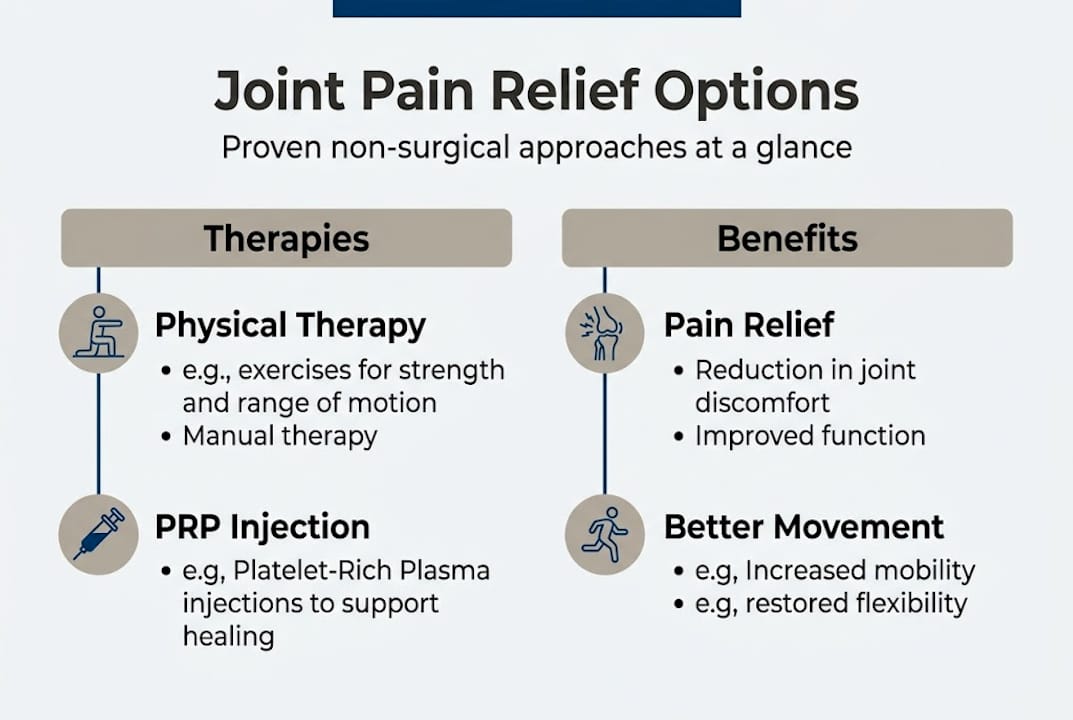
When physical therapy alone does not provide enough relief, injectable therapies offer a meaningful next step. Two of the most widely used options are platelet-rich plasma (PRP) and hyaluronic acid injections.
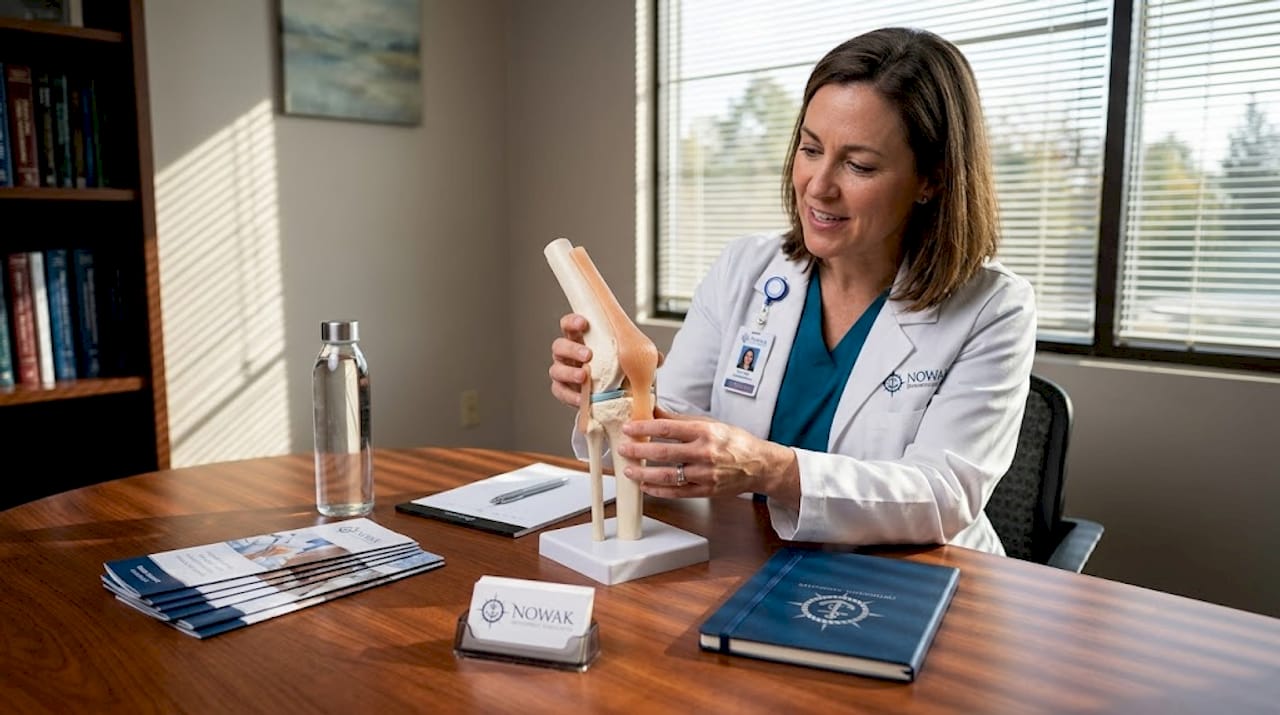
PRP is prepared by drawing a small sample of your own blood, concentrating the growth factors in the plasma, and injecting them directly into the affected joint. The goal is to reduce inflammation and encourage tissue repair. PRP injections have gained considerable attention because they use your body’s own biology rather than synthetic drugs.
Hyaluronic acid, sometimes called viscosupplementation, replaces or supplements the natural lubricating fluid in the joint. In osteoarthritis, this fluid thins and loses its shock-absorbing quality. Injecting hyaluronate can restore some of that function.
A recent systematic review found that PRP shows comparable pain relief to hyaluronic acid, with superior functional improvement particularly when both are used together. PRP versus corticosteroids showed mixed results, with corticosteroids offering faster early relief but PRP potentially holding an advantage at longer follow-up periods.
Good candidates for injectable biologics typically include:
- Adults with confirmed osteoarthritis who have tried PT without enough improvement
- Patients who want to avoid or delay surgery
- Those without active joint infection or blood clotting disorders
You can also explore orthobiologic injections as part of a broader regenerative care approach. These therapies are best discussed with a provider who can assess your imaging and symptom history.
Combining approaches and practical considerations
No single treatment works best in isolation. The adults who tend to see the most meaningful, lasting improvement are the ones who combine physical rehabilitation with medical or biologic interventions. Guidelines support this integrated approach for better overall recovery outcomes.
Here is a practical framework for building your own treatment plan:
- Start with physical therapy as your foundation and give it at least 8 weeks of consistent effort
- Add injections if needed, using PRP or hyaluronic acid to complement your rehabilitation work
- Incorporate lifestyle changes, including maintaining a healthy weight, staying active with low-impact movement, and getting adequate sleep
- Track your progress using a simple pain and function diary so you and your provider can see what is working
- Revisit your plan if pain is not improving after 12 weeks, or worsens unexpectedly
Orthobiologic treatments can be layered in at any point where inflammation is limiting your ability to participate in therapy. Stretch therapy is another option worth considering, particularly if stiffness and reduced range of motion are driving your pain more than structural damage.
Pro Tip: Bring a written list of your symptoms, how they change with activity, and what you have already tried to your first orthopedic appointment. It helps your provider build a more targeted plan right from the start.
What most people get wrong about non-surgical joint pain relief
Here is the pattern we see more often than we would like: a patient tries physical therapy for three weeks, feels a little better, stops going, and then returns six months later with worse symptoms. Non-surgical care gets labeled as “not working” when what actually failed was the commitment to the process.
The most effective non-surgical outcomes come from treating these therapies as ongoing management, not a short course of treatment. That means revisiting your plan, adjusting your exercises, and staying in communication with your care team. Our step-by-step non-surgical relief resource exists precisely because the sequencing and consistency of care matter as much as the specific treatment chosen.
Take the next step toward joint pain relief
If you are ready to move from managing pain to actually addressing its source, Nowak Orthopedic Associates in Hampton, NH is here to help. Our regenerative clinic offers PRP, orthobiologic therapies, SoftWave treatment, and guided stretch therapy, all under one roof. We also provide sports medicine services for adults dealing with activity-related joint problems. Start with our step-by-step orthopedics guide or contact us directly to schedule a consultation.
Frequently asked questions
What are the most effective non-surgical treatments for knee osteoarthritis?
Exercise-based physical therapy provides strong short-term pain relief and functional improvement for knee osteoarthritis, and PRP combined with hyaluronic acid can offer additional benefit when therapy alone is not enough.
Is PRP better than steroid injections for joint pain?
PRP and corticosteroids show comparable pain relief, but PRP may hold advantages at longer follow-up and tends to perform better when combined with other treatments rather than used alone.
When should joint pain be evaluated by urgent care rather than treated non-surgically?
A hot, acutely swollen joint with severe pain needs same-day medical evaluation to rule out infection or other serious conditions before any non-surgical management begins.
How long do the benefits of physical therapy last for joint pain?
Physical therapy benefits are strongest in the first few months but can persist up to one year, though effects tend to diminish over time without continued exercise and maintenance.