

TL;DR:
- Effective knee injury prevention requires evidence-based, personalized, and consistently practiced neuromuscular training.
- Combining strength, balance, agility, plyometrics, and hip exercises reduces injury risk across sports and seasons.
- In New Hampshire, season-specific training and professional support optimize knee protection for diverse winter and summer activities.
Knee injuries sideline athletes and active adults more than almost any other orthopedic issue, yet many people still rely on outdated or unproven strategies. Whether you ski Cannon Mountain in January, play soccer in a Seacoast league, or run trails through the White Mountains, protecting your knees matters year-round. The good news is that science has advanced significantly in this area. This article breaks down the criteria for effective prevention, specific exercises that work, how leading programs compare, and how to adapt all of it to New Hampshire’s unique sports landscape.
Table of Contents
- Set your knee injury prevention criteria
- Top evidence-based knee injury prevention exercises
- How prevention programs compare: PEP, FIFA 11+, and NMT
- Adapting knee injury prevention for New Hampshire’s sports and seasons
- What most knee injury prevention tips miss: Real-world lessons from New Hampshire
- Expert support for knee injury prevention in New Hampshire
- Frequently asked questions
Key Takeaways
| Point | Details |
|---|---|
| Science-backed exercises | Neuromuscular training, balance, agility, and plyometrics are proven to reduce knee injury risk. |
| Effective program routines | Prevention workouts should be 5-15 minutes and repeated 4-5 times each week for best results. |
| Seasonal adaptation | Winter sports in New Hampshire require extra strength training to lower ACL injury risk. |
| Local expert support | Consult NH clinics for personalized prevention strategies and injury recovery options. |
Set your knee injury prevention criteria
Not every prevention strategy is worth your time. Before committing to a program, it helps to know what actually separates effective approaches from those that only sound good on paper.
A strong knee injury prevention program should meet the following criteria:
- Evidence-based design: Look for programs studied in peer-reviewed research, not just fitness trends.
- Neuromuscular training (NMT) components: NMT focuses on improving the way your nervous system controls muscle movement around the knee. NMT reduces knee injury risk by 25-61% in athletes, especially females.
- Consistent frequency: Programs that run 2-5 days per week over several months show the strongest results.
- Personalized approach: Your sport, age, fitness level, and injury history all shape which exercises are most protective for you.
- Local professional support: Access to a qualified orthopedic specialist or physical therapist makes adherence and proper form far more achievable.
Key insight: Prevention is not a one-time event. It is a sustained practice that requires the right structure and the right guidance.
You should also look for programs that address multiple movement patterns, not just one muscle group. The knee joint relies on the coordinated effort of the quadriceps, hamstrings, glutes, and calf muscles. If any one of those is significantly weaker than the others, your risk goes up. Exploring NH knee joint preservation options can also give you a clearer picture of how prevention connects to long-term joint health.
Top evidence-based knee injury prevention exercises
With solid criteria in place, you can now focus on the exercises that meet them. The most effective programs combine several types of movement rather than relying on a single exercise.
Here are the top exercise categories proven to reduce knee injury risk:
- Strength training: Squats, lunges, and single-leg deadlifts build the quad and hamstring strength that stabilizes the knee under load.
- Balance and proprioception drills: Single-leg stands, wobble board exercises, and lateral step-downs train your body to react quickly when balance is disrupted.
- Agility drills: Ladder work, side shuffles, and direction-change drills prepare your joints for the unpredictable movements of sport.
- Plyometric training: Jump landings, broad jumps, and box jumps teach proper mechanics that reduce ACL stress on impact.
- Hip strengthening: Clamshells and hip bridges reduce inward knee collapse, one of the most common causes of ACL tears.
For maximum benefit, research shows that optimal NMT sessions run 5-15 minutes, 4-5 times per week, for more than 26 weeks, producing up to a 25% further risk reduction over shorter programs.
Pro Tip: Tuck 10 minutes of NMT exercises into your existing warm-up routine before practice. You’re far more likely to stay consistent when prevention is already part of what you do rather than something added on top. Your NH sports injury workflow can also guide you if an exercise triggers unexpected pain.
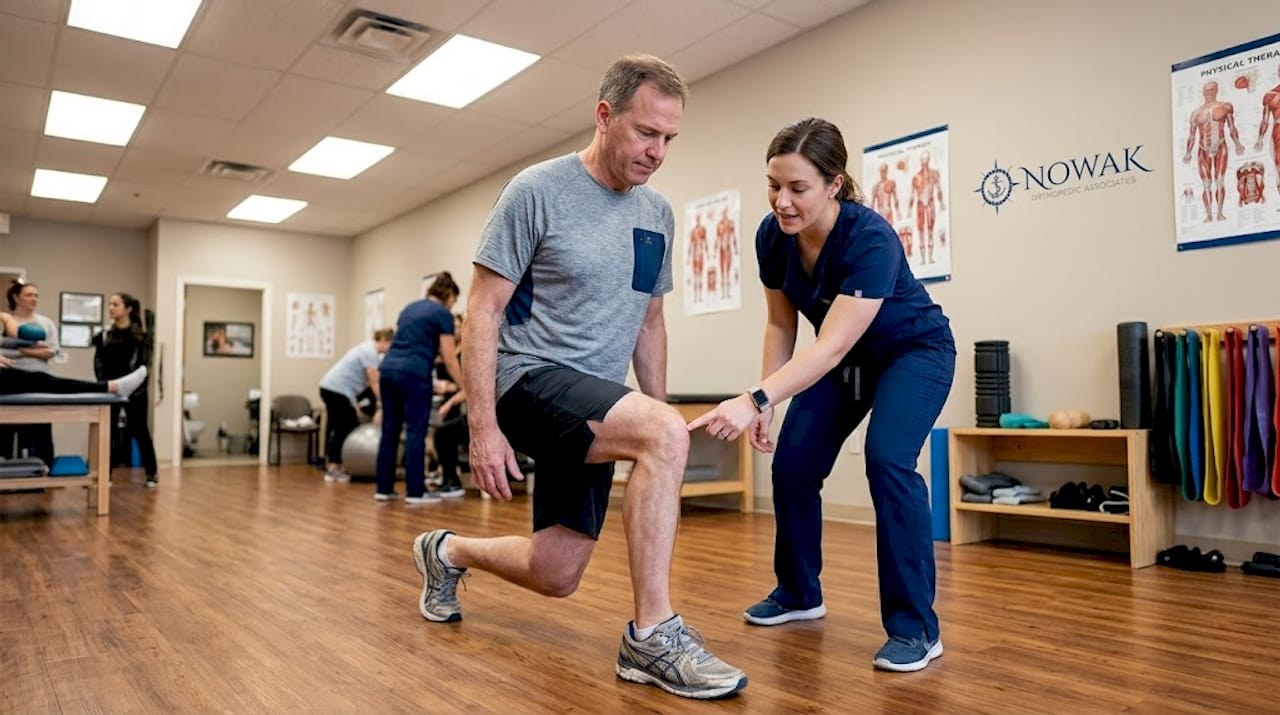
Focus on movement quality over speed. Poor form during plyometrics or lunges can actually increase injury risk. A physical therapist or orthopedic specialist can assess your mechanics and correct any problem patterns early. Additional ACL prevention tips are available to help you understand which cues to watch for during training.
How prevention programs compare: PEP, FIFA 11+, and NMT
Three programs dominate the evidence-based landscape for knee injury prevention. Each has distinct strengths, and understanding the differences helps you pick the best fit.
| Program | Target population | ACL reduction | Frequency | Best for |
|---|---|---|---|---|
| PEP (Prevent injury, Enhance Performance) | Female soccer players | Up to 88% | 2-3x/week | Competitive soccer teams |
| FIFA 11+ | Soccer players (all) | 50-80% | 2-3x/week | Youth and adult soccer |
| NMT (multicomponent) | Multi-sport athletes | 25-61% | 4-5x/week | Year-round sports programs |
Programs like PEP and FIFA 11+ show 50-80% ACL reduction when implemented as structured warm-ups 2-3 times per week. Meanwhile, multicomponent NMT programs show the broadest risk reduction across sports when applied consistently.
Key considerations when choosing a program:
- PEP is highly sport-specific and works best for organized soccer teams with a coach to lead the routine.
- FIFA 11+ is easier to implement for youth leagues and requires minimal equipment.
- NMT offers the widest applicability across different sports and age groups.
For NH athletes competing in multiple sports or shifting between seasons, a flexible NMT-based approach may be the smartest long-term strategy. Understanding your injury treatment workflow in advance helps you act quickly if prevention is not enough. Knowing the most common NH sports injury types also allows you to focus your prevention efforts where the statistical risk is highest.
Adapting knee injury prevention for New Hampshire’s sports and seasons
New Hampshire presents specific challenges that generic prevention guides simply do not address. The state’s sports culture spans skiing, hockey, trail running, lacrosse, soccer, and more, each carrying its own injury profile across drastically different seasons.
Seasonal considerations for NH athletes:
- Winter: Downhill skiing carries some of the highest ACL risk of any sport. Skiing ACL tears occur in 15-30% of ski injuries, making year-round gym strength training a critical safeguard.
- Spring/Summer: Trail runners face uneven terrain and fatigue-related knee stress. Balance and single-leg strength work are especially protective.
- Fall: Soccer and field sports peak. FIFA 11+ or PEP programs fit naturally into team warm-up schedules.
| Season | Primary sport risks | Recommended focus |
|---|---|---|
| Winter | Skiing, hockey | Quad and glute strength, landing mechanics |
| Spring/Summer | Running, hiking | Balance drills, hip stability |
| Fall | Soccer, lacrosse | Agility, plyometrics, structured warm-ups |
Pro Tip: Do not let an off-season become a prevention gap. Many NH skiers abandon strength training in summer, which leaves them underprepared when the slopes open again. Consistent training across all four seasons is the single biggest advantage you can give your knees.
Local support is available. Access Sports Medicine, Atlantic Orthopaedics, and CJ Physical Therapy offer specialized care for NH athletes looking to build prevention programs with professional guidance. If you have already had a procedure, understanding what recovering from knee surgery in NH looks like can also inform how you structure your return to sport.
What most knee injury prevention tips miss: Real-world lessons from New Hampshire
Here is something most generic articles will not tell you: a warm-up alone is not enough. Many athletes check the box with a few stretches before practice and assume they are protected. The research is clear that multicomponent NMT is superior to warm-up routines in isolation, particularly when sustained over many months.
The bigger missed lesson is that prevention must be individualized. A 45-year-old recreational skier has very different needs than a 17-year-old soccer player. One-size-fits-all programs work in studies because they establish a baseline. In real life, they need to be adapted to your sport, your movement patterns, and your personal history. Working with a qualified specialist, like an orthopedic surgeon or sports medicine provider, helps you choose the right NH orthopedic surgeon and build a plan that actually fits your life in New Hampshire.
Expert support for knee injury prevention in New Hampshire
At Nowak Orthopedic Associates in Hampton, NH, we work with active adults and athletes across New Hampshire to build individualized care plans that prioritize keeping you in the game. Whether you need guidance on sports medicine services, want a full evaluation from our orthopedic surgeon guide, or are interested in non-surgical options like our stretch therapy program, we offer the tools to support your prevention and recovery goals. Contact us today to take the next step.
Frequently asked questions
What is the most effective exercise for knee injury prevention?
Neuromuscular training, which includes balance, plyometrics, and strength work, reduces knee injury risk by up to 61% in athletes, making it the most evidence-supported choice.
How often should I do prevention workouts for my knees?
Research supports 4-5 sessions per week, each lasting 5-15 minutes, sustained for at least 26 weeks to achieve the greatest risk reduction.
Are injury prevention tips different for New Hampshire winter sports?
Yes. Because skiing ACL tears account for 15-30% of ski injuries, NH winter athletes should prioritize year-round quad and glute strength training even during the off-season.
Where can I find expert help for knee injury prevention in New Hampshire?
Access Sports Medicine, Atlantic Orthopaedics, and CJ Physical Therapy are among the local NH providers offering specialized sports medicine and injury prevention support.