

TL;DR:
- Most shoulder injuries improve with early conservative treatment without surgery.
- Surgery is typically reserved for complete tears or when non-surgical options fail.
- Emerging regenerative therapies like PRP are promising but remain experimental.
Shoulder pain rarely means you’re heading straight to the operating room. In fact, most adults improve without surgery when they get the right care early. Around 70% of adults will experience shoulder pain at some point, yet the majority of those cases respond well to conservative treatment. Whether your pain came on gradually from years of overhead activity or suddenly from a weekend accident, understanding your real options makes the difference between a fast recovery and months of unnecessary suffering.
Table of Contents
- Understanding shoulder injuries: Types and causes
- Conservative treatment: When surgery isn’t the first step
- Surgical solutions: When and what to consider
- Innovative and regenerative therapies: What’s new and what’s hype
- Our expert perspective: Getting back to full function faster
- Expert orthopedic care for every shoulder journey
- Frequently asked questions
Key Takeaways
| Point | Details |
|---|---|
| Most shoulder pain isn’t surgical | A large majority of shoulder injuries improve with conservative treatment like physical therapy or medication. |
| Know your options | Understanding whether your injury needs rest, therapy, or intervention empowers smarter recovery decisions. |
| Innovations add choices—not shortcuts | Regenerative therapies and advanced surgeries offer alternatives but aren’t always first-line or fully proven. |
| Local care matters | Seeing a shoulder specialist ensures care is tailored to your specific injury and recovery goals. |
Understanding shoulder injuries: Types and causes
Shoulder pain is not a single condition. It is a family of distinct injuries, each with its own causes, symptoms, and recovery path. Knowing which type you have shapes every treatment decision that follows.
The most common shoulder injury treatments address these four categories:
- Rotator cuff tears: Partial or full tears of the tendons surrounding the shoulder joint, often from repetitive lifting or sudden trauma
- Frozen shoulder (adhesive capsulitis): A gradual stiffening of the joint capsule, most common in adults aged 40 to 60
- Shoulder dislocation: The upper arm bone pops out of the socket, typically from a fall or collision
- Tendonitis: Inflammation of the tendons, usually from overuse or poor posture
| Injury type | Primary symptom | Common cause |
|---|---|---|
| Rotator cuff tear | Weakness, night pain | Overuse, aging, trauma |
| Frozen shoulder | Severe stiffness | Unknown, post-injury |
| Dislocation | Acute pain, instability | Fall, impact |
| Tendonitis | Aching, swelling | Repetitive motion |
Age plays a significant role. 1 in 5 adults over 60 have rotator cuff tears, and between 18% and 26% of the general population experiences shoulder pain at any given time. The good news? Most partial rotator cuff tears, about 8 in 10, improve with non-surgical care alone. Understanding your injury type is the first step toward choosing the right path forward.
Conservative treatment: When surgery isn’t the first step
Recognizing these common injury types, let’s look at why non-surgical management is often the best starting point. For most shoulder injuries, conservative care is not a compromise. It is the standard of care, backed by strong clinical evidence.
Your non-surgical options typically include:
- Physical therapy: Targeted exercises to restore range of motion, strength, and joint stability
- Anti-inflammatory medications: NSAIDs like ibuprofen to reduce swelling and manage pain
- Corticosteroid injections: Fast-acting shots that calm acute inflammation in the joint or bursa
- Activity modification: Temporarily adjusting movements that aggravate the injury while healing progresses
- Regenerative injections: Options like PRP injections that support tissue repair at the cellular level
| Approach | Typical timeline | Success rate |
|---|---|---|
| Conservative (frozen shoulder) | 9 to 12 months | Up to 90% |
| Conservative (partial rotator cuff) | 6 to 12 weeks | Up to 80% |
| Surgical intervention | 4 to 6 months recovery | Varies by condition |
For frozen shoulder specifically, conservative treatment success reaches up to 90%, with range of motion typically restored within 9 to 12 months. Night pain, one of the most disruptive symptoms, often resolves in the first month of proper care.
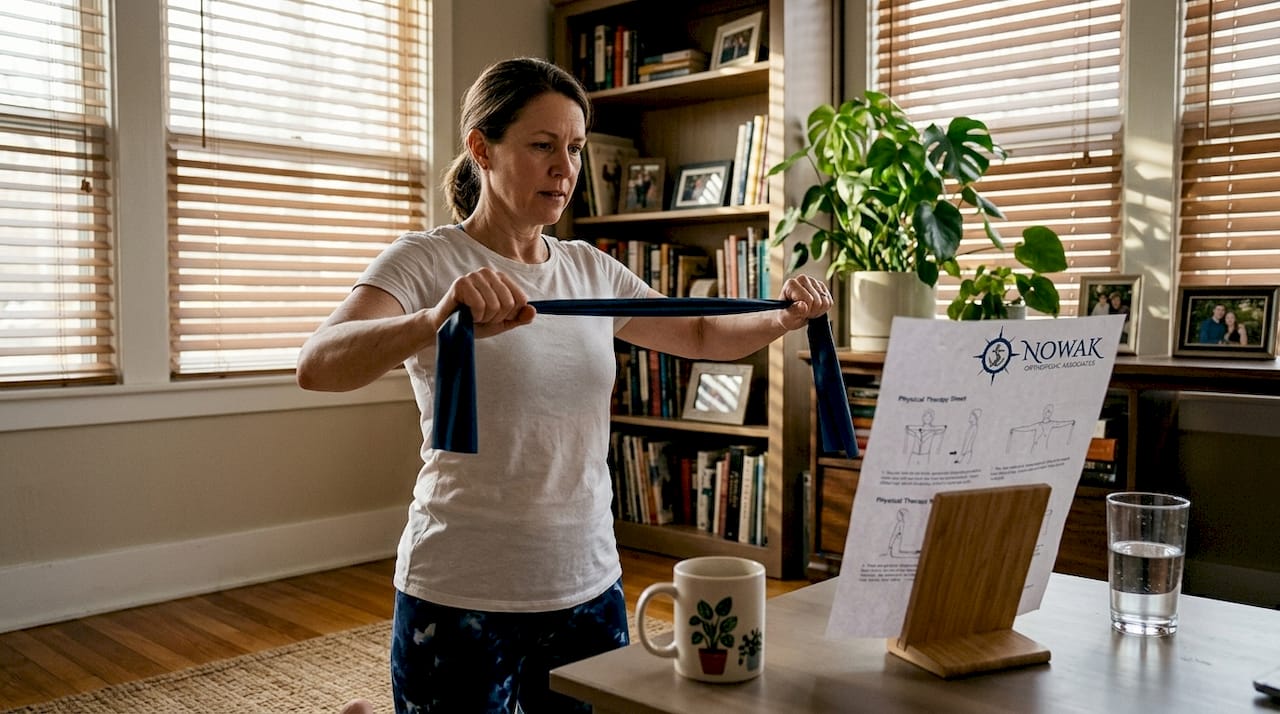
Pro Tip: If shoulder pain is waking you up at night, that is your signal to start non-surgical shoulder treatment right away. Most night pain improves within a month when you address it promptly with guidance from shoulder specialists in NH.
Surgical solutions: When and what to consider
While most people recover without surgery, there are times when an operation makes sense. Here’s what you need to know when considering this option.
Surgery is generally indicated when:
- Conservative care has failed after three to six months of consistent effort
- You have a complete, full-thickness rotator cuff tear causing significant functional loss
- Severe shoulder arthritis is limiting basic daily activities
- There is acute instability from a Bankart lesion or repeated dislocations
“Not everyone with structural damage needs surgery. The decision should always weigh function, pain level, and the patient’s personal goals against the risks and recovery demands of an operation.”
Modern surgical techniques have advanced significantly. Arthroscopy, replacements, balloon spacers, and FiberLocker are among today’s surgical options for severe or complex shoulder cases. Arthroscopy is minimally invasive, allowing surgeons to repair tendons or remove damaged tissue through tiny incisions. Learn more about what to expect in a shoulder arthroscopy overview before making your decision.
For patients comparing procedures, our guide on arthroscopy vs other surgeries outlines key differences. And if surgery is the right call, preparing for shoulder surgery well in advance dramatically improves your outcome.
Innovative and regenerative therapies: What’s new and what’s hype
If conservative or traditional surgical options fall short, you may be offered newer therapies. Here’s a candid look at their pros and cons.
The main emerging therapies available today include:
- Platelet-rich plasma (PRP) injections: Concentrated growth factors from your own blood, injected to stimulate tendon and tissue healing
- Stem cell therapies: Cells harvested from bone marrow or fat tissue, used to promote structural repair
- Balloon spacers: Biodegradable implants placed under the shoulder to temporarily support the joint when a rotator cuff cannot be repaired
- SoftWave therapy: An advanced acoustic wave treatment that activates the body’s natural repair process without needles or incisions
PRP and stem cell therapies show real promise, particularly for tendinopathy and partial tears, but they remain experimental. Long-term data is still limited, and insurance coverage is inconsistent.
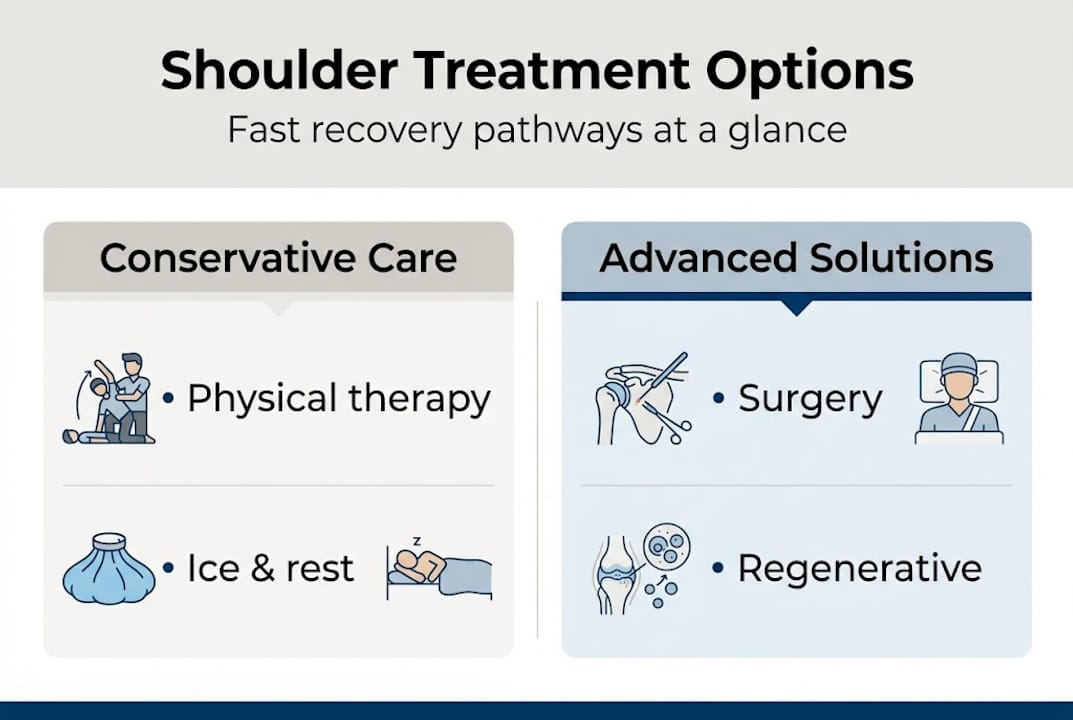
The honest picture: these therapies can be a valuable bridge between conservative care and surgery for the right patient. But they are not a guaranteed fix, and the cost can be significant out of pocket.
Pro Tip: Before scheduling any regenerative treatment, call your insurance provider directly to confirm coverage. Many patients are surprised to find these PRP treatment options are not covered as standard benefits, even when recommended by a physician.
Our expert perspective: Getting back to full function faster
With a better understanding of all your options, here’s our take on what works best for most people navigating shoulder injuries.
We have seen it repeatedly: patients who engage early with physical therapy and commit to their home exercise program recover faster and with less intervention. The patients who struggle most are often those who delayed care, hoping the pain would disappear on its own, or those who pushed for surgery before conservative care had a real chance.
Prioritize conservative management first; reserve surgery for cases with clear structural failure or failure of non-operative care. This is not just our preference, it is the clinical standard.
Two markers tell us recovery is on track: your pain is decreasing within the first two to four weeks, and your range of motion is steadily improving. If neither is happening, that is when escalation becomes a conversation. Investing in prepping for recovery before any procedure also pays dividends no matter which path you take.
Expert orthopedic care for every shoulder journey
If you’re seeking tailored shoulder injury care in New Hampshire, we are here to help you find the right path forward. At Nowak Orthopedic Associates, Dr. Roger B. Nowak and our care team offer everything from conservative rehabilitation to advanced minimally invasive surgery, all under one roof in Hampton, NH. Whether you need to find a shoulder specialist for an accurate diagnosis, want to explore non-surgical options before committing to anything, or are ready to review orthopedic procedures for relief, we will build a plan that fits your goals and your life.
Frequently asked questions
How long does shoulder pain from a rotator cuff tear last?
8 in 10 partial tears improve with non-surgical care over weeks to months, but complete tears or ignored injuries may cause persistent pain well beyond that timeframe.
When is surgery absolutely necessary for a shoulder injury?
Surgery is warranted for full-thickness rotator cuff tears, severe arthritis that does not respond to other care, or when conservative management fails after a reasonable trial period.
What is the success rate of physical therapy for frozen shoulder?
PT resolves night pain in roughly one month for most patients, with success rates reaching up to 90% and full range of motion restored over 9 to 12 months of consistent care.
Are platelet-rich plasma (PRP) and stem cell therapies effective for shoulder injuries?
These regenerative therapies show promise in certain cases but are still considered experimental, meaning results vary and they may not outperform traditional approaches for every patient.
Is it safe to delay treatment for a shoulder injury?
Delaying evaluation is risky. Prompt conservative treatment improves non-surgical outcomes and prevents minor injuries from advancing into conditions that may eventually require surgery.