

TL;DR:
- Advanced orthobiologic therapies like PRP and stem cell injections show promise but depend heavily on proper selection, preparation, and patient-specific factors. Evidence suggests they may benefit mild to moderate knee osteoarthritis, especially when paired with rehabilitation, but long-term results remain uncertain. Careful consultation and individualized treatment plans are essential to achieve realistic outcomes.
If you’ve been told that a single injection will fix your joint pain and have you back on the trails or the field within weeks, it’s worth pausing on that promise. Advanced orthobiologic therapies, which include platelet-rich plasma (PRP), stem cell injections, and newer experimental options like exosomes, are generating real excitement in orthopedic care. But the evidence tells a more nuanced story. Outcomes depend heavily on how therapies are chosen, prepared, and matched to the specific patient and joint condition. Understanding those details is what separates realistic hope from disappointment.
Table of Contents
- What are advanced therapies for joint recovery?
- Matching therapies to joint condition: Evidence and practical guidance
- Clinical results: What data shows about advanced therapies
- The importance of protocol and rehab: What most people miss
- What experts wish every patient knew about advanced therapies
- Discover advanced joint recovery options in New Hampshire
- Frequently asked questions
Key Takeaways
| Point | Details |
|---|---|
| Therapies must be matched | Advanced joint therapies work best when matched to specific patient conditions and disease stage. |
| Protocols affect outcomes | Variations in biologic preparation and delivery are a major reason for differing clinical results. |
| Evidence varies | PRP and stem cell therapies show mild improvements in function for mild-moderate cases, but are not recommended for advanced disease. |
| Rehabilitation matters | Combining biologics with well-designed rehab plans increases the chance of successful joint recovery. |
| Safety and standards needed | Newer therapies like exosomes remain experimental; safety and regulatory clarity are essential. |
What are advanced therapies for joint recovery?
Orthobiologics are a class of treatments that use substances derived from your own body, or from carefully processed biological sources, to support healing. The most widely used are orthobiologic options such as PRP, mesenchymal stem cells (also called bone marrow or adipose-derived cells), and, more recently, extracellular vesicles and exosomes. Each is designed to interact with the injured tissue at a cellular level rather than simply masking pain.
The core idea is biological modulation. Rather than suppressing inflammation with a corticosteroid, orthobiologic injections aim to modulate inflammation and stimulate tissue repair. Growth factors in PRP, for example, signal cells to migrate, proliferate, and rebuild damaged structures. Stem cells may differentiate into cartilage-like tissue, at least in laboratory models. These mechanisms are compelling, and they are why so many patients and clinicians are paying attention.
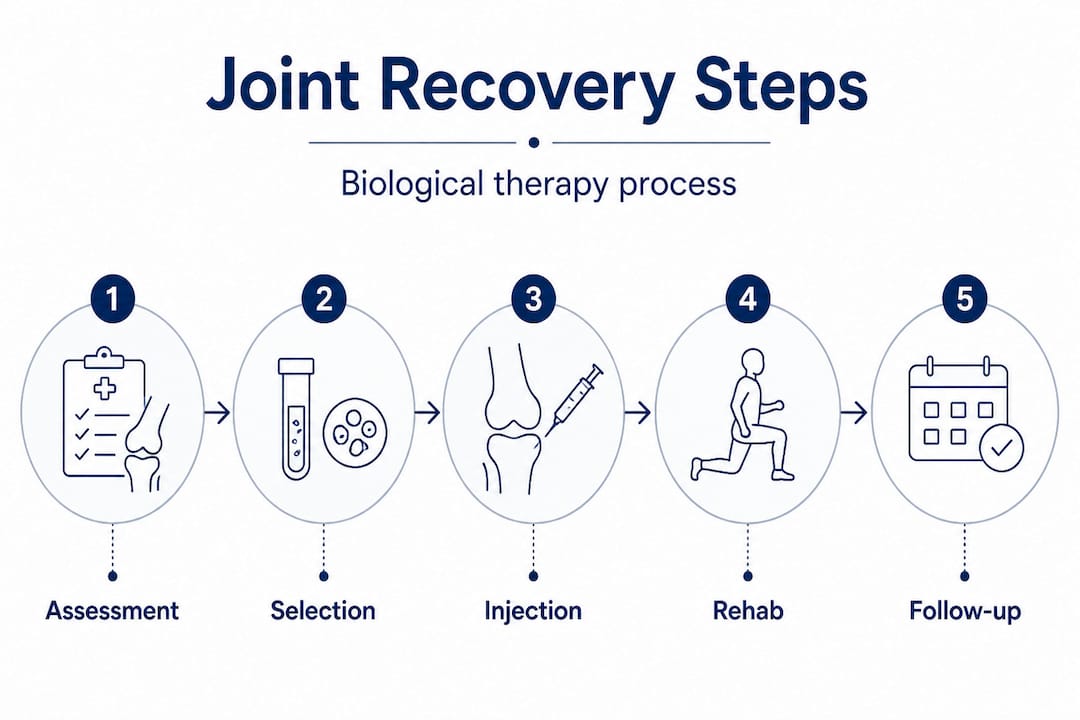
Here is a quick comparison of the major modalities:
| Therapy | Source | Primary mechanism | Evidence level |
|---|---|---|---|
| PRP | Patient’s own blood | Growth factor release, inflammation modulation | Moderate, variable protocols |
| Stem cells | Bone marrow or fat tissue | Tissue differentiation, paracrine signaling | Low to moderate |
| Exosomes | Cell-derived vesicles | Intercellular communication | Investigational only |
Key facts about each option:
- PRP is the most clinically studied and widely available orthobiologic therapy.
- Stem cell injections show biological promise but carry significant uncertainty in high-quality clinical trials.
- Exosomes are described as investigational with limitations in evidence and safety or regulatory status, meaning they should be approached with real caution.
- Effectiveness varies based on preparation, delivery method, and the underlying condition of the joint.
With these therapies defined, let’s examine how patient selection and protocol impact results.
Matching therapies to joint condition: Evidence and practical guidance
Not every patient with joint pain is a candidate for every advanced therapy. The evidence makes this clear, and guidelines from major orthopedic organizations reinforce it.
For knee osteoarthritis (OA), the condition most studied in this space, here is what the evidence shows:
- PRP may offer symptom and function benefits in mild to moderate disease. Guidance bodies acknowledge possible symptom benefits in mild-to-moderate knee OA, while also highlighting major variability and the lack of universal standardization in preparation protocols.
- For stem cell injections, the Cochrane review found low-certainty evidence of slight improvements in pain and function up to six months versus placebo. That uncertainty extends to effects on disease progression and quality of life.
- Conservative care should come first. PRP and stem cell therapy are generally considered after physical therapy, activity modification, and conventional injections have been tried.
- Advanced hip and knee OA is a different picture entirely. The American Association of Hip and Knee Surgeons states biologic injections cannot be recommended for routine treatment in advanced disease because they have not been shown to restore cartilage or demonstrate significant benefit over comparators.
“For patients with mild-to-moderate knee osteoarthritis who haven’t responded to conservative care, PRP represents a reasonable option to discuss, but the conversation must include honest expectations about protocol variability and evidence limitations.”
This matters for athletes and active adults in New Hampshire especially. If you are managing a training-related knee injury or early-stage cartilage wear, the conversation about biologics is worth having with your orthopedic provider. If your imaging shows bone-on-bone changes, a different orthopedic procedures for joint pain path, including surgical options, may serve you better.
Pro Tip: Before agreeing to any biologic injection, ask your provider exactly what stage your osteoarthritis is at on imaging, and request a clear explanation of which protocol they use. That information changes whether the treatment is appropriate for you.
Clinical results: What data shows about advanced therapies
When we look at real-world outcomes rather than laboratory models, the picture becomes more concrete and also more realistic.
A retrospective clinical series involving 120 patients with training-induced knee traumatic osteoarthritis treated with PRP found that the Lysholm Knee Score improved and pain decreased at three months, with MRI cartilage damage scores also slightly reduced. That is meaningful data for athletes with a specific injury pattern.
| Outcome measure | Result at 3 months |
|---|---|
| Lysholm Knee Score | Significant improvement |
| Pain score | Decreased |
| MRI cartilage damage | Slightly reduced |
These findings come with important context. This was a retrospective series, not a randomized controlled trial. The patients had a specific type of knee pathology related to training. Improvements in function scores are promising, but the degree of cartilage change on MRI was modest. This is where statistical significance and clinical significance diverge. A statistically significant result means the change was unlikely to be due to chance. A clinically significant result means the patient actually feels and functions better in a meaningful way in daily life.
Key takeaways from the clinical evidence:
- PRP shows the most consistent signal for mild to moderate disease and training-related injuries.
- Improvement is most likely when the joint is not already severely degenerated.
- MRI changes, while encouraging, do not always translate to proportional functional gains.
- Long-term durability beyond six to twelve months remains under-studied across most biologic modalities.
Results like these offer genuine hope, but they also highlight the need for careful protocol selection and realistic expectations going in.
The importance of protocol and rehab: What most people miss
Here is something most patients never hear in the consultation room: the phrase “PRP injection” can mean dozens of different things depending on where you receive it and who prepares it.
A recurring expert insight is that “advanced therapy” is not a single product. Differences in preparation, including platelet concentration, leukocyte (white blood cell) content, and activation method, can change what is actually injected. This explains why clinical trial outcomes vary so widely and why standardization is repeatedly called for in the medical literature.
- Platelet concentration affects how many growth factors are delivered to the tissue.
- Leukocyte content determines whether the preparation is pro-inflammatory or anti-inflammatory, which matters depending on the condition.
- Activation method (using thrombin, calcium, or none at all) influences how quickly growth factors are released.
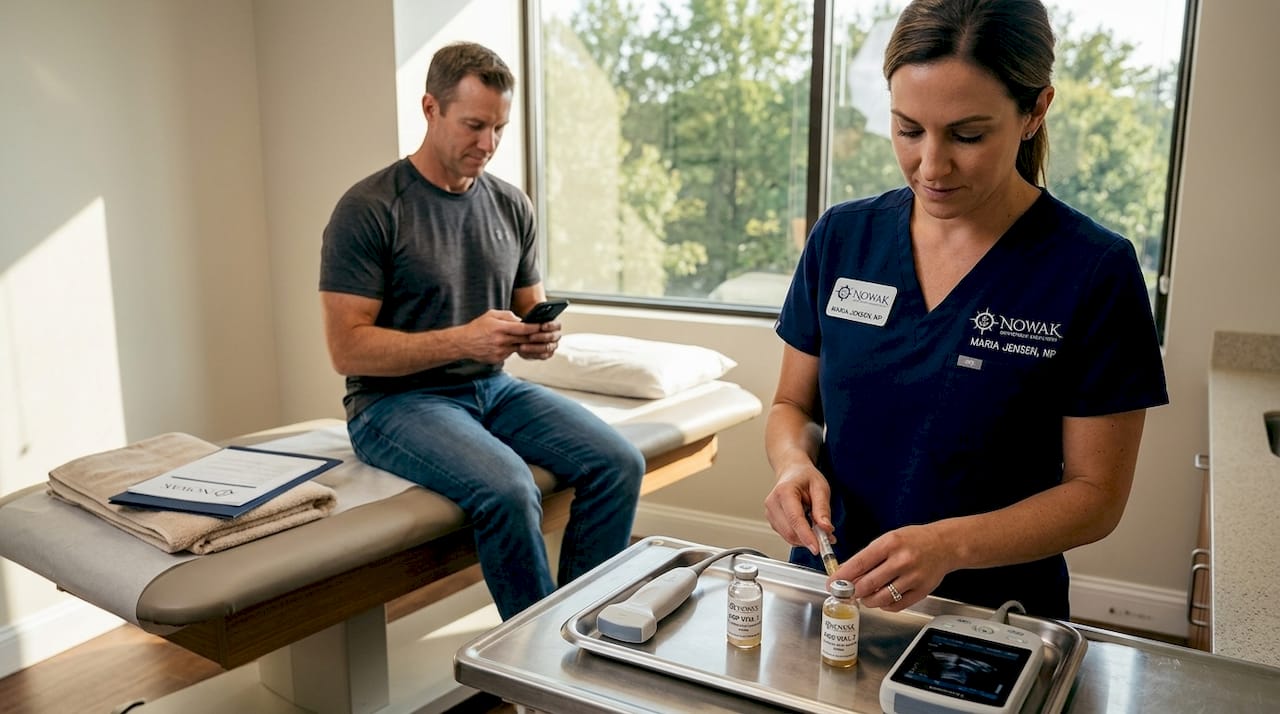
- Injection guidance (ultrasound versus unguided) affects whether the biologic actually reaches the target tissue.
Beyond protocol, rehabilitation timing is just as critical. High-level reviews stress that rigorous, protocol-harmonized trials are needed to confirm long-term benefits and true disease-modifying effects, including studies that examine what happens when biologics are paired with structured rehabilitation.
“An injection without a rehabilitation plan is like replacing one part of a machine while leaving the rest to wear down. Both the tissue repair stimulus and the movement-based loading signal are needed to drive recovery.”
Pro Tip: When you consult about a biologic injection, ask specifically: What is the platelet concentration in this preparation? Will the injection be ultrasound-guided? And what rehabilitation program do you recommend starting after the injection? These three questions will tell you a great deal about the quality of care you are receiving. Explore your joint procedure options with a provider who can answer all three clearly.
What experts wish every patient knew about advanced therapies
Here is the perspective we think deserves more airtime, because it rarely gets said clearly enough in a consultation.
The genuine power of advanced therapies lies not in the therapy itself but in the precision of the match between the method, the protocol, and the patient’s specific condition. This is where regenerative relief insights from experienced orthopedic providers make the difference between good outcomes and wasted investment.
There is a troubling pattern in how these treatments are sometimes marketed. Patients arrive having read about stem cells or exosomes online and are convinced those are the answer before they have had a full clinical evaluation. The evidence does not support that approach. What it does support is individualized decision-making, where the orthopedic provider reviews imaging, assesses disease severity, understands your activity goals, and then selects the most appropriate path.
Resist the pull of one-size-fits-all thinking. Clinical evidence evolves, and what works best is rarely the newest or most expensive option. It is the option most precisely matched to your biology and your goals. Long-term success depends as much on committing to rehabilitation, maintaining realistic expectations, and following through on provider guidance as it does on which biologic you choose. The injection opens a window of opportunity. Rehab is how you climb through it.
Discover advanced joint recovery options in New Hampshire
At Nowak Orthopedic Associates, we believe that choosing the right therapy starts with a thorough understanding of your joint condition, your activity level, and your goals. Our regenerative clinic offers PRP, orthobiologic therapies, SoftWave therapy, and guided stretch therapy, all delivered with individualized protocols rather than one-size-fits-all approaches. Whether you are an athlete managing a training injury or an adult dealing with progressive joint pain, we build a plan around your specific situation. Learn more about our approach to athlete injury treatment or take the first step by scheduling a visit. Schedule your first visit with our team today.
Frequently asked questions
Are advanced joint therapies covered by insurance?
Most orthobiologic and regenerative injections are not covered by major insurance plans and are considered out-of-pocket medical expenses, a fact noted in the AAHKS position on biologics given the current lack of evidence for routine treatment.
How long does it take to see results from PRP or stem cell therapy?
Most patients see symptom and function improvements within three to six months, though results depend significantly on condition severity and the specific protocol used, with stem cell studies showing mean pain improvements of about 1.2 points versus placebo at up to six months.
Is there a standard protocol for PRP in knee osteoarthritis?
There is no universal PRP protocol; preparation, concentration, and dosing vary widely between providers, which is why variability and lack of standardization remain ongoing concerns in the clinical literature.
Are exosome therapies for joint pain proven and safe?
Exosome treatments are currently considered investigational with unestablished safety and effectiveness, and patients should approach any provider offering them commercially with significant caution until higher-quality evidence is available.