

TL;DR:
- Orthobiologics encompass various biological treatments, with PRP being one specific, minimally invasive option.
- Preparation methods and invasiveness vary, impacting recovery and patient experience.
- Evidence supports PRP for short-term joint pain relief, especially in knee osteoarthritis, but outcomes can differ.
If you’ve been researching non-surgical options for joint pain, you’ve likely come across both PRP and orthobiologics, sometimes used interchangeably and sometimes described as completely separate things. This confusion is understandable, but it can lead to unclear expectations, misguided treatment choices, and frustration when results don’t match what you read online. In this guide, we’ll clarify exactly what these terms mean, how the treatments differ in preparation and administration, what the science says about how they work, and how to have a more productive conversation with your orthopedic provider about which option fits your situation.
Table of Contents
- What are orthobiologics and where does PRP fit in?
- How PRP and other orthobiologics are prepared and administered
- Mechanisms of action: What does the science say?
- How do results compare for joint pain and injury?
- Guidelines, controversies, and what to ask your doctor
- The uncomfortable truth: Why outcome consistency still lags behind the hype
- Explore your options with a trusted orthopedic team
- Frequently asked questions
Key Takeaways
| Point | Details |
|---|---|
| PRP is one type | Platelet-rich plasma (PRP) is a type of orthobiologic but not the only option available. |
| Procedures differ | PRP is minimally invasive while other orthobiologics often require tissue harvesting. |
| Results can vary | Both PRP and other orthobiologics offer pain relief, but effectiveness depends on your condition and treatment consistency. |
| Evidence gaps remain | Both therapies lack long-term standardized data, making guideline-driven decisions important. |
| Discuss with experts | Always consult your orthopedic specialist to choose the right biologic treatment for your needs. |
What are orthobiologics and where does PRP fit in?
Let’s start with the broader category. Orthobiologics are biological substances, drawn from either your own body (autologous) or a donor source (allogeneic), used in orthopedics to support musculoskeletal healing. PRP is one specific type within that category, but it sits alongside several other treatment options that work through different mechanisms and involve different levels of complexity.
The major types of orthobiologics include:
- PRP (Platelet-Rich Plasma): Concentrated platelets from your own blood, rich in growth factors
- BMAC (Bone Marrow Aspirate Concentrate): Stem cells and growth factors harvested from bone marrow
- Adipose-derived products: Cells extracted from fat tissue, often containing mesenchymal stem cells
- Bone grafts: Structural bone material used to fill defects or support fusion
- Amniotic tissues: Donated placental or amniotic membrane products with anti-inflammatory properties
Understanding platelet-rich plasma injections as just one option within this broader family helps you see that not all orthobiologics are created equal. Some are more invasive. Some are better suited to specific conditions. And some carry more uncertainty in terms of long-term outcomes.
Key insight: Because orthobiologics is an umbrella term, the phrase “I’m getting an orthobiologic treatment” tells you very little about what’s actually being done. Always ask which specific therapy is being recommended and why.
| Type | Source | Primary intended effect |
|---|---|---|
| PRP | Patient’s blood | Growth factor delivery, inflammation modulation |
| BMAC | Patient’s bone marrow | Stem cell therapy, tissue regeneration |
| Adipose-derived | Patient’s fat tissue | Mesenchymal stem cell delivery |
| Bone graft | Patient or donor bone | Structural support, bone healing |
| Amniotic tissue | Donated placental tissue | Anti-inflammatory, scaffold support |
Exploring orthobiologic injections in more detail can help you understand how these options translate into clinical practice.
How PRP and other orthobiologics are prepared and administered
Once you understand what falls under orthobiologics, it’s essential to see how these therapies are actually obtained and given. The preparation method matters, both for understanding what you’ll experience as a patient and for setting realistic expectations about recovery and potential discomfort.
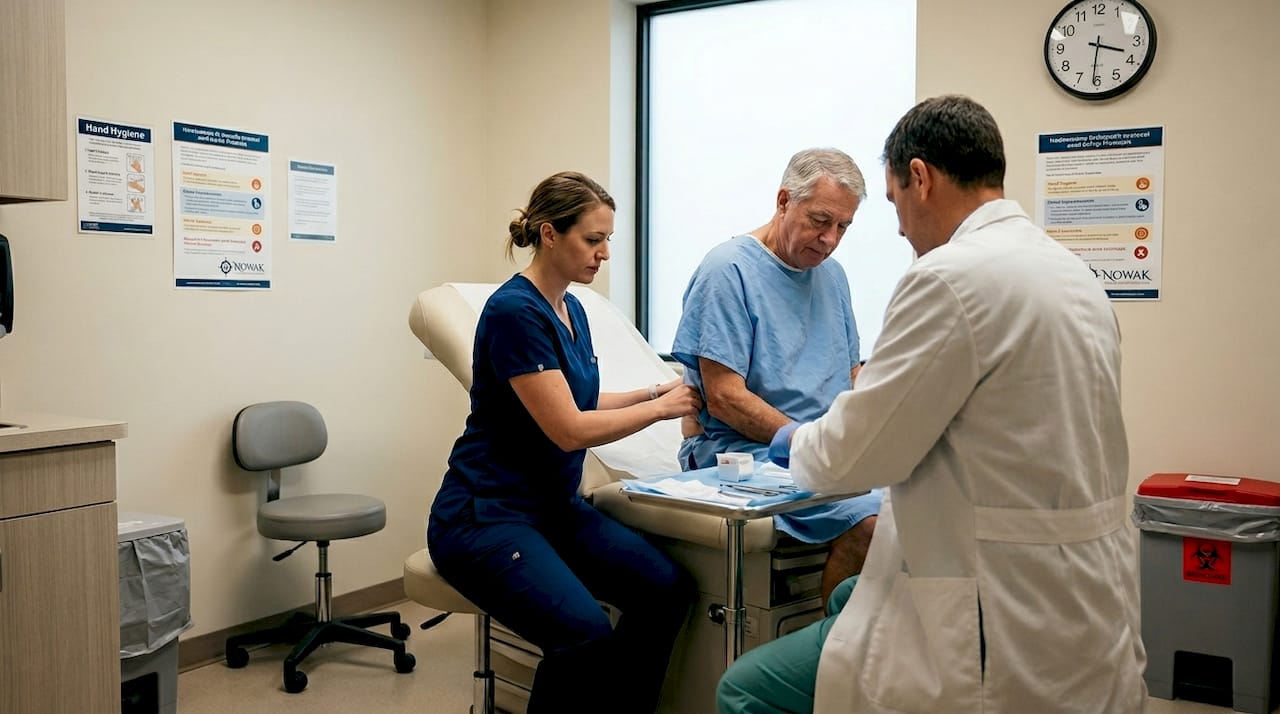
PRP is prepared by centrifuging a small sample of your peripheral blood, a simple and minimally invasive process. Here’s what a typical PRP session looks like:
- A standard blood draw is taken from your arm (usually 30 to 60 ml)
- The blood is placed in a centrifuge and spun to separate platelets from red blood cells
- The concentrated platelet layer is extracted
- The PRP is injected into the affected joint or tissue, often guided by ultrasound
The entire process typically takes under an hour, and most patients return home the same day with minimal downtime.
Contrast that with BMAC, which requires a needle inserted into the iliac crest of the pelvis to aspirate bone marrow. This is more involved, may require local sedation or anesthesia, and carries a longer recovery window. Adipose-derived treatments involve liposuction to harvest fat from the abdomen or thigh, processed in a lab before injection. Allogeneic tissues like amniotic products skip the harvesting step entirely, since they’re donor-sourced, but they introduce different considerations around tissue matching and regulatory oversight.
Pro Tip: Before agreeing to any orthobiologic treatment, ask your provider specifically: “How is this prepared? How invasive is the harvesting process? What is the recovery time, and what are the known risks?” These questions help you compare options clearly and make sure the complexity of the procedure matches what your condition actually requires.
| Treatment | Source material | Preparation method | Invasiveness |
|---|---|---|---|
| PRP | Patient blood | Centrifugation | Minimal |
| BMAC | Patient bone marrow | Aspiration + concentration | Moderate to high |
| Adipose-derived | Patient fat | Liposuction + processing | Moderate |
| Amniotic tissue | Donor placental tissue | Processed/banked | None (donor-based) |
Mechanisms of action: What does the science say?
Knowing their origins helps, but the real question is: what happens inside your body when you get each therapy? This is where PRP and other orthobiologics diverge most significantly.
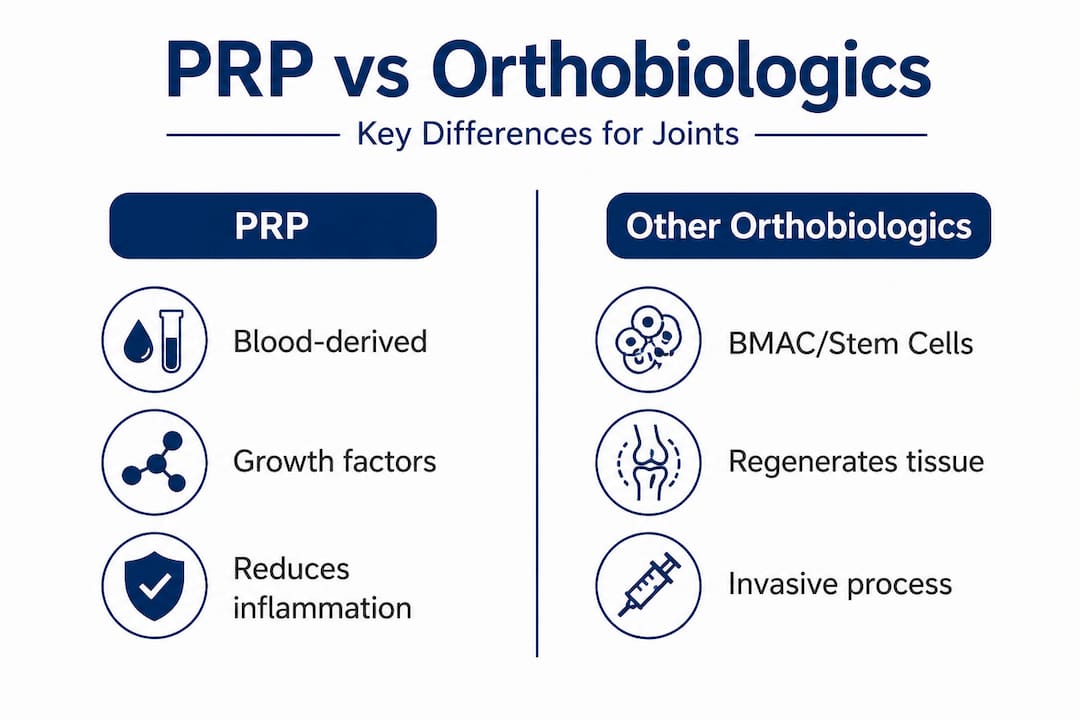
PRP works primarily by delivering a concentrated dose of growth factors directly to damaged tissue. These include PDGF, TGF-beta, and VEGF, which are signaling proteins that trigger inflammation control, cell migration, and tissue repair. The effect is essentially short-to-medium term: your body receives a targeted signal to ramp up its natural healing response. PRP does not introduce new cells. It works through the growth factors already present in your platelets.
Broader orthobiologics, particularly those containing mesenchymal stem cells (MSCs) from BMAC or adipose tissue, offer a different mechanism. These therapies may allow stem cells to differentiate into bone, cartilage, or tendon cells depending on the local environment. They also exert paracrine effects, meaning they send chemical signals to neighboring cells that influence how surrounding tissue behaves. This includes immune modulation, which can be important in inflammatory joint conditions.
Here’s a quick comparison of biological effects:
- PRP: Growth factor delivery, inflammation reduction, repair signal stimulation, no new cell introduction
- BMAC/MSC-based products: Potential cell differentiation, paracrine signaling, immunomodulation, longer-term regenerative effects
- Amniotic tissues: Scaffold support, anti-inflammatory cytokines, limited regeneration
- Adipose-derived: Similar to BMAC in stem cell content, though concentration and viability vary
The distinction between “stimulating repair” (PRP) and “potentially regenerating tissue” (stem cell-based orthobiologics) is clinically meaningful. It shapes which conditions each treatment is best suited for and what kind of outcome you should realistically expect.
How do results compare for joint pain and injury?
Of course, what matters most is real-world results. Does one treatment actually help joint pain more than another?
For knee osteoarthritis (OA), the current evidence favors PRP in the short-to-medium term. PRP shows superior pain relief compared to hyaluronic acid and corticosteroids in knee OA, with meta-analyses showing a mean difference of approximately 16.4 mm on pain scales at six months. That’s a clinically meaningful difference. There are also more randomized controlled trials (RCTs) supporting PRP (around 119) compared to corticosteroid options (around 103), giving clinicians a stronger evidence base to draw from.
For conditions like disc degeneration, MSC-based orthobiologics have shown sustained benefits in some studies extending out to 72 months, though the effect sizes vary and direct comparisons to PRP are limited. Explore orthopedic injection outcomes for a broader picture of what different injections can realistically achieve.
| Condition | PRP evidence | Other orthobiologics evidence |
|---|---|---|
| Knee osteoarthritis | Strong short-mid term pain relief | Limited, inconsistent |
| Disc degeneration | Moderate | Sustained effects in select studies |
| Tendon injuries | Moderate to strong | Less studied |
| Cartilage defects | Moderate | BMAC showing promise in research |
Pro Tip: No single therapy works for every patient or every joint condition. Research results reflect averages across populations; your individual response may differ. Ask your provider to walk you through the evidence specific to your diagnosis, not just the general category of treatment.
Reviewing orthobiologic results in the context of your specific diagnosis is the most useful next step.
Guidelines, controversies, and what to ask your doctor
The data is promising but often debated, so what do leading authorities and guideline panels actually recommend?
Guidelines from the AAOS and ESSKA are cautious. Both organizations acknowledge that PRP may benefit patients with mild osteoarthritis but stop short of recommending it as a replacement for standard care. The primary concerns are lack of standardization in how PRP is prepared and administered, variability in platelet concentrations, and inconsistent long-term data. Those same concerns apply even more broadly to other orthobiologics, where the evidence base is still maturing.
Guideline summary: PRP is viewed as adjunctive therapy for mild OA, not a first-line or replacement treatment. Other orthobiologics carry even more regulatory and evidence uncertainty. Use them as part of a comprehensive, individualized care plan.
Key questions to ask your provider before choosing any orthobiologic treatment:
- How many of these procedures have you performed, and what protocols do you follow?
- How does this treatment align with current clinical guidelines for my specific diagnosis?
- What are the realistic short-term and long-term outcomes I should expect?
- Are there published studies or trials supporting this approach for my condition?
- What happens if this treatment doesn’t provide relief?
Learning more through our orthobiologics options guide can prepare you to have this conversation with more confidence.
The uncomfortable truth: Why outcome consistency still lags behind the hype
Here’s what we think patients deserve to hear directly. Despite the excitement surrounding regenerative medicine, the variability in outcomes is real and documented. Two patients with the same diagnosis receiving PRP at different clinics may have very different experiences, not because one was unlucky, but because lack of standardization in PRP protocols means the platelet concentration, activation method, and injection technique can differ significantly from one provider to the next.
This isn’t a reason to avoid these therapies. It’s a reason to choose your provider carefully. Clinics that follow evidence-based protocols, track patient outcomes, and engage with emerging clinical research are far more likely to deliver consistent, meaningful results. Lasting results in regenerative orthopedics come from combining the right therapy with the right preparation and the right clinical judgment.
Pro Tip: Ask any provider offering PRP or orthobiologics how they standardize their preparation process and whether they track patient outcomes over time. A provider who can answer these questions specifically is one operating at a higher clinical standard.
Explore your options with a trusted orthopedic team
Now that you have a clearer picture of how PRP and orthobiologics differ, the most important next step is a personalized evaluation. At Nowak Orthopedic Associates, our regenerative clinic offers a range of evidence-informed therapies, including PRP injections, orthobiologic treatments, SoftWave therapy, and guided stretch therapy, all tailored to your specific diagnosis and goals. We encourage you to read our advanced joint care guide and explore our joint pain relief procedures to understand the full spectrum of what’s available. Contact our Hampton, NH office to schedule a consultation with Dr. Nowak and start building a care plan built around your needs.
Frequently asked questions
Is PRP considered an orthobiologic treatment?
Yes, PRP is a type of orthobiologic treatment commonly used to promote tissue healing and reduce pain, but it represents just one option within a much broader family of biological therapies.
Which works better for knee osteoarthritis: PRP or other orthobiologics?
PRP provides better short-term pain relief for knee OA compared to hyaluronic acid and corticosteroids, though some orthobiologics may offer longer-term benefits for conditions like disc degeneration.
Are PRP injections less invasive than stem cell or BMAC treatments?
Yes, PRP requires only a blood draw and centrifugation, making it far less invasive than BMAC, which involves bone marrow aspiration, or adipose treatments, which require liposuction.
Are there risks or limitations to choosing PRP or orthobiologics?
Both treatment types carry limitations, including inconsistent results and limited standardization highlighted by AAOS/ESSKA guidelines, so discussing your specific diagnosis and realistic expectations with a knowledgeable provider is essential.
How do I know if PRP or another orthobiologic is right for me?
A thorough orthopedic evaluation that considers your diagnosis, joint condition severity, activity goals, and previous treatments is the most reliable way to determine which regenerative therapy, if any, is the right fit for you.