

TL;DR:
- Physical therapy addresses the root causes of joint pain and injuries through targeted exercises, manual therapy, and modalities.
- Research shows PT outperforms medications and injections for long-term pain relief, function, and re-injury prevention.
- Starting PT early and following personalized programs can improve recovery, prevent future injuries, and reduce the need for surgery.
Many people dealing with joint pain or sports injuries assume that rest, over-the-counter medication, or a quick cortisone shot will solve the problem. But these approaches often mask symptoms rather than address what is actually driving your pain. Physical therapy restores movement, reduces pain, and improves function through targeted exercises, manual therapy, and modalities such as joint mobilization and progressive strengthening. If you are living with chronic knee pain, recovering from a shoulder injury, or trying to get back to the sport you love, understanding what physical therapy can truly do for you may change the way you approach your care.
Table of Contents
- The science behind physical therapy: How it actually works
- Physical therapy vs traditional alternatives: What the evidence shows
- Who benefits most? Common conditions physical therapy treats
- Physical therapy as part of your orthopedic care: When and how to start
- Our perspective: Why most people underestimate physical therapy’s impact
- Get the care you deserve: Next steps with Nowak Orthopedics
- Frequently asked questions
Key Takeaways
| Point | Details |
|---|---|
| Treats root causes | Physical therapy fixes underlying movement issues, not just symptoms. |
| Beats quick fixes | Research shows PT offers better long-term results compared to pain meds and injections for joint pain. |
| Supports full recovery | Over 70% achieve significant pain relief, function gains, and reduced re-injury risk with physical therapy. |
| Integrates with orthopedic care | Physical therapy works with minimally invasive procedures and post-surgery rehab for better outcomes. |
The science behind physical therapy: How it actually works
Physical therapy is a clinically guided practice that addresses the underlying causes of pain and movement problems, not just the surface symptoms. It brings together three main approaches: exercise therapy, manual therapy, and therapeutic modalities.
Exercise therapy involves targeted movements designed to restore strength, improve range of motion, and rebuild neuromuscular control (the brain-body communication that keeps joints stable). Manual therapy includes hands-on techniques like joint mobilization, soft tissue work, and stretching that a licensed therapist applies directly to the affected area. Therapeutic modalities may include ultrasound, electrical stimulation, or other tools that support tissue healing and reduce inflammation.
What sets physical therapy apart from simply resting an injury is that it actively retrains the body. When a joint is injured, nearby muscles often weaken or become uncoordinated. PT targets this directly with evidence-based joint pain relief strategies that restore strength, mobility, and balance together. You will find that what to expect in physical therapy goes well beyond simple stretching routines.
Key benefits of a structured PT program include:
- Reduced joint inflammation through guided movement
- Improved muscle strength and coordination around vulnerable joints
- Restored range of motion after injury or surgery
- Better balance and proprioception (your body’s sense of its own position)
- Lower risk of re-injury through corrective movement training
Pro Tip: A customized PT plan built around your specific injury and activity goals will always outperform a generic program. Cookie-cutter exercises miss the biomechanical details that matter most to your recovery.
Physical therapy vs traditional alternatives: What the evidence shows
It is one thing to say physical therapy works. It is another to show the numbers. The research comparing PT to common alternatives like steroid injections and pain medication is compelling, particularly for knee and sports injuries.
A rigorous randomized controlled trial found that PT outperformed glucocorticoid injections for both knee osteoarthritis (OA) and meniscal tears, with significantly better WOMAC scores (76.85 vs 99.55, p less than 0.001) measuring pain, stiffness, and physical function at one year. Patients in the PT group also showed superior pain relief and proprioception compared to those receiving injections alone.
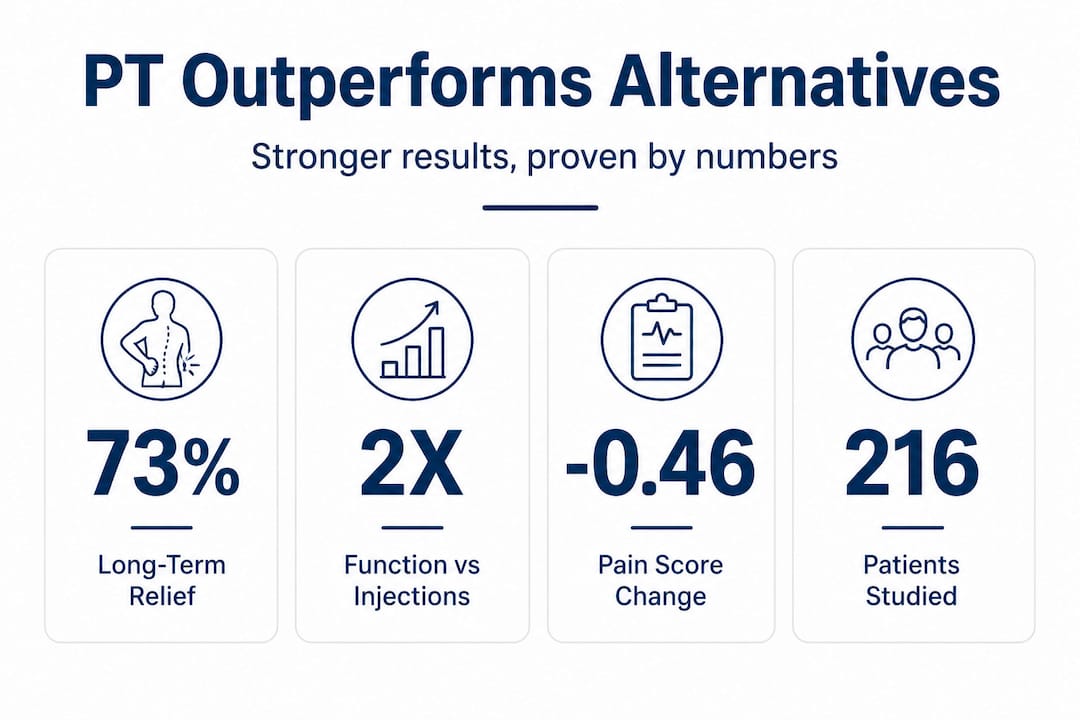
For sports injuries specifically, a study of 216 patients showed that 73% of PT users reported long-term resolution compared to those relying primarily on pain medications. That same study found 86% of patients experienced meaningful pain reduction, 74% achieved functional recovery, 64% returned to their sport, and only 9% experienced re-injury.
| Outcome | Physical therapy | Injections or medication |
|---|---|---|
| Long-term pain relief | High (86%) | Moderate, often temporary |
| Functional recovery | 74% restored function | Limited without rehab |
| Return to sport | 64% successful | Variable, lower without PT |
| Re-injury rate | 9% | Higher without PT |
| Knee OA WOMAC score | 76.85 (better) | 99.55 (worse) |
These numbers tell a clear story. When you compare PT to joint pain injections alone, the advantage of therapy extends well beyond the short term. And for those focused on knee recovery with physical therapy, the data is especially encouraging.
“Physical therapy addresses the root cause of joint pain and sports injuries rather than masking symptoms, making it the most durable first-line option for most active adults.”
Who benefits most? Common conditions physical therapy treats
Physical therapy is not reserved for elite athletes or post-surgical patients. It benefits a wide range of people, from someone managing chronic knee arthritis to a weekend hiker dealing with a nagging ankle sprain.
A meta-analysis examining lower-limb injuries found that PT significantly reduced ankle sprain pain (WMD -0.46 on the visual analog scale), improved knee flexion range of motion by an average of 11 degrees, and produced a strong pain reduction effect size (SMD -0.93) across multiple conditions. These are not small gains. They represent real, measurable improvements in daily function.
Physical therapy has also shown meaningful results in edge cases that often go underserved. For chronic low back pain, PT produces better functional improvement than cognitive behavioral therapy alone, even if results in this population tend to be more gradual. For patients with hypermobility disorders, tendinopathies (like patellar tendinitis or Achilles tendinitis), and those recovering from procedures like ACL reconstruction or meniscus repair, structured PT is essential for restoring normal movement patterns.
Common conditions that respond well to physical therapy include:
- Knee osteoarthritis (cartilage wear causing pain and stiffness)
- Meniscus injuries (tears in the knee’s cushioning tissue)
- Ankle sprains and ligament strains
- Rotator cuff strains and shoulder impingement
- ACL and other ligament injuries in the knee
- Post-surgical rehabilitation after orthopedic procedures
- Tendinopathies of the knee, Achilles, elbow, and shoulder
- Hypermobility syndromes requiring joint stabilization
If you are recovering from knee surgery or working through post-surgery knee care, your physical therapy program will be designed to match the specific phase of your healing and the demands of your daily life.
Physical therapy as part of your orthopedic care: When and how to start
One of the most common mistakes people make is waiting too long to begin physical therapy. Whether you are preparing for a procedure, recovering afterward, or trying to avoid surgery entirely, timing matters.
PT emphasizes root cause correction through biomechanics and muscle balance rather than symptom masking, making it the first-line approach for most adults who want to stay active and avoid unnecessary procedures. When a minimally invasive orthopedic intervention is needed, PT before and after that procedure dramatically improves outcomes.
Here is a practical framework for getting started:
- Recognize the signal. Persistent pain, limited range of motion, or instability after an injury are signs that PT can help. Do not wait for symptoms to become severe.
- Consult your orthopedic provider. An orthopedic evaluation helps identify the exact source of your problem and determines whether PT alone or PT combined with other treatments is the right path.
- Get a customized program. Your therapist will build a plan around your injury, fitness level, and goals. Generic programs miss important details.
- Stay consistent. Most meaningful progress in PT happens between appointments, through the home exercises your therapist assigns.
- Track your progress. Pain, range of motion, and function should be measured regularly so your plan can be adjusted as you improve.
For patients exploring non-surgical orthopedic care, physical therapy is often the centerpiece of the plan, especially in the early stages of treatment.
Pro Tip: Starting PT before an orthopedic procedure (called “prehabilitation”) can shorten your post-surgical recovery significantly by building the strength your body needs ahead of time.
Our perspective: Why most people underestimate physical therapy’s impact
At Nowak Orthopedic Associates, we see a pattern regularly. Patients come in convinced they need a shot or surgery, when in reality they have never fully committed to a structured physical therapy program. PT is often dismissed as “just exercises.” This undersells it completely.
Physical therapy is a precision medical intervention. It requires clinical assessment, individualized programming, hands-on treatment, and ongoing adjustment based on your body’s response. Evidence shows 80% excellent outcomes in knee OA treated with PT versus injections, and sports-specific therapy reduces re-injury rates by 47% in active adults. Those are surgical-quality outcomes without a single incision.
Our view is that PT should not be a last resort after everything else fails. It should be the foundation. If you are an active person in New Hampshire dealing with a sports injury or joint pain, a well-designed PT program built around your activity level and goals is where your recovery starts. If you do need further orthopedic care, our sports injury rehab guide shows how PT integrates seamlessly with advanced procedures. The patients who do best are almost always the ones who take therapy seriously from day one.
Get the care you deserve: Next steps with Nowak Orthopedics
At Nowak Orthopedic Associates in Hampton, NH, we believe your path to lasting relief starts with the right evaluation and a clear plan. Whether you need physical therapy, regenerative treatments like PRP or SoftWave therapy, or a conversation about minimally invasive surgical options, our team is here to help. Our sports medicine experts work with active adults throughout New Hampshire to address joint pain and injuries at every stage. If you are ready to take the first step, schedule your first orthopedic visit with us today. You can also explore our full range of non-surgical treatment options to understand every path available to you before making any decisions.
Frequently asked questions
How quickly can I expect results from physical therapy?
Many people notice meaningful improvement within a few weeks of starting a consistent PT program, though more complex injuries or chronic conditions may require several months for lasting results. Progress depends heavily on adherence to both in-clinic sessions and home exercise programs.
Is physical therapy better than pain medication or injections for joint problems?
Research consistently shows that PT outperforms glucocorticoid injections for long-term pain relief and function in knee osteoarthritis and meniscal tears. Pain medications manage symptoms temporarily but do not address the underlying cause the way a structured therapy program does.
What types of injuries benefit most from physical therapy?
PT produces strong results for a wide range of conditions, and a meta-analysis confirms benefits for ankle sprains, knee injuries, chronic joint pain, post-surgical recovery, tendinopathies, and hypermobility. Most joint and sports injuries respond well when PT is started early and followed consistently.
Can physical therapy prevent future injuries?
Yes. Sports-specific PT programs are designed not just to heal current injuries but to correct the movement patterns that contributed to them. Evidence shows that sports-specific PT reduces re-injury rates by 47% in active adults, making it one of the most effective tools for long-term injury prevention.