

TL;DR:
- Proper preoperative preparation, including managing chronic conditions and following tailored timelines, reduces surgical risks and promotes smoother recovery. Prehabilitation programs combining exercise and nutrition enhance postoperative outcomes, but emotional support and logistical planning are equally vital for optimal results. Consulting with orthopedic experts ensures individualized treatment plans and thorough readiness for shoulder surgery.
Facing shoulder surgery can feel overwhelming, especially when you’re not sure where to start. Questions pile up fast: What do I need to do before the procedure? Will I be healthy enough? How soon can I get back to normal? The good news is that thoughtful preparation makes a real difference in how smoothly your surgery goes and how quickly you recover. The AAOS recommends managing chronic health conditions and aligning with both your primary care physician and surgeon before any elective orthopedic procedure. This guide walks you through every key step, so you feel confident and ready on surgery day.
Table of Contents
- What to do before shoulder surgery: Preparation essentials
- The power of prehabilitation: Strengthening for surgery
- Common mistakes and how to avoid them
- Non-surgical options: Is surgery right for you?
- Why most people underestimate shoulder surgery preparation
- Get expert help for your shoulder surgery journey
- Frequently asked questions
Key Takeaways
| Point | Details |
|---|---|
| Control chronic conditions | Managing diabetes, hypertension, and stopping tobacco are vital for safer surgery and recovery. |
| Choose personalized prehabilitation | A tailored program boosts your strength and improves post-surgery outcomes. |
| Avoid common mistakes | Plan early to avoid oversights like medication errors or missed pre-op steps. |
| Surgery isn’t always necessary | Explore physical therapy and non-surgical options before deciding on surgery. |
| Emotional readiness counts | Prepare your support system and mind—not just your body—for the best results. |
What to do before shoulder surgery: Preparation essentials
Now that we’ve laid the groundwork for why preparation matters, let’s break down your essential pre-surgery checklist.
Preparing for shoulder surgery isn’t just about showing up to the hospital on the right day. It requires coordinating your health, your records, and your daily routine well in advance. The goal is to reduce your surgical risk and give your body the best starting point for healing. Patients who arrive well-prepared tend to experience fewer complications and smoother recoveries.
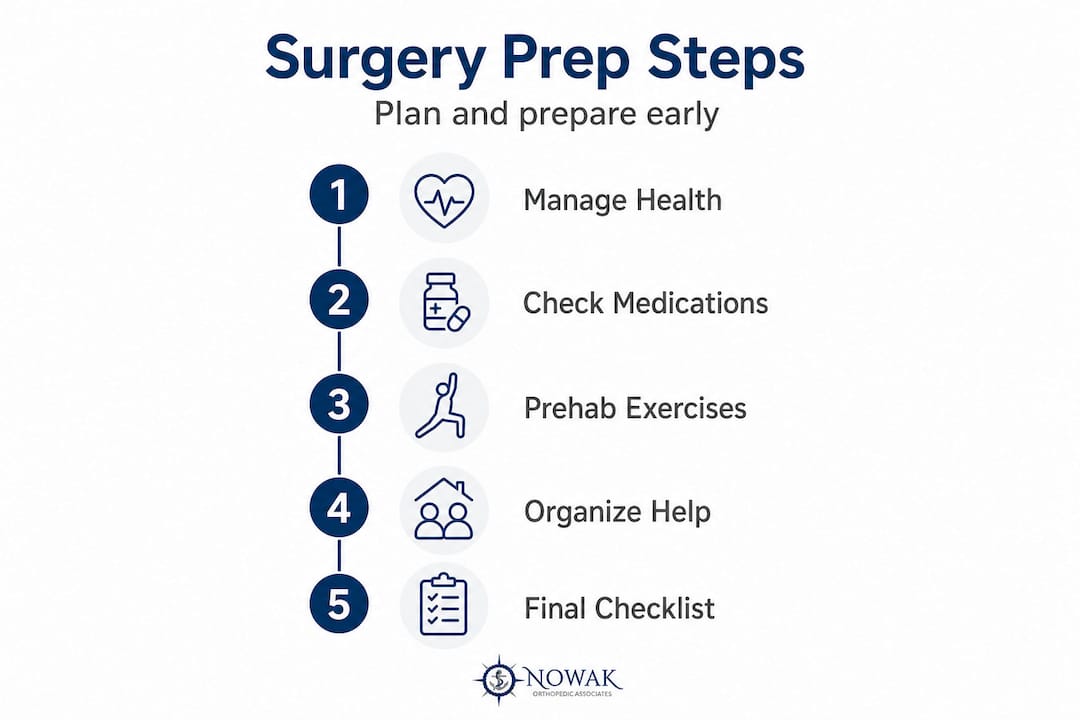
Here are the core preparation essentials you should address:
- Control chronic conditions. If you have diabetes, hypertension, or heart disease, work with your primary care physician to get these conditions stable before your procedure. Uncontrolled blood sugar or blood pressure significantly raises surgical risk.
- Review your medications. Bring a complete and current list of every medication, supplement, and over-the-counter product you take. Some blood thinners, anti-inflammatory drugs, and herbal supplements must be paused before surgery.
- Check for active infections. Even a minor skin infection, urinary tract infection, or dental issue can delay your procedure. Your surgeon needs to confirm you’re infection-free.
- Update your allergy records. Make sure your chart reflects any allergies to medications, latex, or anesthesia-related agents.
- Stop tobacco use. Nicotine restricts blood flow and impairs healing. Quitting at least four to six weeks before surgery reduces wound complications and anesthesia risks.
Use this timeline as a practical guide:
| Timeframe before surgery | Key preparation step |
|---|---|
| 8+ weeks out | Start managing chronic conditions with your PCP |
| 6 weeks out | Begin smoking or tobacco cessation |
| 4 weeks out | Complete pre-op lab work and imaging |
| 2 weeks out | Finalize medication review with your surgeon |
| 1 week out | Confirm anesthesia consultation and surgical instructions |
| Day before | Follow fasting and bowel prep instructions as directed |
Pro Tip: Print a copy of your surgery preparation checklist and use it as a running to-do list. Ticking off items week by week keeps you organized and prevents last-minute surprises.
Reviewing your shoulder surgery checklist early also gives you and your surgeon time to address issues that might otherwise push back your surgery date. Use your first visit guidance to set the right expectations from your very first consultation.
The power of prehabilitation: Strengthening for surgery
With your basic health needs covered, it’s time to talk about how targeted movement and nutrition can supercharge your recovery.

Prehabilitation, often called “prehab,” is a structured exercise and health optimization program completed before surgery. It is not simply going to the gym more. Cleveland Clinic describes prehabilitation as a systematic program that assesses your baseline function and then builds a customized regimen to improve strength and functional outcomes before and after a procedure.
Here’s how to get started with a prehab program:
- Ask for a functional assessment. Before beginning any exercises, your orthopedic team or physical therapist should evaluate your current range of motion, strength, and endurance in the affected shoulder.
- Get a tailored exercise plan. Your prehab program should target the specific muscles that support the shoulder, including the rotator cuff muscles, deltoid, and scapular stabilizers.
- Add nutritional support. Adequate protein intake, vitamin D, and anti-inflammatory foods give your tissues the raw materials needed for repair. Ask about working with a dietitian if you have gaps in your nutrition.
- Follow supervised sessions. Working with a licensed physical therapist ensures that you’re using proper form and progressing safely without aggravating your injury.
- Track your baseline. Document your strength and pain levels at the start of prehab so you can measure improvement before surgery arrives.
Research confirms the value of this approach. A systematic review on multimodal prehabilitation found that programs combining exercise and nutritional support can reduce postoperative complications, improve functional recovery, and shorten hospital length of stay across major surgical procedures.
| Preparation approach | Expected outcome |
|---|---|
| Standard prep only | Baseline recovery timeline, standard complication risk |
| Prehab added | Faster return to function, reduced complication rates, shorter hospital stay |
| Prehab plus nutritional support | Optimized tissue healing, improved strength at week two post-op |
Pro Tip: Treat your prehab program as a prescription, not a personal fitness project. Working with a professional means your program is built around your injury, your baseline fitness, and your surgery date, not a generic workout plan you found online.
Explore your shoulder recovery options to understand how prehab fits into a broader recovery strategy from day one.
Common mistakes and how to avoid them
Even with the best intentions, mistakes can happen. Here are the top pitfalls to watch for and how to avoid them.
Continuing tobacco use too close to surgery. Many patients underestimate how much smoking affects surgical outcomes. Nicotine causes blood vessels to constrict, reducing the oxygen supply to healing tissue. Stopping tobacco use four to six weeks before your procedure meaningfully reduces wound-healing problems and anesthesia-related risks, as AAOS emphasizes in its pre-op guidance.
Patients who stop smoking at least six weeks before shoulder replacement surgery experience significantly fewer postoperative wound complications and lower rates of anesthesia-related issues.
Skipping chronic condition management. Some patients assume that if they feel “okay,” their chronic conditions won’t cause a problem. In reality, even slightly elevated blood pressure or blood sugar can complicate anesthesia and slow healing. Give your primary care physician enough lead time to adjust your management plan before surgery.
Failing to update your medication and allergy list. It’s one of the most common pre-op oversights. A missing allergy or an unlisted supplement can create real problems during and after surgery. Review and update your list at every pre-op appointment.
Not asking about activity and diet restrictions. Patients sometimes follow general advice instead of asking their specific surgeon for personalized instructions. Always confirm what you should eat, drink, and avoid in the days leading up to your procedure.
Ignoring logistics. Forgetting to arrange transportation, home help, or time off work can create unnecessary stress right before surgery. Line these up early.
Pro Tip: Set calendar reminders on your phone for every pre-op milestone, from your tobacco quit date to your medication review appointment. Small reminders prevent big oversights.
If you’re still weighing all your options, a review of non-surgical treatments overview can help clarify what’s possible before committing to a surgical path.
Non-surgical options: Is surgery right for you?
Before finalizing your surgery plans, it’s smart to consider whether non-surgical paths might help your situation.
Not every shoulder condition requires surgery. Some injuries, including partial rotator cuff tears and even certain complete tears, can be managed effectively without going to the operating room. Cleveland Clinic notes that individualized decision-making is essential and that nonoperative management is a valid first approach for many patients.
Non-surgical options worth discussing with your provider include:
- Physical therapy. A structured program can restore range of motion, reduce pain, and strengthen the muscles around the shoulder joint.
- Anti-inflammatory medications. Oral medications or targeted corticosteroid injections can significantly reduce pain and swelling in appropriate cases.
- Activity modification. Adjusting how you move, work, or exercise can relieve stress on the shoulder and allow natural healing to occur.
- Regenerative therapies. Platelet-rich plasma (PRP) injections and other orthobiologic treatments are emerging options for stimulating tissue repair in certain shoulder injuries.
The right path depends on your diagnosis, your activity goals, your overall health, and how you’ve responded to prior treatments. A thorough discussion with your orthopedic provider is the only way to know for sure whether surgery is truly your best next step, or whether a conservative plan deserves more time.
Why most people underestimate shoulder surgery preparation
Here’s something we see consistently in our practice that rarely makes it into standard preparation guides: patients focus intensely on the physical checklist and largely ignore the emotional and logistical dimensions of getting ready for surgery.
Checking off blood work and stopping medications is important. But the patients who recover most smoothly are typically those who also prepared their home environment, communicated openly with their family, and arrived on surgery day without the added burden of unresolved personal stress. Emotional readiness is not a soft afterthought. Anxiety raises cortisol levels, which can affect immune function and recovery pace.
We also see patients who treat prehabilitation as optional or only begin it a week before surgery. That timing misses the window entirely. Prehab delivers its greatest benefit when started four to eight weeks out, giving your muscles time to genuinely strengthen before they’re needed most.
The most effective preparation integrates three things: physical readiness, emotional support, and practical logistics. If you’re only working on one of those, your preparation has gaps. Involving a trusted friend or family member as your “prep partner” helps fill those gaps. That person can accompany you to appointments, help you remember instructions, and provide the kind of day-to-day encouragement that makes the weeks before surgery feel less isolating.
For a more thorough look at the emotional and logistical side of getting ready, our emotional preparation tips offer practical guidance worth reading before your surgery date.
Get expert help for your shoulder surgery journey
At Nowak Orthopedic Associates in Hampton, NH, we guide patients through every stage of their surgical journey, from the first consultation to post-op recovery planning. Dr. Roger B. Nowak and our care team provide individualized prehabilitation guidance, thorough preoperative evaluations, and the kind of clear, direct communication that helps you feel prepared and confident. We’ve helped hundreds of New Hampshire patients achieve successful shoulder outcomes through procedures including rotator cuff repair, Bankart repair, SLAP repair, and more.
Learn more about expert orthopedic care at our practice, review what to expect with shoulder arthroscopy insights, or schedule your initial appointment to start building your personalized preparation plan today.
Frequently asked questions
How long before surgery should I stop certain medications?
Always consult your surgeon directly, as individual medication timelines vary, but some blood thinners and supplements may need to be paused a week or more before your procedure. Your surgical team will provide a specific list and schedule.
Is prehabilitation covered by insurance?
Coverage varies widely by plan, so ask both your orthopedic provider and your insurance company whether a formal prehab program is included in your benefits before you begin.
What if I get sick right before my scheduled surgery?
Contact your surgeon’s office as soon as you notice symptoms, because even a minor illness may require postponing your procedure for safety. Your team will guide you on next steps and rescheduling if needed.
How do I know if surgery is the right decision for my shoulder injury?
Many shoulder injuries, including certain rotator cuff tears, respond well to non-surgical care. Discuss your specific diagnosis, activity goals, and treatment history with your orthopedic provider to reach a truly personalized decision.