

TL;DR:
- Early intervention for joint pain preserves mobility and reduces long-term costs by preventing irreversible damage.
- Delaying treatment increases pain, inflammation, structural damage, and the need for invasive procedures, worsening outcomes.
Joint pain is not simply a fact of aging that you have to accept. Many people spend months, or even years, managing discomfort on their own before finally seeking help, not realizing that this delay can significantly limit their future options. Early prevention and intervention can change the disease trajectory for joint pain, preserving mobility and reducing both pain and long-term costs. For adults in New Hampshire dealing with persistent aching, stiffness, or swelling in their joints, understanding why timing matters could make all the difference.
Table of Contents
- Why timing matters: The science of early intervention
- What happens if you wait? Risks of delayed joint pain treatment
- What does early management look like? Practical steps and approaches
- The nuance: Not all early interventions are equal
- The uncomfortable truth: Early is necessary, but not always sufficient
- Get personalized joint care in New Hampshire
- Frequently asked questions
Key Takeaways
| Point | Details |
|---|---|
| Early action protects joints | Starting treatment early can delay or prevent joint deterioration and chronic pain. |
| Waiting increases risk | Delaying care can lead to worse outcomes, more invasive treatments, and higher costs. |
| Approaches vary by condition | Different joint problems require tailored strategies; not all early actions are equally effective. |
| Lifestyle changes matter | Exercise and healthy habits offer real, though sometimes modest, benefits if started early. |
| Expert guidance is crucial | A personalized care plan from an orthopedic provider helps maximize results and safety. |
Why timing matters: The science of early intervention
Acting early on joint pain is not just about feeling better sooner. It is about changing the course of what happens to your joints over the next several years. Understanding why joint pain happens is the first step, because joint degeneration is a progressive process. Once cartilage breaks down and inflammation becomes chronic, reversing that damage becomes much harder.
Research confirms that early intervention preserves mobility and lowers the risk of disability. When care starts early, treatments have more tissue to work with and more pathways to slow degeneration before it becomes structural.
“Longer pain duration is associated with worse prognosis and outcomes.” ASAP-PFP protocol research makes this point clearly: the longer pain persists without attention, the harder it becomes to treat effectively.
The data below illustrates why waiting is a risk most people cannot afford:
| Outcome factor | Early intervention | Delayed intervention |
|---|---|---|
| Mobility preservation | High | Moderate to low |
| Risk of chronic pain | Lower | Significantly higher |
| Treatment complexity | Usually manageable | Often more invasive |
| Long-term healthcare cost | Lower | Higher |
| Likelihood of surgery | Reduced | Increased |
Reviewing joint procedure outcomes further reinforces this picture. Patients who pursue evaluation and care early often have access to a wider range of conservative and minimally invasive options. Those who delay frequently arrive needing more aggressive intervention. Knee joint preservation strategies, for example, are far more effective when applied before the joint has sustained significant structural damage.
What happens if you wait? Risks of delayed joint pain treatment
Knowing the benefits of early intervention, it is just as important to recognize the dangers of putting off care. Many patients rationalize waiting because the pain “isn’t that bad yet” or they hope it will resolve on its own. Sometimes it does. Often, it does not.
A retrospective cohort study of 268 adults found that delaying intervention for joint conditions, including septic arthritis (a serious infection of the joint), significantly increases treatment failure and long-term risks. Septic arthritis, in particular, is a situation where acting within hours, not weeks, can determine whether a joint is saved or permanently damaged. That is an extreme example, but it illustrates how quickly joint conditions can escalate when left unaddressed.
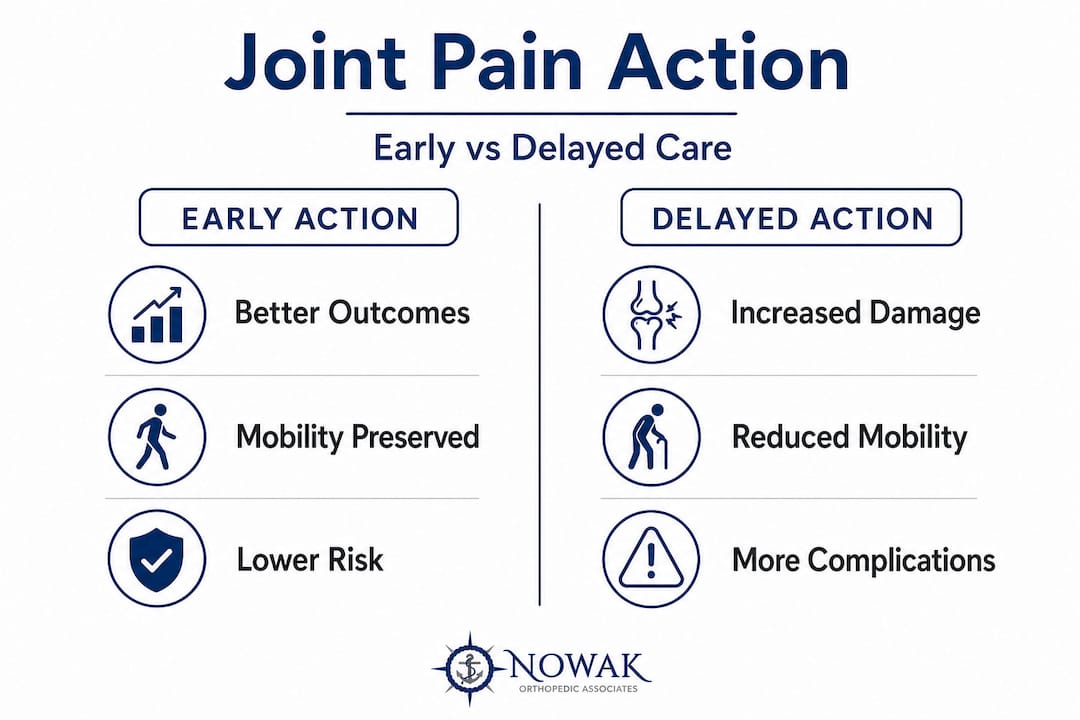
For more common conditions like osteoarthritis or tendon injuries, the progression is slower but still damaging. Longer pain duration mediates poor prognosis, meaning that time spent waiting is time spent accumulating harder-to-treat damage.
Here is what typically worsens when you delay care:
- Increased pain intensity as nerve sensitization sets in and the nervous system amplifies pain signals
- Greater inflammation that spreads beyond the original injury site and affects surrounding tissue
- Structural damage to cartilage, tendons, and bone that may become irreversible without surgical correction
- More complicated treatments that carry higher recovery demands and greater procedural risk
Learning about joint pain relief procedures available today is useful. But those procedures work best before significant damage accumulates. This is equally true for elbow conditions. Strategies for preventing elbow injuries emphasize that early load management and technique correction protect the joint far more effectively than treatment after structural change has occurred.
Pro Tip: Do not wait on these red flag symptoms. Sudden, severe joint swelling, warmth at the joint, fever alongside joint pain, or a rapid loss of normal motion all require urgent evaluation. These signs can indicate infection or acute structural injury that worsens rapidly without immediate attention.
What does early management look like? Practical steps and approaches
With clear risks to waiting established, the logical next question is: what does taking early action actually involve? Early management does not automatically mean surgery. Far from it.

Early management targets mechanical and behavioral factors like movement quality, joint load, and inflammation control. For most people in New Hampshire experiencing new or worsening joint pain, the starting point is a structured, supervised plan that may include physical therapy, movement modification, and targeted exercises designed to offload the affected joint.
Early detection enables lifestyle changes and targeted interventions before symptoms worsen further. Here is a practical list of early actions to consider when joint pain first appears:
- Schedule an evaluation with a musculoskeletal specialist rather than waiting for a general practitioner referral
- Reduce high-impact activity temporarily to allow acute inflammation to settle
- Begin low-load movement such as walking, cycling, or swimming to maintain joint nutrition without excess stress
- Address body weight if applicable, since even modest weight loss reduces knee joint load significantly
- Explore anti-inflammatory strategies including dietary adjustments and prescribed physical therapy
New Hampshire residents have access to year-round outdoor activities, from hiking in the White Mountains to skiing in winter, and those activities are worth protecting. A proactive approach to joint health keeps you participating in the things you love longer.
Explore non-surgical joint relief options and review a step-by-step orthopedic relief guide to understand what a structured conservative plan looks like. For those dealing specifically with knee deterioration, learning more about osteoarthritis of the knee can clarify what stages of the condition respond best to which types of care.
Pro Tip: Your best first call is to a provider who specializes in musculoskeletal conditions. A specialist can identify whether your pain reflects a structural issue, an inflammatory process, or something else entirely, before recommending a plan. General advice to “rest and see how it goes” often delays appropriate care by months.
The nuance: Not all early interventions are equal
Early treatment is almost always better than waiting, but not all interventions deliver the same results for everyone. This is a point worth understanding clearly before setting expectations.
Exercise-based approaches show small to moderate benefits for many joint conditions, but the effects can vary greatly between individuals and may be short-term without consistent follow-through. Factors like age, the specific joint affected, the severity of existing damage, and the presence of other health conditions all influence how well any single intervention performs.
For conditions like rheumatoid arthritis or other inflammatory joint diseases, the situation is different. Early aggressive therapy for inflammatory arthritis leads to better remission rates compared to waiting, but disease-modifying drugs (DMARDs) that are used in this context are not risk-free. They carry potential side effects and cost implications that require careful discussion with a qualified provider.
Factors that determine whether early intervention is likely to succeed include:
- Type of joint condition (osteoarthritis, inflammatory arthritis, tendon injury, cartilage damage)
- How quickly care begins after symptom onset
- Comorbidities such as obesity, diabetes, or cardiovascular disease
- Treatment type selected and how well it matches the underlying problem
- Patient adherence to the recommended plan over time
“Talk openly with your clinician about what success looks like for your specific case, and agree on realistic benchmarks before starting any treatment program. Knowing what to expect prevents frustration and keeps care on track.”
For patients exploring options beyond traditional physical therapy, orthobiologics for joint pain represent an evolving area of care that can bridge the gap between conservative management and surgical intervention.
The uncomfortable truth: Early is necessary, but not always sufficient
Here is an honest perspective drawn from years of clinical experience working with patients at Nowak Orthopedic Associates. The evidence for acting early is strong and consistent. However, acting early alone does not guarantee a perfect outcome.
We see the best results when patients seek evaluation at the very first sign of persistent joint pain, not after months of hoping it resolves. Those patients have the most options and tend to respond best to conservative care. They preserve more tissue, avoid more invasive procedures, and return to activity faster.
But the type of care matters as much as the timing. A generic exercise program prescribed without considering the specific joint, the degree of damage, or the patient’s activity demands will underperform. Personalized care, built around a clear diagnosis, produces meaningfully better outcomes than one-size-fits-all advice.
The biggest mistake we see is patients waiting six, twelve, or even twenty-four months before seeking help, often because the pain seemed manageable. By then, treatment choices narrow. Explore evidence-based joint pain options early, and expect your provider to build a plan that reflects your specific goals, lifestyle, and diagnosis. Early action is the foundation. Quality, personalized care is what builds on it.
Get personalized joint care in New Hampshire
When you are ready to take that first proactive step toward protecting your joints, Nowak Orthopedic Associates in Hampton, NH is here to help. No two cases of joint pain are exactly alike, and that is why every patient receives an individualized evaluation and care plan tailored to their specific condition and goals.
Whether you are managing early signs of knee osteoarthritis, recovering from a shoulder injury, or simply noticing joint changes you want addressed before they worsen, our team offers both surgical and non-surgical solutions. Explore advanced joint care options or review orthopedic relief strategies that may be right for you. Schedule your first visit today and take control of your joint health before pain takes control of your life.
Frequently asked questions
How soon should you seek evaluation for new joint pain?
See a provider if pain persists for more than two weeks or interferes with daily function, especially if swelling or redness is present. Early physiotherapy access for recent-onset pain consistently improves outcomes compared to delayed referral.
Does early exercise guarantee you will avoid arthritis?
No. Early exercise may reduce your risk or delay the progression of osteoarthritis, but it does not guarantee prevention. Exercise-based approaches show small to moderate short-term effects, and results vary considerably between individuals.
What are red flag symptoms that require urgent joint assessment?
Sudden severe pain, fever, joint warmth, or rapid swelling following an injury all require immediate medical attention. Delaying treatment for septic arthritis significantly raises the risk of treatment failure and long-term joint damage.
Are all early treatments for joint pain safe?
Most early strategies, including physical therapy and exercise modification, are very safe. However, disease-modifying drugs used in inflammatory arthritis carry risks. Early disease-modifying treatment is beneficial but requires careful monitoring and consideration of safety and cost.
Is it ever too late to start joint care?
It is never truly too late to benefit from proactive joint care, but the sooner you act, the more options remain available to you. Early prevention changes the disease trajectory and lowers costs even in non-elderly adults, making early action the smarter and more effective choice.