

TL;DR:
- Elbow pain in adults can result from overuse, nerve compression, or fractures, each requiring different evaluations. Early recognition and appropriate treatment of conditions like medial epicondylitis, bursitis, nerve injury, or fractures prevent long-term damage and improve outcomes. Seeking prompt expert assessment is crucial when symptoms persist, worsen, or interfere with daily activities.
Elbow pain can creep up gradually or strike suddenly, and many adults in New Hampshire aren’t sure whether what they’re feeling is something that will resolve on its own or something that needs expert attention. The must-know elbow conditions covered in this guide range from overuse injuries to nerve compression to fractures, and each one has a distinct pattern of symptoms, risk factors, and treatment options. Knowing how to tell them apart isn’t just reassuring. It’s the difference between getting the right care early and letting a manageable problem become a serious one.
Table of Contents
- How to evaluate and recognize key elbow conditions
- Medial epicondylitis: causes, diagnosis, and nonoperative care
- Olecranon bursitis: identifying swelling and infection risks
- Ulnar neuropathy at the elbow: recognizing nerve compression symptoms early
- Elbow fractures in adults: types, diagnosis, and initial care
- Comparing must-know elbow conditions: symptoms, causes, and treatments
- Our perspective: why “wait and see” often backfires with elbow conditions
- Ready to get your elbow evaluated at Nowak Orthopedic Associates?
- Frequently asked questions
Key Takeaways
| Point | Details |
|---|---|
| Identify key symptoms | Recognize distinctive pain, swelling, numbness, or deformity patterns to assess elbow problems early. |
| Prioritize expert evaluation | Consult orthopedic specialists promptly when symptoms persist or worsen despite initial care. |
| Nonoperative management works | Most elbow conditions improve with activity modification, physical therapy, and conservative treatments. |
| Infection risks matter | Swelling with redness or fever requires urgent assessment to rule out septic bursitis. |
| Imaging aids diagnosis | X-rays and ultrasounds help confirm fractures and nerve compression for precise treatment planning. |
How to evaluate and recognize key elbow conditions
Before diving into specific diagnoses, it helps to have a framework for evaluating what you’re feeling. The location of your pain, the nature of your symptoms, and your daily activities all point toward different elbow conditions. Reviewing a reliable elbow pain treatment guide can also help you understand what your symptoms may indicate before your appointment.
Key evaluation criteria include:
- Pain location: Medial (inner) elbow pain often points to golfer’s elbow or ulnar nerve issues. Lateral (outer) pain is more associated with tennis elbow.
- Swelling patterns: Swelling directly over the back of the elbow suggests bursitis, while diffuse swelling after a fall raises concern for fracture.
- Neurological symptoms: Numbness, tingling, or weakness in the fingers indicates possible nerve involvement.
- Aggravating activities: Pain that worsens with gripping or wrist flexion typically implicates tendons. Pain with prolonged elbow bending suggests nerve compression.
- Occupational exposures: Carpentry, plumbing, manual labor, and repetitive assembly work are common risk factors for several elbow pain conditions in New Hampshire adults.
Knowing when to seek expert evaluation matters. If symptoms persist beyond a few weeks, worsen, or interfere with daily work or activities, don’t wait it out.
Medial epicondylitis: causes, diagnosis, and nonoperative care
Medial epicondylitis, often called golfer’s elbow or pitcher’s elbow, is a tendinopathy (a condition involving tendon degeneration and dysfunction) that develops at the medial epicondyle, the bony bump on the inner side of your elbow. Despite the name, you don’t have to swing a golf club to get it. More than 90% of cases are non-sports-related, caused by repetitive gripping and manual loading in everyday work settings.
Common features of medial epicondylitis:
- Gradual onset of pain on the inner elbow, often radiating toward the forearm
- Pain that worsens with wrist flexion, forearm rotation, or gripping
- Tenderness directly over the flexor-pronator tendon origin (just below the medial epicondyle)
- Possible weakness in grip strength over time
The encouraging news is that the vast majority of people respond well to nonoperative care. This includes activity modification, a structured physical therapy program emphasizing eccentric strengthening (controlled lengthening contractions of the affected tendon), and bracing to reduce load on the tendon. For details on what conservative care looks like in practice, explore this overview of golfer’s elbow causes and relief.
For those whose symptoms persist beyond three to six months of consistent conservative management, surgical options, including medial epicondylectomy, are effective and reliable.
Pro Tip: If your elbow pain started after a new job, a change in physical workload, or returning to an old sport, bring that timeline to your appointment. Occupational context significantly shapes the treatment plan.
Olecranon bursitis: identifying swelling and infection risks
Another frequent cause of elbow swelling involves inflammation of a fluid-filled sac called the bursa, located over the back of the elbow. This condition, olecranon bursitis, can look alarming because the swelling is often visible and pronounced, sometimes reaching the size of a golf ball.
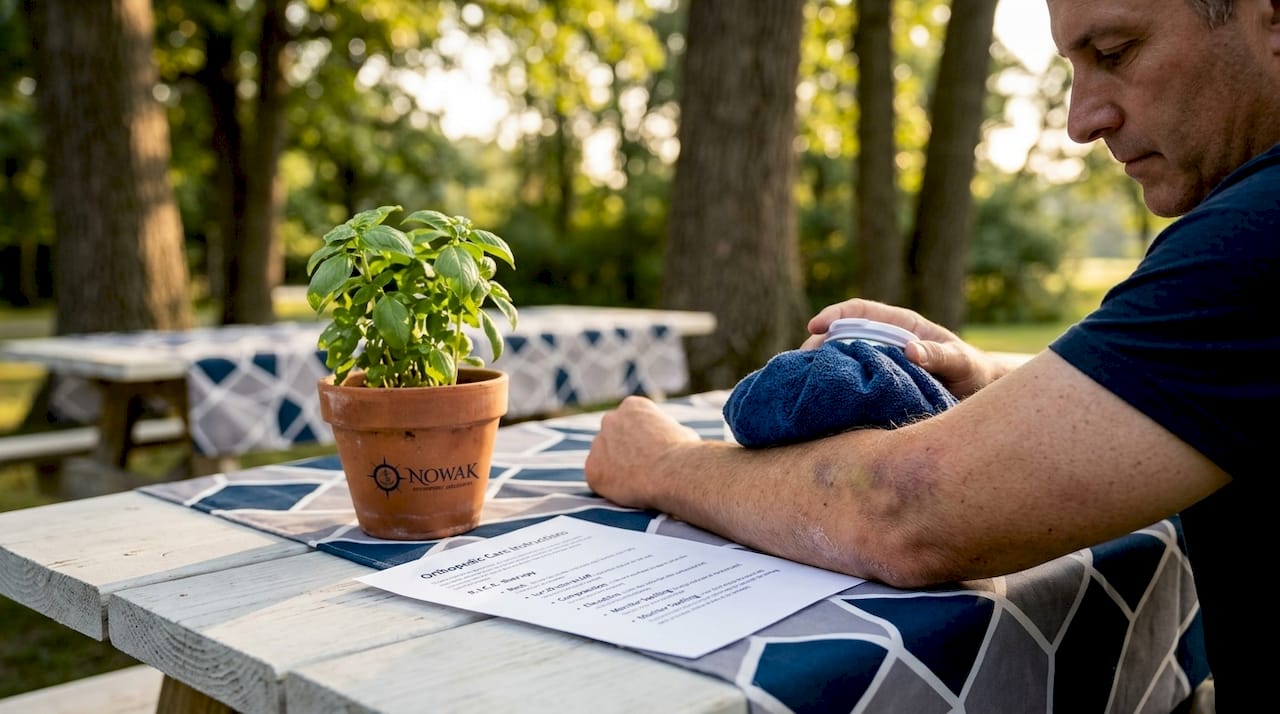
Olecranon bursitis is commonly linked to repetitive elbow pressure and can be septic (infectious) or aseptic (non-infectious), with septic cases needing prompt antibiotic treatment. Getting that distinction right is essential, because the treatment paths are very different.
How to differentiate the two forms:
- Aseptic bursitis: Usually painless or mildly uncomfortable. The swelling is soft and there is minimal redness or warmth. Often related to prolonged pressure on the elbow from a hard surface.
- Septic bursitis: Marked by significant tenderness, redness, warmth, and sometimes fever. This form requires antibiotics and possibly aspiration (draining the fluid) to prevent serious infection.
For non-infectious cases, conservative care works well for most patients. Rest, ice, compression, and protecting the elbow from further pressure are the mainstays. Routine aspiration or steroid injections are generally avoided in aseptic bursitis because they carry real risks, including infection and skin thinning. For further guidance on managing this condition, see our olecranon bursitis treatment guidance.
Pro Tip: If your elbow swelling is accompanied by any fever or feels hot to the touch, treat it as urgent. Septic bursitis can escalate quickly and should not be monitored at home.
Ulnar neuropathy at the elbow: recognizing nerve compression symptoms early
Nerve-related elbow issues can also cause significant symptoms, as seen in ulnar neuropathy from nerve compression. This condition occurs when the ulnar nerve, which runs through a narrow passageway called the cubital tunnel behind the medial elbow, becomes compressed or irritated.
Outcomes decline once axonal damage (permanent nerve fiber injury) occurs, which is why early assessment with numbness or tingling is so important. Don’t let these signs sit for months before getting evaluated.
Signs of elbow problems involving the ulnar nerve:
- Numbness and tingling primarily in the ring and little fingers
- Symptoms that worsen at night or with prolonged elbow flexion (such as talking on the phone or sleeping with bent arms)
- Weakness in grip or difficulty with fine motor tasks in advanced cases
- Symptoms aggravated by leaning on the elbow repeatedly
Early treatment focuses on activity modification, avoiding prolonged elbow flexion, nighttime splinting to keep the elbow in a straighter position, and guided physical therapy. When conservative measures don’t provide adequate relief, surgical options such as cubital tunnel release are available and can prevent further nerve damage. For a more detailed look at diagnosis and care options, visit this resource on ulnar neuropathy diagnosis and care.
Pro Tip: One simple test: if prolonged phone use causes tingling in your pinky and ring finger, that’s a meaningful symptom worth mentioning to your orthopedic provider.
Elbow fractures in adults: types, diagnosis, and initial care
Besides soft tissue and nerve problems, traumatic injuries such as fractures are a significant category of elbow joint disorders. Adults most often fracture the elbow after falling on an outstretched arm, which transfers force directly through the joint.
Elbow fractures account for up to 5% of all fractures, with radial head fractures comprising about one-third of that group. Radial head fractures (at the top of the radius bone, just below the elbow joint) are particularly common and can affect your ability to fully rotate your forearm.
| Fracture type | Common cause | Key symptom | Typical management |
|---|---|---|---|
| Radial head | Fall on outstretched arm | Lateral elbow pain, restricted rotation | Immobilization or surgery if displaced |
| Olecranon | Direct blow or fall | Posterior pain, can’t straighten arm | Often requires surgical fixation |
| Distal humerus | High-energy trauma | Significant swelling, instability | Frequently requires surgery |
Diagnosis requires X-rays from multiple angles, and CT scans may be needed for complex or unclear fractures. Urgent orthopedic consultation is critical for any fracture that appears displaced or unstable. Initial care always includes immobilization, pain management, and close monitoring of blood flow and nerve function in the hand and fingers. For more on what treatment and recovery look like, see this overview of elbow fractures surgery options.
Comparing must-know elbow conditions: symptoms, causes, and treatments
Now, let’s distill the key distinctions among these elbow conditions into a helpful comparison format. This table gives you a side-by-side look at the most important factors for each condition.
| Condition | Primary cause | Key symptoms | First-line treatment |
|---|---|---|---|
| Medial epicondylitis | Repetitive gripping, forearm loading | Inner elbow pain, grip weakness | Activity modification, physical therapy |
| Olecranon bursitis | Pressure on elbow, trauma, infection | Swelling over back of elbow | Rest, ice, compression; antibiotics if septic |
| Ulnar neuropathy | Nerve compression at cubital tunnel | Numbness/tingling in ring and pinky fingers | Splinting, activity changes, cubital tunnel release |
| Radial head fracture | Fall on outstretched arm | Lateral pain, restricted rotation | Immobilization or surgical fixation |
Understanding these distinctions helps you have a more informed conversation with your provider, and ensures you arrive at your appointment knowing what questions to ask. For next steps, you can review elbow conditions treatment options or learn more about the orthopedic surgeon role in elbow care.
Our perspective: why “wait and see” often backfires with elbow conditions
Here’s something we see regularly in practice: patients who wait months before seeking care arrive with problems that have moved well beyond what simple physical therapy can address. Elbow conditions are particularly unforgiving in this way, especially ulnar neuropathy, where nerve damage that accumulates over time doesn’t fully reverse even after successful surgery.
The common belief is that elbow pain will sort itself out with rest. Sometimes it does. But more often, what’s really happening is that the underlying tissue or nerve problem continues to progress while the patient adapts their behavior around the pain. That adaptation, whether it’s avoiding a grip, changing how they lift, or sleeping differently, delays care and lets the condition advance.
We also want to push back on the idea that any elbow symptom automatically means surgery. The reality is that most of the elbow pain conditions we see respond well to structured nonsurgical care. Platelet-rich plasma (PRP) therapy, SoftWave therapy, and targeted physical therapy have made a meaningful difference for many patients who were worried they would need an operation. Surgery is available and effective when it’s truly needed, but it’s always the last option we reach for, not the first.
Ready to get your elbow evaluated at Nowak Orthopedic Associates?
If you’re experiencing persistent elbow pain, swelling, numbness, or any of the elbow condition symptoms described in this article, Nowak Orthopedic Associates in Hampton, NH is here to help. Dr. Roger B. Nowak and our team provide expert orthopedic evaluation and individualized care plans that range from regenerative therapies and physical therapy to minimally invasive surgery when necessary. Whether your concern is medial epicondylitis, ulnar nerve compression, or a fracture, we work with you to find the most effective path back to full function. Contact us to schedule your consultation and take the first step toward lasting relief.
Frequently asked questions
What are the early signs of ulnar neuropathy at the elbow?
Early signs include numbness and tingling in the ring and little fingers, often worsening with prolonged elbow bending or at night. These symptoms reflect early nerve irritation in the ulnar distribution and should be evaluated promptly before permanent nerve damage develops.
How can I tell if my elbow swelling is infected bursitis?
Septic bursitis typically presents with redness, warmth, tenderness, and sometimes fever, unlike aseptic bursitis, which is usually soft and minimally painful. Septic cases show marked tenderness, erythema, and warmth and require prompt antibiotic treatment.
When should I see a doctor for medial elbow pain?
If pain persists beyond several weeks despite rest, or if it interferes with work or daily activities, an expert evaluation is the right move. Surgery is considered only after three to six months of adequate conservative care have not resolved symptoms.
Are X-rays always needed for elbow pain after a fall?
X-rays are recommended whenever there is significant pain, visible deformity, or restricted movement following trauma, because these signs raise concern for fracture. Standard radiographs are recommended to exclude fractures in any suspected elbow injury, and CT imaging may follow for complex cases.