

TL;DR:
- Unicompartmental knee replacement targets only the damaged knee area, preserving healthy tissue for faster recovery. Suitable candidates often have isolated osteoarthritis in one compartment, with higher success rates achieved by experienced surgeons using advanced techniques like robotic assistance. The procedure offers a more natural joint feel and quicker return to normal activities, but long-term revision risk is slightly higher compared to total knee replacement.
If you’ve been told you have knee arthritis and you’re wondering what your surgical options look like, you may be surprised to learn that a full knee replacement isn’t always necessary. Understanding what is unicompartmental knee replacement, or UKA, could open a very different path forward. This procedure targets only the damaged portion of your knee, leaving healthy tissue completely intact. For the right patient, it offers faster recovery, less surgical trauma, and a more natural feeling joint — all without the scope of total knee replacement surgery.
Table of Contents
- Key takeaways
- What unicompartmental knee replacement actually involves
- Who is a good candidate for UKA
- Benefits and risks: an honest comparison
- Recovery after unicompartmental knee replacement
- My perspective on UKA and what patients often miss
- Ready to find out if UKA is right for you?
- FAQ
Key takeaways
| Point | Details |
|---|---|
| Partial, not total | UKA replaces only the damaged knee compartment, preserving healthy bone, cartilage, and ligaments. |
| Right candidate matters | Isolated osteoarthritis in one compartment and stable ligaments are key factors for UKA eligibility. |
| Faster recovery | Most UKA patients return to daily activities within 2 weeks, far sooner than with total knee replacement. |
| Strong satisfaction rates | Patient satisfaction with UKA ranges from 91% to 97%, with 10-year survivorship up to 97%. |
| Surgeon experience counts | Choosing a high-volume UKA surgeon significantly improves your outcome and long-term success. |
What unicompartmental knee replacement actually involves
Your knee has three compartments: the medial (inner), the lateral (outer), and the patellofemoral (front, between your kneecap and thigh bone). Osteoarthritis doesn’t always damage all three equally. In many patients, wear is concentrated in just one area, most often the medial compartment.
Unicompartmental knee replacement, also called partial knee replacement or UKA (unicompartmental knee arthroplasty), replaces only that damaged compartment with an implant while leaving the rest of the knee untouched. Up to 85% of knee osteoarthritis cases show isolated compartment involvement, which means a significant portion of arthritis patients could potentially be candidates for this targeted approach rather than a total replacement.
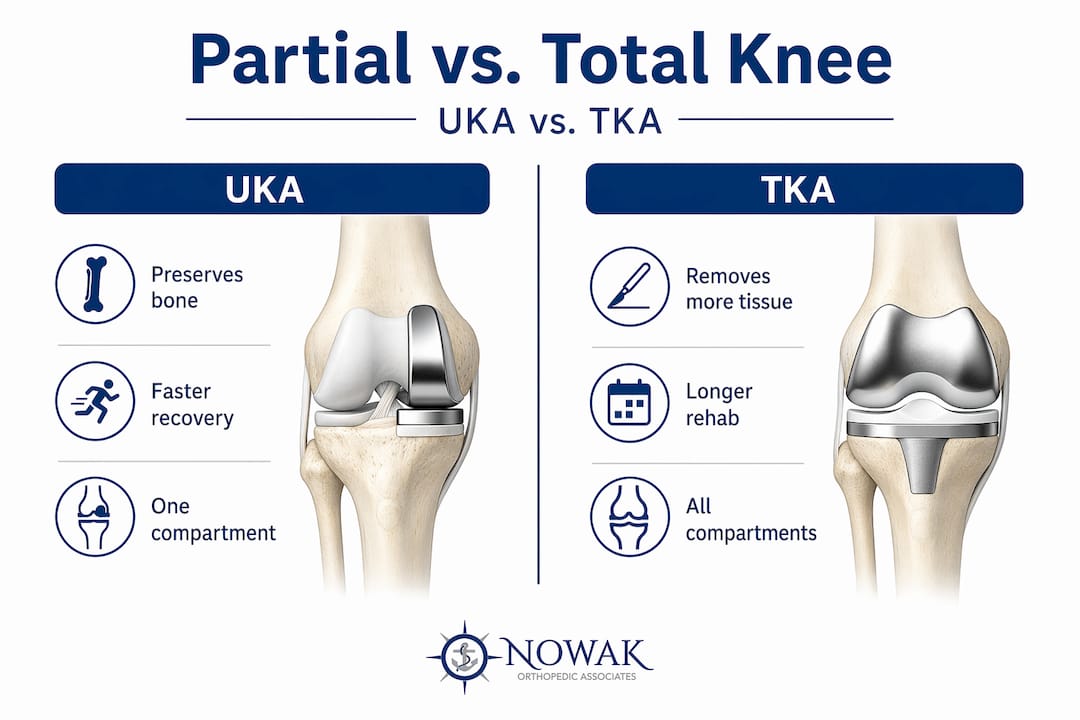
During unicompartmental knee surgery, the surgeon removes the damaged cartilage and bone from the affected compartment, then places a small metal and plastic implant to restore the joint surface. Cruciate ligaments are preserved. Healthy cartilage in the other compartments is left alone. This contrasts sharply with total knee replacement, where all three compartments are resurfaced regardless of their condition.
Here’s a quick side-by-side comparison:
| Feature | Unicompartmental (UKA) | Total Knee Replacement (TKA) |
|---|---|---|
| Tissue removed | Damaged compartment only | All three compartments |
| Ligaments preserved | Yes | Typically sacrificed |
| Hospital stay | Same-day or overnight | 1 to 3 days |
| Recovery time | 2 to 3 months | 3 to 6 months |
| Feel of the joint | More natural | Functional but less natural |
| Long-term revision risk | Somewhat higher | Lower |
The procedure is also considered minimally invasive knee surgery compared to total knee replacement, with a smaller incision and less disruption to the surrounding muscle and soft tissue.
Pro Tip: Ask your surgeon specifically whether they use robotic assistance for UKA. Robotic-assisted techniques show promise for improving implant positioning, which can directly impact how well your knee feels and how long the implant lasts.
Who is a good candidate for UKA
Not everyone with knee arthritis qualifies for unicompartmental knee replacement. Patient selection is where this procedure either succeeds or falls short. The classic profile for a UKA candidate looks like this:
- Osteoarthritis confined to a single compartment, most often the medial side
- Intact anterior cruciate ligament (ACL) and posterior cruciate ligament (PCL)
- No significant inflammatory arthritis (such as rheumatoid arthritis)
- No involvement of the patellofemoral compartment that causes symptoms
- Adequate range of motion with a correctable deformity
Conditions that exclude candidacy include tricompartmental osteoarthritis, significant inflammatory arthritis, or severe ligamentous instability.
Here’s where things get interesting for 2026 patients: expanded candidacy criteria now include younger patients, people with higher BMI, those with ACL deficiency, and even some patients with mild patellofemoral arthritis, when the surgery is performed by an experienced specialist. ACL deficiency, once considered an absolute barrier to UKA, is no longer an automatic disqualifier when patient selection and surgical technique are carefully managed.
If you have been told you are “too young” or “too heavy” for partial knee replacement, it may be worth getting a second opinion from a high-volume UKA surgeon. The guidelines have evolved meaningfully.
Pro Tip: When consulting with your orthopedic surgeon, ask how many UKA procedures they perform each year. Surgeons with higher volumes consistently achieve better patient outcomes. This single question can be one of the most important you ask.
Benefits and risks: an honest comparison
The benefits of unicompartmental knee replacement are real and well documented, but so are the trade-offs. Understanding both helps you have a more informed conversation with your doctor.
The advantages are meaningful:
- Shorter hospital stay, often same-day discharge or one overnight
- Faster return to normal activities, sometimes within 2 weeks
- Fewer early complications including lower rates of infection and blood clots compared to total knee replacement
- Preservation of knee ligaments, which contributes to more natural joint motion after surgery
- High patient satisfaction, with rates reported between 91% and 97%
On the risk side, the most relevant concern is long-term revision. Modern series report 10-year survivorship for UKA ranging from 89% to 97%, which is excellent — but UKA does carry a somewhat higher revision rate over the longer term compared to total knee replacement. Arthritis can progress to other compartments over time, which may eventually require conversion to a total knee replacement.
You can explore a detailed comparison of partial and total knee outcomes to understand which approach fits your situation better. For well-selected patients, the short-to-midterm results for UKA are genuinely strong, and many patients describe their knee feeling closer to normal than what is typically reported after total replacement.
Recovery after unicompartmental knee replacement
Recovery after unicompartmental knee replacement moves faster than most patients expect, especially compared to what they imagine based on stories about total knee surgery.
Here is a general timeline of what to expect after surgery:
- Day of surgery to day 2: Most patients go home the same day or after one overnight stay. You will bear weight with assistance shortly after waking from anesthesia.
- Week 1 to 2: Pain is managed with medication and ice. Many patients are walking with minimal assistance and handling basic daily activities at home within the first two weeks. UKA patients often return to normal activities within 2 weeks.
- Weeks 3 to 6: Physical therapy begins in earnest. Range of motion exercises, strengthening, and gait training are prioritized. Your therapist will guide you through each phase.
- Months 2 to 3: Most patients reach full recovery within 2 to 3 months, resuming low-impact activities like walking, cycling, and swimming.
- Month 4 and beyond: Higher-demand activities like golf or light hiking are typically back on the table, depending on your surgeon’s guidance.
Physical therapy is not optional. It is the engine of a good recovery. Patients who commit fully to their rehab program consistently report better outcomes and faster return to the activities they value most.
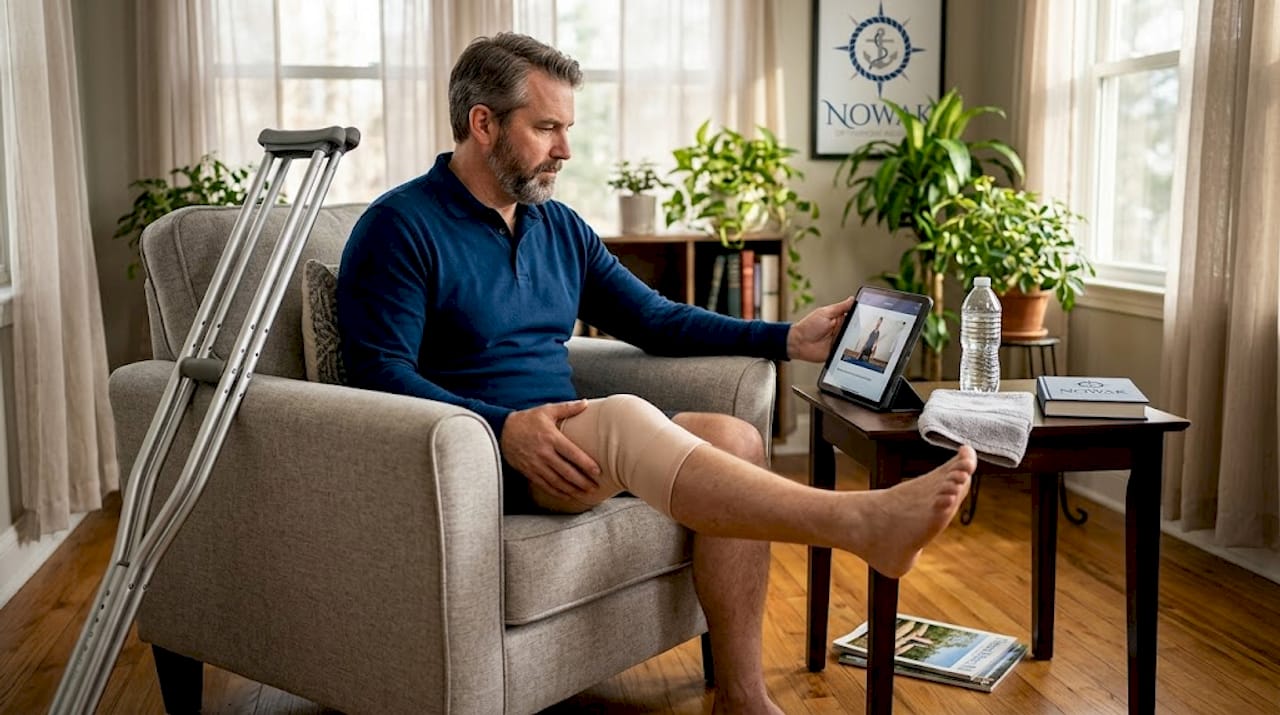
Pro Tip: Prepare your home before surgery. Set up a recovery space on one floor, stock up on easy meals, and arrange for help during the first week. Small preparations upfront make the post-surgery knee care process significantly smoother.
My perspective on UKA and what patients often miss
I’ve noticed that patients who come in asking about unicompartmental knee surgery often have one of two misconceptions. Either they assume partial knee replacement is somehow inferior to total replacement, or they assume it’s automatically the right answer because it sounds less invasive. The truth sits between those extremes.
What I find genuinely encouraging is how much the candidacy criteria have expanded over the past several years. More patients now qualify for UKA than they would have a decade ago, and experienced surgeons are achieving excellent outcomes in populations that were once considered ineligible. That’s real progress worth knowing about.
What I also tell every patient is this: the procedure only works as well as the patient selection behind it. A well-matched UKA candidate who works through physical therapy will likely describe their knee as feeling remarkably natural. A patient who wasn’t quite the right fit may end up needing revision sooner. The honest conversation about long-term trade-offs — revision risk, arthritis progression, and your activity goals — should happen before you commit to any knee surgery option.
My strong advice is to consult with a surgeon who specializes in both UKA and total knee replacement. Someone who performs both is far more likely to give you an unbiased recommendation.
— Rich
Ready to find out if UKA is right for you?
At Nowakorthopedics, Dr. Roger B. Nowak and his team specialize in advanced joint care including unicompartmental knee arthroplasty for patients in Hampton, NH and the surrounding area. Every evaluation starts with a thorough assessment of your imaging, symptoms, and activity goals to determine whether UKA, total knee replacement, or a non-surgical approach is the best path forward. You won’t receive a one-size-fits-all recommendation. You’ll receive a plan built specifically around your knee, your lifestyle, and your long-term health.
If you’re living with knee pain and want to understand your options clearly, the best next step is scheduling a consultation. Visit the first visit page to learn what to expect and how to prepare for your appointment with our team.
FAQ
What is unicompartmental knee replacement in simple terms?
Unicompartmental knee replacement, or UKA, is a partial knee replacement that resurfaces only the damaged compartment of the knee rather than the entire joint. It preserves healthy bone, cartilage, and ligaments in the unaffected areas.
How long does recovery take after UKA?
Most patients return to daily activities within 2 weeks and reach full recovery within 2 to 3 months, which is significantly faster than recovery from total knee replacement.
Who is not a candidate for unicompartmental knee replacement?
Patients with osteoarthritis in all three knee compartments, significant inflammatory arthritis like rheumatoid arthritis, or severe ligament instability are generally not suitable candidates for UKA.
Is unicompartmental knee replacement better than total knee replacement?
It depends on the patient. For well-selected candidates, UKA offers faster recovery, fewer early complications, and a more natural feeling knee. However, UKA carries a higher long-term revision risk than total knee replacement.
How do I know if I qualify for a partial knee replacement?
A consultation with an orthopedic surgeon experienced in UKA is the only way to know for certain. They will evaluate your imaging, physical exam findings, and lifestyle to determine which knee surgery option is right for you.