

TL;DR:
- Musculoskeletal conditions affect over 1.63 billion people globally and are a leading cause of disability. Most pain lacks a structural cause and responds best to active, conservative treatments like physical therapy and patient education. Accurate diagnosis relies more on clinical evaluation than imaging, with surgery reserved for cases where conservative care fails or structural damage is evident.
Musculoskeletal conditions are far more widespread than most people realize. Defining musculoskeletal conditions accurately matters because these disorders affect 1.63 billion people worldwide and rank as the second-highest cause of non-fatal disability globally. Many people assume their pain signals permanent structural damage, or that rest is the best remedy. Neither assumption is usually correct. This guide walks you through what musculoskeletal conditions actually are, how they present, what drives them, and what treatments genuinely work so you can take confident steps toward relief.
Table of Contents
- Key Takeaways
- Defining musculoskeletal conditions: anatomy and types
- Symptoms and how they are diagnosed
- Causes and risk factors
- Treatment options: conservative to surgical
- My perspective on what patients get wrong about pain
- How Nowak Orthopedic Associates can help you
- FAQ
Key Takeaways
| Point | Details |
|---|---|
| Enormous global impact | Over 1.63 billion people live with a musculoskeletal condition, making these among the most common health challenges worldwide. |
| Pain rarely means structural damage | In most non-specific pain cases, no clear structural cause is found, yet activity remains the most effective treatment. |
| Symptoms vary widely | Pain, stiffness, swelling, and limited mobility signal musculoskeletal issues, but red flags require urgent attention. |
| Conservative care comes first | Clinical guidelines recommend physical therapy, education, and movement before any surgical consideration. |
| Workplace factors drive costs | Ergonomic risks in workplaces contribute to billions in avoidable health costs each year. |
Defining musculoskeletal conditions: anatomy and types
Musculoskeletal conditions are disorders that affect the bones, muscles, joints, tendons, ligaments, cartilage, and connective tissues of the body. These structures work together constantly. Your shoulder rotates because muscles, tendons, and a ball-and-socket joint coordinate every motion. When any component in that system becomes inflamed, damaged, or degenerated, the result is pain and lost function.
This musculoskeletal disorder overview spans more than 150 distinct conditions, ranging from autoimmune diseases like rheumatoid arthritis and lupus to degenerative conditions like osteoarthritis, and from chronic pain syndromes like fibromyalgia to acute injuries like a torn ACL. Understanding which category your condition falls into shapes every treatment decision.
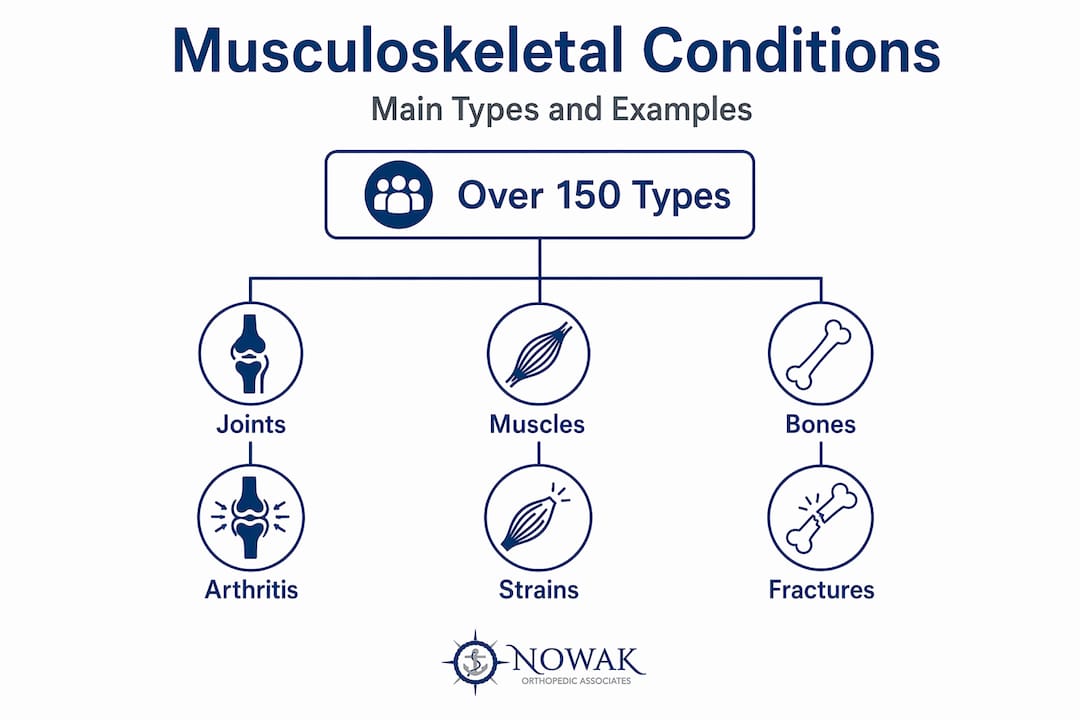
A key distinction that often gets overlooked: acute injuries involve sudden, identifiable structural damage, such as a fracture or ligament tear. Chronic musculoskeletal disorders, like non-specific low back pain or tendinopathy, develop gradually and frequently involve inflammation, degeneration, or nervous system changes rather than one clear injury event.
| Disease Group | Examples | Primary Characteristic |
|---|---|---|
| Inflammatory/Autoimmune | Rheumatoid arthritis, lupus | Immune system attacks joint tissue |
| Degenerative | Osteoarthritis, disc degeneration | Cartilage or tissue breaks down over time |
| Metabolic | Osteoporosis, gout | Bone density loss or crystal deposits in joints |
| Chronic pain syndromes | Fibromyalgia, non-specific back pain | Widespread or localized pain without clear structural cause |
| Acute injuries | Fractures, ligament tears, tendon ruptures | Sudden trauma causing identifiable structural damage |
Symptoms and how they are diagnosed
The symptoms of musculoskeletal issues share a recognizable pattern across most conditions: pain, joint or muscle stiffness, swelling, reduced range of motion, and a general loss of function. You might notice that your knee aches climbing stairs, your shoulder stiffens each morning, or your lower back tightens after sitting for hours. These are classic presentations.
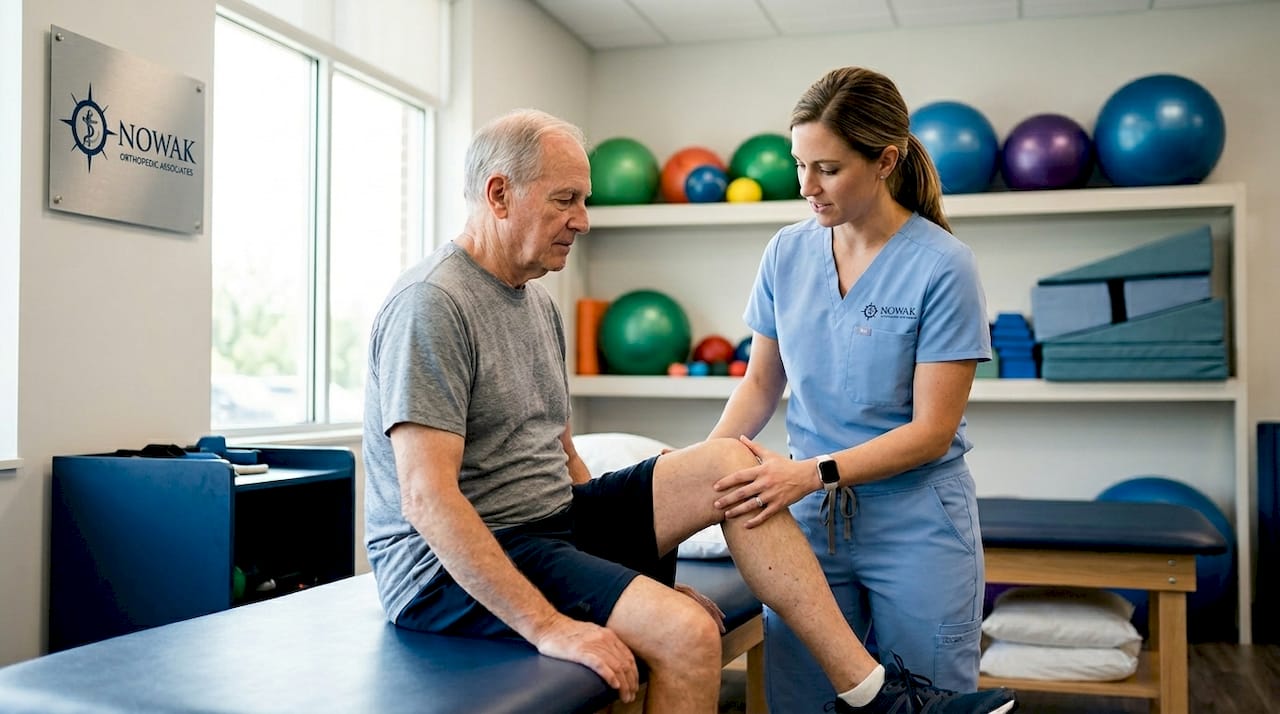
What separates a routine presentation from something urgent are “red flag” symptoms. Knowing these can genuinely change your outcome.
Common musculoskeletal symptoms:
- Localized or widespread joint and muscle pain
- Morning stiffness lasting more than 30 minutes
- Swelling or warmth around a joint
- Weakness or reduced grip strength
- Limited range of motion
- Tenderness when pressing on a specific area
Red flag symptoms that require prompt evaluation:
- Unexplained weight loss alongside pain
- Night sweats or fever accompanying joint symptoms
- Significant neurological symptoms such as numbness or loss of bladder control
- Pain following a high-impact trauma
- Symptoms that worsen steadily despite rest
When it comes to diagnosing musculoskeletal conditions, imaging often gets overused. Clinical guidelines are clear: imaging is not routinely recommended unless specific red flags are present. X-ray or MRI findings frequently do not correlate with pain levels. A person can have significant disc changes on MRI and feel no symptoms, while another person with a “normal” scan experiences debilitating pain. Your clinician’s physical examination and symptom history carry more diagnostic weight than many patients expect.
Causes and risk factors
Understanding musculoskeletal health means recognizing that pain rarely has a single cause. Physical contributors include age-related tissue degeneration, prior injuries, and inflammatory diseases. But lifestyle factors play an equally significant role. Sedentary behavior reduces muscle support around joints. Poor posture during prolonged sitting places repetitive strain on the spine and hips. Repetitive hand and wrist movements at a workstation can lead to conditions like carpal tunnel syndrome or De Quervain’s tenosynovitis.
The workplace deserves particular attention. Musculoskeletal conditions affect 40 to 50% of individuals in employer-sponsored health plans in the U.S., generating $90 billion in avoidable workforce-related costs. Many of those costs stem from preventable ergonomic risk factors: unsupported lower backs during extended desk work, awkward overhead reaching in manual jobs, and vibration exposure in trade occupations.
One common misconception deserves direct correction. Many people believe their chronic back or neck pain must stem from a serious injury or visible structural problem. In reality, no clear structural cause is found in over 85% of non-specific back pain cases. Biopsychosocial factors, including stress, poor sleep, anxiety about movement, and sedentary habits, contribute heavily to chronic musculoskeletal pain. Addressing these factors is not secondary care. It is front-line care.
Pro Tip: If you work at a desk, adjust your chair so your hips sit slightly higher than your knees, your monitor sits at eye level, and your keyboard allows your elbows to stay near 90 degrees. Small ergonomic corrections, done consistently, reduce cumulative strain that otherwise compounds over years into chronic conditions. Review preventing elbow injuries for a detailed workflow on protecting your joints at work.
Treatment options: conservative to surgical
Musculoskeletal problems explained through a treatment lens follow a clear progression. The evidence strongly supports starting with the least invasive, most active approaches before escalating.
- Patient education and reassurance. Understanding your condition reduces fear of movement, which itself amplifies pain. Clinicians trained in musculoskeletal care explain what the diagnosis means, what does not cause lasting harm, and how the body heals.
- Staying active and physical therapy. Clinical guidelines recommend avoiding bed rest and encouraging continued movement for conditions like non-specific low back pain. A physical therapy program builds strength and flexibility around affected joints, often resolving symptoms without further intervention.
- Targeted injections and regenerative therapies. When conservative movement-based care needs support, options like orthobiologic injections and PRP therapy stimulate the body’s own healing processes and reduce inflammation without surgery.
- Addressing psychosocial factors. Stress, poor sleep, and fear of movement significantly amplify pain perception and slow recovery. Cognitive strategies, sleep improvement, and guided rehabilitation that challenges avoidance behaviors are critical parts of an effective plan.
- Surgical intervention. Surgery becomes appropriate when conservative care has been exhausted, when structural damage clearly requires repair (a fully torn rotator cuff, for example), or when neurological function is at risk. Importantly, up to 36% of musculoskeletal surgeries may be unnecessary, which reinforces why a thorough conservative trial matters before choosing the operating room.
Passive treatments like massage or acupuncture can provide short-term symptom relief and are useful as supportive tools. They should not, however, replace active rehabilitation. The body adapts and strengthens through movement, not through receiving treatment while lying still.
My perspective on what patients get wrong about pain
I’ve worked with enough people managing chronic musculoskeletal pain to recognize the single most common and costly mistake: assuming pain equals damage. When your back hurts or your knee aches, the instinct is to stop moving and protect the area. That instinct, while understandable, typically makes things worse.
What I’ve learned is that the nervous system plays a massive role in musculoskeletal pain, often amplifying signals that no longer reflect actual tissue injury. Fear of movement, called kinesiophobia, keeps people stuck in cycles of inactivity that worsen muscle loss and joint stiffness. The research on this is consistent and compelling.
My honest advice: get a proper diagnosis early, engage actively with your rehabilitation, and take ergonomic risks at work seriously before they compound. Surgery is sometimes the right answer, but it is rarely the only answer. Patients who come in having already committed to movement and lifestyle changes almost always get better outcomes, whether they end up needing surgery or not.
— Rich
How Nowak Orthopedic Associates can help you
If you are living with joint pain, recurring stiffness, or a musculoskeletal condition that has not responded to basic care, Nowak Orthopedic Associates in Hampton, NH offers the kind of thorough evaluation and individualized treatment that makes a real difference. Board-certified orthopedic surgeon Dr. Roger B. Nowak and his team are experienced in both non-surgical and surgical care across the shoulder, knee, elbow, and hand.
Whether your situation calls for non-surgical orthopedic treatments like regenerative therapy and guided stretch therapy, or more advanced intervention through the practice’s advanced joint care services, care is built around your goals and your timeline. Early evaluation consistently leads to better outcomes. If you have been managing pain on your own and wondering whether something more targeted could help, scheduling a first visit at Nowak Orthopedic Associates is a straightforward next step.
FAQ
What does defining musculoskeletal conditions actually mean?
Defining musculoskeletal conditions means identifying disorders that affect bones, muscles, joints, tendons, ligaments, cartilage, and connective tissues. There are over 150 recognized conditions in this category, ranging from arthritis to fibromyalgia to acute ligament injuries.
What are the most common symptoms of musculoskeletal issues?
The most common symptoms include pain, stiffness, swelling, limited range of motion, and weakness. Symptoms may be localized to one joint or spread across multiple areas of the body.
When should imaging be used to diagnose musculoskeletal conditions?
Imaging is recommended only when red flag symptoms are present, such as fever, unexplained weight loss, or neurological deficits. In most cases, a clinical examination and patient history are sufficient for initial diagnosis.
Can musculoskeletal pain occur without structural damage?
Yes. In over 85% of non-specific back pain cases, no clear structural cause is identified. Psychosocial factors including stress and fear of movement play a significant role in both the experience and persistence of pain.
What is the first-line treatment for most musculoskeletal conditions?
Clinical guidelines recommend conservative management first: patient education, continued activity, and physical therapy. Surgery is considered only when conservative care has been fully explored and structural repair is clearly necessary.