

TL;DR:
- Tendon repair surgery reattaches torn tendons to restore their function, especially in complete ruptures. Recovery involves multiple stages over months, with adherence to physical therapy crucial for successful outcomes. Although risks exist, timely diagnosis and proper rehabilitation significantly improve long-term function and reduce complications.
If you’ve torn a tendon and your doctor mentioned surgery, you’re probably trying to understand what that actually means. What is tendon repair surgery, what happens during the procedure, and how long will recovery take? These are the right questions to ask. The key thing to know upfront: not all tendon injuries need surgery, but when a tendon fully ruptures, surgical repair is often the best path to restoring strength and function. This guide walks you through the procedure, recovery stages, risks, and what shapes a successful outcome.
Table of Contents
- Key takeaways
- What is tendon repair surgery and how is it performed
- Recovery after tendon repair: stages, timelines, and rehab
- Risks, complications, and alternatives to surgery
- Expected outcomes and what shapes success
- My perspective on tendon repair and recovery
- How Nowak Orthopedic Associates can help
- FAQ
Key takeaways
| Point | Details |
|---|---|
| Surgery targets full ruptures | Complete tendon tears rarely heal without surgical repair to reattach the ends. |
| Techniques vary by injury | Open repair and minimally invasive approaches both offer proven results depending on the tendon involved. |
| Recovery takes months, not weeks | Tendon healing alone takes roughly 3 months, with full recovery often reaching 9 to 12 months. |
| Rehab adherence determines outcomes | Physical therapy phases are not optional. Skipping or rushing them raises the risk of re-rupture. |
| Nonsurgical options exist | Partial tears and tendinitis may respond well to conservative care, including regenerative therapies. |
What is tendon repair surgery and how is it performed
Tendon repair surgery is a procedure that reattaches torn or ruptured tendon tissue so it can heal in proper alignment and regain its mechanical function. Tendons are the tough, fibrous cords that connect muscle to bone. When one tears completely, the muscle loses its anchor. Without repair, that connection may never fully restore.
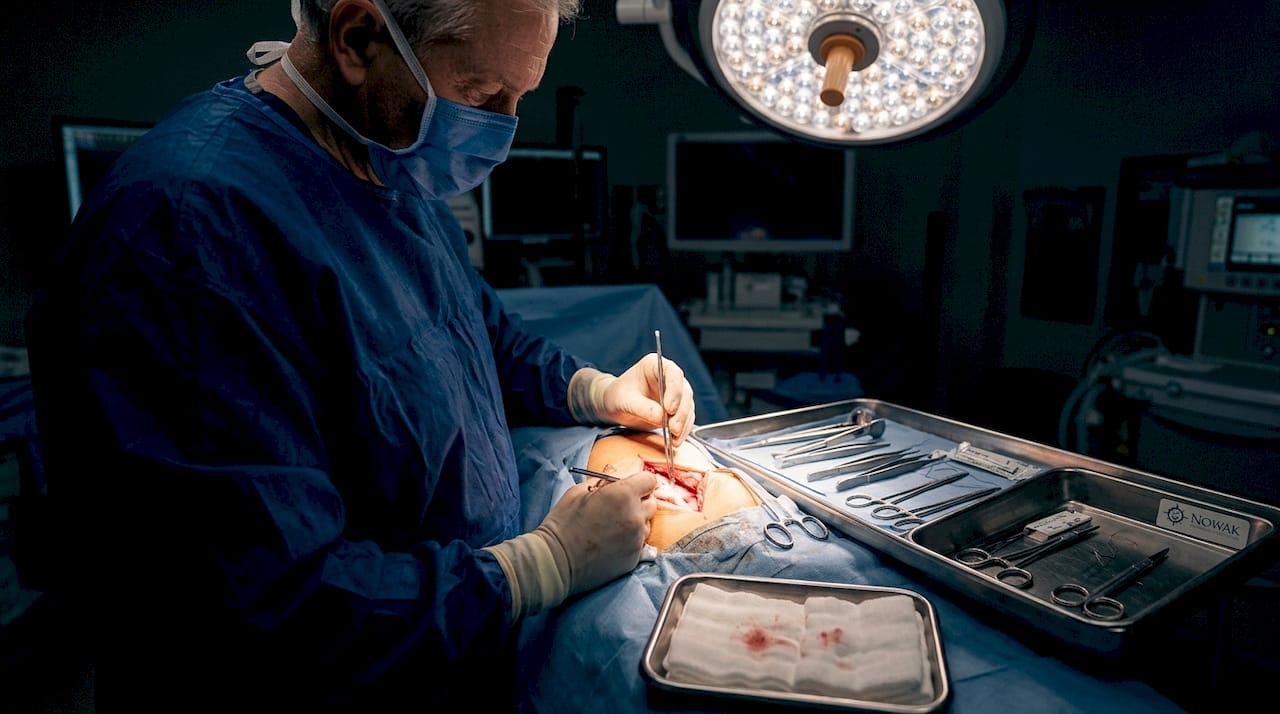
The most common injuries that lead to surgical repair include complete Achilles tendon ruptures, rotator cuff tears, biceps tendon ruptures, quadriceps and patellar tendon tears, and hand flexor or extensor tendon lacerations. Partial tears and chronic tendinitis generally do not require surgery unless conservative treatment fails.
How is tendon repair done? Surgeons use several approaches depending on the tendon and the extent of the tear:
- Open repair: A single incision exposes the tendon directly. The surgeon trims damaged tissue and uses sutures to reattach the torn ends. This is common for large tears or ruptures with significant retraction.
- Minimally invasive repair: Techniques like the Percutaneous Achilles Repair System (PARS) use a 1-cm incision to pass sutures through the tendon without fully opening the wound. Less tissue disruption often means earlier weight-bearing.
- Arthroscopic-assisted repair: For tendons like the rotator cuff, tiny cameras and instruments allow repair through small portals rather than a large open incision.
Regarding anesthesia, general or local anesthesia may be used depending on the tendon being repaired and the patient’s overall health. Hand tendon repairs, for example, are sometimes performed under local anesthesia while you remain awake but completely numb.
Pro Tip: Ask your surgeon specifically which repair technique they plan to use and why. The answer tells you a lot about the expected recovery timeline and what restrictions you’ll face in the early weeks.
Recovery after tendon repair: stages, timelines, and rehab
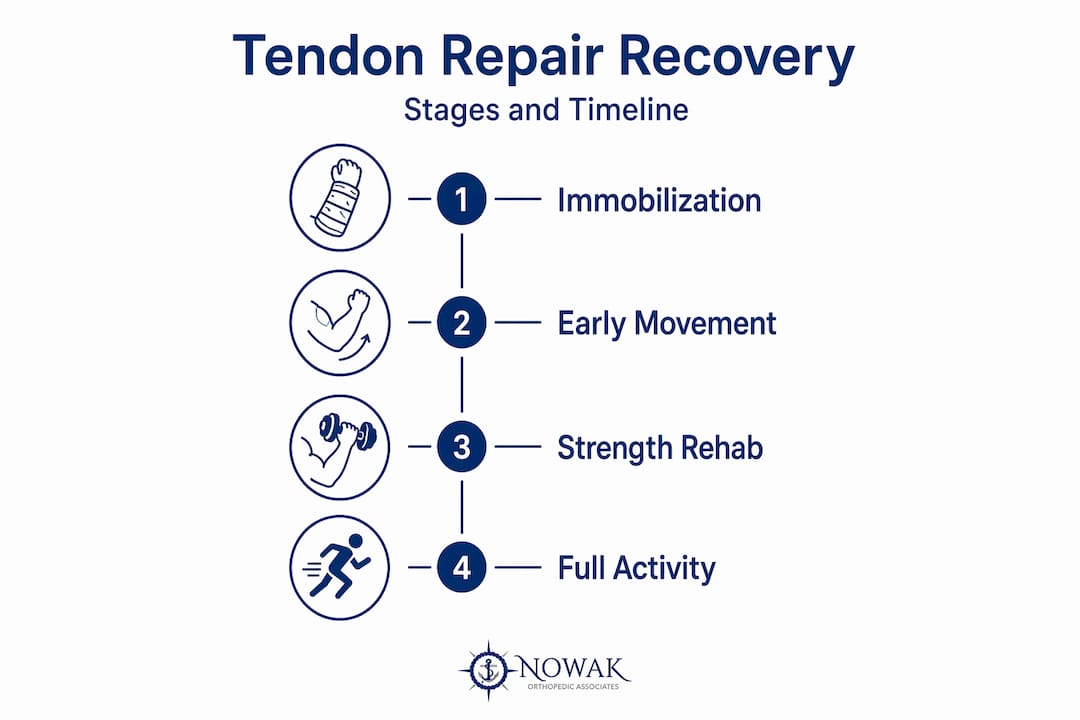
Tendon surgery recovery is not a single event. It unfolds in distinct phases, and each one serves a specific biological purpose. Skipping ahead in the process is one of the most common reasons patients experience setbacks.
Physical therapy phases guide patients through a careful progression that matches how tendon tissue actually heals. Here is what that typically looks like:
- Incision and early healing (weeks 1 to 6): The surgical site closes and inflammation settles. The repaired tendon is protected through immobilization, a cast, or a splint. Weight-bearing is often restricted during this phase.
- Tendon healing phase (weeks 6 to 12): The tendon itself undergoes structural repair. Tendon healing takes about 3 months, during which gentle range-of-motion exercises begin under a therapist’s supervision.
- Strengthening phase (months 3 to 6): Controlled loading begins. Structured progressive loading promotes collagen remodeling, starting with isometric exercises and advancing to heavy slow resistance training.
- Return to activity (months 6 to 12): Sport-specific or high-demand functional activities are reintroduced carefully. Full recovery often spans 9 to 12 months, particularly for load-bearing tendons like the Achilles or patellar tendon.
Recovery time varies significantly based on which tendon was repaired, the surgical technique used, and how diligently the patient follows the rehabilitation program. Hand tendon repairs may allow earlier fine motor activity, while lower extremity repairs demand longer weight-bearing restrictions.
Pro Tip: Keep a written rehab log. Patients who track their exercises and milestones tend to catch regression early and communicate more precisely with their physical therapist, which leads to better-adjusted programs.
Risks, complications, and alternatives to surgery
Every surgical procedure carries risk, and tendon repair is no exception. Understanding what can go wrong helps you weigh your options with clear eyes.
Common tendon surgery risks include:
- Infection: Any open wound carries infection risk. Surgeons use prophylactic antibiotics and sterile technique to minimize this.
- Tendon stiffness: Scar tissue formation during healing can limit range of motion, especially in hand and finger tendons where gliding is critical.
- Re-rupture: The repaired tendon can tear again, particularly if the patient returns to high-load activities before full tissue maturation.
- Nerve or blood vessel injury: Structures near the tendon can be inadvertently affected, though this is uncommon with experienced surgeons.
- Need for additional surgery: In complex cases or when initial repair fails, revision procedures or tendon grafting may be required.
Not every tendon injury requires surgery. Partial tears and tendinitis often respond well to immobilization, physical therapy, and regenerative treatments like platelet-rich plasma (PRP) injections. Surgical decisions also weigh the patient’s activity level, overall health, and the specific tendon involved. A less active patient with a partial biceps tear, for example, may regain adequate function without surgery. You can read more about non-surgical treatment pathways for tendon injuries to understand what conservative care realistically offers.
Expected outcomes and what shapes success
Most patients who undergo tendon repair surgery and follow their rehabilitation program regain meaningful function. The realistic picture depends on several variables.
| Factor | Favorable outcome | Less favorable outcome |
|---|---|---|
| Timing of repair | Surgery within 2 to 3 weeks of injury | Delayed repair requiring grafts and higher complication risk |
| Rehab adherence | Consistent participation in all phases | Incomplete or rushed rehabilitation |
| Injury severity | Clean rupture with minimal retraction | Large chronic tears with muscle atrophy |
| Patient age and health | Younger, active patients with no comorbidities | Advanced age combined with low physical demand |
| Surgical technique | Minimally invasive with early mobilization | Open repair with prolonged immobilization |
Strength and function typically improve steadily over the first year following surgery. Pain relief is often noticed earlier, within the first few months, as inflammation resolves and the tendon stabilizes. Long-term risks like re-injury are reduced significantly when patients progress through each rehabilitation stage rather than rushing back to full activity.
My perspective on tendon repair and recovery
What I’ve learned from years of treating tendon injuries is that the surgery itself is often the straightforward part. The harder work happens afterward, in physical therapy and at home. Patients frequently underestimate how long tendon tissue takes to mature. They feel better at three months and assume they’re done. They’re not.
The other thing I see consistently is delayed diagnosis. People assume a painful tendon is just inflammation, when in fact they’ve sustained a partial or complete rupture that has been quietly progressing. Early, accurate diagnosis is the single biggest factor I can influence before a patient ever gets to the operating room. Catching a distal biceps rupture in week one versus week four changes the entire surgical approach and the expected outcome.
I also tell every patient the same thing before surgery: your results depend more on what you do in the following months than on what I do in the operating room. That’s not modesty. It’s what the biology of tendon healing actually demands.
— Dr. Roger Nowak
How Nowak Orthopedic Associates can help
At Nowak Orthopedic Associates in Hampton, NH, Dr. Roger B. Nowak brings board-certified expertise to the full spectrum of tendon injuries, from conservative management to advanced surgical repair. Whether you’re dealing with a rotator cuff tear, Achilles rupture, triceps tendon injury, or a hand tendon laceration, every patient receives an individualized treatment plan built around their specific injury, activity goals, and health profile. Learn more about our orthopedic surgical expertise and how we support patients through every stage of recovery. For those who may not need surgery, our Regenerative Medicine Clinic offers PRP, SoftWave therapy, and orthobiologic treatments. Schedule your first visit to get a clear diagnosis and a plan that fits your life.
FAQ
What is tendon repair surgery used for?
Tendon repair surgery reattaches torn or ruptured tendons so they can heal in proper alignment and restore muscle function. It is most commonly used for complete ruptures of the Achilles, rotator cuff, biceps, or hand tendons.
How long does tendon surgery recovery take?
Recovery varies by tendon and technique, but tendon tissue itself takes approximately 3 months to heal structurally. Full recovery, including a return to sport or heavy activity, typically spans 9 to 12 months.
What are the main risks of tendon repair surgery?
The primary risks include infection, tendon stiffness from scar tissue, re-rupture with premature activity, and rarely nerve or vessel injury. Most risks decrease significantly with experienced surgical care and proper rehabilitation.
Can tendon injuries heal without surgery?
Partial tears and tendinitis often respond well to non-surgical tendon injury treatment, including immobilization, physical therapy, and regenerative injections. Complete ruptures, however, rarely regain full strength without surgical repair.
How soon after injury should tendon repair surgery be done?
Timing matters considerably. For distal biceps ruptures, repair within 2 to 3 weeks produces better outcomes. Delays can increase surgical complexity and require tendon grafting, which raises complication risk.