

TL;DR:
- Most rotator cuff tears heal without surgery through physical therapy and medications.
- Surgical repair reconnects torn tendons, with outcomes influenced by tear size and surgeon experience.
If your shoulder has been aching, catching, or simply failing you during everyday tasks, you may be wondering what is rotator cuff repair and whether it applies to your situation. Nearly 2 million Americans visit their doctor each year for rotator cuff tears, making this one of the most common shoulder problems in the country. The good news? Most people don’t end up needing surgery. Understanding your options, from conservative care to surgical repair, puts you in a far better position to make decisions that actually fit your life.
Table of Contents
- Key takeaways
- What is rotator cuff repair: your treatment options
- How tear size and surgical technique affect your outcome
- What to expect during recovery
- When to see an orthopedic specialist
- My perspective on rotator cuff repair
- Rotator cuff care at Nowak Orthopedic Associates
- FAQ
Key takeaways
| Point | Details |
|---|---|
| Most tears heal without surgery | About 80–85% of patients find relief through physical therapy, medications, or injections alone. |
| Surgery reattaches torn tendon | Rotator cuff repair reconnects the damaged tendon to the upper arm bone using anchors or sutures. |
| Tear size shapes treatment | Small tears respond well to conservative care; larger tears may require surgical intervention and longer recovery. |
| Recovery takes months, not weeks | Tendon healing takes 6 to 8 weeks, but full function typically returns after 4 to 6 months or more. |
| Surgeon experience matters greatly | Arthroscopic repair is technically demanding, and choosing an experienced specialist significantly affects your outcome. |
What is rotator cuff repair: your treatment options
The rotator cuff is a group of four muscles and their tendons that surround the shoulder joint. Together, they hold the ball of your upper arm securely in the shoulder socket and power nearly every movement your arm makes. When one or more of those tendons tears, whether from a sudden injury or years of wear, the result is pain, weakness, and limited range of motion.
Understanding rotator cuff repair starts with recognizing that “repair” doesn’t always mean surgery. Treatment is a spectrum, and where you land on it depends on the severity of your tear, your activity level, and how long you’ve been dealing with the injury.
Nonsurgical options are always explored first and include:
- Physical therapy to strengthen surrounding muscles and restore mobility
- Nonsteroidal anti-inflammatory medications to manage pain and swelling
- Corticosteroid injections, which provide relief for about two-thirds of patients for at least three months, though long-term effectiveness varies
- Rest and activity modification to reduce strain on the injured tendon
When these measures fail, or when the tear is large and the patient is physically active, surgery becomes the appropriate next step. The surgical goal is straightforward: reattach the torn tendon back to the head of the humerus, the upper arm bone, restoring the connection that allows normal shoulder function. Surgeons use one of three approaches: fully arthroscopic, mini-open, or traditional open surgery. Each has its place, and the choice depends on the size and complexity of the tear.
Pro Tip: If you’ve been receiving steroid injections, know that repeated long-term use can weaken tendon tissue. Talk with your orthopedic specialist about combining injections with physical therapy rather than relying on injections alone.
How tear size and surgical technique affect your outcome
Not all rotator cuff repairs are created equal. Rotator cuff surgery explained properly requires understanding that tear size, location, and tissue quality all influence which surgical technique gives you the best chance of success.
| Surgical approach | Best suited for | Key consideration |
|---|---|---|
| Arthroscopic | Most tear sizes; minimally invasive | Technically demanding; requires experienced surgeon |
| Mini-open | Medium to large tears | Combines arthroscopic and open techniques |
| Open surgery | Massive or complex tears | Higher morbidity; longer recovery |
The supraspinatus tendon is the most frequently torn structure in the rotator cuff. Its critical zone, the area closest to where it attaches to bone, has poor blood supply, which is precisely why tears concentrate there and why healing can be slow. Surgical repair targets this footprint directly, reattaching the tendon with suture anchors to restore that native contact zone.
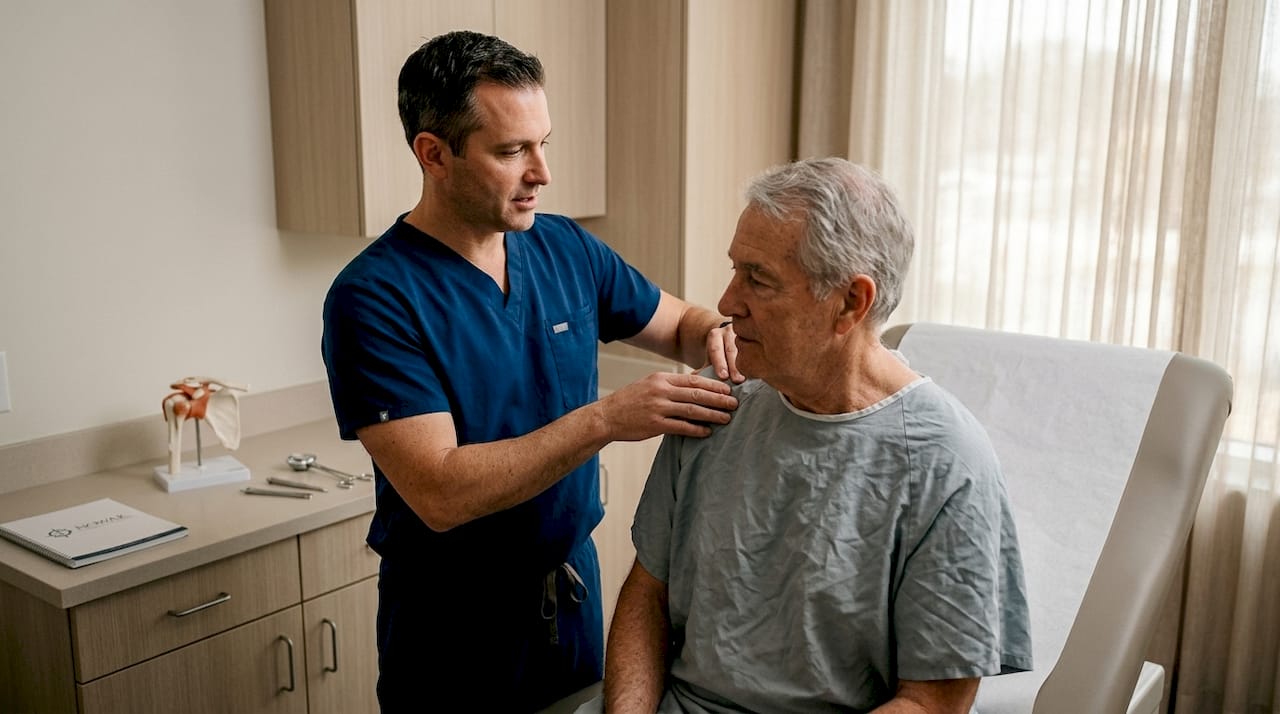
Tear size plays a significant role in both surgical planning and outcomes. Medium and large tears carry a higher risk of re-tear after surgery compared to small tears. For larger tears, surgeons often use a double-row suture anchor technique, which creates more contact between the tendon and bone. This approach is biomechanically superior and reduces re-tear rates compared to single-row methods.
Preoperative MRI findings, including assessments of muscle fatty infiltration, also influence surgical decisions and long-term prognosis. Significant fatty changes in the muscle tissue indicate the repair may have limited function even if the tendon heals.
Surgeon experience is not a minor detail. Arthroscopic repair requires a steep learning curve, and a surgeon’s technical skill directly affects repair integrity. When exploring rotator cuff surgery explained thoroughly, this is one factor many patients overlook.
Pro Tip: When choosing a surgeon for arthroscopic rotator cuff repair, ask specifically how many procedures they perform per year. Volume and experience in minimally invasive techniques translate directly into better outcomes.
What to expect during recovery
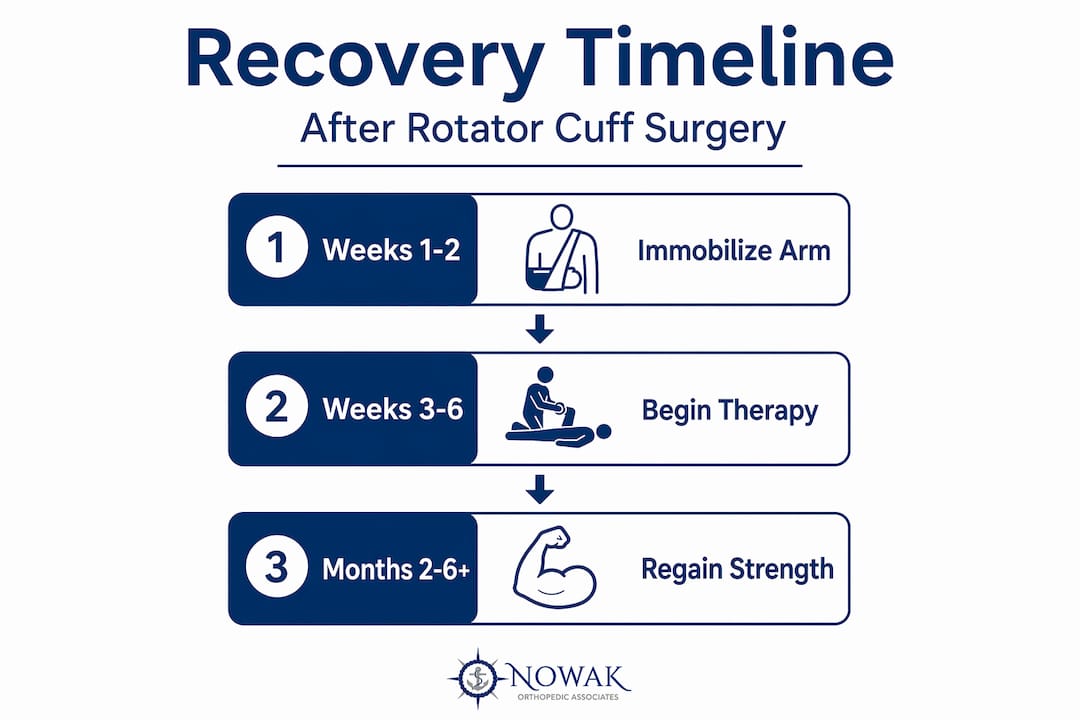
Recovery from rotator cuff repair follows a predictable progression, but the timeline is longer than most patients expect. Here’s a realistic phase-by-phase breakdown:
- Weeks 1 to 6 (immobilization phase): Your arm will be in a sling to protect the repair. Pain and swelling are managed with medication and ice. Movement is limited to gentle pendulum exercises.
- Weeks 6 to 12 (passive motion phase): A physical therapist begins guided range-of-motion work. The tendon is still healing to bone during this period, so no resistance is applied yet. Tendon-to-bone healing typically takes 6 to 8 weeks.
- Months 3 to 4 (active strengthening phase): With the repair more stable, you begin active exercises and light resistance work to rebuild muscle strength.
- Months 4 to 6 and beyond (return to activity): Full recovery, including return to overhead sports or physical labor, can take 6 months or longer depending on tear size and individual healing.
Larger tears simply take longer. A patient repairing a massive tear will not follow the same timeline as someone with a small partial-thickness tear. Your age, overall health, and how closely you follow your rehabilitation program all affect your pace.
Pro Tip: The single biggest predictor of a successful repair is consistency in physical therapy. Skipping sessions or rushing back to activity before your surgeon clears you dramatically increases the risk of re-tear.
For practical help planning your recovery, the shoulder surgery recovery checklist from Nowak Orthopedic Associates walks you through exactly what to prepare before and after your procedure.
When to see an orthopedic specialist
Many people tolerate shoulder pain far longer than they should, hoping it will resolve on its own. Knowing when to seek a specialist evaluation can prevent a small problem from becoming a massive tear requiring more complex repair. Consider scheduling a consultation if you experience any of the following:
- Shoulder pain that persists beyond 3 to 6 months despite rest and conservative care
- Weakness in the arm, particularly when lifting overhead or reaching behind your back
- A sudden sharp pain following a fall or forceful movement
- Night pain that disrupts sleep regularly
- Loss of function that limits your work, sport, or daily routine
Accurate diagnosis matters here more than many people realize. Subscapularis tears are frequently missed in early evaluations, and specific physical tests, such as the bear-hug and belly-press tests, are needed to identify them. Missing this diagnosis leads to incomplete treatment. An MRI provides the detail necessary to confirm tear size, location, and muscle quality before any treatment decision is made.
At Nowak Orthopedic Associates, treatment recommendations are individualized to your specific tear characteristics, activity demands, age, and tissue quality. That tear-size-specific approach to surgical planning consistently leads to better outcomes than one-size-fits-all protocols. For a broader look at shoulder pain causes and management, understanding the full picture of your shoulder health is always the right starting point.
My perspective on rotator cuff repair
In my experience working with patients across a wide range of tear types and activity levels, the most common misconception I encounter is that a diagnosis of a rotator cuff tear automatically means surgery. It doesn’t. I’ve seen patients with significant tears recover full function through structured physical therapy and targeted injections, and I’ve seen small tears in high-demand athletes require prompt surgical repair. There is no universal answer.
What I’ve found works best is honest, upfront education. When patients understand their anatomy, what the repair actually involves, and what recovery truly demands, they follow through. They show up to physical therapy. They protect the repair in those early weeks. That adherence is what separates a good outcome from a re-tear.
I also want to be direct about arthroscopic technique: not all arthroscopic rotator cuff repairs are equivalent. The approach, the anchor configuration, and the surgeon’s volume of experience all matter. If you’re considering surgery, ask detailed questions about your surgeon’s specific experience with your tear type. You have every right to that information.
— Dr. Roger Nowak
Rotator cuff care at Nowak Orthopedic Associates
At Nowak Orthopedic Associates in Hampton, NH, Dr. Roger B. Nowak brings board-certified expertise and a high volume of minimally invasive arthroscopic procedures to every shoulder case. Whether you’re exploring nonsurgical options like PRP injections and physical therapy or you’re facing a tear that requires surgical repair, the practice builds a treatment plan around your specific injury and goals.
For those researching their options, the arthroscopic surgery benefits page explains what makes minimally invasive repair preferable for most patients. For a broader look at what specialized orthopedic care involves, the guide to advanced joint care is a strong starting point. Ready to take the next step? Visit the shoulder treatments page to learn about the full range of shoulder procedures available and schedule your consultation.
FAQ
What does rotator cuff repair surgery involve?
Rotator cuff repair surgery reattaches a torn tendon back to the upper arm bone using suture anchors, typically performed arthroscopically through small incisions. The goal is to restore the tendon’s footprint and enable normal shoulder strength and movement.
How long does recovery from rotator cuff surgery take?
Tendon healing to bone takes approximately 6 to 8 weeks, but full recovery including return to overhead activity generally takes 4 to 6 months or longer, depending on tear size and patient factors.
Can a rotator cuff tear heal without surgery?
Yes. Conservative treatment relieves pain and restores function in about 80 to 85 percent of patients with rotator cuff tears through physical therapy, medications, and injections.
When is surgery recommended for a rotator cuff tear?
Surgery is typically recommended when pain persists after 3 to 6 months of conservative treatment, or when the patient is highly active and requires full overhead arm function that nonsurgical care cannot restore.
Does tear size affect surgical outcomes?
Yes. Medium and large tears have a higher re-tear risk after surgery than small tears, and larger repairs often require more anchors and a longer rehabilitation period to achieve the best possible outcome.