

TL;DR:
- Degenerative joint disease, or osteoarthritis, is a progressive condition affecting cartilage, bone, and tissues in the joints, influenced by factors beyond aging. Early symptoms include activity-related pain and stiffness that eases within 30 minutes, allowing for self-assessment. Management involves lifestyle modifications, exercise, medications, and potentially surgery, with adherence crucial for preserving function over time.
Degenerative joint disease, also known as osteoarthritis, is one of the most misunderstood conditions in orthopedic medicine. Many people assume it is simply the inevitable result of getting older, but that framing misses a great deal of what is actually happening inside the joint. Understanding what is degenerative joint disease means recognizing it as a chronic, progressive condition that affects cartilage, bone, and surrounding tissues in ways that are influenced by far more than just age. This article breaks down the real causes, the symptoms to watch for, and the management strategies that actually help.
Table of Contents
- Key takeaways
- What is degenerative joint disease and what causes it
- Recognizing symptoms of degenerative joint disease
- Treatment and management strategies
- How DJD progresses and what to expect
- My perspective on managing DJD well
- How Nowak Orthopedic Associates can help
- FAQ
Key takeaways
| Point | Details |
|---|---|
| DJD equals osteoarthritis | Degenerative joint disease is the clinical term for osteoarthritis, involving cartilage loss and structural joint changes. |
| Not just wear and tear | Injury, metabolic disorders, and abnormal joint motion all contribute, making this a modifiable condition in many cases. |
| Early symptoms are recognizable | Pain worsened by activity and stiffness lasting under 30 minutes are hallmark early signs readers can self-assess. |
| Treatment is multimodal | Exercise, weight management, medication, and sometimes surgery work together for the best long-term outcomes. |
| Adherence drives results | Consistent follow-through on lifestyle changes is the single biggest predictor of functional preservation over time. |
What is degenerative joint disease and what causes it
Degenerative joint disease (DJD) is the clinical term most physicians use to describe osteoarthritis, a chronic joint disorder involving the progressive breakdown of cartilage along with changes to the surrounding bone, ligaments, and joint lining. Cartilage functions as the smooth cushioning layer between bones, absorbing load and allowing surfaces to glide against each other without friction. When it deteriorates, bones can begin to rub together, producing pain, swelling, and loss of movement.
The condition goes well beyond simple aging. OA is not merely wear and tear. Factors such as previous joint injury, abnormal joint mechanics, and metabolic disorders like diabetes or obesity all actively drive its development. That distinction matters because it means there are real, modifiable risk factors you can address.
The joint structures most commonly affected include:
- Cartilage: The primary site of damage; loses its smooth texture and begins to break down.
- Subchondral bone: The bone directly beneath cartilage that can thicken or develop bony growths called osteophytes.
- Synovium: The joint lining that may become inflamed in response to cartilage debris.
- Ligaments and tendons: Supporting structures that weaken as joint stability declines.
Pro Tip: If you have had a significant joint injury in the past, such as an ACL tear or a meniscus injury, your risk for developing degenerative joint disease in that joint is meaningfully higher than baseline. Proactive monitoring with an orthopedic specialist is worth pursuing early.
Degenerative arthritis explained in population terms is striking. Roughly 606.5 million people worldwide currently live with osteoarthritis, and the global burden has risen approximately 9% since 1990, driven largely by aging populations and rising obesity rates. This is not a rare or niche condition. It is one of the leading causes of disability worldwide.
Recognizing symptoms of degenerative joint disease
Understanding the symptoms of degenerative joint disease early gives you the best opportunity to slow its progression. The pattern of symptoms is distinctive enough that many patients can begin to recognize what they are dealing with before they ever see a doctor.
Here are the most common clinical features, roughly in the order they tend to appear:
- Joint pain during or after activity. Pain is typically the earliest symptom, described as a deep ache rather than a sharp sensation. It gets worse with use and tends to ease with rest.
- Stiffness after inactivity. Stiffness after rest is one of the hallmark signs. It typically improves within 30 minutes of movement, which helps distinguish DJD from inflammatory arthritis like rheumatoid arthritis, where stiffness often lasts much longer.
- Reduced range of motion. Over time, affected joints may not bend or straighten as fully as they once did.
- Swelling or tenderness around the joint. This reflects inflammation in the synovium responding to cartilage breakdown.
- Crepitus. A grating, crackling, or popping sensation when moving the joint, caused by roughened cartilage surfaces.
The joints most commonly affected by degenerative joint disease include the knees, hips, hands, and spine. Knee symptoms are among the most disabling for daily activities like climbing stairs or rising from a chair. The symptoms of joint degeneration in the hands often appear as bony enlargements at the finger joints, which can limit grip strength and fine motor control.
One reliable self-check: If your joint pain reliably worsens with activity and eases with rest, and any morning stiffness clears up within 30 minutes of moving around, these are strong indicators of osteoarthritis rather than another joint condition. That pattern alone warrants a conversation with your doctor.
Treatment and management strategies
The good news about degenerative joint disease is that most management is non-surgical, focused on reducing pain, maintaining function, and slowing disability. Treatment plans are most effective when they combine multiple approaches rather than relying on a single fix.
Core non-surgical strategies include:
- Therapeutic exercise: Strengthening the muscles around affected joints reduces the load on damaged cartilage. Both low-impact aerobic exercise and targeted strength training are well-supported by evidence.
- Weight management: Every pound of body weight adds roughly four pounds of force across the knee joint. Losing even a modest amount of weight measurably reduces pain and slows progression.
- Joint protection techniques: Modifying activities, using assistive devices, and learning proper movement mechanics protect joints from excessive strain.
- Medications: Topical NSAIDs (applied directly to the skin over the joint) are often a first choice because they deliver localized relief with fewer systemic side effects. Oral NSAIDs and acetaminophen are also commonly used for pain management.
It is worth being clear about what medications can and cannot do. Pharmacologic treatments improve comfort but do not stop cartilage from breaking down. They create a window of reduced pain that makes it easier to stay active and follow through on exercise and weight management, both of which have a genuine impact on how the disease progresses.
Pro Tip: Do not wait until pain becomes severe to start an exercise program. Starting strengthening exercises while symptoms are still mild gives you the best chance of maintaining joint function for years longer.
Non-surgical joint pain relief options have expanded considerably in recent years to include regenerative therapies like platelet-rich plasma (PRP) injections and SoftWave therapy, which aim to reduce inflammation and support tissue recovery without surgery. When DJD becomes severe and conservative care no longer provides adequate relief, surgical options such as partial or total joint replacement become appropriate for carefully selected patients.
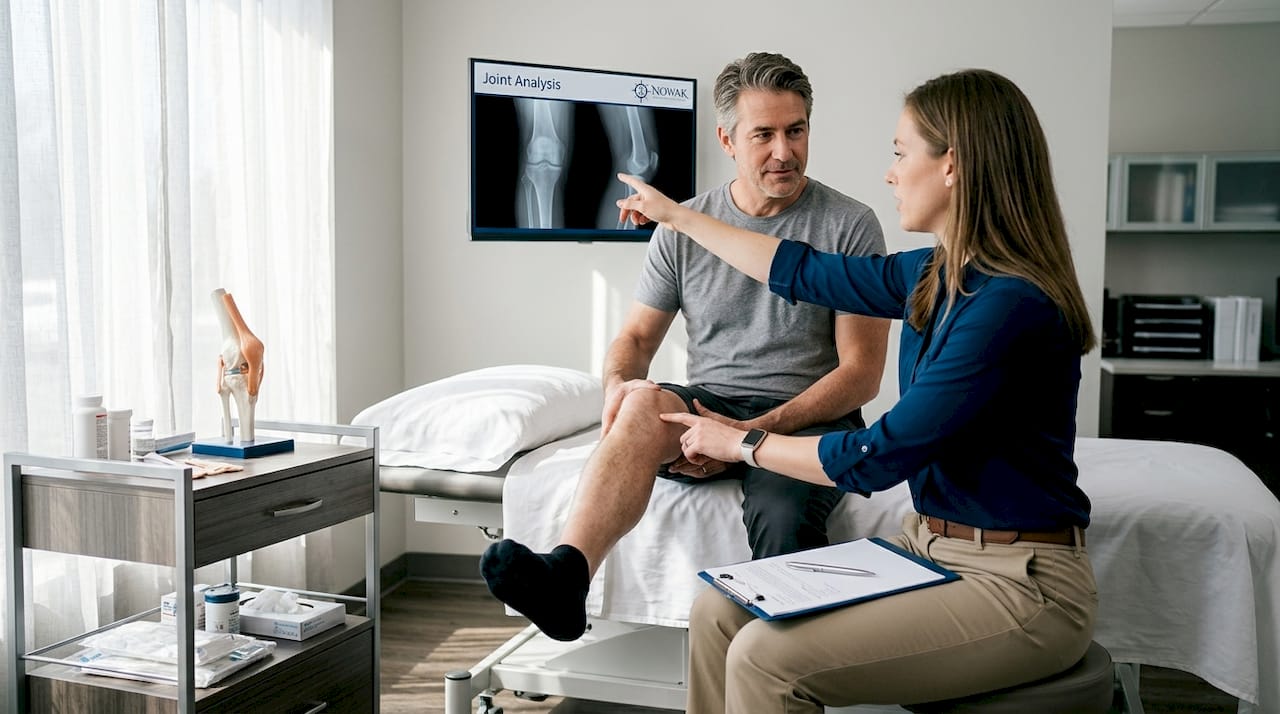
Consistent adherence to lifestyle changes is the factor that most strongly determines long-term outcomes. Patients who stay active, manage their weight, and follow through on their therapy plans experience significantly less functional decline over time than those who rely on medication alone.
How DJD progresses and what to expect
Living with joint degeneration is different for every person, and that variability is not random. DJD is a heterogeneous condition, meaning the pace and pattern of progression varies based on which joints are affected, what caused the disease, and how consistently a person manages it.
OA affects the entire joint, not just the cartilage. As the disease advances, bone, synovium, ligaments, and tendons all become involved, which is why a multimodal treatment approach works better than any single intervention. The goals of treatment shift over time from symptom control in early stages to preserving function and mobility in more advanced stages.
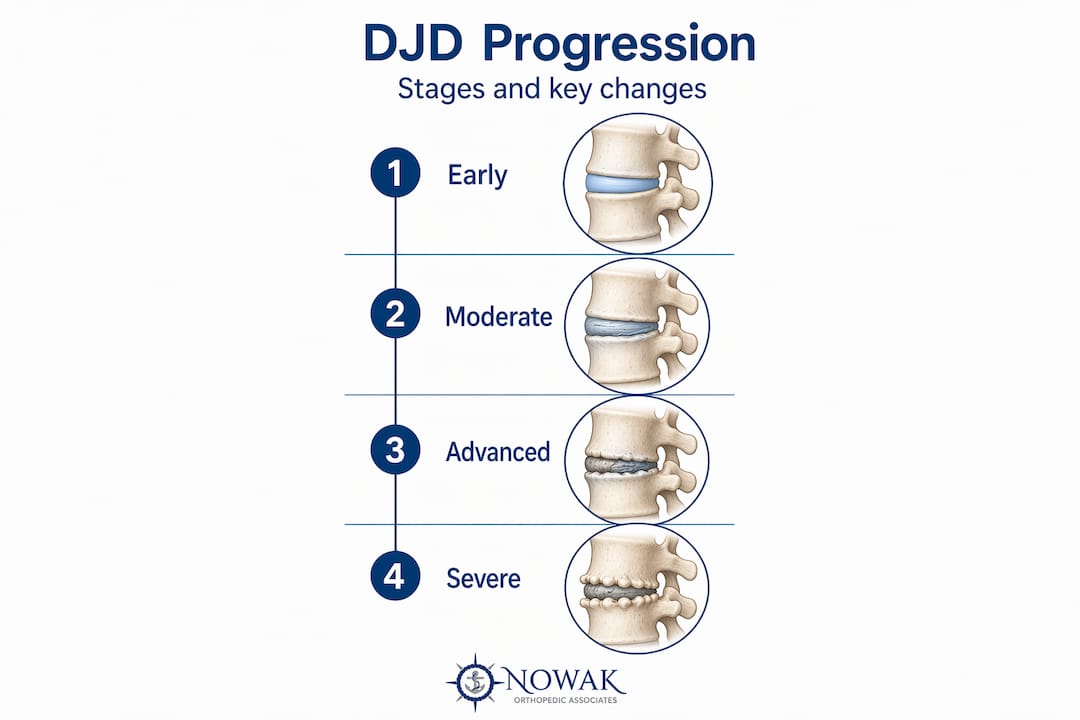
| Stage | Primary changes | Management focus |
|---|---|---|
| Early | Cartilage softening, mild pain with activity | Exercise, weight management, activity modification |
| Moderate | Cartilage thinning, osteophyte formation, increased pain | NSAIDs, physical therapy, possible injections |
| Advanced | Significant cartilage loss, bone-on-bone contact | Surgical evaluation, joint replacement consideration |
There is currently no cure for degenerative joint disease. That is the honest reality. But the absence of a cure does not mean the absence of meaningful progress. Many patients maintain good function and quality of life for years with the right plan in place. The rising global prevalence of OA makes this not just a personal health issue but a significant public health priority, and research into better treatments continues to grow.
My perspective on managing DJD well
In my experience treating patients with degenerative joint disease, the biggest shift in my thinking has been moving away from the idea that this is simply a disease you manage with medication. I’ve watched patients who leaned entirely on pain relievers stay stuck in a cycle of increasing doses and decreasing function. The patients who do best are those who treat exercise and weight management as non-negotiable parts of their care, not optional add-ons.
What I’ve learned is that the multifactorial nature of DJD means there are usually multiple levers you can pull. Pulling only one, whether that is medication alone or surgery alone without rehabilitation, almost always delivers incomplete results. I’ve seen patients with moderate-to-severe disease genuinely surprise themselves with how much function they recover when they commit to a structured, multimodal plan.
My honest advice: get evaluated early, ask about regenerative options before jumping to surgery, and take the lifestyle components as seriously as any prescription. The patients who do that give themselves the best possible outcome.
— Dr. Roger Nowak
How Nowak Orthopedic Associates can help
If you are dealing with joint pain or early signs of degenerative disease, Nowak Orthopedic Associates in Hampton, NH offers individualized care designed around your specific condition and goals. Dr. Roger B. Nowak and his team take a thorough approach, starting with an accurate diagnosis and building a treatment plan that fits your life.
For patients in earlier stages of DJD, our non-surgical treatment options cover the full range from physical therapy and targeted injections to regenerative therapies including PRP, SoftWave therapy, and orthobiologic treatments available through our dedicated Regenerative Medicine Clinic. For patients whose joint disease has advanced to the point where conservative care is no longer enough, we offer proven orthopedic procedures including partial knee replacement and a range of minimally invasive surgical options.
The right time to get evaluated is before the pain is running your life. Schedule your first visit with Nowak Orthopedic Associates and get a clear picture of where your joints are today and what you can do about it.
FAQ
What is degenerative joint disease in simple terms?
Degenerative joint disease is the medical term for osteoarthritis, a chronic condition where the cartilage cushioning your joints gradually breaks down, causing pain, stiffness, and reduced movement. It affects not just cartilage but bone, ligaments, and the joint lining as well.
What are the earliest signs of degenerative joint disease?
The earliest signs are usually joint pain that worsens with activity and eases with rest, along with stiffness after sitting or sleeping that clears up within 30 minutes of moving around. These patterns are characteristic enough to distinguish DJD from other forms of arthritis.
Can degenerative joint disease be cured?
There is currently no cure for degenerative joint disease, but symptoms can be managed effectively with exercise, weight control, medications, and in advanced cases, surgery. Many patients maintain strong function and quality of life for years with the right treatment plan in place.
Which joints are most commonly affected by DJD?
The knees, hips, hands, and spine are the most frequently affected joints. Knee and hip involvement tends to cause the most significant impact on daily activities like walking, climbing stairs, and getting up from a seated position.
How is degenerative joint disease different from other types of arthritis?
Unlike rheumatoid arthritis, which is driven by an autoimmune response, degenerative joint disease results from mechanical and metabolic breakdown of joint tissues. Morning stiffness in DJD typically resolves within 30 minutes, while inflammatory arthritis often causes prolonged stiffness lasting an hour or more.