

TL;DR:
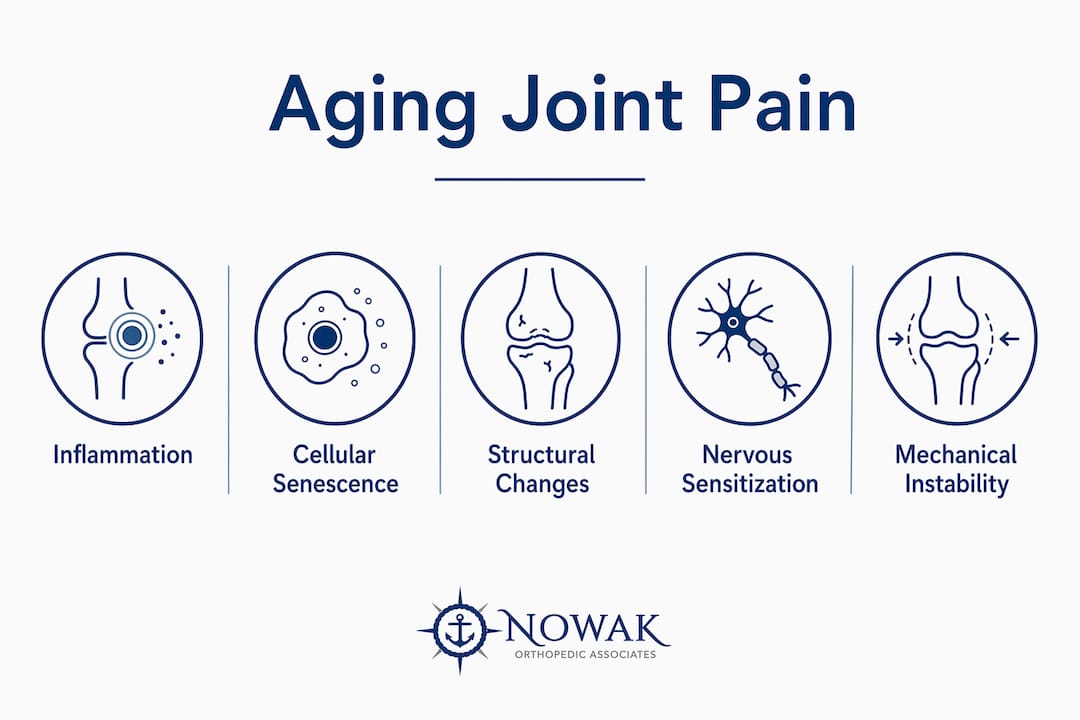
- Joint pain in older adults results from inflammatory cycles, cellular dysfunction, and structural joint changes, not just wear and tear.
- Early management through exercise, weight control, and prompt injury treatment can slow degeneration and improve quality of life.
Joint pain is one of the most common complaints among older adults, yet most people misunderstand why it happens. The assumption that joint pain increases with age simply because of “wear and tear” is incomplete and, in some ways, misleading. The medical term for the most common culprit is osteoarthritis, a condition involving progressive joint degeneration driven by structural breakdown, inflammatory cycles, and cellular changes that accumulate over decades. Understanding the full picture is not just reassuring. It is the first step toward doing something about it.
Key takeaways
| Point | Details |
|---|---|
| More than wear and tear | Joint pain with age involves inflammatory cycles, cellular dysfunction, and mechanical instability, not just cartilage loss. |
| Multiple structures affected | Cartilage, tendons, ligaments, and joint lining all change with age, explaining why symptoms are mixed and variable. |
| Pain does not equal damage | Many people have significant joint damage on imaging but no pain, meaning inflammation and function matter as much as X-rays. |
| Modifiable factors matter | Muscle strength, body weight, and injury history are controllable factors that significantly affect pain progression. |
| Early action pays off | Low-impact exercise, weight management, and prompt treatment of injuries can slow degeneration and improve quality of life. |
Why joint pain increases with age: structural changes
Aging causes structural joint changes including cartilage thinning, tendon wear, and inflammation of the joint lining, all of which combine to produce pain, stiffness, and reduced mobility. Cartilage acts as a shock absorber inside your joints. When it thins and deteriorates, bones begin to rub against each other, creating pain with every movement.
Tendons and ligaments also lose elasticity as we age. They become stiffer, weaker, and more prone to irritation from routine activity. This is why older adults often feel more pain from activities that never bothered them before. Even a long walk or a round of golf can leave joints aching in ways that were not an issue at 40.
The joint lining, known as the synovium, also changes with age. It thickens, produces more fluid, and that fluid loses its lubricating quality. The result is warmth, swelling, and increased friction inside the joint.
Here is what structural aging actually looks like in practice:
- Cartilage thins and loses its ability to absorb impact
- Tendons and ligaments become less flexible and more susceptible to micro-tears
- The synovium thickens and produces lower-quality joint fluid
- Bone ends may develop spurs, further limiting range of motion
- Joints lose their normal shape, altering how load is distributed during movement
Pro Tip: Morning stiffness lasting more than 30 minutes is often a sign of active joint inflammation, not just aging. Mention this specifically to your doctor, as it helps distinguish between different types of joint conditions.
The biology behind worsening pain
Here is what surprises most people: osteoarthritis pain worsens with age not just because joints wear down, but because of an active inflammatory cycle that drives further breakdown. When joint tissue is damaged, the body releases enzymes and cytokines, which are chemical messengers that trigger more cartilage destruction. This becomes self-perpetuating and explains why pain tends to escalate even years after an initial injury.
At the cellular level, mitochondrial dysfunction and cellular senescence play a significant role. Senescent cells, sometimes called “zombie cells,” stop dividing but do not die. They accumulate in joint tissue and release inflammatory signals that harm surrounding cartilage. Defective handling of lipid metabolites within cartilage cells, called chondrocytes, also contributes. When lipid waste builds up inside these cells, it damages their ability to maintain the cartilage matrix.
Pain sensitization is another piece of this puzzle. As we age, our nervous system becomes more reactive to pain signals from joints. This means that the same level of joint damage may produce significantly more discomfort in a 70-year-old than in a 45-year-old.
| Biological factor | How it affects joints |
|---|---|
| Inflammatory cytokines | Accelerate cartilage breakdown and perpetuate swelling |
| Cellular senescence | Accumulation of dysfunctional cells that release joint-damaging signals |
| Lipid metabolism changes | Buildup of harmful lipid byproducts inside cartilage cells |
| Pain sensitization | Nervous system amplifies pain signals, increasing perceived discomfort |
Pro Tip: Pain that seems disproportionate to how your joint looks on an X-ray is real and not in your head. The biology of pain sensitization means older adults often experience more pain from less visible damage. This distinction matters when seeking treatment.
Additional factors that compound joint pain
The burden of osteoarthritis peaks between ages 65 and 69, and that timing is no coincidence. By that stage in life, multiple contributing factors have had decades to accumulate. Understanding each one helps you identify what might be driving your own symptoms.
-
Muscle weakness. Muscles act as the support system for your joints. When they weaken with age, joints absorb more direct stress during movement. Knee osteoarthritis, for example, worsens noticeably when quadriceps strength declines, because the knee loses its protective muscular cushion.
-
Decreased proprioception. Proprioception is your body’s ability to sense joint position and movement. Aging reduces this sense, meaning your joints are more likely to move in ways that cause damage. A person with poor proprioception may repeatedly stress the same joint without realizing it.
-
Excess body weight. Every pound of body weight adds roughly four pounds of pressure to the knee joint during walking. Beyond mechanics, obesity adds inflammatory stress through the release of inflammatory chemicals from fatty tissue, accelerating cartilage breakdown.
-
Prior injuries. A knee ligament tear, a shoulder dislocation, or even a repetitive stress injury earlier in life permanently alters joint mechanics. The altered alignment and movement patterns that result increase wear on specific areas of cartilage, making osteoarthritis more likely and more severe decades later.
Managing age-related joint pain effectively
One of the most clinically important facts about aging and joint discomfort is this: pain often relates more to inflammation and mechanical instability than to the degree of cartilage loss visible on X-rays. This means there is genuine room for improvement even when imaging looks discouraging.
Effective management for joint health as we age includes several evidence-based approaches:
- Low-impact exercise. Walking, swimming, and cycling strengthen the muscles around joints without excessive loading. Strengthening exercises stabilize joints and reduce pain over time more reliably than rest.
- Weight management. Losing even 10 pounds reduces knee joint load significantly. Weight loss also lowers systemic inflammation, addressing pain at the biological level, not just the mechanical one.
- Early treatment of injuries. Prompt attention to sprains, tears, or persistent pain prevents the mechanical alterations that lead to long-term degeneration. Delaying treatment is rarely neutral. It typically accelerates the problem.
- Warm water therapy. Heat and buoyancy reduce joint stress and improve circulation, offering real symptom relief for many older adults.
| Treatment approach | Best suited for |
|---|---|
| Physical therapy | Building muscle support and improving proprioception |
| Anti-inflammatory injections | Reducing active joint inflammation and swelling |
| PRP and regenerative therapies | Stimulating tissue repair without surgery |
| Arthroscopic surgery | Addressing structural damage that does not respond to conservative care |
For those whose pain persists despite conservative measures, surgical options for joint pain including arthroscopy and partial joint replacement offer reliable paths to restored function.
My perspective on treating aging joints
From Dr. Roger Nowak, Nowak Orthopedic Associates
In my experience, the single biggest barrier to effective treatment is the belief that joint pain is just what aging feels like. I hear patients say “I’m just getting old” as if that explanation makes further evaluation pointless. It does not.
What I have learned over years of treating older adults is that the patients who do best are the ones who understand that their pain has specific, addressable causes. Inflammation can be reduced. Muscles can be strengthened. Weight can be managed. Joint degeneration can be slowed. And when structural damage is severe enough to need intervention, modern orthopedic procedures produce outcomes that would have seemed remarkable a generation ago.
The research on cellular mechanisms like senescence and lipid metabolism gives me genuine optimism about where treatment is heading. But right now, today, the biggest gains come from patients who seek care early rather than waiting until pain is unbearable.
— Dr. Roger Nowak
How Nowak Orthopedic Associates can help
If you or someone you care for is dealing with persistent joint pain, Nowak Orthopedic Associates in Hampton, NH provides individualized orthopedic care designed for exactly this situation. Dr. Roger B. Nowak and his team work with older adults to identify the specific causes of their pain and build a treatment plan around their goals and lifestyle.
Whether you are exploring non-surgical treatment options like PRP, SoftWave therapy, or guided stretch therapy, or you need evaluation for a surgical procedure, the practice offers the full spectrum of orthopedic care. You can also explore advanced joint care options to understand what to expect and what questions to ask. Taking the step to get evaluated is always worth it. Schedule your first visit and get answers specific to your joints and your life.
FAQ
What causes joint pain to get worse with age?
Aging leads to cartilage thinning, tendon stiffening, and synovial inflammation, but ongoing inflammatory cycles driven by cellular dysfunction also actively accelerate joint breakdown beyond simple wear.
Is osteoarthritis the same as normal aging?
No. While osteoarthritis is common in older adults, it is a distinct disease process involving inflammatory and cellular mechanisms. Not everyone develops significant osteoarthritis, and the severity varies widely based on modifiable factors.
Why do joints hurt more even when X-rays look normal?
Pain often depends more on inflammation and mechanical instability than cartilage loss. Pain sensitization in older adults also amplifies discomfort, meaning imaging does not tell the complete story.
Can you prevent arthritis from getting worse as you age?
You cannot always prevent osteoarthritis, but modifiable risk factors like body weight, muscle strength, and early injury treatment significantly influence how quickly it progresses.
When should you see a doctor about joint pain?
Seek evaluation if pain persists beyond a few weeks, limits your daily activities, or is accompanied by swelling and warmth. Early consultation leads to better outcomes than waiting for pain to become severe.