

TL;DR:
- Biceps tenodesis removes the diseased long head of the biceps tendon and reattaches it to the humerus to reduce shoulder pain and preserve function. The procedure’s success depends on fixation site choice and precise tensioning, with active patients benefiting most from this surgery. Recovery typically takes three to six months, and individual factors influence the surgical approach and outcome.
Biceps tenodesis is defined as a surgical procedure that removes the diseased portion of the long head of the biceps tendon (LHBT) and reattaches it to the humerus to relieve anterior shoulder pain while preserving full biceps function. The LHBT is one of the most common sources of anterior shoulder pain, and when conservative treatments like physical therapy, corticosteroid injections, or platelet-rich plasma (PRP) fail to provide lasting relief, biceps tendon surgery becomes a serious option. Understanding what this procedure involves, how it compares to alternatives, and what recovery looks like will help you make a more informed decision with your orthopedic surgeon.
What is biceps tenodesis and who needs it?
Biceps tenodesis is the surgical reattachment of the LHBT to the humerus after the damaged segment near the shoulder joint is removed. The goal is to eliminate the pain source while keeping the biceps muscle intact and functional. This matters because the LHBT plays a role in shoulder stability, forearm supination, and elbow flexion. Cutting it without reattachment, a procedure called tenotomy, trades pain relief for potential cosmetic and functional drawbacks.
Candidates for this procedure typically present with one or more of the following conditions:
- LHBT tendinopathy: Chronic inflammation and degeneration of the tendon, often from repetitive overhead activity
- Partial LHBT tears: Tears involving less than 50% of the tendon diameter that do not heal with conservative care
- LHBT instability: The tendon slips out of its groove, causing a painful snapping sensation
- SLAP lesions: Superior labrum tears that involve the biceps anchor at the top of the shoulder socket
- Rotator cuff tears with concurrent LHBT pathology: The two conditions frequently coexist, and addressing both in one surgery is common
Anterior shoulder pain that worsens with overhead lifting, carrying, or forearm rotation is the hallmark symptom. If you have tried six or more weeks of physical therapy and targeted injections without meaningful improvement, surgical evaluation is the logical next step. You can also review shoulder injury treatment options to understand the full spectrum of care before committing to surgery.
How is biceps tenodesis done?
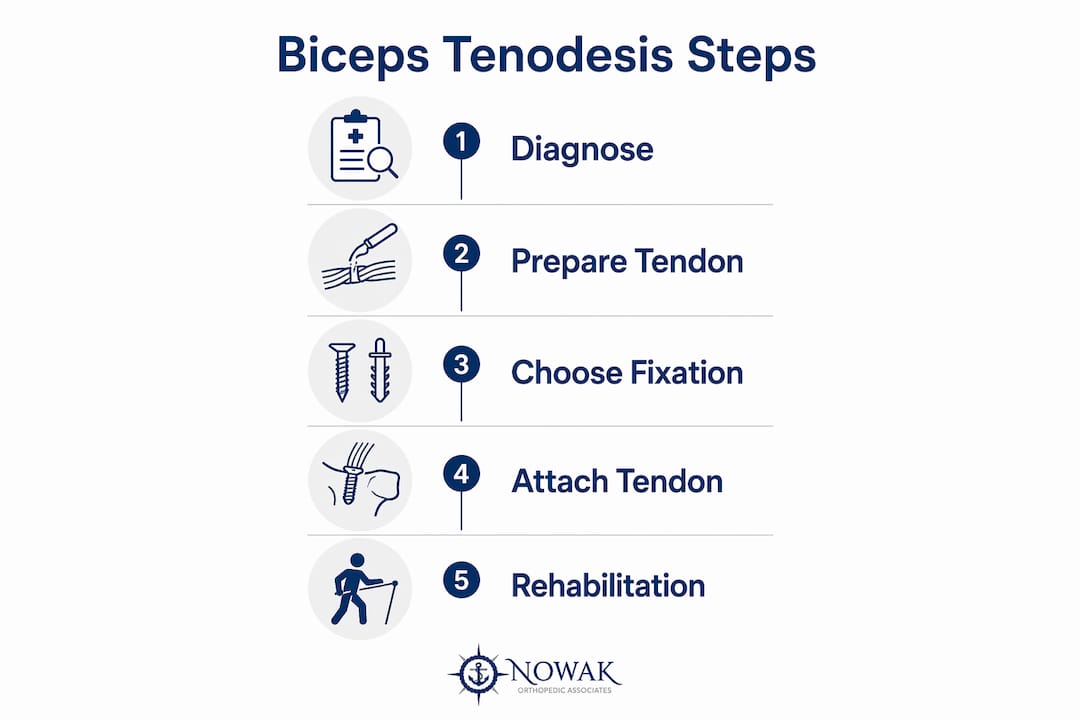
The procedure begins with the surgeon releasing the LHBT from its attachment at the superior labrum, removing the diseased segment, and securing the healthy tendon to the humerus using sutures or bone anchors. The fixation site is one of the most consequential decisions in the entire operation.
Three primary fixation locations are used in practice:
- Intra-articular (top of the groove): Performed entirely arthroscopically but associated with a higher rate of postoperative bicipital groove pain compared to lower fixation sites
- Suprapectoral: Just below the groove, typically arthroscopic; balances accessibility with reduced groove irritation
- Subpectoral: Below the pectoralis major muscle, usually performed through a small open or mini-open incision; often preferred for patients with significant groove pathology
The arthroscopic approach uses small portals and a camera, minimizing tissue disruption. The mini-open subpectoral technique requires a slightly larger incision but gives the surgeon direct visualization of the fixation site. Both approaches are well-established, and the choice depends on the patient’s anatomy, the extent of tendon damage, and the surgeon’s experience.
Maintaining correct tendon tension during fixation is the most technically demanding aspect of the procedure. Too much tension risks fixation failure; too little leads to muscle fatigue, cramping, or a cosmetic deformity. Newer techniques like the Loop ‘N’ Tack tenodesis address this by adjusting suture tensioning and placement to reduce complications seen in traditional suprapectoral approaches.
Pro Tip: Ask your surgeon specifically which fixation site they plan to use and why. The answer tells you a great deal about how they are tailoring the procedure to your anatomy and activity level.
Biceps tenodesis vs tenotomy: benefits and risks compared
No universal superiority exists between tenotomy and tenodesis. The decision weighs cosmetic concerns, activity demands, and the importance of preserving the biceps length-tension relationship.
| Factor | Biceps tenodesis | Tenotomy |
|---|---|---|
| Popeye deformity risk | Lower (17 cases per 227 patients) | Higher (56 cases per 227 patients) |
| Surgical complexity | Moderate | Lower |
| Recovery time | Longer | Shorter |
| Best candidate | Younger, active, cosmetically concerned | Older, less active patients |
| Functional strength preservation | Strong | Variable |
A meta-analysis comparing both procedures found 56 Popeye deformity cases after tenotomy versus 17 after tenodesis in matched groups of 227 patients each. That is a meaningful difference for anyone who uses their arm for manual labor, athletics, or simply cares about appearance.
“Tenotomy is simpler and faster, but the higher rates of cosmetic deformity and cramping make tenodesis the preferred option for manual laborers and patients concerned about appearance.” — AO Foundation Sports Blog
Tenodesis is not without risk. Fixation failure can occur if the anchor pulls out of the bone, particularly in patients with poor bone quality. Persistent pain is possible if tensioning is incorrect. And because the procedure is more involved than tenotomy, the surgical and anesthesia time is longer. For older or less active patients where cosmetic outcome is not a priority, tenotomy remains a clinically sound choice.
Pro Tip: If you are under 55, physically active, or work with your hands, bring up the Popeye deformity risk directly with your surgeon. It is a concrete, data-backed reason to favor tenodesis.
What to expect during biceps tenodesis recovery
Recovery from biceps tenodesis follows a structured, phased approach. Rushing any phase increases the risk of fixation failure before the tendon has fully integrated with the bone.
- Weeks 1 to 4 (Protection phase): The arm is kept in a sling. Passive range-of-motion exercises begin under the guidance of a physical therapist. No active biceps loading.
- Weeks 4 to 8 (Early motion phase): Active-assisted motion begins. Light daily activities resume. Elbow flexion against resistance is still restricted to protect the fixation site.
- Weeks 8 to 12 (Strengthening phase): Progressive resistance exercises begin. Most patients notice meaningful improvement in pain and function during this window.
- Months 3 to 6 (Return to activity): Full return to sport or heavy labor is typically cleared between three and six months, depending on the fixation technique and individual healing rate.
Postoperative biceps strength can approach 90% of the contralateral side with proper rehabilitation. That is a strong functional outcome for most patients. However, patients who received intracuff tenodesis may experience lingering bicipital groove pain that resolves more slowly than those who had subpectoral fixation. Your surgeon’s choice of fixation site directly shapes your recovery experience, which is why that conversation before surgery matters so much. Reviewing how to prepare for shoulder surgery can help you set realistic expectations and arrive at your procedure date in the best possible condition.
Key takeaways
Biceps tenodesis relieves anterior shoulder pain by reattaching the LHBT to the humerus, with fixation site selection and precise tensioning being the two factors that most directly determine outcomes.
| Point | Details |
|---|---|
| Core purpose | Tenodesis removes diseased LHBT and reattaches it to the humerus to preserve function. |
| Fixation site matters | Intracuff placement carries higher groove pain risk; subpectoral is often preferred for active patients. |
| Tenodesis vs tenotomy | Tenodesis produces far fewer Popeye deformities (17 vs 56 per 227 patients) but requires more surgical skill. |
| Recovery timeline | Full return to activity typically occurs between three and six months post-surgery. |
| Candidate profile | Younger, active, or cosmetically concerned patients benefit most from tenodesis over tenotomy. |
My perspective on tailoring biceps tenodesis to the patient
After performing biceps tenodesis across a wide range of patients, from competitive athletes to construction workers to retirees, the single most consistent finding is this: the procedure is only as good as the tensioning. I have seen technically clean surgeries produce disappointing results because the tendon was fixed with slightly too much slack. The patient ends up with cramping and a subtle deformity that could have been avoided.
What I tell patients before surgery is that there is no single correct fixation site. The subpectoral approach works well for most active patients because it moves the fixation point away from the groove entirely, which reduces one of the most common sources of postoperative irritation. But for patients with specific anatomy or concurrent rotator cuff work being done arthroscopically, an all-arthroscopic approach may be more practical. The decision is genuinely individualized.
The other thing I want patients to understand is that tenotomy is not a lesser procedure. For the right patient, it is the smarter choice. An 70-year-old with low activity demands and no cosmetic concerns does not need the additional recovery burden of tenodesis. Matching the procedure to the person is what produces the best outcomes, not defaulting to the more complex option.
— Dr. Roger Nowak
How Nowak Orthopedic Associates can help you move forward
If you are experiencing persistent anterior shoulder pain and wondering whether biceps tendon surgery is right for you, Nowak Orthopedic Associates in Hampton, NH offers the specialized evaluation you need. Dr. Roger B. Nowak performs biceps tenodesis as part of a broader shoulder surgery practice that includes rotator cuff repair, SLAP repair, and Bankart repair. Every patient receives a thorough assessment before any surgical recommendation is made. You can learn more about what to expect from advanced joint care at Nowak Orthopedic Associates, or schedule your first visit to begin a personalized treatment plan. Relief from shoulder pain is achievable, and the right surgical approach starts with the right conversation.
FAQ
What is biceps tenodesis in simple terms?
Biceps tenodesis is a shoulder surgery that removes the damaged part of the long head of the biceps tendon and reattaches the healthy portion to the arm bone (humerus) to relieve pain and preserve muscle function.
How long does biceps tenodesis recovery take?
Most patients return to full activity between three and six months after surgery, with strength approaching 90% of the opposite arm after completing a structured rehabilitation program.
What is the difference between biceps tenodesis and tenotomy?
Tenodesis reattaches the tendon to preserve function and appearance, while tenotomy simply cuts the tendon. Tenotomy is faster but carries a significantly higher risk of Popeye deformity and cramping.
What are the main risks of biceps tenodesis?
The primary risks include fixation failure, persistent pain from incorrect tensioning, and postoperative bicipital groove pain, particularly with intracuff fixation techniques.
Who is a good candidate for biceps tenodesis?
Younger, physically active patients and those concerned about cosmetic appearance are the best candidates. Patients with LHBT tendinopathy, partial tears, instability, or SLAP lesions who have not responded to conservative care are typically considered for this procedure.