

TL;DR:
- Osteoarthritis is a chronic joint condition characterized by cartilage breakdown, pain, stiffness, and reduced mobility. Its symptoms include deep joint ache, morning stiffness lasting less than 30 minutes, swelling, and limited movement, especially in older adults. Effective management involves exercise, lifestyle modifications, targeted medications, and, when necessary, surgical intervention.
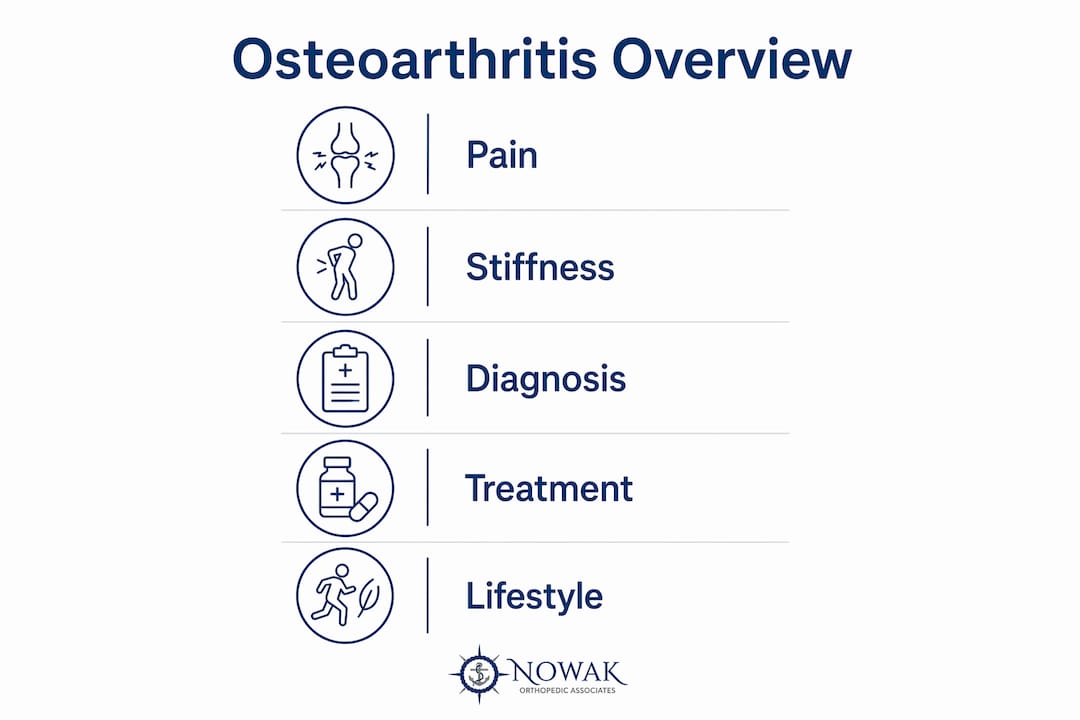
Osteoarthritis (OA) is defined as a chronic joint disorder in which cartilage, the protective tissue cushioning bone ends, gradually breaks down, causing pain, stiffness, and reduced mobility. It is the most common form of arthritis and the leading cause of joint pain in adults over 65. Explaining osteoarthritis in seniors matters because the condition affects not just the joint surface but the entire joint structure, including bone, ligament, and surrounding tissue. By age 80, the majority of older adults show signs of OA in at least one joint. Understanding what drives those symptoms, and what can be done about them, is the first step toward managing the condition well.
What are the common osteoarthritis symptoms in elderly patients?
OA pain is described as a deep ache that worsens with weight-bearing activity and improves with rest, at least in the early stages. The knees, hips, hands, and spine are the joints most commonly affected. Seniors often notice the pain most after climbing stairs, walking long distances, or rising from a chair.
Stiffness is the other hallmark symptom, and its timing is a critical diagnostic clue. OA stiffness lasts less than 30 minutes after waking or after a period of inactivity, then loosens as the joint warms up with movement. This pattern distinguishes OA from inflammatory arthritis conditions like rheumatoid arthritis, where morning stiffness typically persists for an hour or more.
Symptoms do not follow a straight line. OA symptoms fluctuate with activity levels and weather, and in severe cases, pain becomes continuous even at rest. Caregivers should expect good days and bad days rather than steady decline, and plan activities accordingly.
Common OA symptoms in seniors include:
- Deep joint aching that worsens with walking, stair climbing, or prolonged standing
- Morning stiffness that resolves within 30 minutes of gentle movement
- Swelling or tenderness around the affected joint after activity
- Reduced range of motion, making tasks like bending the knee or gripping objects difficult
- Crepitus, a grinding or crackling sensation when moving the joint
Pro Tip: Keep a simple symptom log for one week, noting pain level, time of day, and activity. This pattern gives your orthopedic provider far more useful information than a single office visit snapshot.
How is osteoarthritis diagnosed in seniors?
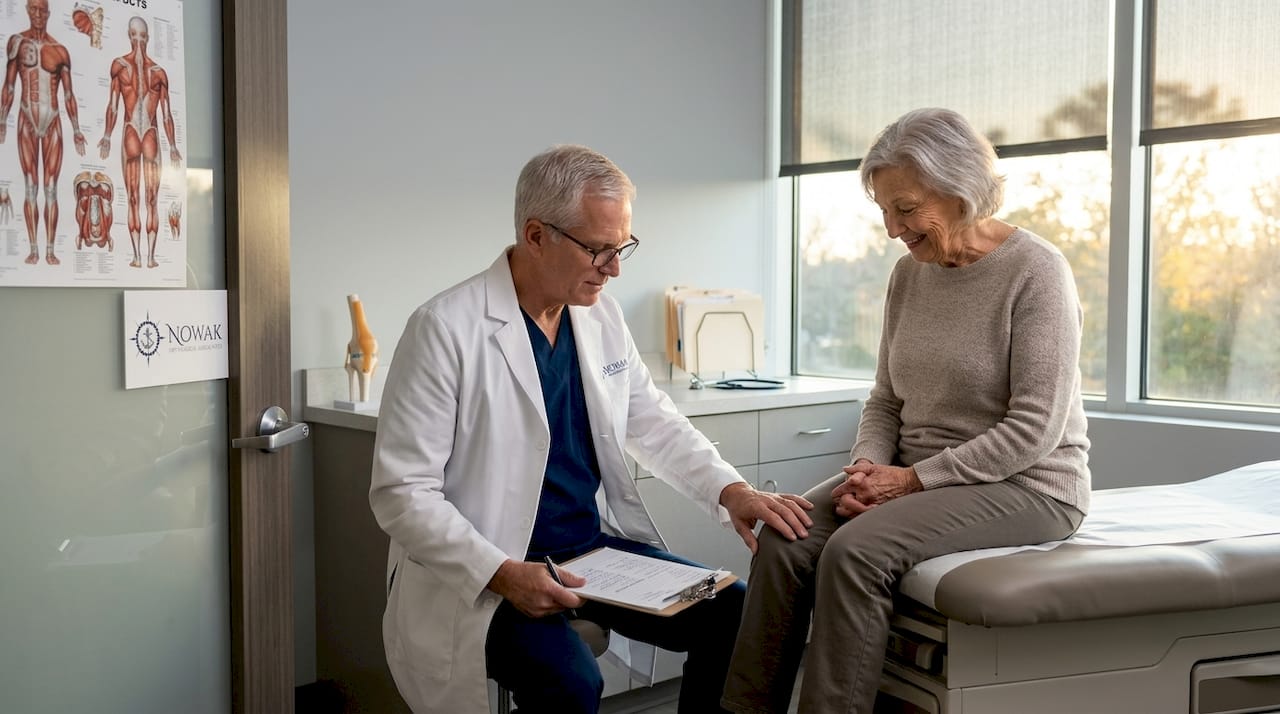
Diagnosis relies primarily on symptoms and physical examination, supported by imaging when needed. A physician will assess joint tenderness, range of motion, and the pattern of affected joints before ordering any tests. Clinical evaluation carries more weight than imaging alone.
X-rays are the standard first imaging step. X-rays show joint-space narrowing, osteophytes (bone spurs), and increased bone density beneath the cartilage, all signs of OA progression. However, there is a well-documented gap between what imaging shows and how much pain a patient actually feels.
X-ray severity often does not correlate with pain intensity, meaning a senior with dramatic imaging findings may have mild symptoms, while another with modest X-ray changes may be significantly disabled. This is why symptom patterns and functional limitations guide treatment decisions more than imaging grades. MRI can detect early cartilage changes before they appear on X-ray, but it also risks overdiagnosis in early disease, leading to unnecessary concern or intervention.
| Diagnostic tool | What it shows | Limitation |
|---|---|---|
| Physical exam | Joint tenderness, range of motion, swelling | Requires experienced clinical judgment |
| X-ray | Joint-space narrowing, bone spurs, sclerosis | Poor sensitivity for early cartilage loss |
| MRI | Early cartilage and soft tissue changes | Risk of overdiagnosis; not routine for OA |
| Symptom history | Pain pattern, stiffness duration, functional impact | Subjective but most treatment-relevant |
What treatment options are effective for managing arthritis in seniors?
Exercise and physical therapy are the cornerstone treatments for OA at every stage. Strengthening the muscles around an affected joint reduces the load on cartilage and improves stability. This is not a minor add-on. It is the single most evidence-supported intervention for pain relief for elderly arthritis patients. A supervised program from a physical therapist at Nowak Orthopedic Associates can be tailored to each senior’s fitness level and joint limitations.
Controlled loading through strengthening and stretching protects joints by improving muscle support rather than resting them completely. Complete rest actually accelerates muscle loss and joint stiffness in older adults, which is a counterintuitive but well-supported finding.
For medication, the approach in seniors requires care:
- Topical NSAIDs such as diclofenac gel are preferred for knee and hand OA because they deliver local pain relief with minimal systemic absorption, reducing gastrointestinal and kidney risks.
- Oral NSAIDs like ibuprofen or naproxen are effective but carry higher risk in seniors, particularly those with kidney disease, heart conditions, or stomach sensitivity. Use the lowest effective dose for the shortest time.
- Acetaminophen is a safer alternative for mild to moderate pain, though it is less effective than NSAIDs for OA-related inflammation.
- Corticosteroid injections provide short-term relief for flare-ups and are particularly useful when a joint is acutely swollen and painful.
- Assistive devices including knee braces, canes, and cushioned shoe inserts reduce joint load during daily activities and can delay the need for more aggressive treatment.
When conservative measures no longer control pain and function is severely affected, joint replacement surgery becomes a consideration. Hip and knee replacements dramatically reduce pain and restore mobility. Nowak Orthopedic Associates also offers unicompartmental knee arthroplasty, a partial knee replacement that preserves healthy joint tissue when only one compartment is affected.
Pro Tip: Ask your provider about platelet-rich plasma (PRP) injections or SoftWave therapy before committing to surgery. These regenerative options are available at Nowak Orthopedic Associates and may provide meaningful relief for moderate OA.
How do lifestyle and self-care affect osteoarthritis outcomes?
Weight management is one of the most direct levers seniors and caregivers can pull. Every pound of body weight adds roughly four pounds of force across the knee joint during walking, so even modest weight loss produces measurable symptom improvement. Omega-3 fatty acids and an anti-inflammatory diet rich in vegetables, whole grains, and lean protein support joint health by reducing systemic inflammation.
Low-impact exercise, including swimming, cycling, and walking on flat surfaces, maintains joint mobility without the impact stress of running or jumping. The goal is consistent movement, not intensity. Seniors who remain active within their comfort range consistently report better function and less pain than those who limit activity out of fear of worsening the joint.
Self-care strategies that make a real difference include:
- Maintaining a healthy weight to reduce mechanical stress on knees and hips
- Eating anti-inflammatory foods such as fatty fish, leafy greens, berries, and olive oil
- Scheduling rest periods during the day to prevent overloading joints during extended activity
- Using grab bars, raised toilet seats, and non-slip mats to reduce fall risk and joint strain at home
- Addressing mood and mental health, since depression and anxiety are common in chronic pain conditions and worsen perceived pain intensity
Occupational therapy is an underused resource for seniors with OA. An occupational therapist can assess the home environment and recommend modifications that reduce joint stress during everyday tasks like cooking, dressing, and bathing. For more on holistic pain management approaches that complement conventional care, there are evidence-informed options worth exploring alongside your medical team.
Key takeaways
Osteoarthritis in seniors is best managed through a combination of exercise, targeted medication, lifestyle modification, and timely specialist evaluation rather than imaging-driven decisions alone.
| Point | Details |
|---|---|
| OA stiffness timing matters | Morning stiffness under 30 minutes distinguishes OA from inflammatory arthritis and guides diagnosis. |
| Imaging does not equal pain | X-ray severity rarely matches symptom severity; treat the patient, not the picture. |
| Exercise is the top treatment | Strengthening muscles around affected joints reduces pain and protects cartilage more than rest does. |
| Topical NSAIDs are safer for seniors | Diclofenac gel delivers effective pain relief with far lower systemic risk than oral NSAIDs. |
| Surgery is a last resort with strong outcomes | Knee and hip replacement dramatically improve function when conservative care is no longer enough. |
What I have learned from treating seniors with osteoarthritis
After years of working with older adults at Nowak Orthopedic Associates, one pattern stands out clearly: the patients who do best are the ones who stop waiting for their X-ray to tell them how bad things are. I have seen seniors with severe imaging findings walk out of physical therapy with dramatically improved function, and I have seen others with modest X-ray changes who were genuinely disabled. The image is not the patient.
What I find most rewarding is building a treatment plan that fits the person in front of me, not a textbook case. Some seniors respond beautifully to a structured physical therapy program. Others benefit from regenerative treatments like PRP or SoftWave therapy before we ever discuss surgery. And for those who do need a joint replacement, the outcomes today are far better than they were a decade ago.
My advice to caregivers is this: pay attention to how your loved one moves, not just whether they are in pain. Changes in gait, reluctance to use stairs, or avoiding activities they used to enjoy are early signals worth acting on. Early evaluation leads to more options, and more options lead to better outcomes.
— Dr. Roger Nowak
How Nowak Orthopedic Associates can help
At Nowak Orthopedic Associates in Hampton, NH, we provide individualized orthopedic care for seniors dealing with joint pain at every stage of OA. Dr. Roger B. Nowak and the team offer a full range of advanced joint care options, from physical therapy and targeted injections to regenerative treatments and surgical intervention when needed. Whether you are exploring non-surgical treatment options or considering a partial or total knee replacement, we build a plan around your specific symptoms, goals, and health history. Contact us to schedule your first consultation and take the first step toward less pain and better mobility.
FAQ
What is osteoarthritis and how does it differ from osteoporosis?
Osteoarthritis is a joint disorder caused by cartilage breakdown, leading to pain and stiffness. Osteoporosis is a bone density condition that weakens bones and increases fracture risk. The two conditions are distinct but can occur together in older adults.
How long does morning stiffness last with osteoarthritis?
OA morning stiffness typically resolves within 30 minutes of gentle movement. Stiffness lasting longer than 30 minutes suggests an inflammatory arthritis condition and warrants further evaluation.
Is exercise safe for seniors with osteoarthritis?
Yes. Low-impact exercise including swimming, walking, and cycling is not only safe but recommended as the primary treatment for OA. Controlled strengthening protects joint cartilage by building the muscle support around it.
When should a senior consider joint replacement surgery?
Joint replacement becomes appropriate when pain is severe, function is significantly limited, and conservative treatments including physical therapy, medications, and injections have not provided adequate relief. Hip and knee replacements carry strong long-term outcomes for well-selected patients.
Can diet help manage osteoarthritis symptoms?
A diet rich in omega-3 fatty acids, vegetables, and whole grains reduces systemic inflammation and supports joint health. Weight loss through dietary changes also directly reduces mechanical load on weight-bearing joints like the knees and hips.