

TL;DR:
- Tendon repair restores strength, movement, and function after injury through surgical or non-surgical methods. Early diagnosis and proper timing are crucial for optimal recovery, with minimally invasive techniques offering faster healing options. Rehabilitation phases and tendon location significantly influence outcomes, emphasizing the importance of skilled therapy and timely intervention.
Tendon repair is defined as the surgical or non-surgical restoration of a torn or damaged tendon to recover strength, movement, and joint function. Whether you’ve ruptured your Achilles tendon during a weekend run or torn a flexor tendon in your hand, the tendon repair process follows a clear clinical logic: reconnect the tissue, protect the repair, and rebuild function through guided rehabilitation. Both the technique chosen and the timing of treatment directly determine how well you recover. Understanding your options puts you in a far better position to make informed decisions with your orthopedic surgeon.
What are the common tendon repair techniques?
Tendon repair surgery, the recognized clinical term for this procedure, relies on several well-established techniques. The right approach depends on the tendon involved, the extent of the tear, and how much time has passed since the injury.
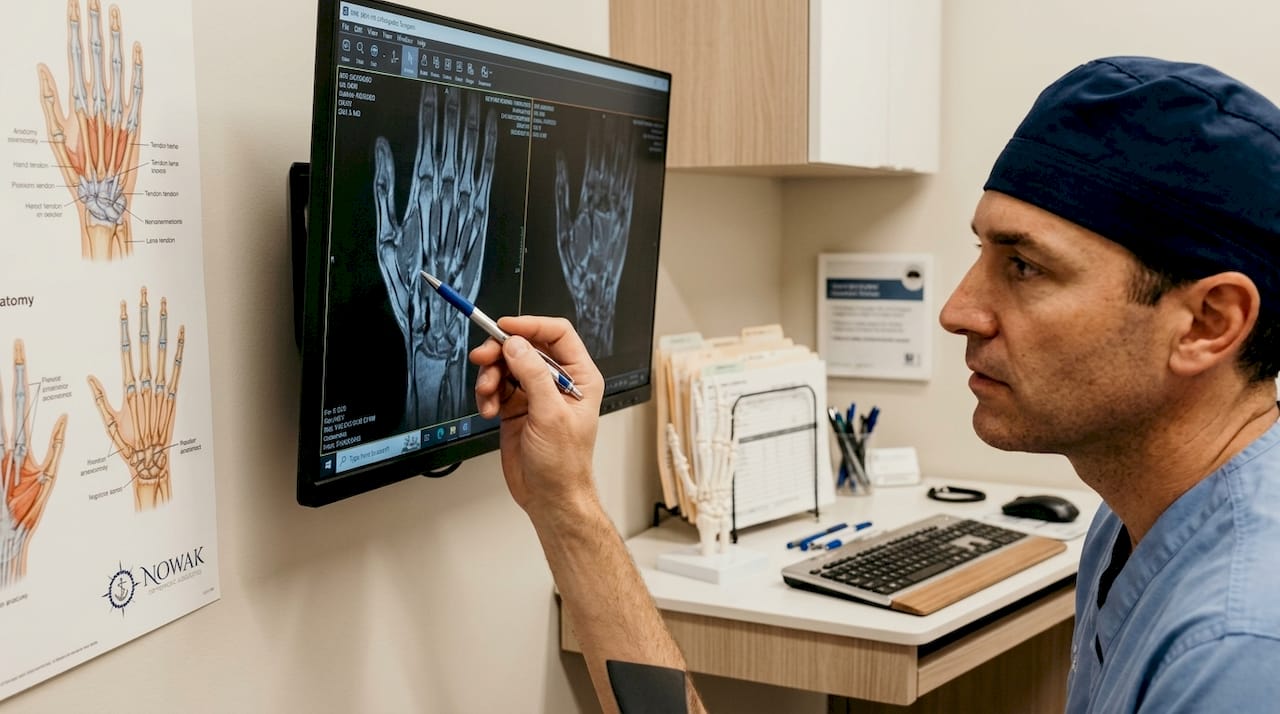
The most widely used method is core suture repair, where sutures are passed through the tendon ends to pull them back together. Using 4 to 6 strand core sutures plus an additional epitendinous suture layer optimizes both repair strength and tendon gliding. More suture strands crossing the repair site mean a stronger hold, which matters enormously during early rehabilitation when controlled movement begins.
Here is a comparison of the primary surgical approaches:
| Technique | Best used for | Key advantage |
|---|---|---|
| Core suture repair (4-6 strand) | Fresh complete ruptures, flexor tendons | High strength, allows early motion |
| Epitendinous suture | Added to core repair | Improves gliding, reduces adhesions |
| Tendon graft or transfer | Delayed repairs, complex injuries | Bridges gaps when primary repair fails |
| PARS (Percutaneous Achilles Repair System) | Achilles tendon ruptures | Minimally invasive, faster recovery |
Surgical incisions are placed transversely or obliquely across flexion creases rather than along them. This detail matters because longitudinal incisions increase the risk of restrictive scar contractures that permanently limit joint motion after healing.
Minimally invasive options have changed outcomes significantly for Achilles injuries. The Percutaneous Achilles Repair System (PARS) reduces surgical trauma compared to open repair and allows weight bearing and physical therapy to begin within four weeks. Open surgery typically requires five weeks of casting before therapy starts.
Pro Tip: If you are considering tendon repair surgery, ask your surgeon specifically about minimally invasive options for your injury. Not every tendon or rupture pattern qualifies, but when it does, the recovery timeline difference is significant.
When is surgery necessary versus conservative treatment?
Not every tendon injury requires surgery, but complete ruptures almost always do. Complete ruptures of flexor tendons and the Achilles tendon nearly always require surgical repair to restore function. Conservative management, meaning rest, bracing, and physical therapy, is typically reserved for partial tears and patients who face high surgical risk.
The threshold most surgeons use is roughly 60 percent. Partial tears involving less than 60 percent of the tendon’s cross-section may be managed without surgery. Tears above that threshold carry too much risk of complete rupture under normal loading, making surgical repair the safer path.
Timing is one of the most consequential variables in tendon injury treatment. Surgical repair performed within 48 hours to 2 weeks of injury produces the best functional outcomes. Beyond three weeks, the muscle-tendon unit retracts and shortens, making primary repair impossible and often requiring a tendon transfer or graft instead. That is a significantly more complex procedure with a longer recovery.
The consequences of leaving a complete rupture untreated are serious. Failure to repair complete tendon ruptures leads to chronic weakness, inability to return to prior activity levels, and the need for complex secondary procedures. For athletes especially, delayed treatment can mean the difference between a full return to sport and permanent functional limitation.
Pro Tip: If you suspect a complete tendon rupture, do not wait to see if it improves on its own. Get an MRI or ultrasound within the first week. The two-week window for optimal repair closes faster than most people expect.
For patients who are not surgical candidates, non-surgical orthopedic treatments including bracing, PRP injections, and structured physical therapy can still produce meaningful recovery.
What does the tendon repair rehabilitation process involve?
Rehabilitation after tendon repair follows a phased structure, and each phase has a specific biological purpose. Moving too fast risks re-rupture; moving too slowly allows adhesions to form, which permanently restrict tendon gliding and joint motion.
The four phases are:
- Early protected motion (weeks 1 to 4): Controlled passive and active-assisted movement within a protective splint. The goal is to stimulate healing without overloading the repair.
- Active motion (weeks 4 to 8): Progressive active movement as the repair gains tensile strength. Splint use is gradually reduced.
- Strengthening (weeks 8 to 12): Resistance exercises are introduced to rebuild muscle and tendon capacity.
- Return to function (months 3 to 6): Sport-specific or activity-specific loading to prepare for full return.
Early controlled motion improves tendon healing and reduces adhesion formation, leading to better functional outcomes. This is why modern protocols favor movement over immobilization from the earliest safe point after surgery.
Certified Hand Therapists play a central role in hand and wrist tendon recovery, while sports medicine physical therapists guide Achilles and lower extremity rehabilitation. Structured progressive loading is more effective than total rest for tendon healing because it stimulates tissue repair and prevents muscle atrophy.
One of the most common mistakes patients make is misunderstanding the role of movement. Patients often underestimate the need for controlled movement versus complete rest, and therapist education significantly improves compliance and outcomes. The guided stretch therapy programs at Nowak Orthopedic Associates are designed specifically to support this balance.
Pro Tip: Ask your therapist to explain the reasoning behind each exercise at every phase. Patients who understand why they are doing something are far more likely to follow through correctly.
How does tendon location affect repair and outcomes?
Different tendons require different repair strategies, and injury location within a tendon system changes both the surgical approach and the rehabilitation protocol.
| Tendon | Injury zones | Repair approach | Key challenge |
|---|---|---|---|
| Flexor tendon (hand) | Zones I to V | Core suture plus epitendinous repair | Adhesion formation in Zone II |
| Extensor tendon (hand/wrist) | Zones I to VIII | Direct repair or splinting for partial tears | Maintaining extensor balance |
| Achilles tendon | Mid-substance or insertion | Open repair or PARS | Re-rupture risk, equinus contracture |
| Rotator cuff (shoulder) | Partial or full thickness | Arthroscopic or open repair | Tissue quality in chronic tears |
Flexor tendon injuries in Zone II of the hand, the area between the base of the finger and the palm, are considered the most technically demanding repairs in hand surgery. The tendon passes through a narrow fibrous sheath in this zone, and any adhesion formation after repair directly limits finger flexion. This is why Certified Hand Therapists are not optional for Zone II repairs. They are necessary.
Achilles tendon repair options range from open surgery to minimally invasive PARS, with recovery timelines typically ranging from 3 to 6 months for a return to full activity. Athletes pursuing a return to sport should plan for the longer end of that range. For a deeper look at surgical tendon repair techniques, Nowak Orthopedic Associates provides a detailed patient guide covering current methods and recovery expectations.
Key takeaways
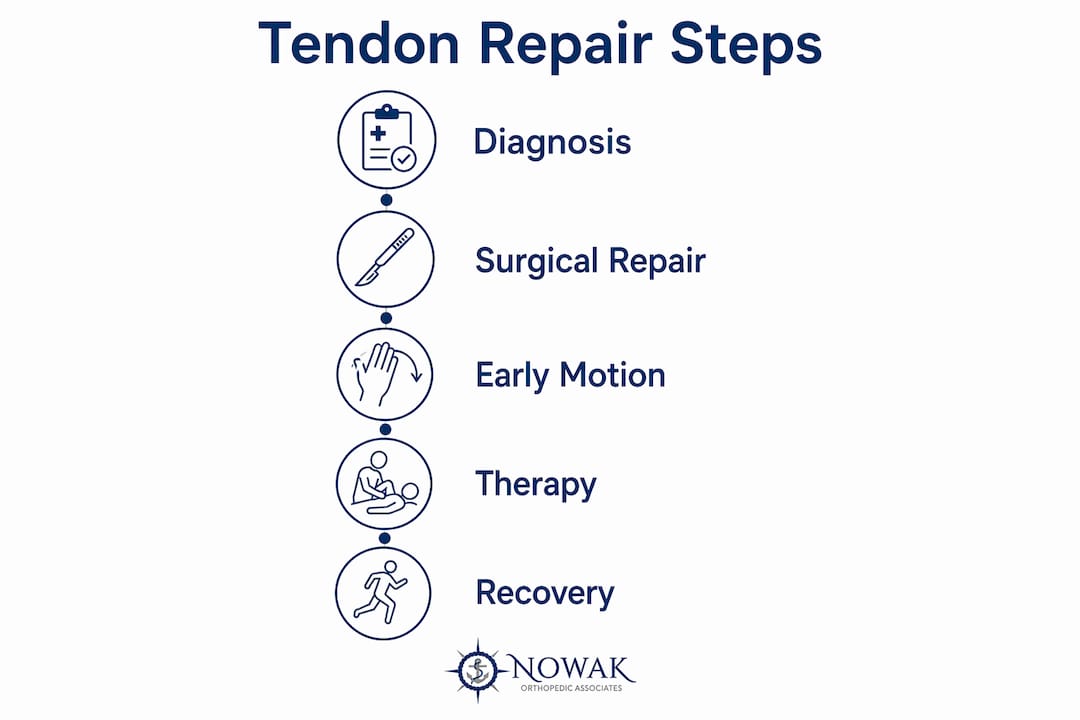
Successful tendon repair depends on prompt diagnosis, the right surgical technique for the specific tendon and injury pattern, and a structured rehabilitation program that balances protection with progressive movement.
| Point | Details |
|---|---|
| Timing determines complexity | Repair within 2 weeks avoids the need for tendon grafts or transfers. |
| Suture technique affects strength | Four to six strand core sutures plus epitendinous repair produce the strongest, most functional repairs. |
| Minimally invasive options exist | PARS for Achilles ruptures enables weight bearing and therapy within 4 weeks versus 5 weeks for open surgery. |
| Rehab phases are non-negotiable | Skipping or rushing phases risks re-rupture or permanent adhesion formation. |
| Location changes everything | Flexor Zone II hand injuries and Achilles ruptures require specialized protocols distinct from other tendon repairs. |
What I’ve learned about tendon repair after years in the OR
After performing hundreds of tendon repairs across the hand, shoulder, and elbow, the pattern I see most often is not a technical failure. It is a timing failure. Patients wait. They hope the pain resolves. They try rest and ice for three weeks before seeking care. By the time I see them, the window for a straightforward primary repair has closed, and we are now discussing a tendon transfer or graft. That is a harder surgery with a longer recovery and a less predictable outcome.
The second thing I have learned is that rehabilitation compliance separates good outcomes from great ones. The surgery reconnects the tendon. The rehab determines how well it functions. I have seen technically perfect repairs produce mediocre results because patients either did too much too soon or avoided movement out of fear. Both extremes cause problems. The balance between protection and motion is not intuitive, which is why working with a skilled therapist is not a luxury. It is part of the treatment.
Modern techniques like PARS have genuinely changed what is possible for Achilles ruptures. Patients who would have spent weeks in a cast are now walking and starting therapy within a month. That is a real shift in outcomes, and it reflects how much the field has advanced. If you are facing a tendon injury, the most important thing you can do is get an accurate diagnosis quickly and find a surgeon who uses current techniques.
— Dr. Roger Nowak
How Nowak Orthopedic Associates can help you recover
At Nowak Orthopedic Associates in Hampton, NH, Dr. Roger B. Nowak performs tendon repair procedures across the hand, elbow, and shoulder using current minimally invasive and open surgical techniques. Whether you are dealing with a flexor tendon injury, an Achilles rupture, or a rotator cuff tear, you receive an individualized treatment plan built around your injury, your activity level, and your recovery goals. The practice also offers PRP injections, SoftWave therapy, and guided stretch therapy for patients pursuing non-surgical recovery. To learn more about your advanced orthopedic treatment options or to schedule your first consultation, visit Nowak Orthopedic Associates and take the first step toward recovery.
FAQ
What is tendon repair surgery?
Tendon repair surgery is a procedure that reconnects torn or ruptured tendon ends using sutures to restore strength and joint movement. The technique varies based on the tendon involved, the severity of the tear, and how long ago the injury occurred.
How long does tendon repair recovery take?
Recovery from major tendon surgery typically takes 3 to 6 months to return to full activity. Minimally invasive techniques like PARS can accelerate the early phases, with weight bearing and physical therapy beginning within four weeks.
Can a tendon injury be treated without surgery?
Partial tears involving less than 60 percent of the tendon may be managed conservatively with bracing, physical therapy, and regenerative treatments like PRP. Complete ruptures of the Achilles or flexor tendons almost always require surgical repair.
When should I see a doctor after a tendon injury?
See an orthopedic specialist within the first week of a suspected complete rupture. Surgical repair performed within 48 hours to 2 weeks produces the best outcomes, and delays beyond three weeks significantly increase treatment complexity.
What happens if a tendon rupture goes untreated?
Untreated complete tendon ruptures lead to chronic weakness, permanent loss of function, and the eventual need for complex secondary procedures like tendon transfers. Early diagnosis and treatment produce significantly better long-term results.