

TL;DR:
- ACL tears are common in summer sports, especially among female athletes, caused mostly by non-contact knee movements. Prevention through neuromuscular training, structured warm-ups, and proper mechanics significantly reduces injury risk, with recovery taking at least nine months. Recognizing symptoms early and adhering to thorough rehabilitation protocols are essential for a safe return to play and long-term knee health.
ACL tears are among the most serious knee injuries affecting summer soccer and basketball athletes, caused by the sudden stops, pivots, and landings that define both sports. The anterior cruciate ligament (ACL) is one of four major ligaments stabilizing the knee, and when it ruptures, the consequences reach far beyond a single season. Knee injuries account for 50 to 60% of acute sports injuries in teenage and high-school athletes, with ACL tears ranking among the most common types. Female athletes face the steepest risk, with rates up to 8 times higher than their male counterparts in soccer and basketball. Understanding why these injuries happen, and how to prevent them, is the most practical step any summer league athlete can take.
What causes ACL tears in summer soccer and basketball leagues?
The mechanism behind most ACL injuries is not a collision. Approximately 70% of ACL injuries in youth athletes are non-contact, meaning the ligament tears during the athlete’s own movement rather than from an opponent’s impact. Cutting to change direction, landing from a jump with the knee caved inward, or planting and pivoting at speed are the most common triggers. Both soccer and basketball demand these exact movements repeatedly throughout a game, which is why ACL tears in summer soccer and basketball leagues are so prevalent.
Several factors raise an athlete’s individual risk beyond just the sport itself:
- Early sports specialization: Athletes who play a single sport year-round face higher cumulative stress on the same joints and movement patterns. Early specialization is directly linked to elevated ACL injury risk, particularly for summer league athletes who train through the off-season without adequate variety.
- Sex-specific anatomy: After puberty, female athletes develop wider hips, increased knee valgus (inward knee collapse), and hormonal changes that affect ligament laxity. Girls’ soccer carries the highest injury rate among all female team sports.
- Fatigue and surface conditions: Summer leagues often involve back-to-back games on uneven grass fields or outdoor courts. Fatigue degrades neuromuscular control, meaning the muscles that protect the knee fire more slowly and less accurately late in a game.
- Poor movement mechanics: Athletes who land with stiff knees, allow their knees to collapse inward, or fail to absorb force through the hips and glutes place excessive load directly on the ACL.
Pro Tip: If you play both soccer and basketball in the same summer, schedule at least one full rest day between sessions. Accumulated fatigue is a silent ACL risk factor that most athletes underestimate.
How can athletes prevent ACL tears during summer sports?
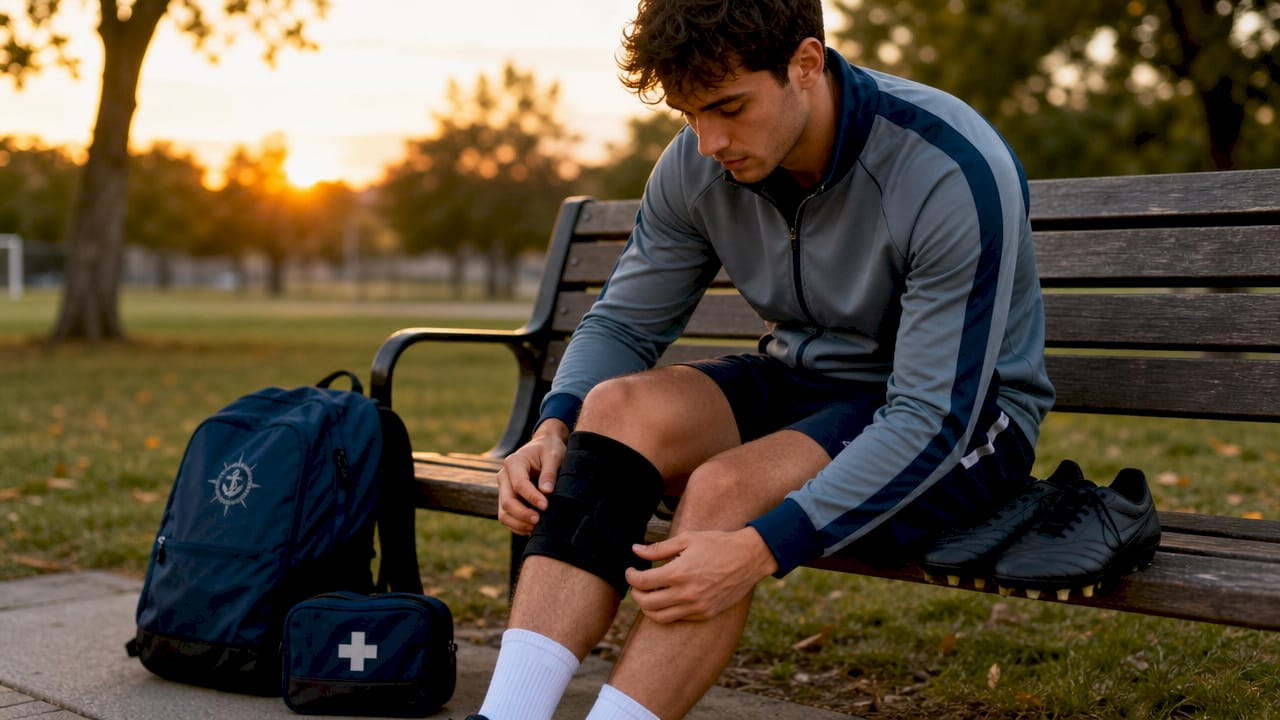
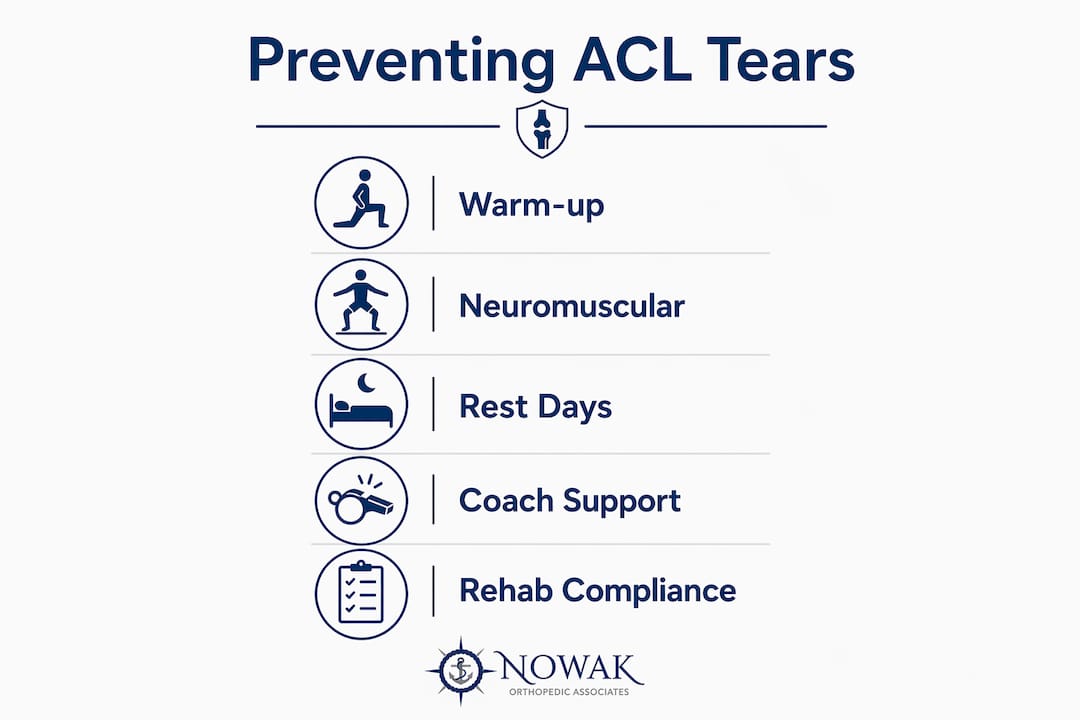
Prevention is where the evidence is clearest and most encouraging. Neuromuscular training programs reduce ACL injury risk by approximately 54%, with the strongest protective effect seen in athletes under 18. These programs combine strength training, balance work, plyometrics, and movement technique correction into a structured routine. The key word is “structured.” A single pre-game stretch does nothing. Consistent execution over weeks and months is what changes movement patterns at a neurological level.
Here is a practical prevention framework for summer league athletes:
- Adopt a structured warm-up program. The FIFA 11+ program is the most studied option available. It reduced overall injuries by 32% and overuse injuries by 50% in female youth soccer players. Basketball athletes benefit from the same principles: dynamic warm-up, single-leg balance drills, and controlled landing practice before every session.
- Train landing mechanics. Practice jumping and landing with soft knees, hips back, and feet shoulder-width apart. This single skill reduces the valgus collapse that tears ACLs.
- Build single-leg strength. Exercises like Bulgarian split squats, single-leg Romanian deadlifts, and lateral band walks directly strengthen the muscles that stabilize the knee during cutting movements.
- Cross-train deliberately. Swimming, cycling, and yoga build strength and mobility in movement patterns that soccer and basketball do not address. Cross-training lowers overuse risk and keeps athletes fresher for high-demand summer schedules.
- Prioritize frequency over intensity. Neuromuscular training is most effective when performed at least 10 minutes three times per week. Short, consistent sessions outperform occasional long ones.
Pro Tip: Coaches and parents should know that program compliance determines effectiveness. A prevention program done halfway produces half the benefit. Assign a team captain or athletic trainer to lead warm-ups and track adherence.
| Prevention method | Evidence level | Best suited for |
|---|---|---|
| FIFA 11+ warm-up | High (32% injury reduction) | Soccer players, all ages |
| Neuromuscular training | High (54% ACL risk reduction) | Athletes under 18, all sports |
| Single-leg strength work | Moderate to high | Female athletes, post-puberty |
| Cross-training | Moderate | Year-round single-sport athletes |
What are the signs and symptoms of an ACL tear?
Recognizing an ACL tear quickly matters because continuing to play on an unstable knee can cause additional damage to the meniscus and cartilage. The key symptoms of a complete ACL tear are distinctive and typically appear immediately at the moment of injury.
Watch for these warning signs:
- A popping sound or sensation at the knee during the injury moment. Many athletes describe hearing or feeling a distinct “pop” when the ligament tears.
- Rapid swelling within the first hour. This swelling is caused by internal bleeding inside the joint, not just fluid accumulation. It develops faster than swelling from most other knee injuries.
- Knee instability or “giving way.” The knee feels unreliable during weight-bearing, especially when trying to pivot or change direction.
- Limited range of motion. Bending or straightening the knee fully becomes difficult due to swelling and pain.
- A general sense that something is “wrong.” Athletes often report that the knee feels fundamentally different, not just sore.
No athlete should self-diagnose an ACL tear. A board-certified orthopedic surgeon uses physical examination tests, such as the Lachman test and anterior drawer test, combined with MRI imaging to confirm the diagnosis and assess the full extent of ligament and cartilage damage.
What are the treatment options and recovery timeline for ACL tears?
ACL reconstruction surgery is the standard treatment for athletes who want to return to cutting and pivoting sports. Dr. Roger B. Nowak at Nowak Orthopedic Associates performs ACL reconstruction using both autograft (tissue from the patient’s own body) and allograft (donor tissue), with the choice depending on the athlete’s age, activity level, and anatomy.
Recovery is measured in months, not weeks, and objective benchmarks matter more than how the knee feels.
| Recovery milestone | Benchmark | Why it matters |
|---|---|---|
| Supervised rehabilitation | Minimum 6 months | Longer supervised rehab produces better functional outcomes |
| Time post-surgery | At least 9 months | Return-to-sport criteria include a minimum 9-month timeline |
| Quadriceps strength symmetry | 90% or greater | Limb symmetry index directly predicts re-injury risk |
| Hop testing | Successful completion | Confirms dynamic knee stability for pivoting sports |
| Psychological readiness | Assessed formally | Fear of re-injury is a documented barrier to full return |
Walking without a limp does not mean the knee is ready for basketball or soccer. Late-stage rehab must address rotational stability and dynamic joint control, not just basic mobility. Athletes who return before meeting strength and hop testing benchmarks face significantly higher re-injury rates. For athletes seeking non-surgical options or adjunct healing support, Nowak Orthopedic Associates also offers platelet-rich plasma (PRP) injections and SoftWave therapy through its Regenerative Medicine Clinic.
Key takeaways
ACL tears in summer soccer and basketball leagues are largely preventable through consistent neuromuscular training, structured warm-up programs, and evidence-based return-to-play protocols.
| Point | Details |
|---|---|
| Non-contact mechanism | 70% of ACL tears happen during the athlete’s own movements, not collisions. |
| Female athlete risk | Girls in soccer and basketball face up to 8 times the ACL injury rate of male peers. |
| Prevention works | Neuromuscular training cuts ACL risk by 54%, especially for athletes under 18. |
| Recovery timeline | Safe return to sport requires at least 9 months and 90% quadriceps symmetry. |
| Compliance is critical | Prevention programs only work when executed consistently and with proper technique. |
What I’ve learned treating ACL injuries in summer athletes
By Dr. Roger Nowak
After treating ACL injuries across many summer seasons, the pattern I see most often is not a lack of awareness. It is a gap between knowing what to do and actually doing it consistently. Athletes hear about warm-up programs and neuromuscular training, but execution fades after the first few weeks of the season when schedules get busy and fatigue sets in.
Female athletes deserve particular attention here. The anatomical and hormonal factors that increase their risk are real and well-documented, but they are also addressable through targeted training. A female soccer or basketball player who commits to single-leg strength work and proper landing mechanics three times per week is doing more to protect her ACL than any brace or tape job can offer.
On the recovery side, I consistently see athletes push for early return because the knee “feels fine.” Feeling fine is not the same as being ready. Objective testing, specifically quadriceps symmetry and hop testing, exists precisely because subjective comfort is an unreliable guide. Trusting the benchmarks protects athletes from re-injury, which carries a longer and harder recovery than the original surgery.
— Dr. Roger Nowak
How Nowak Orthopedic Associates can help
Whether you are dealing with a suspected ACL tear or want to get ahead of injury risk before summer leagues begin, Nowak Orthopedic Associates in Hampton, NH offers the full spectrum of care. Dr. Roger B. Nowak provides expert evaluation, ACL reconstruction using autograft and allograft techniques, and individualized rehab planning designed to get athletes back on the field safely. For athletes exploring non-surgical options, the practice’s Regenerative Medicine Clinic offers PRP injections and SoftWave therapy to support healing and reduce inflammation. Learn more about advanced joint care options or explore our sports injury rehab guide to understand what recovery looks like from day one through return to sport. Contact Nowak Orthopedic Associates to schedule your first visit and get a personalized treatment plan built around your goals.
FAQ
What is an ACL tear and why does it happen in soccer and basketball?
An ACL tear is a rupture of the anterior cruciate ligament, one of the primary stabilizers of the knee. It most commonly occurs during sudden stops, pivots, or landings, movements that are central to both soccer and basketball.
How long does ACL recovery take for athletes?
ACL reconstruction recovery takes a minimum of 9 months before safe return to sport, with supervised rehabilitation for at least 6 months. Athletes must also meet quadriceps strength symmetry of 90% or greater before returning to play.
Can ACL tears be prevented in young athletes?
Yes. Neuromuscular training programs reduce ACL injury risk by approximately 54%, particularly in athletes under 18. Programs like FIFA 11+ that combine strength, balance, and movement technique training are the most effective tools available.
Are female athletes more at risk for ACL tears?
Female athletes are up to 8 times more likely to suffer an ACL tear than male athletes, with soccer and basketball accounting for 70% of female ACL injuries. Anatomical differences and neuromuscular patterns after puberty are the primary contributing factors.
Should I see a doctor if I suspect an ACL tear?
Yes, immediately. A board-certified orthopedic surgeon uses physical examination and MRI imaging to confirm the diagnosis and assess damage to surrounding structures like the meniscus. Early evaluation prevents additional injury from continued activity on an unstable knee.