

TL;DR:
- SoftWave therapy is a non-invasive, regenerative treatment that uses broad acoustic shockwaves to promote tissue repair at the cellular level. It offers deeper, wider coverage than focused shockwave devices and modulates the immune response to provide lasting pain relief. Most patients undergo six to twelve sessions without anesthesia, with results improving over several weeks through combined therapy and rehabilitation.
SoftWave therapy is defined as a non-invasive treatment that delivers broad, unfocused acoustic shockwaves into damaged tissue to activate the body’s own healing mechanisms at the cellular level. Unlike pain medications or cortisone injections that suppress symptoms, SoftWave addresses the underlying biology of tissue damage. The technology is backed by over 300 clinical studies and has received FDA clearance, making it one of the more rigorously studied regenerative therapies available for musculoskeletal pain. If you are living with joint pain, tendon injuries, or chronic musculoskeletal conditions, understanding how this therapy works can help you make a more informed decision about your care.
How does SoftWave therapy work at the device level?
SoftWave therapy uses a patented electrohydraulic mechanism to generate acoustic shockwaves. Inside the device, a high-voltage electrical discharge creates a plasma bubble that collapses rapidly, producing a powerful pressure wave. That wave is then shaped by a parabolic reflector into a broad, unfocused beam that penetrates deep into tissue, covering a larger treatment area than traditional focused shockwave devices.
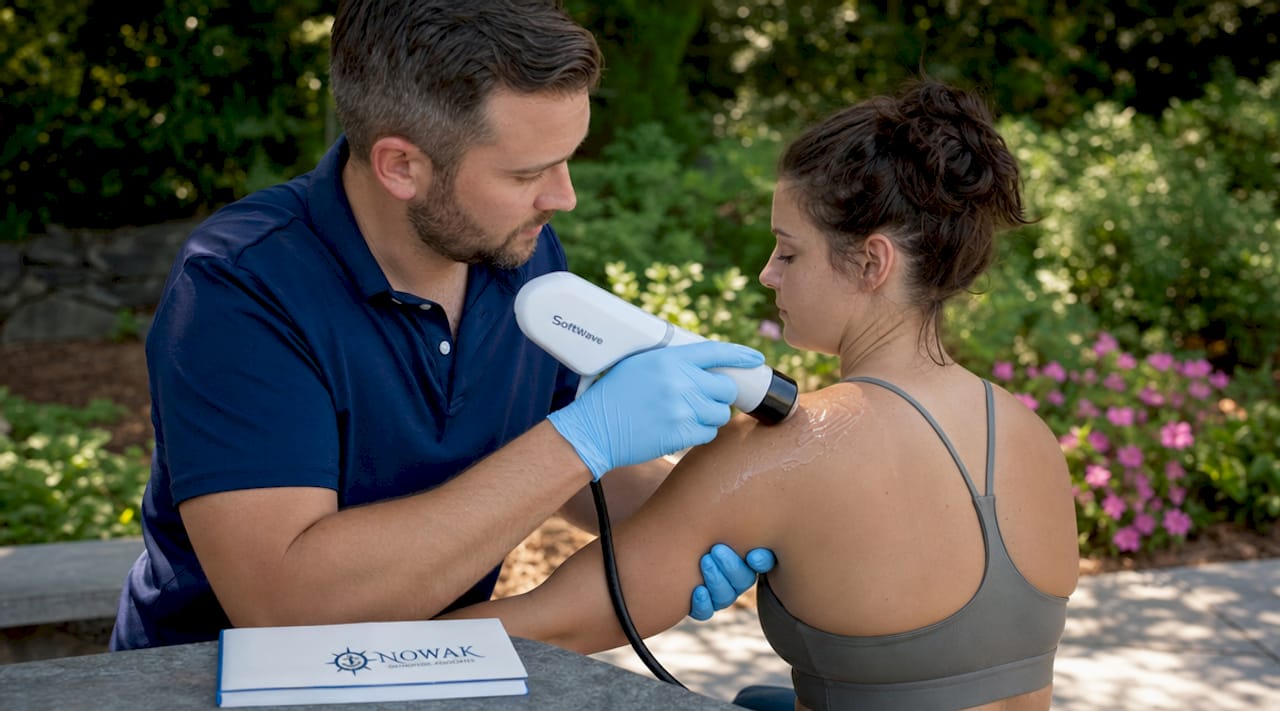
This distinction matters clinically. Focused shockwave devices concentrate energy at a precise point, which works well when the pain source is exactly identified. SoftWave’s broad delivery pattern treats tendon, fascia, and nerve elements simultaneously, reducing the risk of missing the actual pain generator. For conditions like plantar fasciitis, rotator cuff tendinopathy, or knee osteoarthritis, where pain often originates from multiple overlapping structures, this wider coverage is a meaningful advantage.
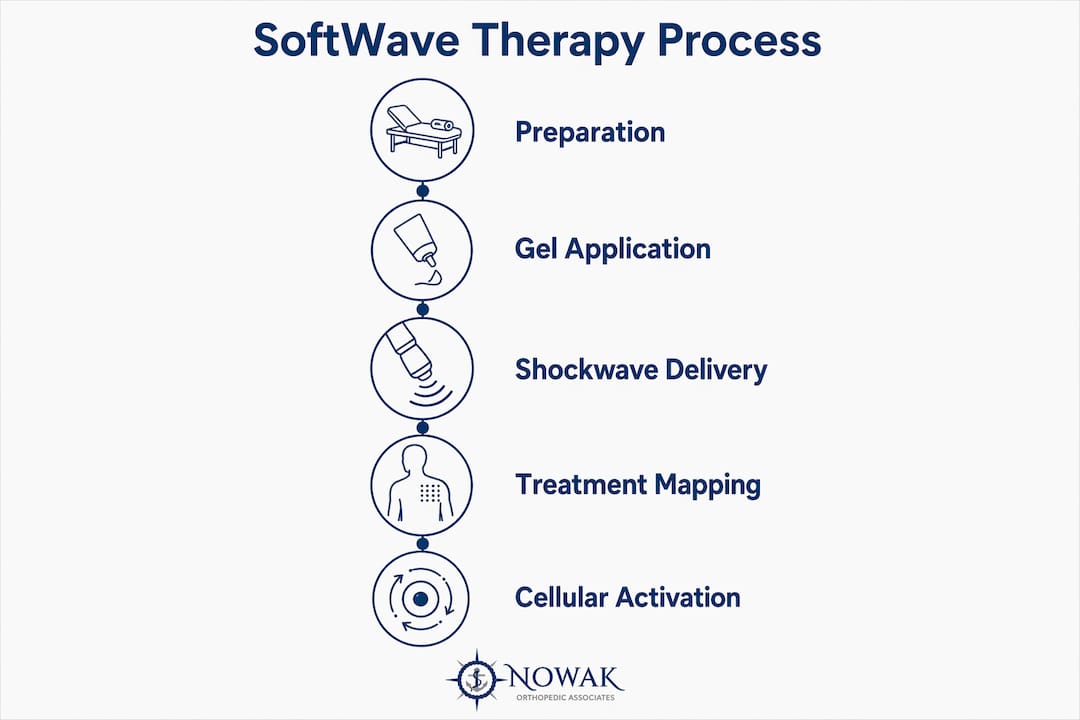
During a session, a trained clinician applies a conductive gel to the skin and moves a handheld applicator over the treatment area. Sessions typically last five to ten minutes, require no anesthesia, and can be performed by clinical staff after brief training. Most treatment protocols involve six to twelve sessions depending on the condition and patient response.
Pro Tip: Ask your provider to map the full kinetic chain around your pain site, not just the spot that hurts. SoftWave’s broad coverage allows treatment of referred pain patterns that focused devices often miss entirely.
What biological processes does SoftWave therapy trigger?
The core science behind SoftWave therapy is mechanotransduction, the process by which mechanical forces are converted into biochemical signals inside cells. When acoustic shockwaves contact tissue, they cause cellular membrane deformation, activating ion channels and triggering the release of adenosine triphosphate (ATP). ATP acts as a signaling molecule that sets off a cascade of repair-oriented biological activity.
The downstream effects of this cascade include:
- Angiogenesis: New blood vessel formation increases oxygen and nutrient delivery to damaged tissue, accelerating repair.
- Collagen synthesis: Fibroblasts produce new collagen, rebuilding the structural integrity of tendons, ligaments, and cartilage.
- Stem cell activation: Resident stem cells in the treated area are recruited to differentiate into the specific cell types needed for repair.
- Gene expression changes: Shockwaves alter the expression of growth factors including VEGF and TGF-beta, sustaining the healing response beyond the treatment window.
SoftWave therapy also modulates the immune response in a clinically significant way. It shifts macrophages from the pro-inflammatory M1 phenotype to the anti-inflammatory M2 phenotype. This shift reduces the chemical mediators responsible for chronic pain, which explains why patients often report relief that persists and improves over weeks rather than fading after a few days. This is the mechanism that separates SoftWave from symptom-masking treatments. It is remodeling the tissue environment, not just quieting pain signals.
“SoftWave therapy is a regenerative intervention that modulates immune response rather than simply masking symptoms, promoting sustained tissue repair and inflammation reduction.” — CMT Medical, Biological Mechanisms of SoftWave
For a deeper look at how immune modulation works in regenerative therapies, the underlying macrophage biology applies across several non-surgical treatment approaches.
How does SoftWave compare to other pain treatments?
Understanding how SoftWave therapy helps requires placing it in context against the alternatives most patients have already tried or considered.
| Treatment | Mechanism | Tissue coverage | Anesthesia needed | Regenerative effect |
|---|---|---|---|---|
| SoftWave therapy | Broad unfocused shockwaves | Large, deep zones | No | Yes |
| Focused shockwave | Pinpoint acoustic energy | Small, targeted point | Sometimes | Partial |
| Cortisone injection | Anti-inflammatory steroid | Localized | No | No |
| TENS / ultrasound | Electrical or sound stimulation | Superficial | No | Minimal |
| PRP injection | Growth factor delivery | Localized | No | Yes |
Compared with traditional focused shockwave therapy, SoftWave provides deeper tissue penetration and broader treatment zones, reducing the risk of missing the true source of pain. Traditional focused devices often require longer sessions and, in some cases, local anesthesia for patient comfort. SoftWave’s unfocused delivery is generally well-tolerated without any numbing agents.
Cortisone injections remain a common first-line option, but they suppress inflammation without repairing the underlying tissue. Repeated cortisone use can actually weaken tendons over time. SoftWave, by contrast, promotes the biological conditions for repair. For patients who want to address the root cause of their pain rather than manage it indefinitely, this distinction is worth understanding before choosing a treatment path.
Pro Tip: SoftWave therapy and PRP injections are not mutually exclusive. At Nowak Orthopedic Associates, both can be incorporated into a single non-surgical treatment plan for conditions like knee osteoarthritis or chronic tendinopathy.
What should you expect during and after SoftWave sessions?
Knowing what the softwave therapy treatment process feels like helps reduce anxiety before your first appointment. Most patients describe the sensation as rhythmic tapping or pulsing against the skin. On areas with significant tissue dysfunction, you may feel occasional sharper sensations as the applicator passes over tender points. This is a normal indicator that the shockwaves are reaching the affected tissue.
Key things to expect across your treatment course:
- Session length: Each treatment lasts under 10 minutes, making it easy to fit into a workday without significant disruption.
- Post-treatment soreness: Mild soreness similar to the feeling after a workout is common. This is a sign that biological healing pathways have been activated, not a sign of injury.
- No downtime: You can return to normal activities immediately after each session. No immobilization or rest period is required.
- Progressive improvement: Many patients notice pain reduction after the first two or three sessions. The full regenerative effect continues to develop over four to eight weeks as tissue remodeling progresses.
- Integration with rehab: SoftWave therapy works best when combined with physical therapy, which reinforces the structural gains made through tissue regeneration.
Regarding cost, session fees range from $150 to $250 per visit, with full protocols of six to twelve sessions totaling between $900 and $2,500. Most insurance plans do not currently cover SoftWave therapy, so patients should plan for out-of-pocket costs and discuss protocol length with their provider upfront.
Key takeaways
SoftWave therapy works by converting acoustic shockwave energy into cellular repair signals, making it a true regenerative treatment rather than a pain management workaround.
| Point | Details |
|---|---|
| Broad unfocused delivery | SoftWave covers larger, deeper tissue zones than focused devices, reducing missed pain generators. |
| Mechanotransduction is the core mechanism | Shockwaves trigger ATP release, collagen synthesis, angiogenesis, and stem cell activation. |
| Immune modulation drives lasting relief | Macrophage shift from M1 to M2 reduces chronic inflammation at the source, not just the symptom. |
| Short sessions, no downtime | Treatments last five to ten minutes with no anesthesia and immediate return to activity. |
| Best results with accurate diagnosis | Identifying the true pain source and combining SoftWave with rehab produces the strongest outcomes. |
My clinical perspective on SoftWave therapy
What I find most compelling about SoftWave therapy is not the technology itself. It is the biological logic behind it. We have always known that the body can repair damaged tissue given the right conditions. SoftWave creates those conditions in a way that is reproducible, non-invasive, and genuinely supported by science.
That said, I want to be direct about one thing: the therapy is only as effective as the diagnosis behind it. Clinical success depends heavily on accurate identification of pain generators, including referred pain along the kinetic chain. Treating the wrong site, even with excellent technology, produces disappointing results. This is why SoftWave therapy at Nowak Orthopedic Associates is always preceded by a thorough orthopedic evaluation.
I have seen patients with chronic shoulder tendinopathy and knee pain report meaningful relief after just a few sessions, particularly when SoftWave is paired with a structured rehabilitation program. The patients who do best are those who commit to the full protocol and stay engaged with their recovery. SoftWave accelerates the biological process. The patient still has to do the work.
— Dr. Roger Nowak
Explore non-surgical care at Nowak Orthopedic Associates
At Nowak Orthopedic Associates in Hampton, NH, SoftWave therapy is offered as part of a broader Regenerative Medicine Clinic that includes platelet-rich plasma (PRP) injections, orthobiologic therapies, and guided stretch therapy. Every patient receives an individualized treatment plan built around a thorough orthopedic evaluation by Dr. Roger B. Nowak. If you are dealing with joint pain, tendon injuries, or a musculoskeletal condition that has not responded to conventional care, explore your non-surgical treatment options or schedule your first visit to discuss whether SoftWave therapy is right for you.
FAQ
What is SoftWave therapy used to treat?
SoftWave therapy is used to treat musculoskeletal conditions including tendinopathy, plantar fasciitis, rotator cuff injuries, knee osteoarthritis, and chronic joint pain. It is most effective for conditions involving tissue degeneration, inflammation, or impaired healing.
How many SoftWave therapy sessions are needed?
Most protocols involve six to twelve sessions, each lasting five to ten minutes. The number of sessions depends on the severity of the condition and how the patient responds to initial treatments.
Is SoftWave therapy effective for chronic pain?
SoftWave therapy addresses chronic pain by shifting macrophages from pro-inflammatory to anti-inflammatory states, reducing the chemical mediators that sustain chronic pain. Many patients report progressive improvement over four to eight weeks following their treatment course.
Does SoftWave therapy hurt?
Most patients feel rhythmic tapping or pulsing sensations during treatment. Sharper sensations may occur over tender points, which indicates the shockwaves are reaching dysfunctional tissue. No anesthesia is required, and discomfort is generally well-tolerated.
How is SoftWave different from focused shockwave therapy?
SoftWave uses a parabolic reflector to deliver broad, unfocused shockwaves that cover larger and deeper tissue areas than focused devices. This reduces the risk of missing the true pain source and eliminates the need for anesthesia in most cases.