

TL;DR:
- Persistent joint pain beyond six weeks, mechanical symptoms, instability, or loss of mobility indicate the need to consult an orthopedic specialist. Urgent evaluation is required for red-flag symptoms such as joint deformity, inability to bear weight, or fever with joint pain, as these may signify emergencies. Active conservative care, including physical therapy and anti-inflammatories, should be exhausted before referral, with functional impairment being a key indicator for surgical or non-surgical intervention.
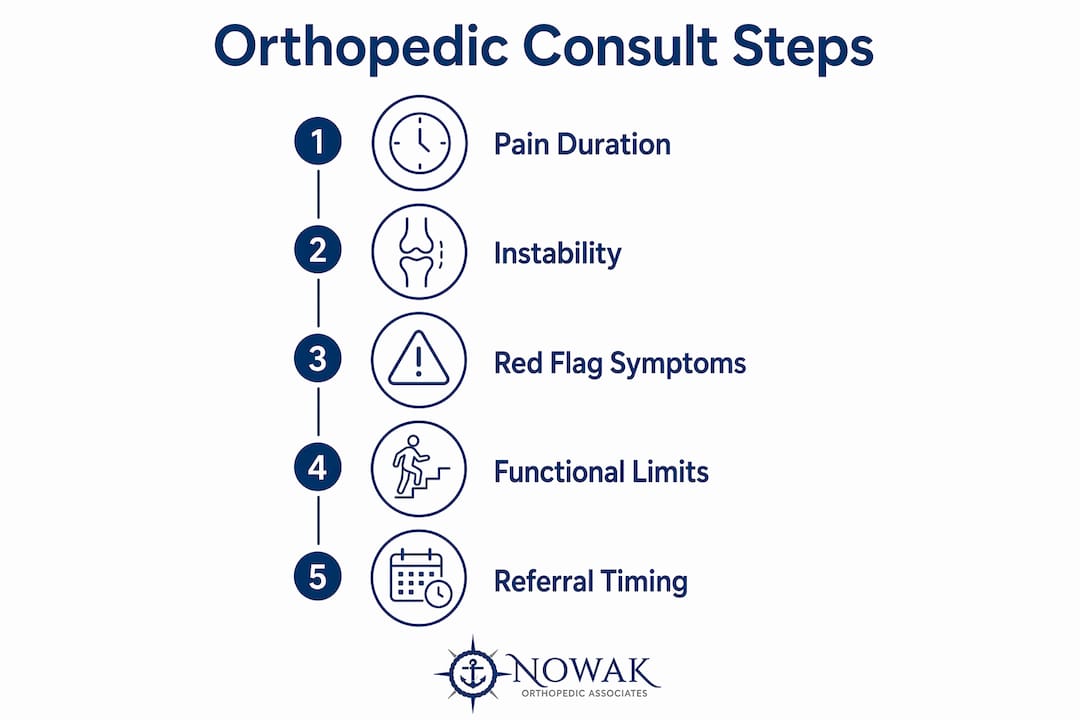
Signs that you need to schedule a consult with an orthopedic specialist include persistent joint pain lasting beyond six weeks, mechanical symptoms like locking or catching, sudden instability, and any loss of mobility that limits your daily activities. Orthopedic specialists, formally called musculoskeletal physicians or orthopedic surgeons, diagnose and treat conditions affecting bones, joints, tendons, ligaments, and cartilage. Knowing when to move beyond home remedies and primary care is not always obvious. This guide gives you the specific clinical indicators that signal it is time to call a specialist, so you can make that decision with confidence.
What are the main signs that indicate an orthopedic consult is needed?
Musculoskeletal pain persisting beyond six weeks despite rest and over-the-counter medications like ibuprofen or naproxen is the standard clinical threshold for specialist referral. That six-week mark matters because most soft-tissue injuries, including minor sprains and muscle strains, resolve within that window with basic care. Pain that does not follow that pattern points to something structural that needs a trained eye.
Beyond duration, watch for these specific orthopedic consult signs:
- Persistent joint pain that does not improve with rest, ice, or OTC anti-inflammatories after six weeks
- Instability sensations such as a knee buckling under you, a shoulder slipping, or an ankle giving way during normal walking
- Loss of range of motion that prevents you from fully straightening your elbow, raising your arm overhead, or squatting without pain
- Mechanical symptoms including locking, catching, or a grinding sensation inside the joint. Mechanical symptoms like locking indicate structural pathology, such as a torn meniscus or loose cartilage fragment, that is unlikely to resolve without specialist intervention
- Swelling or inflammation that persists beyond 48 hours after an injury or activity
Pro Tip: Keep a simple symptom log for two weeks before your appointment. Note when pain peaks, what activities trigger it, and whether swelling is present. This information cuts your consultation time in half and helps your orthopedist reach a diagnosis faster.
Instability deserves special attention because patients often dismiss it as clumsiness. A joint that gives way is signaling ligament damage or cartilage loss, not a coordination problem. That distinction changes the entire treatment path.
What red flag symptoms require urgent orthopedic evaluation?
Some symptoms cannot wait for a scheduled appointment. Red-flag symptoms like sudden inability to bear weight, visible joint deformity, or fever combined with joint pain are classified as surgical or medical emergencies requiring same-day evaluation.
The following symptoms require immediate or urgent orthopedic care:
- Sudden inability to bear weight on a leg or foot after trauma, even if you can still move the limb
- Visible joint deformity or dislocation, such as a shoulder that sits lower than normal or a finger bent at an unnatural angle
- Fever combined with joint pain, which can indicate septic arthritis, a joint infection that destroys cartilage within hours if untreated
- Rapidly progressing numbness, tingling, or weakness in an arm or leg, which may signal nerve compression or spinal cord involvement
- Signs of severe trauma including significant bruising, rapid swelling, or a sensation of something snapping or tearing
Important: Patients can have serious internal injury even when they can still bear weight or move a limb after trauma. Delayed evaluation allows secondary damage to develop that is significantly harder to treat. When in doubt, get evaluated the same day. See our guide on orthopedic red flags for a full breakdown of urgent warning signs.
Fever with joint pain is the combination most patients underestimate. Septic arthritis requires emergency joint washout in most cases, and hours matter. Do not wait to see if it improves on its own.
How conservative care fits in and when it signals time for a referral
Conservative care is the correct first step for most musculoskeletal complaints, but genuine conservative care is active, not passive. Sitting on the couch and hoping pain fades does not count as a trial of conservative treatment. Documented failure of structured care is what justifies and often requires an orthopedic referral.
Active conservative care typically includes:
- Structured physical therapy with a licensed therapist, targeting strength, flexibility, and movement mechanics specific to your injury
- Anti-inflammatory protocols including prescribed or OTC NSAIDs taken on a consistent schedule, not just when pain spikes
- Activity modification that reduces load on the injured area while maintaining overall conditioning
- Supportive interventions such as bracing, taping, or orthotics where clinically appropriate
Orthopedists focus on conditions that have failed initial non-surgical approaches or that involve structural damage requiring repair. Clinical guidelines recommend referral when symptoms persist beyond six weeks of this structured care. That timeline exists because it is long enough to give conservative treatment a fair chance and short enough to prevent irreversible joint damage.
Pro Tip: Before your orthopedic appointment, gather any physical therapy discharge summaries, imaging reports, and a list of medications you have tried. Orthopedists use this documentation to determine whether conservative care was truly exhausted, which directly influences your treatment plan.
Orthopedists also prefer to order imaging after a trial of active care rather than at the first sign of pain. Ordering advanced imaging too early can surface incidental findings unrelated to your actual problem, creating unnecessary anxiety and sometimes leading to treatment of the wrong issue. Patience with the process, combined with genuine effort in conservative care, produces better diagnostic clarity.
How functional limitations signal the need for orthopedic assessment
Orthopedic evaluation prioritizes functional impairment over pain severity alone. A patient who rates pain at a four out of ten but cannot climb stairs, button a shirt, or lift a grocery bag has a more urgent clinical picture than someone with higher pain scores who remains fully functional. Function is the true measure of how much a condition is affecting your life.
The table below maps common functional limitations to the joint areas most often responsible:
| Functional limitation | Likely joint area involved |
|---|---|
| Difficulty climbing stairs or squatting | Knee (meniscus, cartilage, or patellofemoral joint) |
| Trouble lifting arm overhead or reaching behind | Shoulder (rotator cuff or labrum) |
| Pain gripping, buttoning, or typing | Hand, wrist, or elbow |
| Limping or inability to walk normal distances | Hip, knee, ankle, or foot |
| Morning stiffness lasting more than 30 minutes | Multiple joints (possible inflammatory arthritis) |
Sleep disruption is another reliable indicator. Pain worsening at night or during rest distinguishes serious structural or inflammatory conditions from ordinary muscle fatigue, which typically improves with rest. If lying still makes your pain worse, that pattern warrants evaluation. Progressive morning stiffness that takes more than 30 minutes to ease is similarly significant, as it often points to inflammatory arthritis or advancing joint degeneration rather than simple overuse.
Early intervention consistently produces better outcomes than waiting until function is severely compromised. Cartilage does not regenerate on its own, and ligaments left unstable for months develop compensatory movement patterns that create secondary problems in adjacent joints.
Key takeaways
Scheduling an orthopedic consult is the right move when pain persists beyond six weeks of active conservative care, when mechanical symptoms or instability appear, or when daily function is measurably compromised.
| Point | Details |
|---|---|
| Six-week threshold | Seek a specialist referral when pain persists beyond six weeks despite structured conservative care. |
| Mechanical symptoms matter | Locking, catching, or grinding inside a joint signals structural damage that rarely resolves without specialist care. |
| Red flags require same-day care | Fever with joint pain, deformity, or sudden inability to bear weight need urgent evaluation, not a wait-and-see approach. |
| Function over pain score | Orthopedic referral is justified by functional loss, not just pain intensity. |
| Conservative care must be active | Passive rest does not count as conservative treatment; structured physical therapy and anti-inflammatory protocols are required. |
What I tell patients who wait too long
The pattern I see most often at Nowak Orthopedic Associates is not patients who come in too early. It is patients who come in six months or a year after a problem started, having spent that time hoping it would resolve on its own. By that point, a meniscus tear that might have been repaired has become a resection candidate. A rotator cuff with a small partial tear has progressed to a full-thickness rupture. The biology of delay is unforgiving.
What surprises many patients is that an orthopedic consultation does not automatically mean surgery. Surgery is generally reserved for structural damage confirmed after non-operative care has been genuinely exhausted. At our practice, a large portion of patients leave their first visit with a physical therapy referral, a targeted injection, or a regenerative treatment plan, not a surgical date. Coming in early gives us more options, not fewer.
My advice: describe your symptoms in terms of what you cannot do, not just how much something hurts. Tell me you cannot sleep on your shoulder, that you stopped hiking, that you dropped a coffee mug twice last week. That functional language tells me far more than a pain rating, and it helps us build a treatment plan that targets your actual goals.
— Dr. Roger Nowak
Take the next step with Nowak Orthopedic Associates
At Nowak Orthopedic Associates in Hampton, NH, board-certified orthopedic surgeon Dr. Roger B. Nowak evaluates joint pain, sports injuries, and degenerative musculoskeletal conditions with a focus on restoring function and reducing pain. Whether you need non-surgical treatment options like PRP injections, SoftWave therapy, or guided stretch therapy, or you require surgical intervention such as ACL reconstruction, rotator cuff repair, or carpal tunnel release, the practice builds individualized plans around your specific condition and goals. Your first visit includes a clinical interview, physical examination, and imaging review. Most major insurance plans are accepted, though some require a PCP referral, so check your coverage before scheduling.
FAQ
How long should I wait before seeing an orthopedist?
The standard referral threshold is six weeks of persistent symptoms despite active conservative care, including physical therapy and anti-inflammatory treatment. If you have red-flag symptoms like joint deformity or fever with joint pain, seek evaluation the same day.
Does seeing an orthopedist mean I will need surgery?
No. Most orthopedic patients are managed without surgery through physical therapy, injections, or regenerative therapies. Surgery is reserved for structural damage that does not respond to non-operative treatment.
What symptoms need immediate orthopedic attention?
Sudden inability to bear weight, visible joint deformity, fever combined with joint swelling, and rapidly progressing numbness or weakness all require urgent or emergency evaluation rather than a scheduled appointment.
Can I go directly to an orthopedist without a PCP referral?
Many orthopedic practices, including Nowak Orthopedic Associates, accept direct appointments, but some insurance plans require a primary care referral first. Confirm your plan’s requirements before booking to avoid coverage issues.
What is the difference between a muscle injury and a joint problem?
Muscle injuries typically improve with rest within two to four weeks and do not cause joint instability or mechanical symptoms. Joint problems often involve persistent swelling, locking, catching, or instability that does not resolve with rest alone.