

TL;DR:
- Platelet-rich plasma (PRP) injections use your own blood to deliver concentrated healing factors directly to injured tissues, stimulating natural repair. The procedure involves drawing blood, centrifuging it to concentrate platelets, and injecting the plasma into targeted areas, promoting tissue regeneration over weeks. PRP offers a biologically active alternative to corticosteroids or surgery, with benefits including pain reduction and improved function, though results require patience and understanding of its time-dependent healing process.
Platelet-rich plasma (PRP) injection is a medical treatment that concentrates healing platelets from your own blood and delivers them directly to an injured joint, tendon, or ligament to stimulate tissue repair. The formal clinical term is autologous platelet-rich plasma therapy, though “PRP injection” is the phrase most patients and providers use. If you are dealing with persistent knee pain, a stubborn tendon injury, or joint inflammation that has not responded to rest or medication, understanding PRP injections could open a path to recovery you have not yet considered. Nowak Orthopedic Associates offers PRP as part of its Regenerative Medicine Clinic, giving patients in Hampton, NH access to this therapy alongside comprehensive orthopedic care.
What is a PRP injection and how does it work?
A PRP injection delivers a concentrated dose of your body’s own platelets to a damaged area to trigger natural healing. Platelets are tiny blood cells best known for clotting wounds, but they also carry hundreds of growth factors and cytokines that signal the body to repair tissue. In a PRP injection, those healing signals are amplified and placed exactly where you need them most.
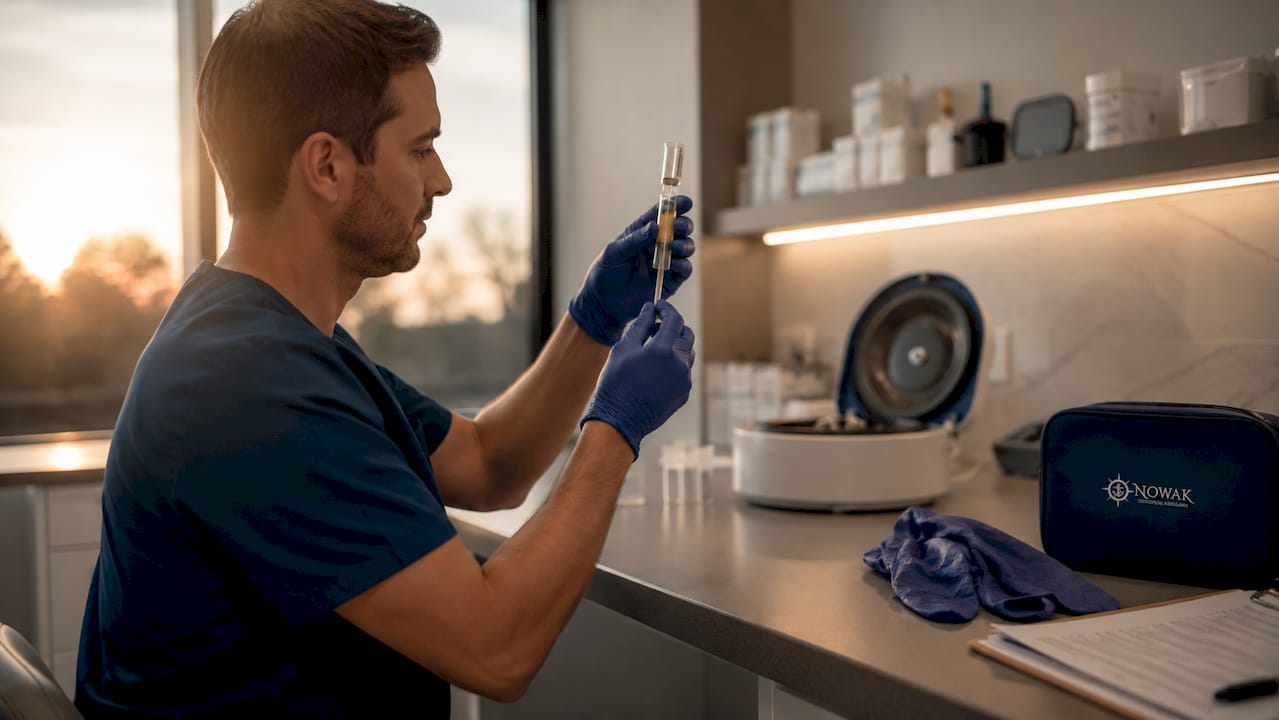
The process starts with a standard blood draw. Your blood is then spun in a centrifuge to separate and concentrate the platelets to 3–5 times their normal level in the bloodstream. That concentrated plasma is what gets injected. The result is a targeted biological stimulus at the injury site rather than a systemic drug affecting your whole body.
PRP therapy differs from cortisone or hyaluronic acid injections because it does not simply mask pain or lubricate a joint. It works by recruiting your body’s own repair mechanisms. That distinction matters when you are weighing long-term recovery against short-term relief.
How is a PRP injection performed?
The entire appointment takes about 45 minutes, from blood draw to injection. Here is what to expect at each step:
- Blood draw. A provider draws approximately 60–70 cc of blood from your arm, similar to a standard lab draw.
- Centrifugation. The blood spins for roughly 20 minutes, separating red blood cells from the platelet-rich plasma layer.
- PRP extraction. The provider removes 5–10 cc of concentrated plasma from the tube.
- Site preparation. The injection site is cleaned and, when needed, a local anesthetic is applied to minimize discomfort.
- Injection. The PRP is injected directly into the target area, often guided by ultrasound imaging for precision.
After the injection, you can expect some temporary soreness and swelling at the site. This is not a complication. Post-procedure inflammation is part of the intended healing response, and it typically resolves within a few days.
Pro Tip: Stop taking NSAIDs like ibuprofen or naproxen at least one week before your PRP injection, and avoid them for two weeks after. Anti-inflammatory medications suppress the very inflammatory response that makes PRP work. Talk to your provider about blood thinners and supplements too, since some of those also affect platelet function.
What biological mechanisms make PRP effective?
PRP works because platelets are the body’s first responders to tissue damage. When platelets activate at an injury site, they release a cascade of growth factors and cytokines that coordinate repair. In a PRP injection, that response is concentrated and precisely delivered.
Key biological actions include:
- Growth factor release. Platelets release cytokines and growth-promoting factors including PDGF, TGF-beta, VEGF, and IGF-1. These proteins signal cells to migrate to the injury, multiply, and rebuild tissue.
- Collagen stimulation. PRP promotes collagen synthesis in tendons and ligaments, which is critical for restoring structural integrity after injury.
- Cartilage support. In joints like the knee, PRP may reduce the breakdown of cartilage and support the cells responsible for maintaining it.
- Inflammation modulation. PRP does not eliminate inflammation. It channels it productively, shifting the injury site from a chronic, stalled state into an active healing phase.
“PRP therapy shows early pain relief and functional gains in randomized controlled trials for musculoskeletal injuries like knee osteoarthritis and tendinopathy, confirming its potential to reduce pain and boost recovery compared to conventional treatments.” — Systematic review, Journal of Musculoskeletal Research
PRP differs from other orthobiologic treatments like stem cell therapy in that it uses a well-defined, reproducible component of your blood rather than harvested cells. That makes the preparation process more standardized and the treatment more accessible.
PRP vs. other joint pain treatments: how do they compare?
Choosing the right treatment depends on your injury type, severity, and recovery goals. The table below compares PRP with three common alternatives.
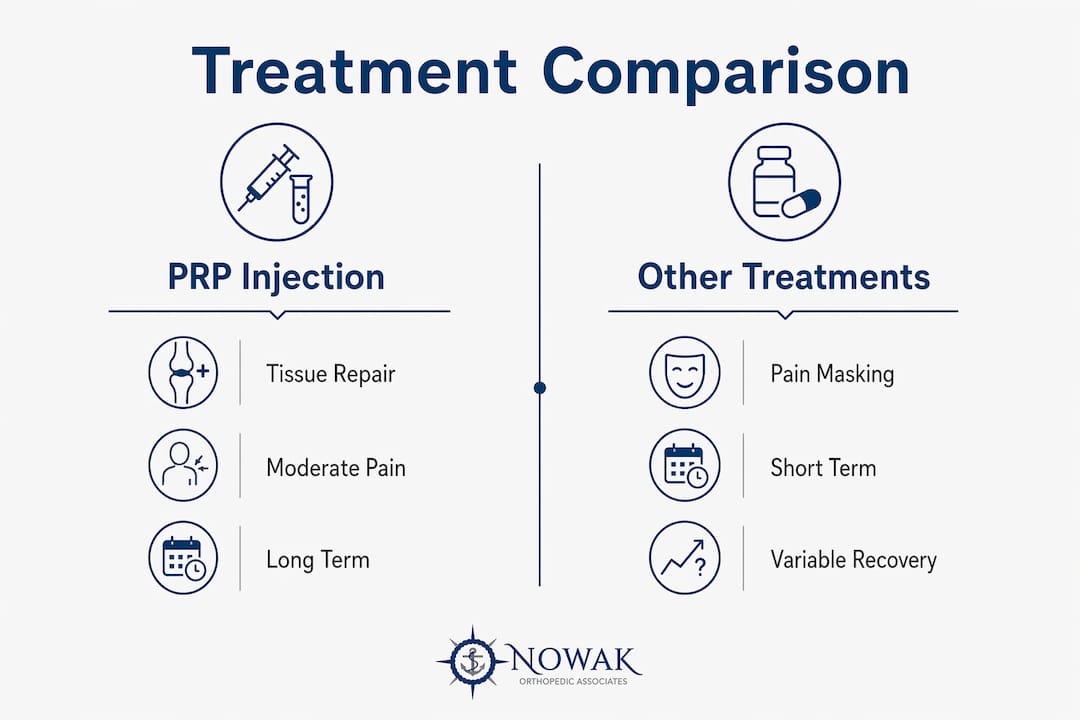
| Treatment | Mechanism | Best For | Key Limitation |
|---|---|---|---|
| PRP Injection | Stimulates tissue repair via growth factors | Tendinopathy, mild to moderate osteoarthritis, ligament injuries | Results take weeks; not FDA-approved for specific conditions |
| Corticosteroid Injection | Reduces inflammation quickly | Acute flare-ups, bursitis, short-term relief | Does not repair tissue; repeated use may weaken tendons |
| Physical Therapy | Strengthens supporting muscles, improves mechanics | Most musculoskeletal conditions as a foundation | Slower progress; requires patient commitment |
| Surgery | Repairs or reconstructs damaged structures | Severe tears, advanced joint degeneration | Longest recovery; carries surgical risks |
PRP is not a replacement for surgery when structural damage is severe. However, for patients with knee osteoarthritis or chronic tendinopathy who want to avoid or delay surgery, PRP offers a biologically active option that corticosteroids simply cannot match. Combining PRP with hyaluronic acid injections may further improve outcomes for certain knee conditions, and providers may recommend that combination based on your specific diagnosis.
One important regulatory note: no PRP kit holds FDA approval for treating specific conditions like knee osteoarthritis or hair loss. FDA 510(k) clearance covers the safety of PRP preparation devices, not clinical effectiveness claims. PRP use for these conditions is off-label, though widely practiced and supported by a growing body of clinical evidence.
PRP injection benefits, side effects, and recovery timeline
PRP injection benefits are real, but they require patience. Most patients do not feel significant improvement in the first week. The healing process takes time, and results typically build over 4–12 weeks as tissue regenerates.
Common benefits reported by patients include:
- Reduced pain. Many patients with tendinopathy and osteoarthritis report meaningful pain reduction after one or two injections.
- Improved function. Patients resume more activity with less pain over time, though individual results vary based on injury type and PRP preparation protocol.
- Low risk of allergic reaction. Because PRP comes from your own blood, the risk of rejection or systemic reaction is minimal.
- Potential to delay surgery. For some patients, successful PRP therapy postpones or eliminates the need for surgical intervention.
PRP injection side effects are generally mild and temporary. Expect localized soreness, swelling, and stiffness for a few days after the procedure. Infection is rare but possible, as with any injection. Serious adverse events are uncommon.
Cost is a practical consideration. PRP injections are not typically covered by insurance, since use is off-label for most musculoskeletal conditions. Out-of-pocket costs vary by provider and region.
Pro Tip: Follow your provider’s post-injection protocol closely. Returning to high-impact activity too soon can disrupt the healing response. Light movement and physical therapy in the weeks after PRP often produce better outcomes than complete rest.
Key takeaways
PRP injections work by concentrating your body’s own platelets and delivering them directly to damaged tissue, making them a biologically grounded option for joint and musculoskeletal pain relief.
| Point | Details |
|---|---|
| PRP uses your own blood | Platelets are concentrated 3–5 times above normal levels before injection. |
| Procedure takes about 45 minutes | Blood draw, centrifugation, and injection are all completed in one appointment. |
| Avoid NSAIDs before and after | Anti-inflammatory drugs interfere with the healing response PRP is designed to trigger. |
| Results build over weeks | Most patients see meaningful improvement 4–12 weeks after treatment, not immediately. |
| Off-label but evidence-supported | No PRP kit is FDA-approved for specific conditions, but clinical trials confirm real benefits. |
What i’ve learned about PRP after years in orthopedic practice
The most common mistake I see is patients expecting PRP to work like a cortisone shot. Cortisone reduces inflammation fast. PRP does something fundamentally different: it asks your body to do the work. That takes time, and patients who understand that going in tend to have far better experiences.
I have also seen patients dismiss PRP because they heard it “doesn’t work.” In most of those cases, the issue was either poor patient selection or inadequate post-injection care. PRP is not right for every injury or every person. Severe structural damage, advanced joint degeneration, or certain systemic conditions can limit its effectiveness. The role of PRP injections in recovery is strongest when it is part of a broader treatment plan that may include physical therapy, activity modification, and follow-up evaluation.
What I find genuinely encouraging is how the evidence base has matured. Early skepticism was fair. Now, randomized controlled trials consistently show functional gains for conditions like knee osteoarthritis and chronic tendinopathy. That is not a trend I take lightly. For the right patient, PRP is one of the most promising non-surgical tools we have.
— Dr. Roger Nowak
How nowak orthopedic associates can help you move forward
If you are considering PRP therapy for joint or musculoskeletal pain, Nowak Orthopedic Associates provides expert evaluation and individualized treatment planning at its dedicated Regenerative Medicine Clinic. Dr. Roger B. Nowak and the team assess each patient’s injury, goals, and medical history before recommending any treatment. PRP may be one part of a broader plan that includes physical therapy, orthobiologic therapies, or surgical options when necessary. To understand the full range of advanced joint care options available to you, schedule a consultation and take the first step toward lasting relief.
FAQ
What conditions does PRP injection treat?
PRP injections are most commonly used for knee osteoarthritis, tendinopathy, ligament injuries, and rotator cuff conditions. Clinical evidence is strongest for knee osteoarthritis and chronic tendon pain.
How many PRP injections will i need?
Most patients receive one to three injections, spaced several weeks apart. The number depends on injury severity, your body’s response, and your provider’s protocol.
Is PRP injection painful?
The injection itself causes mild discomfort, similar to other joint injections. Local anesthetic is typically used at the site, and post-procedure soreness resolves within a few days.
How long does it take to see results from PRP?
Most patients notice meaningful improvement between 4 and 12 weeks after treatment. The healing response builds gradually as growth factors stimulate tissue repair.
Does insurance cover PRP injections?
PRP injections are generally not covered by insurance for musculoskeletal conditions because use is off-label. Patients typically pay out of pocket, so discussing costs with your provider before treatment is advisable.