

TL;DR:
- Knee pain worsens in warm weather due to heat, humidity, and dehydration impairing joint lubrication and increasing inflammation. These factors expand tissues and lower synovial fluid viscosity, causing friction and pressure that intensify discomfort during outdoor activities. Managing hydration, choosing low-impact exercises, and avoiding rapid temperature changes help prevent summer knee pain.
Knee pain worsens in warm weather activity because heat, humidity, and dehydration alter joint lubrication, expand soft tissues, and trigger inflammation inside the knee. These are not separate problems. They work together to increase friction, raise internal joint pressure, and amplify discomfort during the very outdoor activities you look forward to all year. Understanding why this happens is the first step toward doing something about it. This article explains the physiology behind warm weather joint pain, identifies the summer activities most likely to aggravate your knees, and gives you practical strategies to stay active without paying for it later.
Why knee pain gets worse in warm weather activity: the synovial fluid connection
Synovial fluid is the joint’s built-in lubricant. It is water-based, and its protective quality depends heavily on its viscosity, meaning its thickness and ability to cushion bone surfaces. Heat reduces that viscosity, making the fluid thinner and less effective at protecting cartilage during movement.
Dehydration compounds this by thinning synovial fluid further, increasing friction between joint surfaces and producing the grinding, aching sensation many people describe as bone-on-bone pain. That description is often accurate. When lubrication fails, cartilage absorbs more direct stress with every step.
Staying hydrated is not just general wellness advice. It is a direct intervention for joint lubrication quality. Most adults underestimate how much fluid they lose through sweat during summer activity, and that deficit shows up in their knees before they feel thirsty.
Pro Tip: Drink water consistently throughout the day rather than in large amounts before or after activity. Synovial fluid replenishment is gradual, not immediate, so front-loading hydration hours before exercise protects your joints better than drinking at the trailhead.
Key factors that reduce synovial fluid quality in summer:
- Heat lowers fluid viscosity, reducing its shock-absorbing capacity
- Sweat-driven dehydration shrinks the water content of synovial fluid
- Reduced lubrication forces cartilage to absorb more direct impact
- Prolonged heat exposure can also trigger inflammatory responses that cause fluid retention and stiffness
How does humidity affect knee joint pressure?
Humidity does not just make you feel uncomfortable. It changes the physical environment inside your knee. When atmospheric pressure drops on humid days, soft tissues and fluids inside the joint expand in response. That expansion presses against nerve endings within the joint capsule, producing pain that feels like pressure rather than a specific injury.
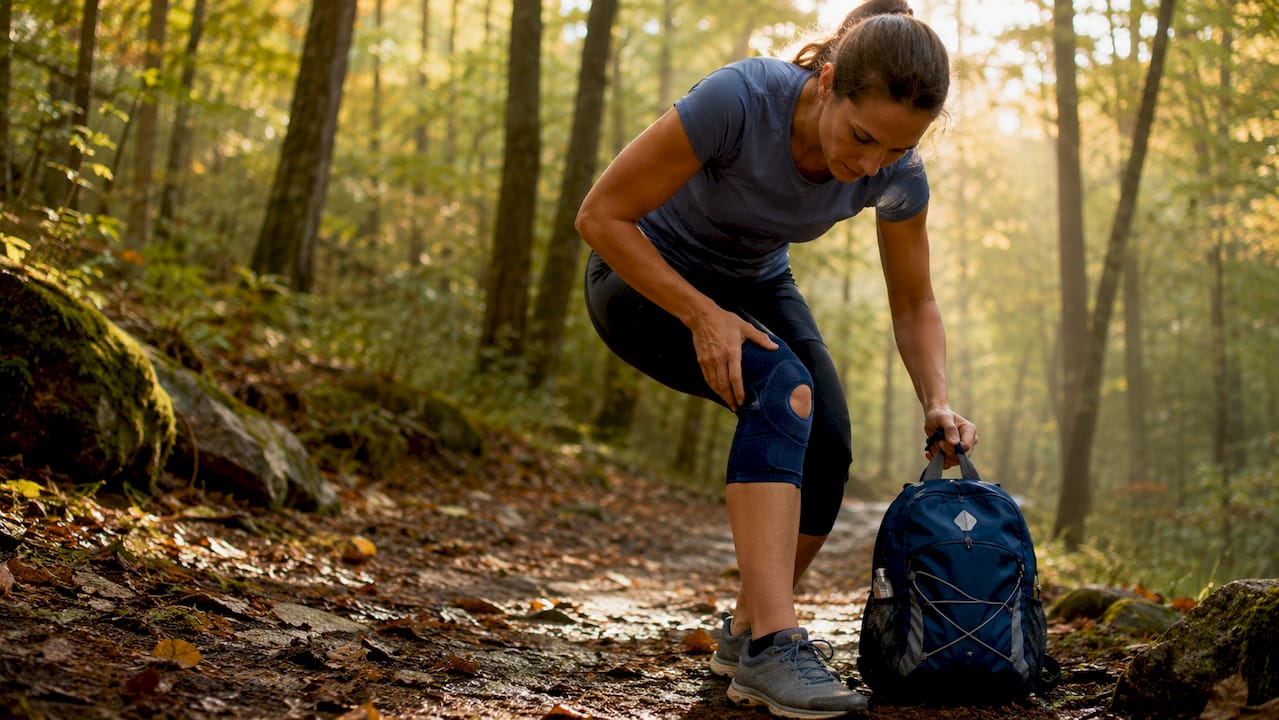
This is sometimes called the “humidity swell” phenomenon. Many patients describe waking up on a muggy morning with knee pain and assuming they slept wrong or re-injured themselves. The actual cause is internal tissue expansion from the drop in barometric pressure that accompanies high humidity.
Cold weather produces a different but related effect. Low temperatures cause tissues to contract and stiffen, reducing range of motion. The table below compares how warm and cold weather affect knee joints differently.
| Weather condition | Primary joint effect | Pain type | Key driver |
|---|---|---|---|
| Hot and humid | Tissue and fluid expansion | Pressure, aching | Low barometric pressure |
| Hot and dry | Synovial fluid thinning | Friction, grinding | Dehydration |
| Cold | Tissue contraction and stiffness | Stiffness, reduced range | Muscle and fluid contraction |
| Cold and damp | Combined expansion and stiffness | Diffuse aching | Pressure drop plus cold |
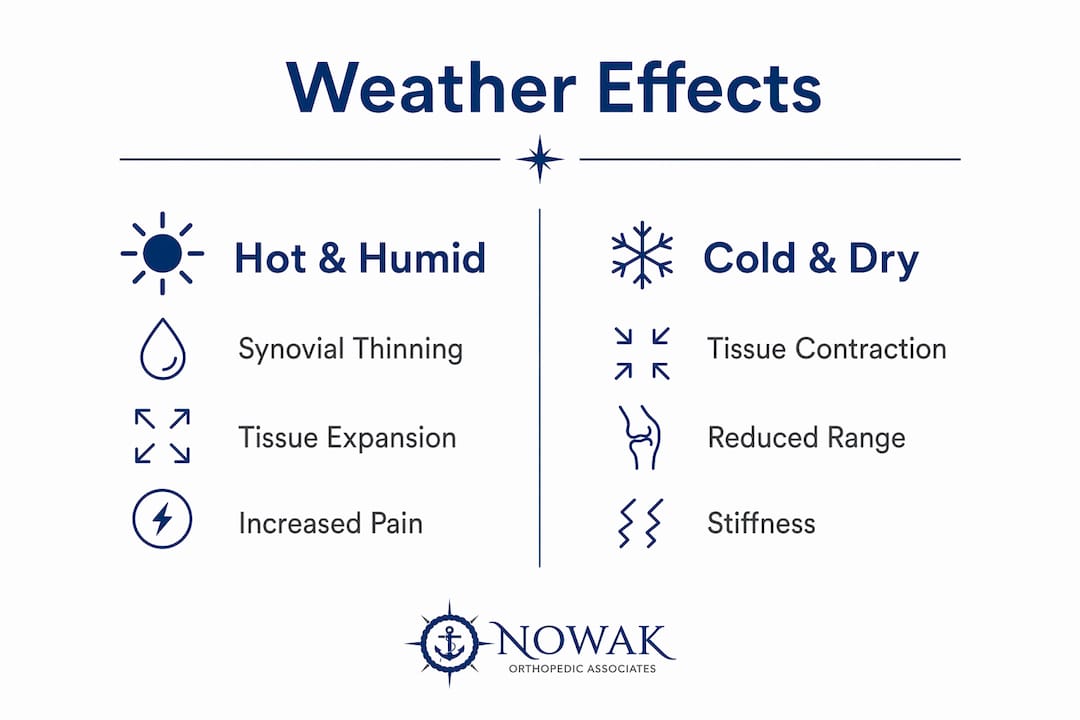
Understanding which weather pattern is driving your pain helps you respond correctly. Humid heat calls for hydration and pressure management. Dry heat calls for fluid intake and reduced intensity. Cold calls for warm-up time and layering.
Which summer activities aggravate knee pain the most?
The activities most likely to worsen outdoor activity knee pain are not always the obvious ones. High-intensity sports get the blame, but repetitive low-intensity movements like gardening, casual walking on uneven terrain, and prolonged standing cause cumulative joint strain that builds quietly until pain flares.
Walking on sun-baked pavement is a particular problem. Hard surfaces return more impact force to the knee with every step, and heat-softened cartilage absorbs that force less efficiently. The result is accelerated wear during what feels like a gentle activity.
Common summer activities and their knee risks:
- Hiking on uneven trails: Lateral knee stress from uneven footing strains the meniscus and ligaments
- Gardening: Prolonged kneeling and squatting compress the patellofemoral joint
- Tennis and pickleball: Lateral cutting movements stress the ACL and medial collateral ligament, especially on hard courts. Learn more about ACL risks in summer sports
- Cycling on hills: Repeated high-resistance pedaling strains the patellar tendon
- Casual walking on pavement: Cumulative impact without adequate footwear accelerates cartilage stress
Pro Tip: Increase your summer activity level by no more than 10% per week. Sudden spikes in duration or intensity are a leading cause of inflammation flares in people who already have knee pain.
Does moving between outdoor heat and indoor AC worsen knee stiffness?
Yes. The rapid temperature shift from outdoor heat to a cold air-conditioned room causes muscles to contract suddenly, stiffening the tissues that support and protect the knee joint. This is called thermal shock, and it is a frequently overlooked cause of knee pain flares in summer.
Moving from 40°C outdoor heat to an 18°C room triggers the same muscle contraction response that cold weather does, but it happens abruptly rather than gradually. The joint has no time to adapt, and the result is stiffness, reduced range of motion, and increased pain.
Setting your indoor AC to 24–25°C significantly reduces this effect. That range keeps you comfortable without creating a temperature gap large enough to shock your muscles. Practical steps to protect your knees from thermal shock include:
- Keep indoor AC at 24–25°C rather than the lowest comfortable setting
- Wear light layers when entering heavily air-conditioned spaces like offices or grocery stores
- Avoid sitting directly under AC vents for extended periods
- Allow a brief transition period when moving between extreme temperatures
For more on protecting your knees from environmental stressors, the knee injury prevention guide from Nowak Orthopedic Associates covers these strategies in depth.
How to manage knee pain during summer activity
Managing knee pain in summer requires addressing the specific mechanisms driving it, not just reducing activity. The goal is to stay as active as possible while removing the conditions that accelerate joint stress.
- Hydrate consistently. Drink water throughout the day to maintain synovial fluid quality. Do not wait until you are thirsty.
- Choose low-impact activities. Swimming reduces impact forces on knee joints by up to 90% compared to running or walking on pavement. Aqua aerobics and cycling on flat terrain are strong alternatives during heat-related flares.
- Warm up before activity. Warm muscles act as shock absorbers, reducing the stress transferred directly to cartilage. Five to ten minutes of gentle movement before exercise makes a measurable difference.
- Choose softer surfaces. Grass, packed dirt trails, and rubberized tracks return less impact force than concrete or asphalt.
- Control your indoor temperature. Keep AC at 24–25°C to prevent thermal shock when transitioning indoors.
- Seek early treatment. Masking symptoms with painkillers or compression braces delays proper care and increases the risk of chronic inflammation. Address persistent pain early rather than pushing through it.
For a broader look at non-surgical relief options, including platelet-rich plasma therapy and SoftWave treatment, those approaches can reduce inflammation without requiring surgery.
Key takeaways
Knee pain worsens in warm weather activity primarily because heat and humidity reduce synovial fluid quality, expand joint tissues, and create conditions that increase friction and internal pressure.
| Point | Details |
|---|---|
| Synovial fluid thinning | Dehydration and heat reduce joint lubrication, causing increased friction and pain. |
| Humidity swell | Drops in barometric pressure expand soft tissues, pressing on nerve endings inside the knee. |
| Thermal shock risk | Moving abruptly from outdoor heat to cold AC stiffens muscles and aggravates joint pain. |
| Low-impact activity | Swimming reduces knee impact forces by up to 90%, making it the best warm weather alternative. |
| Early intervention | Treating symptoms early prevents chronic inflammation; masking pain with medication delays recovery. |
What I tell every patient who comes in with summer knee pain
I have treated knee pain for many years, and summer brings a predictable pattern. Patients arrive in July and August convinced they have re-injured themselves, when the actual culprit is a combination of dehydration, increased activity, and the physiological effects of heat and humidity they were not expecting.
The mistake I see most often is not the activity itself. It is the response to early symptoms. People feel mild discomfort, take an over-the-counter painkiller, strap on a brace, and keep going. That approach delays the diagnosis and allows inflammation to become chronic. Early intervention is consistently more effective than pushing through pain.
My honest advice: treat your first warning signs as information, not inconvenience. Adjust your hydration, modify your activity surface, and give your knee a day to recover. If the pain persists beyond three to five days or worsens with rest, that is the time to get a proper evaluation. Summer should not mean choosing between staying active and protecting your joints. With the right adjustments, you can do both.
— Dr. Roger Nowak
Persistent knee pain deserves a real evaluation
If your knee pain keeps returning or worsens despite adjusting your hydration, activity level, and indoor temperature, the underlying cause may need professional attention. At Nowak Orthopedic Associates in Hampton, NH, Dr. Roger B. Nowak and his team specialize in diagnosing and treating the full range of knee conditions, from cartilage wear and meniscus injuries to inflammatory joint disease. Treatment plans are individualized and may include physical therapy, PRP injections, SoftWave therapy, or surgical options when needed. Explore your advanced joint care options or schedule your first visit to get a clear picture of what is driving your pain.
FAQ
Why does knee pain increase in hot and humid weather?
Heat reduces synovial fluid viscosity and humidity lowers atmospheric pressure, causing soft tissues inside the knee to expand and press on nerve endings. Both effects increase pain independently, and they are worse together.
What is the best exercise for knee pain in summer?
Swimming is the most protective option, reducing impact forces on the knee by up to 90% compared to land-based activity. Aqua aerobics and flat-terrain cycling are strong alternatives when knee pain flares in heat.
Does dehydration really affect knee pain?
Yes. Synovial fluid is water-based, and dehydration thins it directly. Thinner synovial fluid means less cushioning between joint surfaces, which increases friction and worsens bone-on-bone pain during activity.
Can air conditioning make knee pain worse?
Moving abruptly from outdoor heat to a cold air-conditioned room triggers muscle contraction that stiffens the knee joint. Setting AC to 24–25°C reduces this thermal shock effect significantly.
When should I see a doctor about summer knee pain?
See an orthopedic specialist if knee pain persists beyond three to five days, worsens with rest, or does not improve after adjusting hydration and activity. Masking symptoms with painkillers without a diagnosis increases the risk of chronic inflammation.