

TL;DR:
- SLAP repair reattaches the torn superior labrum of the shoulder to restore stability and reduce pain. It involves arthroscopic surgery using small anchors, typically for younger, active patients with Type II tears. Recovery requires multiple phases of physical therapy and can take up to a year for full activity.
SLAP repair is a surgical procedure that reattaches the torn superior labrum of the shoulder back to the glenoid rim, restoring stability and relieving pain. The acronym SLAP stands for Superior Labrum Anterior to Posterior, describing the location of the tear at the top of the shoulder socket. This injury is common among overhead athletes, people who fall on an outstretched arm, and anyone who has experienced a sudden shoulder trauma. Understanding what this surgery involves, who needs it, and what recovery looks like helps you make informed decisions about your shoulder health.
What is SLAP repair and why does it matter?
SLAP repair is the surgical reattachment of the superior labrum to the top of the shoulder socket using small anchors and sutures. The labrum is a ring of cartilage that deepens the shoulder socket and serves as the anchor point for the biceps tendon. When this tissue tears, the biceps anchor loses its foundation, causing pain, instability, and mechanical symptoms like clicking or catching.
Arthroscopic SLAP repair uses small incisions and a camera to access the joint without opening the shoulder fully. This approach reduces tissue damage, lowers infection risk, and speeds recovery compared to open surgery. The technique is considered the standard method for repairing labral tears in active patients.
What causes a SLAP tear and how does it affect the shoulder?
SLAP tears develop through two main pathways: acute trauma and repetitive overhead stress. A single traumatic event, such as a fall on an outstretched arm or a sudden pull on the shoulder, can detach the superior labrum in one motion. Repetitive overhead activity, common in baseball pitchers, swimmers, and tennis players, gradually wears down the labrum over time.
Typical symptoms of SLAP tears include:
- Deep shoulder pain, especially with overhead movements or throwing
- A clicking, catching, or popping sensation inside the joint
- Weakness when lifting or rotating the arm
- Difficulty with daily tasks like reaching overhead or carrying objects
- Decreased throwing velocity or accuracy in athletes
These symptoms arise because the detached labrum disrupts the biceps anchor and alters normal shoulder mechanics. The shoulder becomes less stable, and the biceps tendon may pull abnormally on the joint with every arm movement. Left untreated, a SLAP tear can worsen and make even basic activities uncomfortable.
SLAP tears are classified into four main types. Type II lesions are the most common and involve a true detachment of the labrum and biceps anchor from the glenoid rim. Type I tears involve fraying without detachment, while Types III and IV involve bucket-handle tears and extension into the biceps tendon. The type of tear directly influences which treatment approach is most appropriate.
What does SLAP repair surgery involve and who is a good candidate?
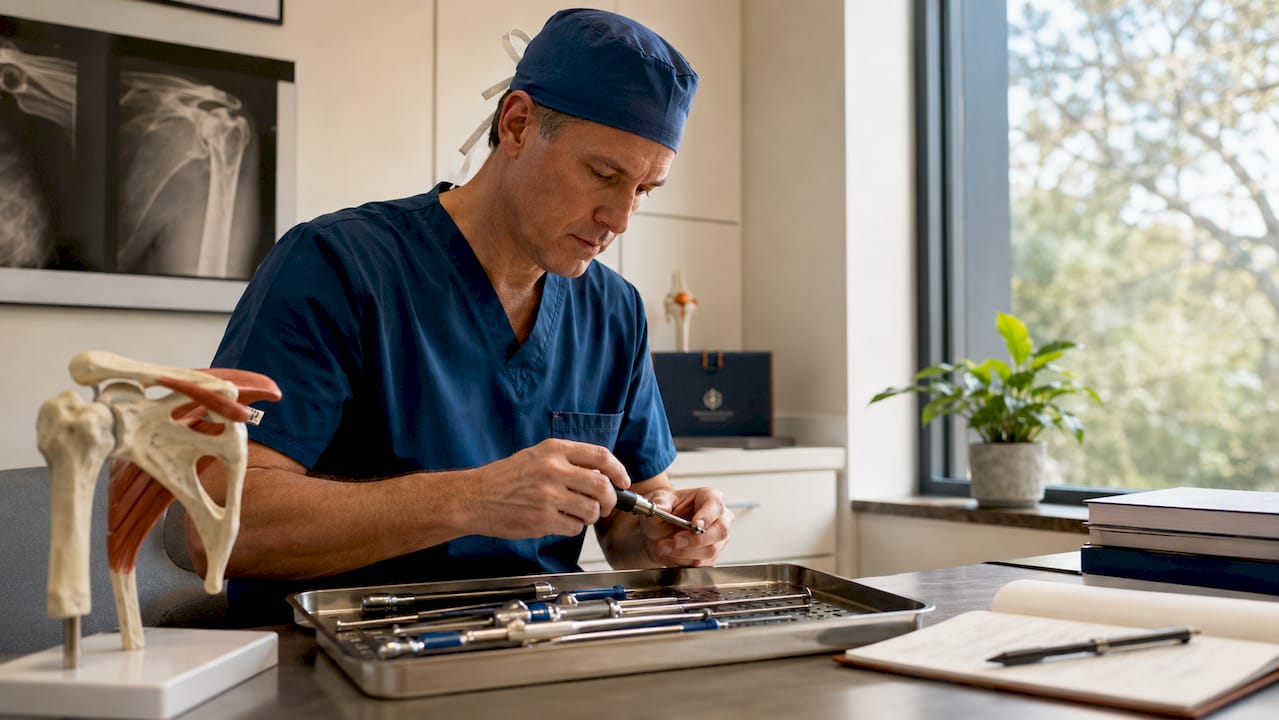
Arthroscopic SLAP repair uses suture anchors to reattach the torn labrum to the superior glenoid rim. The surgeon inserts small anchors into the bone, then passes sutures through the labral tissue to pull it back into its correct position. The entire procedure is performed through two or three small incisions using a camera and specialized instruments.
SLAP repair vs. alternative surgical options
Not every patient with a SLAP tear needs repair. The right procedure depends on age, activity level, and tear characteristics.
| Factor | SLAP repair | Biceps tenodesis |
|---|---|---|
| Best candidate | Young, active overhead athletes | Older patients or non-overhead athletes |
| Goal | Restore labrum and biceps anchor | Detach and reattach biceps lower on the humerus |
| Recovery demand | High rehab commitment | Moderate rehab commitment |
| Risk of overconstraint | Possible with rigid fixation | Lower risk |
Biceps tenodesis is often preferred in patients over 35 or those who do not perform high-demand overhead activities. SLAP repair outcomes depend heavily on patient age and activity demands, which is why surgeon judgment during patient selection is critical.
Diagnostic arthroscopy allows the surgeon to confirm the tear type and assess surrounding structures before committing to a repair strategy. MRI and physical exam findings guide the initial evaluation, but the arthroscope provides the definitive picture.
Pro Tip: Choose a surgeon who performs a high volume of shoulder arthroscopy procedures. Surgeon experience directly influences how well the suture anchors are placed and how cleanly the labrum is reattached, both of which affect your long-term outcome.
What to expect during recovery after SLAP repair
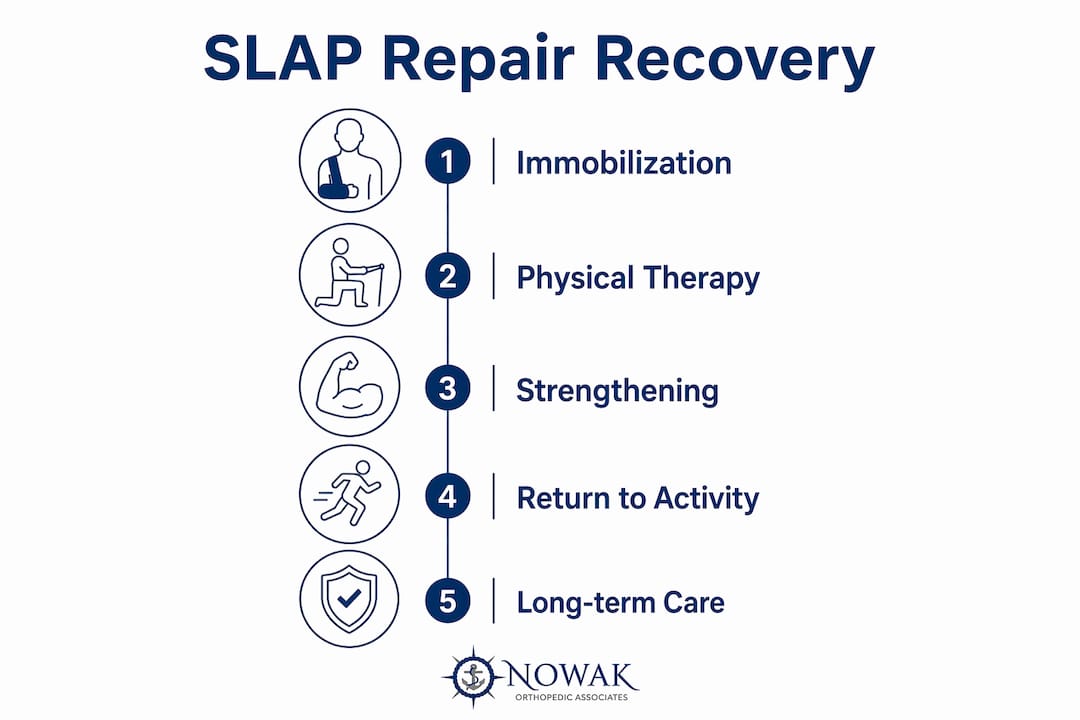
Recovery from SLAP repair follows a structured, phased timeline. Rushing any phase increases the risk of re-tear or stiffness.
- Weeks 1–4: Immobilization. You will wear a sling for 3–4 weeks to protect the repair while initial tissue healing occurs. Passive range of motion exercises may begin under physical therapy guidance.
- Weeks 4–8: Motion restoration. Physical therapy focuses on regaining shoulder range of motion and scapular control. Active-assisted exercises replace passive ones as healing progresses.
- Weeks 8–16: Strengthening. Rotator cuff and periscapular strengthening exercises begin. Patients work on shoulder stability and neuromuscular control.
- Months 4–6: Functional training. Sport-specific or activity-specific movements are reintroduced. Throwing athletes begin an interval throwing program.
- Months 6–12: Return to full activity. Full return to sport can take several months to up to a year, depending on the procedure and the patient’s goals.
The most common challenge patients face is impatience. Tissue healing at the bone-labrum interface takes time that no amount of effort can accelerate. Skipping phases or returning to overhead activity too early is the leading cause of failed repairs.
Pro Tip: Keep a written log of your physical therapy sessions and pain levels. Patients who track their progress stay more consistent with their rehab and communicate more effectively with their surgeon at follow-up appointments.
A structured post-surgery rehab plan is as important as the surgery itself. Physical therapy that emphasizes scapular control and throwing mechanics gives athletes the best chance of returning to their prior level of performance.
How successful is SLAP repair and what factors influence outcomes?
SLAP repair produces reliable results when the right patient receives the right procedure. About 40% of professional baseball players return to play after rehab alone, which means surgery is not always the first step. For those who do require surgery, outcomes vary based on several key factors.
| Factor | Impact on outcome |
|---|---|
| Patient age | Younger patients generally achieve better results |
| Tear type | Type II tears respond best to repair |
| Activity level | Overhead athletes face higher re-injury risk |
| Rehab adherence | Consistent therapy strongly predicts success |
| Surgeon experience | High-volume surgeons produce more consistent repairs |
Surgical outcomes vary by patient age and lesion type, with older patients and more complex tears showing higher complication rates. Avoiding rigid fixation in overhead athletes may reduce the risk of overconstraint, a complication where the repaired tissue limits normal shoulder rotation. Careful patient selection and a commitment to rehabilitation are the two factors most within a patient’s control.
My perspective on SLAP repair: what I tell every patient before surgery
The most common mistake I see is patients arriving expecting surgery to be the answer before they have given conservative care a real chance. Physical therapy targeting scapular control and shoulder mechanics is genuinely effective for many SLAP tears, particularly those without a clear traumatic cause. I always recommend a structured rehab trial first unless the clinical picture clearly points to surgery.
When surgery is the right call, I spend as much time discussing recovery expectations as I do the procedure itself. Patients who understand that full return to overhead sport may take close to a year are far better prepared mentally and physically. Unrealistic timelines lead to frustration and, worse, premature return to activity that undoes the repair.
Patient selection is where outcomes are won or lost. A well-performed repair on the wrong candidate produces poor results. A thoughtfully selected patient who commits to rehab almost always does well.
— Dr. Roger Nowak
Shoulder care at Nowak Orthopedic Associates
Nowak Orthopedic Associates in Hampton, NH specializes in advanced shoulder arthroscopy and individualized treatment plans for patients with labral tears and other shoulder injuries. Dr. Roger B. Nowak performs SLAP repair, Bankart repair, rotator cuff repair, and biceps tenodesis, selecting the right approach based on each patient’s age, activity level, and tear characteristics. Non-surgical options, including PRP injections and physical therapy, are also available for patients who are not yet surgical candidates. If shoulder pain is limiting your daily life or athletic performance, schedule your first visit with Nowak Orthopedic Associates to get a clear diagnosis and a treatment plan built around your goals.
FAQ
What is the SLAP repair definition in simple terms?
SLAP repair is surgery that reattaches the torn top portion of the shoulder’s cartilage ring back to the bone using small anchors and sutures.
How long does SLAP repair recovery take?
Recovery typically takes several months to up to a year, depending on the patient’s activity goals and how well they follow their physical therapy program.
Who is the best candidate for SLAP repair surgery?
Young, active overhead athletes with a confirmed Type II SLAP tear who have not responded to conservative treatment are the strongest candidates for surgical repair.
What is the difference between SLAP repair and biceps tenodesis?
SLAP repair reattaches the labrum to the glenoid rim, while biceps tenodesis detaches and reattaches the biceps tendon lower on the arm bone. Tenodesis is generally preferred for older or non-overhead patients.
Can a SLAP tear heal without surgery?
Yes. Conservative treatment including rest, injections, and physical therapy resolves symptoms in a meaningful portion of patients, particularly those without a traumatic tear or high overhead demands.
Key takeaways
SLAP repair is most successful when the right patient is selected, the repair is performed arthroscopically by an experienced surgeon, and rehabilitation is followed consistently through all phases.
| Point | Details |
|---|---|
| SLAP repair definition | Surgery reattaches the superior labrum to the glenoid rim using suture anchors. |
| Patient selection matters | Age, tear type, and activity level determine whether repair or tenodesis is the better choice. |
| Rehab is non-negotiable | Full return to overhead sport takes up to a year and requires structured physical therapy. |
| Conservative care comes first | Physical therapy should be tried before surgery unless trauma or clear instability is present. |
| Surgeon experience affects outcomes | High-volume arthroscopic surgeons produce more consistent and durable repairs. |