

TL;DR:
- A SLAP tear is a injury to the top of the shoulder socket where the biceps tendon attaches, often causing deep pain and clicking. Diagnosis involves physical exam maneuvers and imaging, with Conservative treatment first, and surgery if needed for persistent symptoms. Proper diagnosis and rehabilitation are crucial to avoid unnecessary surgery and ensure full shoulder function.
A SLAP tear is defined as an injury to the superior glenoid labrum at the point where the biceps tendon attaches to the shoulder socket. The term SLAP stands for Superior Labrum Anterior to Posterior, describing the arc of cartilage that tears from front to back across the top of the socket. The Snyder classification system organizes these injuries into four types based on arthroscopic findings, ranging from simple fraying to complete tears involving the biceps tendon itself. Understanding what is a SLAP tear matters because the labrum acts as a stabilizing rim for the shoulder joint. Without it functioning properly, the joint loses critical support during everyday movements and athletic activity. At Nowak Orthopedic Associates in Hampton, NH, board-certified orthopedic surgeon Dr. Roger B. Nowak diagnoses and treats SLAP tears using a combination of physical examination, advanced imaging, and individualized care plans.
What are the common symptoms of a SLAP tear?
SLAP tear symptoms are often mistaken for other shoulder problems, which delays proper treatment. The most telling signs center around the biceps tendon attachment rather than the broader shoulder area.
Common symptoms include:
- Deep shoulder pain localized near the front of the joint, often worsening with overhead movements or lifting
- Clicking, popping, or grinding sensations during arm rotation or reaching
- A feeling that the shoulder may give out, particularly during throwing or pressing motions
- Weakness with overhead activity, such as reaching a high shelf or throwing a ball
- Night pain that disrupts sleep, especially when lying on the affected side
Shoulder instability is present in only about 20% of SLAP tear cases. That statistic matters because many patients assume instability is the defining feature, when pain and mechanical symptoms are far more common.
Rotator cuff injuries produce more diffuse shoulder pain across the outer arm and deltoid region. A SLAP tear, by contrast, produces pain that centers tightly around the biceps tendon attachment at the top of the socket. That distinction helps orthopedic specialists narrow the diagnosis before imaging is even ordered.
Pro Tip: Keep a symptom journal before your appointment. Note when pain occurs, what movements trigger it, and whether you hear or feel clicking. This information helps your orthopedic surgeon identify the injury pattern quickly.
What causes SLAP tears and who is most at risk?
SLAP tears develop through two distinct pathways: acute trauma and repetitive overuse. Knowing which applies to your situation shapes both diagnosis and treatment.
- Overhead athletes. Baseball pitchers, volleyball players, and swimmers place repetitive stress on the biceps anchor with every throw or stroke. The labrum absorbs enormous force during the deceleration phase of throwing, and over time that stress causes tearing.
- Traumatic injury. A fall onto an outstretched arm, a direct blow to the shoulder, or a sudden pull on the arm can tear the labrum in a single event. This mechanism is more common in older adults and non-athletes.
- Age-related degeneration. Type I SLAP tears represent fraying of the labral edge rather than a true acute tear. They are common in patients over 40 and often require no surgical intervention.
- Occupational overuse. Workers who perform repetitive overhead tasks, such as painters or construction workers, develop labral stress similar to overhead athletes. The cumulative load on the biceps anchor is the shared mechanism.
Understanding athletic overuse injury patterns helps explain why SLAP tears cluster in specific populations. The shoulder is a shallow ball-and-socket joint, and the labrum deepens that socket to compensate. Any activity that repeatedly stresses the rim of that socket puts the superior labrum at risk.
How is a SLAP tear diagnosed?
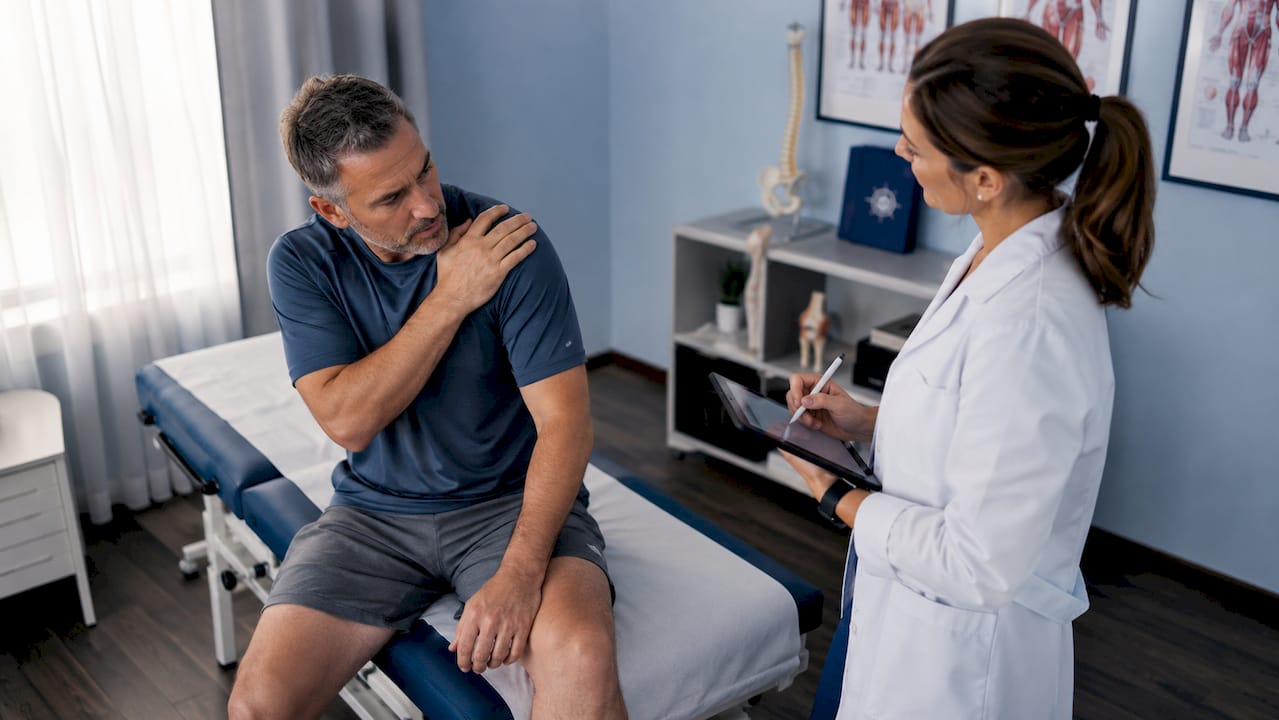
Diagnosing a SLAP tear requires combining imaging with a hands-on physical examination. Relying on MRI alone produces errors.
The sublabral sulcus is a normal anatomical groove at the top of the shoulder socket. On MRI, it can look identical to a SLAP tear. Experienced orthopedic surgeons correlate imaging results with specific physical exam maneuvers to avoid treating a normal structure as an injury. This is one of the most common sources of overtreatment in shoulder care.
Physical exam maneuvers used in SLAP tear diagnosis include the O’Brien active compression test, the Speed test, and the Biceps Load test. Each stresses the biceps tendon attachment in a controlled way to reproduce the patient’s symptoms. A positive result on multiple tests increases diagnostic confidence significantly.
| Diagnostic method | Strength | Limitation |
|---|---|---|
| MRI | Visualizes labral anatomy clearly | Can confuse sublabral sulcus with a tear |
| Physical exam maneuvers | Reproduces patient symptoms directly | Requires experienced examiner |
| Arthroscopy | Definitive diagnosis and treatment | Invasive; used when conservative care fails |
Pro Tip: Ask your orthopedic surgeon which physical exam tests they plan to use and what the results mean. Understanding the process builds confidence and helps you participate actively in your diagnosis.
The Snyder classification guides treatment decisions once a tear is confirmed. Type I and II tears are the most common. Type II, which involves detachment of the biceps anchor from the socket, is the type most likely to require surgical repair. Types III and IV involve bucket-handle tears and biceps tendon splits respectively, and they are less frequent.
What treatment options are available for SLAP tears?
Treatment follows a stepwise approach, starting with the least invasive option and progressing only when needed.
Conservative treatment is the starting point for most patients:
- Rest and activity modification. Stopping the overhead activity that caused the injury reduces ongoing stress on the labrum.
- NSAIDs. Non-steroidal anti-inflammatory drugs such as ibuprofen reduce pain and swelling during the acute phase.
- Physical therapy. A structured program lasting 6 weeks to 2 months focuses on rotator cuff strengthening, scapular stabilization, and restoring range of motion. Physical therapy is the first-line treatment for the majority of SLAP tears.
When conservative care does not resolve symptoms, surgical intervention becomes appropriate. Arthroscopic SLAP repair uses small anchors to reattach the torn labrum to the socket rim. The procedure is minimally invasive and allows for precise repair under direct visualization. Nowak Orthopedic Associates offers arthroscopic shoulder repair as a core service for patients who do not respond to non-surgical management.
Platelet-rich plasma (PRP) injections represent a newer treatment option showing real promise. PRP concentrates growth factors from the patient’s own blood and delivers them directly to the injured tissue. Nowak Orthopedic Associates’ Regenerative Medicine Clinic offers PRP as part of a broader orthobiologic approach for patients seeking alternatives to surgery or looking to accelerate healing after repair.
Recovery after surgical repair requires strict adherence to physical therapy during the first 6–8 weeks to prevent stiffness and protect the repaired tissue. Skipping or rushing through this phase is the most common reason patients experience setbacks. Following your rehabilitation protocol fully is not optional. It is the treatment.
Key Takeaways
A SLAP tear is a specific injury to the superior labrum at the biceps tendon attachment, and accurate diagnosis requires both MRI and physical examination to avoid overtreatment.
| Point | Details |
|---|---|
| SLAP tear definition | An injury to the superior glenoid labrum where the biceps tendon anchors, classified by the Snyder system into Types I–IV. |
| Symptoms differ from rotator cuff | Pain centers at the biceps tendon attachment, not diffusely across the shoulder. |
| MRI alone is insufficient | The sublabral sulcus can mimic a tear on imaging; physical exam maneuvers are required for accurate diagnosis. |
| Conservative care comes first | Physical therapy lasting 6 weeks to 2 months resolves many SLAP tears without surgery. |
| Rehab adherence is non-negotiable | The first 6–8 weeks after surgical repair determine long-term outcomes; skipping therapy risks reinjury. |
What I tell every patient who comes in with shoulder pain
One of the most common mistakes I see is patients who have been told they have a rotator cuff problem for months, when the real issue is a SLAP tear. The two injuries feel similar, but they respond to very different treatments. A rotator cuff program will not fix a detached biceps anchor. That mismatch wastes months of a patient’s life.
The other thing I want patients to understand is that a positive MRI finding does not automatically mean surgery. I have seen patients come in convinced they need an operation because an MRI showed a labral abnormality. When I examine them and run the appropriate physical tests, the imaging finding turns out to be a normal anatomical variant. Treating an image instead of a patient is a mistake I work hard to avoid.
My honest advice: if you have deep shoulder pain that does not improve with rest, get a proper orthopedic evaluation that includes both imaging and a hands-on exam. Start with physical therapy if the diagnosis supports it. Give it a real effort for the full prescribed period before concluding it has not worked. Most patients who commit to that process avoid surgery entirely. For those who do need surgical repair, the shoulder recovery tips you follow in the weeks after the procedure matter as much as the surgery itself.
— Dr. Roger Nowak
Shoulder care at Nowak Orthopedic Associates
Shoulder pain that lingers deserves a thorough evaluation, not a wait-and-see approach. Nowak Orthopedic Associates provides expert orthopedic diagnosis and individualized shoulder treatment for patients across Hampton, NH and the surrounding region. Dr. Roger B. Nowak performs arthroscopic SLAP repair, biceps tenodesis, and Bankart repair using minimally invasive techniques designed to protect surrounding tissue and speed recovery. For patients who prefer non-surgical options, the practice’s Regenerative Medicine Clinic offers PRP injections and orthobiologic therapies. Whether you need a clear diagnosis or a complete treatment plan, scheduling a consultation is the right first step toward getting your shoulder back to full function.
FAQ
What is a SLAP tear in simple terms?
A SLAP tear is damage to the ring of cartilage at the top of the shoulder socket, specifically where the biceps tendon attaches. It disrupts shoulder stability and causes deep pain, clicking, and weakness with overhead movements.
How long does SLAP tear recovery take?
Conservative treatment with physical therapy typically runs 6 weeks to 2 months. Surgical recovery requires strict rehabilitation for at least 6–8 weeks postoperatively, with full return to sport often taking 4–6 months.
Can a SLAP tear heal without surgery?
Many SLAP tears, particularly Type I degenerative tears, resolve with rest, anti-inflammatory medication, and physical therapy. Surgery is reserved for cases where conservative treatment fails to relieve symptoms after a full course of rehabilitation.
How is a SLAP tear different from a rotator cuff tear?
A SLAP tear involves the labrum and biceps tendon attachment at the top of the socket, producing localized deep pain. A rotator cuff tear affects the tendons surrounding the joint and typically causes more diffuse shoulder and upper arm pain.
What physical tests diagnose a SLAP tear?
Orthopedic surgeons use maneuvers such as the O’Brien active compression test, the Speed test, and the Biceps Load test to stress the biceps anchor and reproduce symptoms. These tests are used alongside MRI to confirm the diagnosis accurately.