

TL;DR:
- Shoulder surgery is indicated when persistent pain, weakness, or limited motion do not improve with conservative treatment. Recognizing these signs early helps prevent complications and ensures proper timing for surgery. Most cases benefit from 3 to 6 months of physical therapy before considering surgical options.
Shoulder surgery is necessary when persistent pain, significant weakness, or functional loss fails to improve after structured conservative care. Knowing the signs of shoulder surgery early helps you avoid the complications that come from waiting too long. Dutch Orthopedic Association 2026 guidelines show that 75% of isolated, non-traumatic supraspinatus tendon tears improve with non-surgical treatment within 3–6 months. That means surgery is the right answer for a meaningful portion of patients, and recognizing when you fall into that group requires a careful shoulder injury surgery assessment with a specialist like Nowak Orthopedic Associates.
How to tell when shoulder surgery is needed: key signs
Certain symptoms consistently point toward surgery when they persist despite conservative care. Recognizing these shoulder surgery symptoms early gives you and your orthopedic team the clearest path forward.
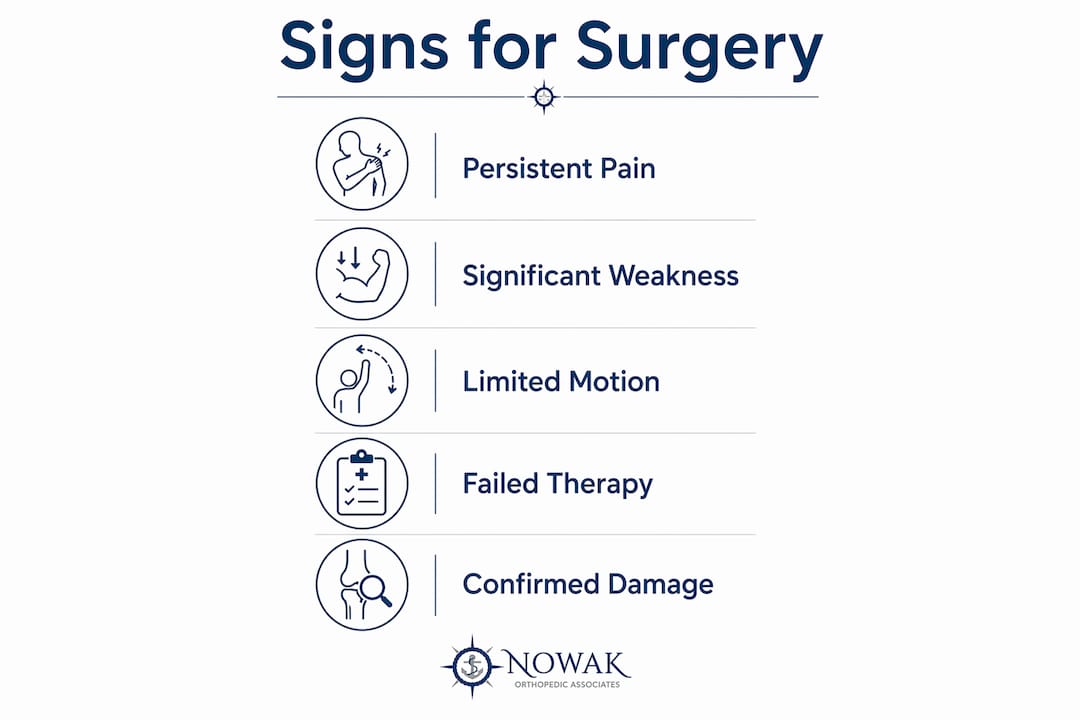
The most common surgical indicators include:
- Severe pain that disrupts sleep or daily activities. Pain that wakes you at night or prevents you from dressing, reaching overhead, or driving is a red flag. Persistent pain at rest, not just with movement, signals deeper structural damage.
- Significant weakness or loss of function. If you cannot lift your arm above shoulder height or carry light objects without sharp pain, the rotator cuff or surrounding structures may be torn beyond what therapy can restore.
- Limited range of motion unresponsive to physical therapy. Stiffness that does not improve after months of guided stretching and strengthening suggests a mechanical problem that conservative care cannot fix.
- Recurrent shoulder dislocations. Repeated instability episodes require surgical stabilization, particularly in young, active patients, to prevent chronic instability and early arthritis.
- Objective imaging findings. Full-thickness rotator cuff tears, labral tears, or significant arthritis confirmed on MRI or X-ray are strong surgical indicators that go beyond subjective symptoms.
These signs do not automatically mean surgery is your only option. They mean surgery belongs in the conversation.
Pro Tip: If two or more of these signs appear together and have lasted longer than 6 weeks, schedule a formal shoulder injury evaluation rather than waiting to see if things improve on their own.
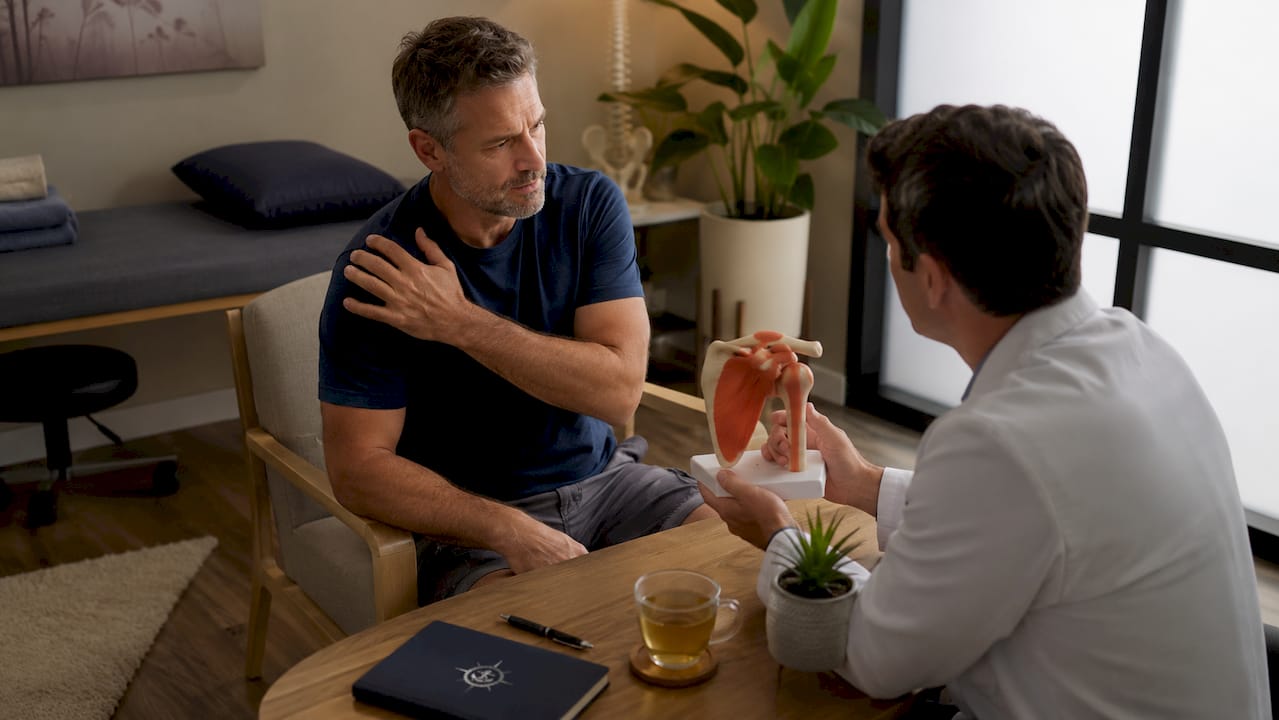
How does conservative treatment factor into deciding on shoulder surgery?
Surgery is almost never the first step. The standard approach is a structured trial of non-surgical care before any surgical decision is made.
Clinical consensus recommends at least 3–6 months of structured physical therapy before considering surgery, except in cases of acute traumatic tears. This timeline exists because the shoulder responds well to targeted rehabilitation when the injury allows it. Skipping this phase means exposing yourself to surgical risks that may not have been necessary.
The table below compares outcomes across the two main treatment paths:
| Treatment path | Typical outcome | Timeline |
|---|---|---|
| Structured physical therapy | 75% improvement in non-traumatic supraspinatus tears | 3–6 months |
| Arthroscopic surgery | Necessary for full-thickness tears, instability, or failed conservative care | Recovery 4–6 months post-op |
| Immediate surgery | Recommended for acute traumatic tears or complete ruptures | Urgent, within weeks of injury |
Arthroscopic subacromial decompression shows no long-term benefit over exercise programs for shoulder impingement syndrome alone. This finding reinforces why surgery should target specific, confirmed structural problems rather than general pain.
Rushing to surgery before exhausting conservative care increases your risk of unnecessary complications. Waiting too long after conservative care has clearly failed leads to muscle atrophy and joint deterioration that makes surgery harder and recovery longer.
Pro Tip: To get the most from physical therapy, attend every session, perform your home exercises daily, and report any sharp or worsening pain immediately. Sharp pain during therapy is a signal to pause and reassess, not push through.
What diagnostic steps confirm the need for shoulder surgery?
A thorough clinical evaluation is what separates a surgical candidate from a patient who needs more conservative care. No single test makes the decision alone.
The evaluation process at Nowak Orthopedic Associates typically follows these steps:
- Medical history and symptom documentation. Your surgeon reviews the onset, duration, and pattern of your pain, prior treatments, and how symptoms affect your daily life.
- Physical examination. This focuses on range of motion, strength testing, and stability. Specific tests like the Hawkins-Kennedy test or the empty can test help identify rotator cuff involvement and impingement.
- Imaging. X-rays rule out fractures and arthritis. MRI is critical for identifying partial versus full-thickness tears, labral damage, and cartilage status. CT scans are added when bone anatomy needs closer review, particularly for instability cases.
- Patient-specific factors. Age, activity level, occupation, and personal goals all shape the final recommendation. A 30-year-old athlete with a Bankart lesion and a 65-year-old with a degenerative partial tear face very different risk-benefit calculations.
Objective imaging findings carry significant weight. A full-thickness rotator cuff tear confirmed on MRI, combined with failed conservative care and functional loss, is one of the clearest surgical indicators in orthopedic practice.
What should you expect from recovery after shoulder surgery?
Recovery from shoulder surgery follows a predictable structure, but it demands patience and strict adherence to your post-operative protocol.
The standard recovery milestones are:
- Weeks 1–6: Wear a sling continuously. Post-operative protocols require 4–6 weeks of immobilization to protect the repair.
- Weeks 6–12: Begin guided physical therapy. Range of motion exercises start gradually, with strength work added as healing progresses.
- Months 3–6: Lifting restrictions typically apply for about 3 months. Most patients return to full function around 6 months post-surgery.
- Ongoing monitoring: Watch for warning signs including a fever above 100.4°F, increased swelling, or foul-smelling discharge from the incision, all of which require immediate attention.
Delaying necessary surgery leads to muscle atrophy and glenoid bone loss, both of which complicate the repair and reduce long-term outcomes. The longer a full-thickness tear goes unrepaired, the harder it becomes to restore full strength and function.
Post-surgical movement also matters for clot prevention. Staying completely still increases thrombosis risk, so your care team will guide you on safe, controlled movement from day one.
Pro Tip: Prepare your home before surgery. Set up a sleeping area where you can rest with your arm supported, stock easy-to-prepare meals, and arrange help for the first two weeks. A well-prepared recovery environment reduces stress and protects your repair.
Key Takeaways
Surgery is the right choice when persistent pain, confirmed structural damage, and failed conservative care align, and timing that decision correctly determines how well you recover.
| Point | Details |
|---|---|
| Conservative care comes first | Most non-traumatic tears improve with 3–6 months of structured physical therapy before surgery is considered. |
| Specific signs indicate surgery | Recurrent dislocations, full-thickness tears, and function loss unresponsive to therapy are clear surgical indicators. |
| MRI guides the decision | Imaging differentiates partial from full-thickness tears and confirms whether surgery is structurally warranted. |
| Delaying surgery has real costs | Waiting too long causes muscle atrophy and bone loss that complicate repair and reduce recovery potential. |
| Recovery takes 4–6 months | Immobilization, guided therapy, and strict post-op protocols are required for a successful outcome. |
My perspective on timing shoulder surgery
Patients often ask me whether they waited too long or moved too fast. My honest answer is that both mistakes happen, and both carry real costs.
The patients I see who waited too long often come in with tears that have retracted significantly. The muscle has atrophied. What could have been a straightforward rotator cuff repair is now a more complex reconstruction with a longer, harder recovery. That outcome is not inevitable, but it is preventable when patients act on clear warning signs rather than hoping the pain resolves on its own.
On the other side, I have seen patients who pursued surgery before completing a genuine trial of physical therapy. Some of them would have done well without an operation. Surgery always carries risk, and those risks are only justified when conservative care has genuinely failed.
What I tell every patient is this: the decision is not mine alone to make. Your age, your activity goals, your tolerance for the recovery process, and the specific nature of your injury all shape what the right path looks like for you. Individualized characteristics like baseline activity level and functional demands matter as much as the imaging findings. A shared conversation between you and your surgeon, grounded in objective findings and your personal goals, produces better outcomes than any one-size-fits-all protocol.
If you are unsure where you stand, get evaluated. A clear diagnosis is the foundation of every good decision.
— Dr. Roger Nowak
Shoulder care at Nowak Orthopedic Associates
Nowak Orthopedic Associates in Hampton, NH provides individualized evaluations for patients dealing with shoulder pain, instability, or functional loss. Dr. Roger B. Nowak uses advanced imaging, physical examination, and a thorough review of your history to determine whether conservative care or surgery is the right path for you. Procedures available include rotator cuff repair, Bankart repair, SLAP repair, and biceps tenodesis, alongside non-surgical options such as PRP injections and SoftWave therapy. If you are ready to get a clear answer about your shoulder, review our orthopedic care guide or schedule your first visit to speak directly with our team.
FAQ
What are the main signs that shoulder surgery is needed?
The clearest signs include persistent pain disrupting sleep, significant weakness, limited motion unresponsive to therapy, and recurrent dislocations. Full-thickness tears or labral damage confirmed on MRI are strong objective indicators.
How long should I try conservative treatment before considering surgery?
Clinical guidelines recommend a structured trial of 3–6 months before surgery is considered, except in acute traumatic tears where earlier intervention is appropriate.
Does shoulder surgery always require a long recovery?
Most patients wear a sling for 4–6 weeks and return to full function around 6 months post-surgery. Recovery length depends on the procedure, the extent of the injury, and how closely you follow your rehabilitation program.
What happens if I delay shoulder surgery too long?
Delaying necessary surgery allows muscle atrophy and glenoid bone loss to develop, both of which make the repair more difficult and reduce the likelihood of a full recovery.
Can imaging alone determine if I need shoulder surgery?
Imaging is a critical part of the assessment but not the only factor. MRI findings are interpreted alongside your symptoms, physical exam results, and personal goals to reach a surgical recommendation that fits your specific situation.