

TL;DR:
- Carpal tunnel release surgery cuts the transverse carpal ligament to relieve median nerve pressure, alleviating symptoms of carpal tunnel syndrome. Different techniques include open, endoscopic, and ultrasound-guided approaches, with surgeon skill more important than the method. Early movement and timely surgery improve recovery and long-term outcomes.
Carpal tunnel release is defined as a surgical procedure that cuts the transverse carpal ligament to relieve pressure on the median nerve inside the wrist. This nerve compression is the root cause of carpal tunnel syndrome, a condition that affects up to 1 in 20 adults in the United States. If you have been living with numbness, tingling, or weakness in your hand, you already know how much it disrupts daily life. Surgery is the most effective long-term treatment available, and understanding what the carpal tunnel procedure actually involves helps you make a confident, informed decision about your care.
What is carpal tunnel release surgery and how is it performed?
Carpal tunnel release surgery has one clear goal: decompress the median nerve by cutting through the transverse carpal ligament, the tight band of tissue that forms the roof of the carpal tunnel. Once that ligament is divided, the tunnel widens and pressure on the nerve drops immediately. The procedure is performed as an outpatient surgery, meaning you go home the same day.
Three main surgical approaches exist:
- Open release: The surgeon makes a small incision in the palm, directly exposing the ligament and cutting it under direct vision. This is the most established technique with a long track record.
- Endoscopic release: A tiny camera is inserted through one or two small incisions, allowing the surgeon to cut the ligament from the inside. Patients often experience less palm soreness early in recovery.
- Ultrasound-guided release: The surgeon uses real-time ultrasound imaging to guide a specialized tool through a very small entry point. This approach is minimally invasive and may support faster return to normal activities.
All three techniques aim to fully release the ligament and decompress the nerve. The right choice depends on your anatomy, symptom severity, and your surgeon’s experience with each method. Surgeon skill matters more than the technique itself, and a board-certified orthopedic surgeon will guide you toward the approach best suited to your situation.
What are the benefits and potential risks of carpal tunnel release?
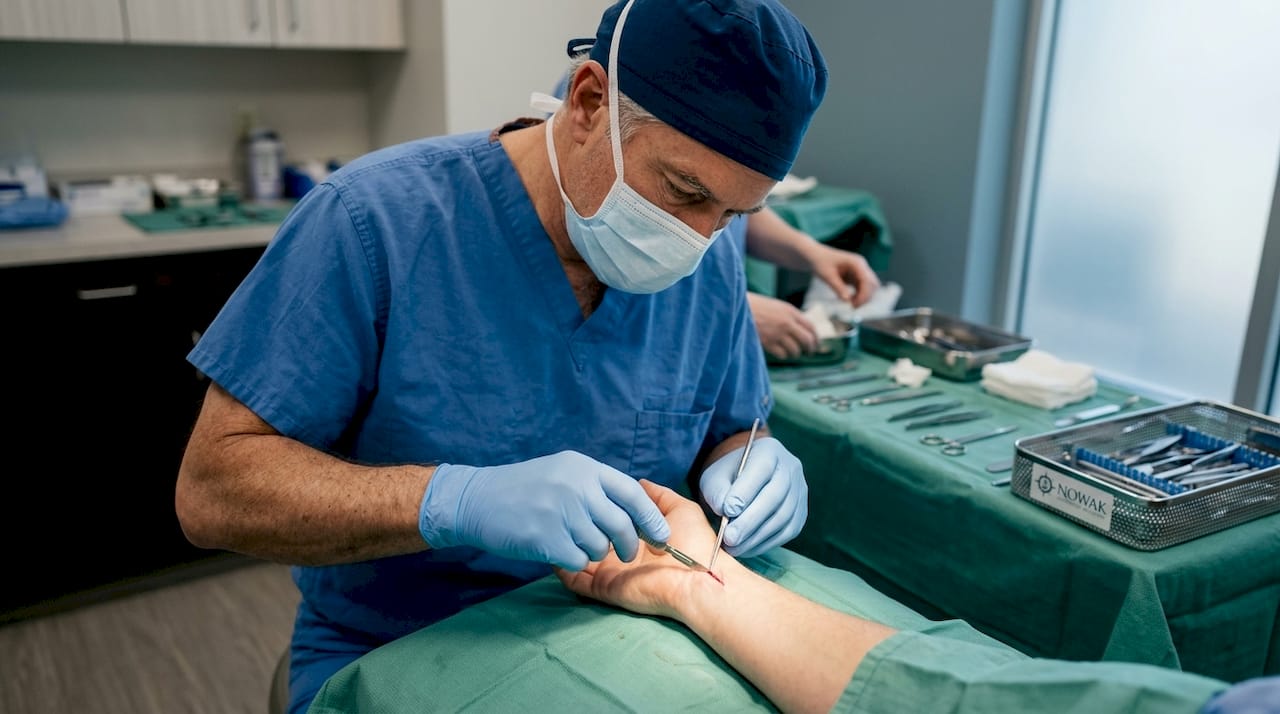
The benefits of carpal tunnel release are well-documented and significant. Surgery shows a higher probability of sustained recovery at 12–18 months compared to conservative treatments, with a Relative Risk of 1.36. That means patients who choose surgery are meaningfully more likely to achieve lasting relief than those who rely on splints or injections alone.
The most common benefits patients report include:
- Reduced or eliminated hand and wrist pain
- Restored grip strength and fine motor control
- Improved sleep, since nighttime symptoms are often the most disruptive
- Return to work and daily activities without limitation
Risks do exist and deserve honest discussion. Possible complications include infection, bleeding, scar tenderness, and, in rare cases, incomplete nerve release or injury to a nearby nerve branch. Most risks are low when surgery is performed by an experienced orthopedic surgeon.
“Patients with longer duration of nerve compression before surgery often face longer recovery and a greater chance of incomplete symptom resolution. Surgical outcomes correlate strongly with how soon nerve decompression is performed relative to symptom onset.”
This is the most important point many patients miss. Waiting too long to seek care is not a neutral choice. The nerve can sustain damage that surgery cannot fully reverse, which is why early evaluation matters.
What does recovery from carpal tunnel release look like?
Recovery from carpal tunnel surgery follows a predictable path for most patients, though the timeline varies by technique and individual health. Here is what you can generally expect:
- Days 1–3: Rest the hand, keep it elevated above heart level, and apply ice in 20-minute intervals to reduce swelling. Alternate icing with breaks to protect the skin.
- Week 1–2: Light daily tasks such as typing or eating become manageable for most patients.
- Weeks 3–6: Grip strength gradually returns. Patients who had ultrasound-guided procedures may return to normal activities roughly 20.8 days sooner than those who had traditional open surgery.
- Months 3–6: Full strength and sensation typically return, especially in patients who sought surgery early in their symptom history.
Watch for warning signs after surgery. Call your provider immediately if you develop a fever above 100.4°F, increased bleeding or drainage, or new numbness in your fingers or thumb.
Current guidelines from the American Academy of Orthopaedic Surgeons (AAOS) recommend early finger movement rather than prolonged splinting after surgery. Moving your fingers gently from day one improves strength and range of motion faster than keeping the hand immobilized.
Pro Tip: Routine postoperative physical therapy is not required for most patients. Self-guided finger exercises started early produce similar or better outcomes, according to AAOS guidelines. Ask your surgeon for a simple home exercise plan before you leave the facility.
What surgical technique is best for carpal tunnel release?
Choosing a surgical technique is not a one-size-fits-all decision. Each approach has real differences in how it is performed and how quickly patients recover.
| Technique | Approach | Early recovery | Long-term outcome |
|---|---|---|---|
| Open release | Palm incision, direct visualization | Standard timeline | Excellent, well-established |
| Endoscopic release | Camera-guided, 1–2 small incisions | Faster than open | Comparable to open |
| Ultrasound-guided release | Real-time imaging, minimal incision | Fastest (20+ days sooner) | Comparable to open |
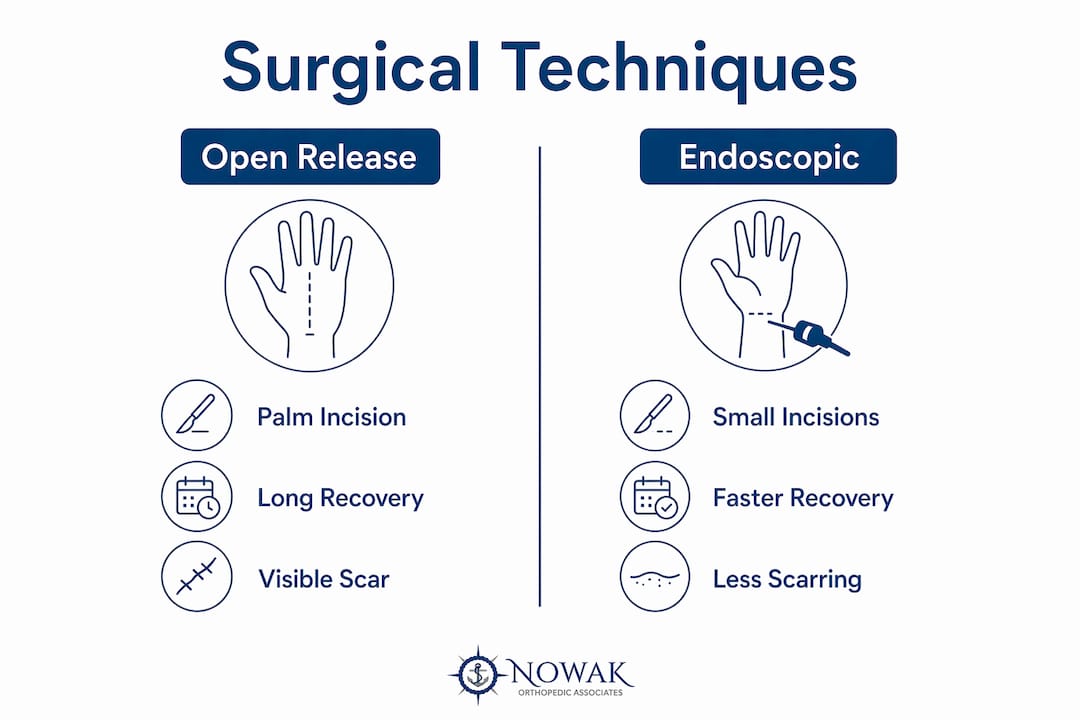
Long-term outcomes are similar across all three techniques when the ligament is fully released. The primary difference is how quickly you return to normal activity in the first weeks after surgery. Ultrasound-guided release currently shows the fastest early recovery, but that advantage narrows over several months.
The most important factor is not which technique your surgeon uses. Surgeon experience and skill drive long-term success more than any single method. A surgeon who performs hundreds of carpal tunnel releases per year will consistently outperform one who does the procedure occasionally, regardless of technique.
Pro Tip: When consulting a surgeon, ask how many carpal tunnel releases they perform annually and which technique they recommend for your specific case. A confident, specific answer tells you a great deal about their expertise.
If you are still trying to confirm whether you have carpal tunnel syndrome before considering surgery, reviewing your symptoms carefully is a useful first step.
Key Takeaways
Carpal tunnel release relieves median nerve pressure by cutting the transverse carpal ligament, and surgery produces better long-term outcomes than conservative treatment at 12–18 months.
| Point | Details |
|---|---|
| Surgery is the most effective option | AAOS guidelines confirm surgery outperforms conservative care for sustained relief at 12–18 months. |
| Three techniques are available | Open, endoscopic, and ultrasound-guided release all achieve comparable long-term results. |
| Timing of surgery matters | Delaying surgery after symptoms begin increases the risk of incomplete nerve recovery. |
| Early movement speeds recovery | AAOS recommends gentle finger movement from day one instead of prolonged splinting. |
| Surgeon skill is the key variable | Experience and technique proficiency matter more than which surgical method is chosen. |
What I tell every patient before carpal tunnel surgery
The question I hear most often is: “Do I really need surgery, or can I just keep wearing the brace?” My honest answer is that the brace buys time. It does not fix the underlying nerve compression. For patients with moderate to severe symptoms, or symptoms that have persisted for more than a few months, surgery is almost always the right call.
What surprises many patients is how straightforward the recovery actually is. The fear of surgery tends to be worse than the surgery itself. Most people are back to light tasks within a week and genuinely relieved by how quickly the nighttime pain disappears. That said, I have seen patients who waited years before coming in, and their recovery is harder. The nerve has limits. The earlier you act, the more completely it heals.
My other consistent advice: follow your postoperative instructions precisely. Elevation and icing in those first 48 hours make a real difference in swelling and comfort. And do not skip the early finger exercises. Patients who move their fingers from day one recover grip strength faster than those who keep the hand still out of caution.
— Dr. Roger Nowak
Carpal tunnel care at Nowak Orthopedic Associates
Nowak Orthopedic Associates in Hampton, NH offers advanced hand surgery for patients dealing with carpal tunnel syndrome, including open and minimally invasive release techniques performed by board-certified orthopedic surgeon Dr. Roger B. Nowak. Every patient receives an individualized evaluation to determine the most appropriate surgical approach based on symptom severity, nerve health, and personal recovery goals. From your first consultation through your final follow-up, the focus is on restoring hand function and getting you back to normal life as quickly as possible. To learn more about what to expect and how Dr. Nowak approaches orthopedic surgical care, schedule your first visit today.
FAQ
What is carpal tunnel release in simple terms?
Carpal tunnel release is surgery that cuts a tight ligament in the wrist to relieve pressure on the median nerve. It stops the pain, numbness, and weakness caused by carpal tunnel syndrome.
How long does carpal tunnel surgery take?
The procedure typically takes 15–30 minutes and is performed as outpatient surgery, so patients go home the same day.
How long is carpal tunnel recovery time?
Most patients return to light tasks within 1–2 weeks. Full grip strength and sensation typically return within 3–6 months, depending on how long symptoms were present before surgery.
Is carpal tunnel release surgery worth it?
Yes. Surgery shows a significantly higher rate of sustained recovery at 12–18 months compared to non-surgical treatments, making it the most effective long-term option for moderate to severe carpal tunnel syndrome.
What should I expect after carpal tunnel surgery?
Expect mild soreness and swelling for the first few days. Keep the hand elevated, ice it in 20-minute intervals, and begin gentle finger movement early to support faster recovery.