

TL;DR:
- Triceps tendon repair restores elbow extension strength in patients with major tears or retracted injuries. Proper surgical technique and strict phased rehabilitation lead to high rates of return to sport and activity. Adherence to recovery protocols and patience during healing are essential for optimal long-term function.
Triceps tendon repair is defined as the surgical reattachment of a torn or ruptured distal triceps tendon to the olecranon, the bony tip of the elbow. This procedure restores the muscle’s ability to extend the arm at the elbow, a movement critical for pushing, lifting, and most overhead activity. Without repair, a complete rupture leaves patients with permanent weakness and loss of function. At Nowak Orthopedic Associates in Hampton, NH, board-certified orthopedic surgeon Dr. Roger B. Nowak performs this procedure as part of a comprehensive approach to elbow injury care.
When is triceps tendon repair surgery necessary?
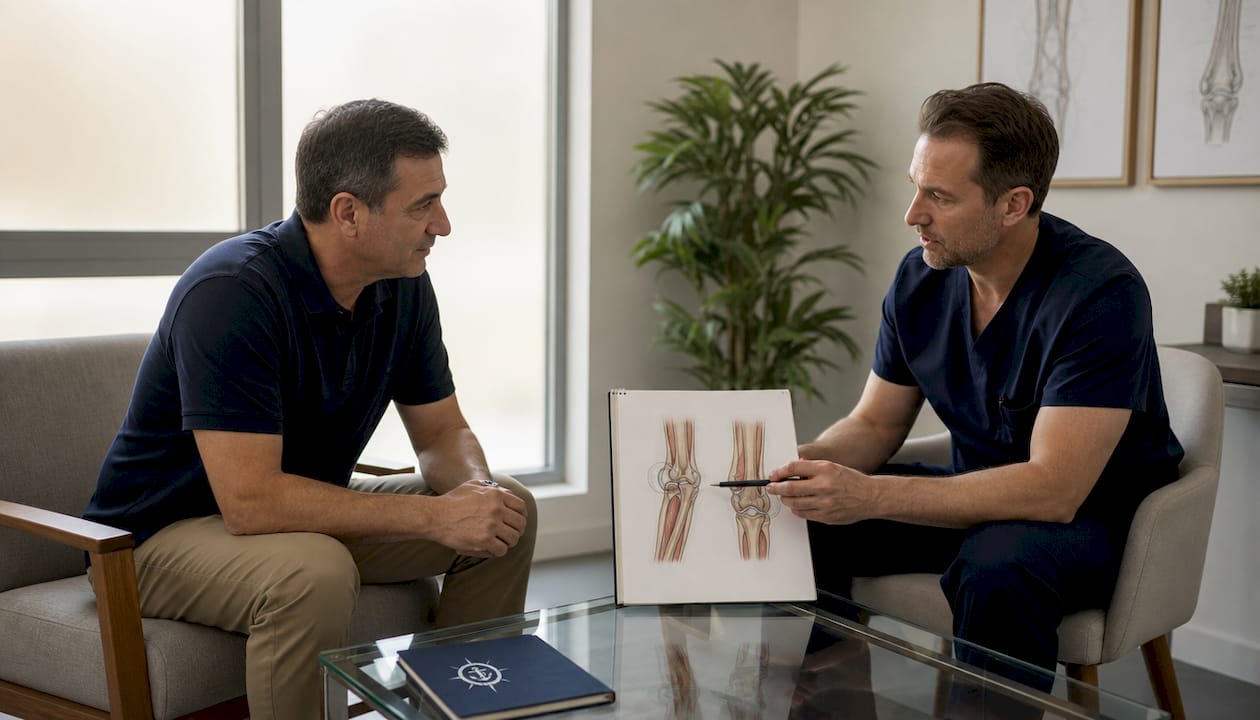
Surgical repair is the preferred treatment for complete or greater than 50% triceps tendon defects in active individuals, per 2026 clinical guidelines. That threshold matters because a tendon torn more than halfway through cannot generate reliable force, and conservative treatment alone will not restore full elbow extension strength.
The decision to operate depends on several factors:
- Complete rupture: The tendon has fully detached from the olecranon. Surgery is required to restore function.
- Partial tear greater than 50%: Active patients, athletes, and manual workers need surgical repair to prevent progression to a complete tear.
- Partial tear less than 50%: Conservative management with rest, bracing, and physical therapy is often sufficient.
- Timing: Early intervention within three weeks of injury produces better outcomes. Delayed repair allows the tendon to retract and scar, making reattachment more difficult.
- Pre-operative imaging: MRI confirms tear extent and guides the surgical approach. Chronic injuries with significant retraction require a different technique than acute tears.
Patients who delay treatment or opt out of surgery for a complete tear face lasting deficits in elbow extension strength. That functional loss affects everything from carrying groceries to returning to sport. Chronic triceps injuries are harder to repair and carry a higher risk of requiring graft augmentation.
How is the triceps tendon repaired surgically?
The triceps tendon repair process involves reattaching the distal tendon to the olecranon using one of several well-established techniques. The choice of method depends on how long ago the injury occurred, the quality of remaining tendon tissue, and the degree of retraction.
- Primary repair with transosseous tunnels: The surgeon passes sutures through bone tunnels drilled in the olecranon. This is the standard approach for acute tears with good tissue quality. The repair technique typically uses whip stitches to secure the tendon end before threading it through the tunnels.
- Suture anchor fixation: Anchors are placed directly into the olecranon bone, and sutures are tied through the tendon. This method avoids drilling full tunnels and is widely used for acute repairs.
- Graft-based reconstruction: Chronic or retracted tears with poor tissue quality require augmentation using an allograft (donor tissue) or autograft (patient’s own tissue). Graft reconstruction bridges the gap when the native tendon cannot reach the bone without tension.
- Graft augmentation of primary repair: In cases where the tendon reaches the bone but tissue quality is poor, a graft reinforces the primary repair to reduce rerupture risk.
The most serious complication after triceps tendon surgery is rerupture, which occurs in approximately 4.4% of cases. Surgeons reduce this risk by choosing the right fixation method for each patient and by setting strict postoperative movement restrictions.
Pro Tip: Ask your surgeon which fixation technique they plan to use and why. The answer tells you a great deal about how your rehabilitation timeline will be structured.
What does the triceps tendon repair recovery process entail?
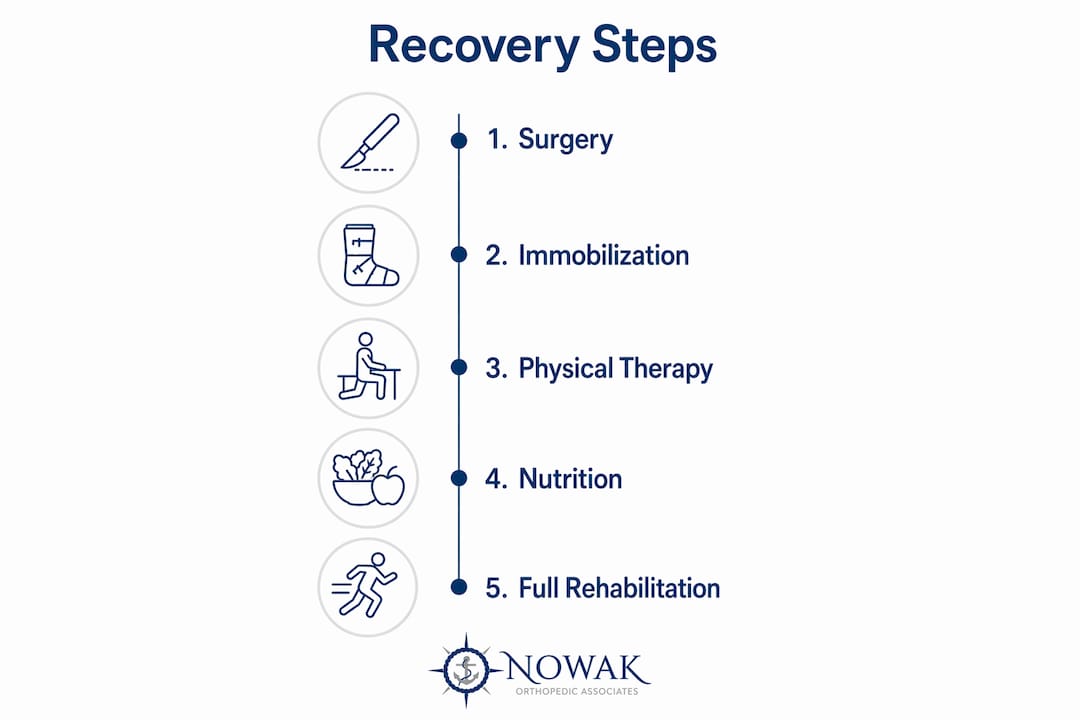
Recovery after triceps tendon surgery follows four distinct phases. Each phase builds on the last, and skipping ahead is the most common reason patients experience setbacks.
- Phase 1, weeks 0–2 (immobilization): The elbow is held in a rigid posterior splint at near full extension. No active motion is permitted during this window. The goal is to protect the repair site while initial healing begins.
- Phase 2, weeks 2–6 (early motion): Gentle, controlled range-of-motion exercises begin. Passive flexion is introduced gradually, but resisted movement remains off-limits. Swelling management and pain control are priorities.
- Phase 3, weeks 6–12 (progressive strengthening): Resistance training starts at low loads and increases incrementally. Physical therapy focuses on rebuilding elbow extension strength and restoring neuromuscular control.
- Phase 4, months 3–6 (return to activity): Patients progress toward sport-specific or work-specific tasks. Full return to heavy physical activity and competitive sport typically occurs between 6–9 months after surgery, depending on repair complexity.
The full rehabilitation protocol governs long-term functional outcomes more than the surgery itself. Patients who follow each phase precisely recover more extension strength than those who rush progression.
Nutrition plays a real role in tendon healing. Consuming 1.6–2.2 g/kg of protein daily supports the biological repair process. Tendon tissue heals on its own timeline, and no amount of exercise intensity can accelerate that biology.
Pro Tip: Keep a written log of your therapy sessions and pain levels. Surgeons and physical therapists use this data to adjust your progression safely and catch problems early.
What outcomes can patients expect after triceps tendon repair?
The evidence on outcomes is encouraging. A systematic review of 31 studies covering 277 athletes found that 93% returned to sport at a mean of 5.2 months after surgery. That is a strong success rate for a significant tendon injury.
| Outcome Measure | Result |
|---|---|
| Return to sport rate | 93% of athletes |
| Mean time to return to sport | 5.2 months |
| Return to prior or higher competition level | 63.6% of athletes |
| Rerupture rate | 4.4% |
| Reoperation rate | 7.8% |
Returning to the same or higher level of competition takes longer and requires more from rehabilitation. The 63.6% figure for returning to prior competitive level reflects the reality that full strength restoration is a gradual process. Patients in high-demand sports or heavy manual work should plan for a 6–9 month timeline before resuming full activity.
Factors that affect outcomes include injury severity, how long the tear went untreated, the surgical technique used, and how consistently the patient follows the rehabilitation protocol. Rehab adherence is the single most controllable variable in the recovery equation.
Key Takeaways
Triceps tendon repair requires surgical fixation, a phased rehabilitation protocol, and patient adherence to achieve full elbow extension strength and return to activity.
| Point | Details |
|---|---|
| Surgery is indicated for major tears | Complete or greater than 50% tears in active patients require surgical repair, not conservative care. |
| Technique depends on injury age | Acute tears use primary repair; chronic or retracted tears need graft-based reconstruction. |
| Rehab has four defined phases | Immobilization, early motion, strengthening, and return to activity span 4–6 months minimum. |
| Return to sport rates are high | 93% of athletes return to sport at a mean of 5.2 months with proper surgical and rehab care. |
| Nutrition supports healing | Daily protein intake of 1.6–2.2 g/kg supports tendon tissue repair during recovery. |
What I’ve learned about triceps repair after years in the OR
Surgery fixes the structural problem. What happens in the weeks and months after the procedure determines how much function a patient actually gets back. I have seen patients with technically excellent repairs plateau at 70% strength because they rushed the strengthening phase or skipped physical therapy sessions. The biology of tendon healing does not respond to impatience.
The patients who do best are the ones who understand why each phase of rehabilitation exists. When you know that the first two weeks of immobilization protect the suture fixation from catastrophic failure, you take that restriction seriously. When you understand that progressive loading in weeks 6–12 stimulates collagen remodeling, you show up to every therapy session.
One misconception I address regularly is the idea that pain-free movement means the repair is ready for full loading. It is not. Tendon tissue remodels over months, not weeks. Feeling good is a positive sign, but it is not clearance to skip ahead. Patience and protocol compliance are the two things patients control most, and they matter more than most people realize.
— Dr. Roger Nowak
Triceps tendon care at Nowak Orthopedic Associates
Nowak Orthopedic Associates offers the full spectrum of care for triceps tendon injuries, from initial diagnosis through surgical repair and structured rehabilitation. Dr. Roger B. Nowak tailors each treatment plan to the patient’s injury severity, activity level, and recovery goals. Whether you need primary repair, graft reconstruction, or a guided post-surgery rehab plan, the practice provides individualized care at every stage. For patients who want to understand all available options before committing to surgery, a consultation with our team is the right first step. Learn more about what to expect from advanced joint care at Nowak Orthopedic Associates, or schedule your first visit to discuss your elbow injury with Dr. Nowak directly.
FAQ
What is triceps tendon repair?
Triceps tendon repair is surgery to reattach the distal triceps tendon to the olecranon after a complete or significant partial rupture. The procedure restores elbow extension strength and arm function.
How long does triceps tendon repair recovery take?
Most patients return to sport at a mean of 5.2 months, but full return to heavy physical activity or competitive sport typically takes 6–9 months depending on repair complexity and rehabilitation progress.
What are the risks of triceps tendon surgery?
The rerupture rate is approximately 4.4% and the reoperation rate is near 7.8%. Strict adherence to postoperative immobilization and rehabilitation protocols reduces both risks significantly.
Can a triceps tendon tear heal without surgery?
Partial tears involving less than 50% of the tendon can often be managed conservatively. Complete ruptures and tears greater than 50% in active individuals require surgical repair to restore full function.
How soon after injury should surgery be performed?
Clinical guidelines recommend repair within three weeks of injury for the best outcomes. Delayed repair allows tendon retraction and scarring, which increases surgical complexity and may require graft reconstruction.