

TL;DR:
- Elbow surgery recovery involves a structured process focused on restoring motion, strength, and joint function. Adherence to rehabilitation and pain management in the first weeks significantly impacts long-term outcomes and reduces stiffness risk.
Elbow surgery recovery is defined as the structured process of regaining motion, strength, and full joint function following a surgical procedure on the elbow. Knowing how to recover from elbow surgery matters because the choices you make in the first days and weeks directly shape your long-term outcome. Simple procedures may allow a return to light tasks within 6 weeks, while complex surgeries can require up to 12 months of total healing. At Nowak Orthopedic Associates, we see patients every week who underestimate how much structured rehabilitation and pain control determine whether they get their elbow back fully or settle for partial function.
What happens in the first week after elbow surgery?
The first week sets the foundation for everything that follows. Your primary goals are controlling swelling, protecting the surgical site, and avoiding movements that stress the repair. Miss this window and you risk complications that push your timeline back significantly.
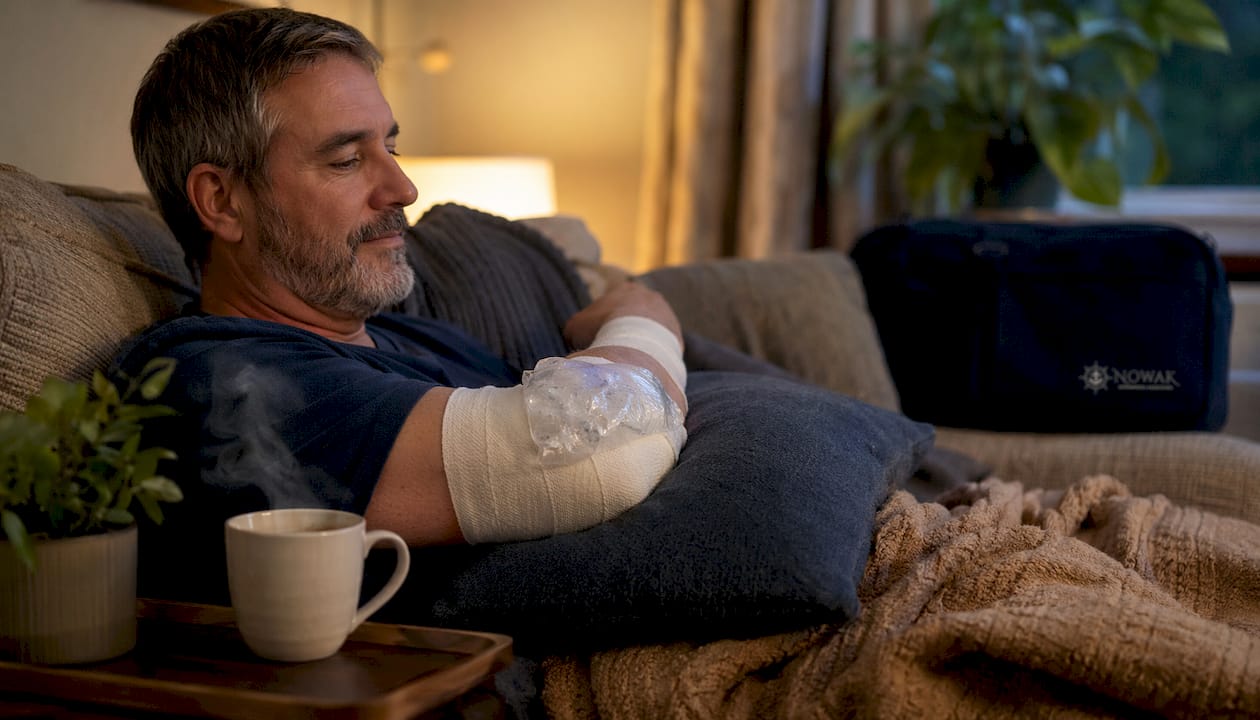
Your care team will typically send you home with a splint or sling. Sling use is advised until muscle control returns, especially during the 48-hour period when a nerve block is still active and your arm feels heavy or numb. Do not skip the sling just because you feel no pain. The absence of sensation is not the same as the absence of risk.
Key steps for the first week include:
- Elevation: Keep your arm raised above heart level as much as possible to reduce swelling.
- Ice: Apply ice wrapped in a cloth for 15–20 minutes several times daily.
- Wound care: Keep the incision dry and clean; follow your surgeon’s specific dressing instructions.
- Gentle movement: Begin slow finger and wrist movements as soon as your surgeon approves, usually within the first 24–48 hours.
- Medication timing: Start prescribed pain medication before the nerve block wears off to stay ahead of pain rather than chasing it.
Common symptoms in this phase include swelling, bruising, and temporary numbness near the incision. These are normal. Fever, increasing redness, or discharge from the wound are not normal and require a call to your surgeon.
Pro Tip: Set a phone alarm to take your pain medication on schedule for the first 3–5 days. Waiting until pain peaks makes it much harder to control and can delay your first therapy session.
How do you start physical therapy after elbow surgery?
Physical therapy is not optional after elbow surgery. Rehab lowers pain and swelling, restores motion, and reduces the risk of long-term stiffness. Stiffness is one of the most common long-term complications, and consistent therapy is the primary defense against it.
Therapy progresses in stages. Your therapist will not push you from zero to full strength overnight. The standard protocol moves through three phases:
- Passive range of motion (weeks 1–3): Your therapist moves your elbow for you. The goal is to maintain joint mobility without loading the repair. Flexion and extension are the primary movements at this stage.
- Active-assisted exercises (weeks 3–6): You begin moving the elbow yourself, with support. Forearm rotation (pronation and supination) is introduced here. Movements remain controlled and pain-guided.
- Active strengthening (weeks 6 and beyond): Resistance exercises begin once the tissue has healed enough to tolerate load. Grip strength, wrist stability, and full elbow range of motion become the focus.
Post-surgical elbow stiffness recurs in up to 34% of cases. That statistic reflects what happens when patients skip sessions or stop therapy too early. Breaking the pain-stiffness cycle requires both structured analgesia and progressive physical therapy working together.
Your home exercise program matters as much as your clinic sessions. A therapist can guide you twice a week, but you move the joint every day. Athletes, including young pitchers recovering from elbow procedures, face the same challenge: consistency between sessions determines how fast function returns.
Pro Tip: Track your range of motion weekly with a simple goniometer app on your phone. Seeing measurable progress, even small gains, keeps motivation high during a long recovery.
For a detailed progression plan, the elbow injury rehab guide from Nowak Orthopedic Associates walks through each phase with specific exercises.
How do you manage pain effectively after elbow surgery?
Pain is the primary barrier to therapy compliance after elbow surgery. Effective pain management enables better participation in physical therapy, which directly improves outcomes. Treating pain as an afterthought is one of the most common mistakes patients make.
Your surgeon may use several approaches depending on the complexity of your procedure:
- Continuous peripheral nerve blocks (CPNB): Surgeons use regional anesthetic catheters for up to 5 days post-operatively. CPNB reduces opioid use and improves pain scores significantly compared to general anesthesia alone. This approach also allows earlier mobilization.
- Oral analgesics: Non-opioid medications like acetaminophen and NSAIDs form the backbone of home pain control. Opioids are reserved for breakthrough pain in the early days.
- Ice and elevation: These non-pharmaceutical methods remain highly effective and should be used consistently alongside medication.
“Structured analgesia combined with progressive therapy breaks the pain-stiffness cycle that prevents many patients from reaching full motion. The goal is not to eliminate all sensation. The goal is to keep pain low enough that you can move.”
Timing matters more than most patients realize. Taking medication 30–45 minutes before a therapy session gives it time to work. Arriving at therapy already in significant pain means you will guard the joint, limit your range of motion, and get less out of the session.
Contact your surgeon if pain is not controlled with your prescribed regimen, if it suddenly worsens after improving, or if you notice new swelling or warmth in the joint. These signs can indicate a complication that needs prompt evaluation.
What is the realistic timeline for returning to normal activities?
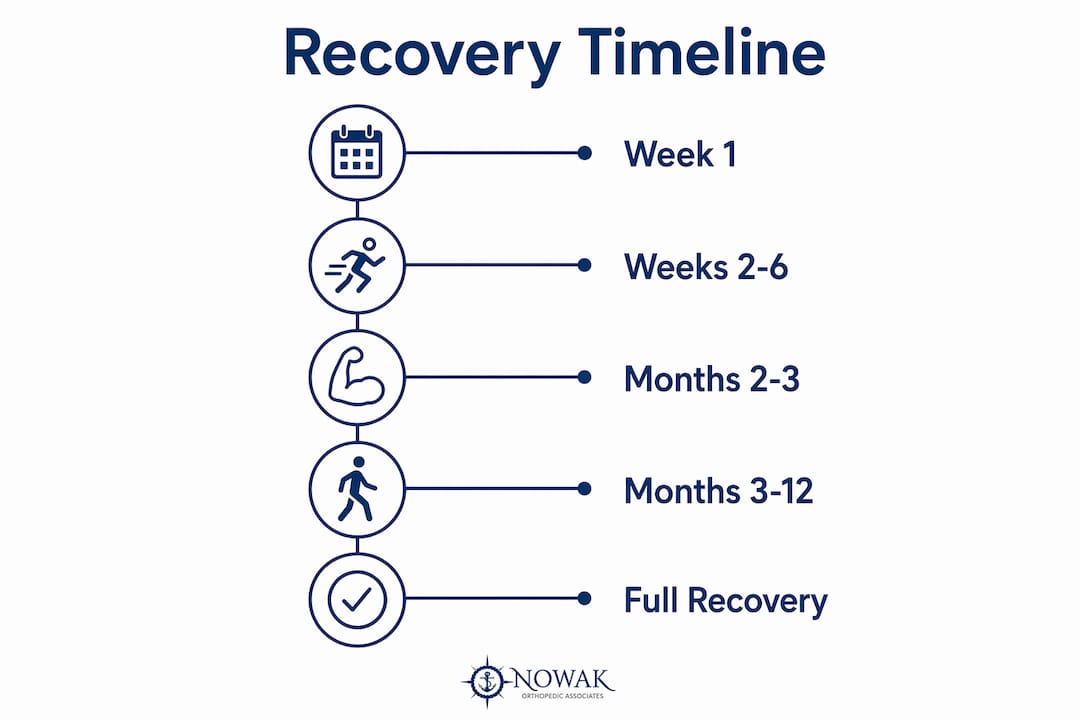
Recovery milestones vary by procedure complexity, but general patterns hold across most elbow surgeries. Understanding the timeline helps you set realistic expectations and avoid pushing too hard too soon.
| Recovery Phase | Typical Timeline | Activity Level |
|---|---|---|
| Early protection | Weeks 1–2 | Rest, elevation, gentle finger and wrist movement |
| Light activity | Weeks 4–6 | Light housework and daily tasks |
| Moderate activity | Weeks 6–12 | Increased elbow use, avoid heavy lifting |
| Return to full function | 3–12 months | Full strength and motion, depending on procedure |
Complex procedures such as total elbow arthroplasty or triceps tendon repair sit at the longer end of that range. Simpler arthroscopic procedures often allow faster progression. Your surgeon’s guidance overrides any general timeline.
Pain and mobility are your two best daily indicators. If pain spikes after increasing activity, reduce the load and give the joint more time. Gradual progression prevents setbacks far better than aggressive pushing. Patients who understand their elbow surgery options before the procedure tend to have more realistic expectations and better compliance during recovery.
Key Takeaways
Successful elbow surgery recovery requires consistent physical therapy, proactive pain management, and a realistic understanding of your procedure’s timeline.
| Point | Details |
|---|---|
| Start pain control early | Take prescribed medication before nerve block numbness fades to stay ahead of pain. |
| Follow the therapy phases | Progress from passive motion to active strengthening; skipping phases increases stiffness risk. |
| Stiffness is preventable | Up to 34% of patients experience recurrent stiffness; consistent rehab is the primary defense. |
| Activity milestones vary | Most patients resume light tasks at 4–6 weeks; complex surgeries may need up to 12 months. |
| Pain enables therapy | Effective pain control is not comfort management. It is what makes productive therapy possible. |
What I tell every patient before they leave the operating room
By Dr. Roger Nowak
After years of performing elbow procedures, including cubital tunnel releases, lateral epicondylectomies, and triceps tendon repairs, the single biggest predictor of a good outcome is not the surgery itself. It is what the patient does in the weeks after.
I have seen technically perfect repairs fail to restore full function because patients stopped therapy when the pain became inconvenient. I have also seen patients with complex injuries return to full activity because they treated their rehab program like a second job. The difference is almost always discipline and communication.
The pain-stiffness cycle is real and it is vicious. Pain causes guarding. Guarding causes stiffness. Stiffness causes more pain. The only way to break it is to stay ahead of the pain pharmacologically and keep moving within safe limits. That is why I emphasize nerve block timing and home exercise compliance from day one.
My advice to every patient is this: call us when something feels wrong, not after you have waited two weeks hoping it resolves on its own. Early intervention on a setback is far easier than managing a complication that has had time to develop. Recovery is not passive. You are an active participant in your own outcome.
— Dr. Roger Nowak
Nowak Orthopedic Associates and your elbow recovery
Nowak Orthopedic Associates in Hampton, NH provides individualized care plans for patients recovering from elbow surgery, from the first post-operative visit through full return to activity. Dr. Nowak and the team coordinate pain management, physical therapy referrals, and follow-up imaging to keep your recovery on track at every stage. Whether you are recovering from a cubital tunnel release, a triceps repair, or a lateral epicondylectomy, your plan is built around your specific procedure and goals. For patients considering surgery or seeking a second opinion, the advanced joint care guide covers what to expect from orthopedic surgical care. Schedule your first visit to get a personalized recovery plan from a board-certified orthopedic surgeon.
FAQ
How long does elbow surgery recovery take?
Most patients resume light tasks at 4–6 weeks, with total healing ranging from 3 to 12 months depending on procedure complexity.
When should physical therapy start after elbow surgery?
Gentle finger and wrist movements typically begin within the first 24–48 hours. Formal physical therapy usually starts within the first 1–2 weeks, guided by your surgeon’s protocol.
What is the biggest risk during elbow recovery?
Post-surgical stiffness is one of the most common long-term risks. Stiffness recurs in up to 34% of cases when structured rehabilitation is not followed consistently.
Does a nerve block help with elbow surgery recovery?
Yes. Continuous peripheral nerve blocks reduce opioid use and improve pain scores in the first five days after surgery, allowing earlier and more effective mobilization.
When can I return to sports after elbow surgery?
Return to sport timelines vary widely by procedure and sport. Athletes should follow a sport-specific progression plan and receive clearance from their orthopedic surgeon before returning to full activity.