

Carpal tunnel syndrome is a nerve compression condition where the median nerve gets squeezed as it travels through a narrow passageway in your wrist called the carpal tunnel. The result is numbness, tingling, and pain in the hand and fingers that can range from mildly annoying to genuinely disabling. Left untreated, it tends to get worse.
What is carpal tunnel syndrome, exactly?
The carpal tunnel is roughly one inch wide, formed by the carpal bones on the bottom and sides and the transverse carpal ligament across the top. Nine flexor tendons and the median nerve pass through this space together. When anything causes swelling or narrowing inside that tunnel, the nerve gets compressed and symptoms follow.
Key anatomy and mechanics at a glance:
- Median nerve: Controls sensation in the thumb, index, middle, and part of the ring finger, plus movement in some thumb muscles
- Carpal tunnel: A rigid, bone-and-ligament channel at the base of the wrist with very little room to expand
- Transverse carpal ligament: The tough band of tissue forming the tunnel’s roof; cutting it is the basis of surgical treatment
- Nerve compression: Pressure on the median nerve disrupts normal signal transmission, producing the characteristic tingling and numbness
What are the symptoms of carpal tunnel syndrome?
Symptoms typically start gradually and often feel worse at night, when many people sleep with their wrists bent. The most common signs include numbness, tingling, and pain in the thumb, index, middle, and ring fingers. Weakness in the hand, trouble gripping objects, and a tendency to drop things are also frequent complaints.
Common carpal tunnel symptoms to watch for:
- Numbness or tingling that wakes you at night
- Pain radiating from the wrist up the forearm
- Weakness when pinching or gripping
- A tendency to shake your hand to relieve the tingling
- Clumsiness with fine motor tasks like buttoning a shirt
- Muscle wasting at the base of the thumb in advanced cases
Pro Tip: If you notice symptoms only at night or during specific activities like driving or typing, that pattern is a strong early signal. Catching carpal tunnel syndrome at this stage gives you the widest range of treatment options and the best chance of avoiding surgery.
If you want a more detailed breakdown of early warning signs, the guide on how to tell if you have carpal tunnel covers the key indicators clearly.

What causes carpal tunnel syndrome?
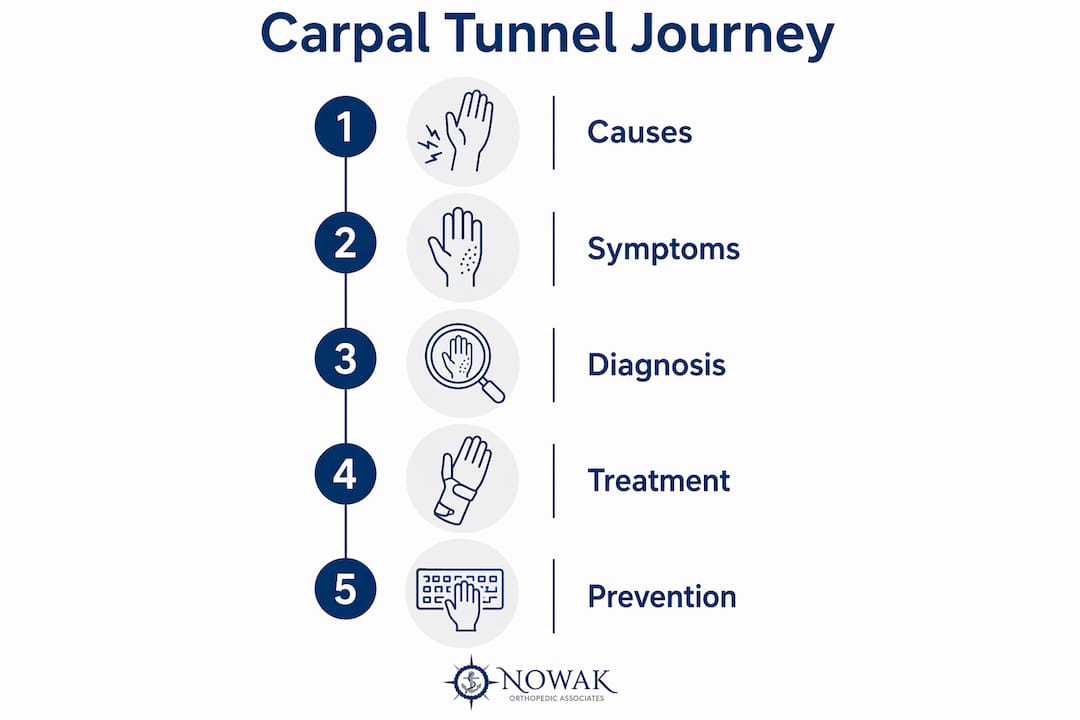
Pressure builds inside the carpal tunnel when the synovium, the tissue surrounding the flexor tendons, swells and crowds the median nerve. That swelling can come from many sources, which is why carpal tunnel syndrome affects such a wide range of people.
Causes and risk factors include:
- Repetitive hand and wrist use: Sustained or forceful gripping, typing, and assembly work all increase tunnel pressure over time
- Forceful hand exertion: Research tracking 2,474 workers found that peak hand force and time spent in forceful exertions were each associated with more than double the risk of developing carpal tunnel syndrome
- Wrist anatomy: A naturally narrower tunnel or a previous wrist fracture can predispose someone to compression
- Health conditions: Diabetes, rheumatoid arthritis, thyroid disorders, and pregnancy all increase the likelihood of nerve compression
- Obesity: Higher body mass index raises the odds of carpal tunnel syndrome, particularly in jobs with frequent exertions
- Workplace exposure: In one NIOSH evaluation of a poultry processing plant, 81% of evaluated jobs had hand activity and force levels above recommended limits, and 34% of workers met the case definition for carpal tunnel syndrome
Anatomy note: The carpal tunnel has fixed walls. Unlike soft tissue elsewhere in the body, it cannot expand to accommodate swelling, so even modest increases in pressure translate directly into nerve compression.
How is carpal tunnel syndrome diagnosed?
No single test confirms carpal tunnel syndrome on its own. Diagnosis combines a thorough patient history, physical examination maneuvers, and, when needed, electrodiagnostic testing.
Diagnostic methods used in clinical practice:
- Patient history: Symptom pattern, duration, occupation, and medical history all inform the picture
- Phalen’s test: Holding the wrists in full flexion for 60 seconds; reproduction of tingling suggests nerve compression
- Tinel’s sign: Tapping over the carpal tunnel at the wrist; a tingling sensation in the fingers is a positive result
- Nerve conduction studies (NCS): Measure how quickly electrical signals travel through the median nerve; slowing confirms compression
- Electromyography (EMG): Assesses muscle electrical activity to detect nerve damage and gauge its severity
- Specialist evaluation: When symptoms are atypical or other conditions need to be ruled out, an orthopedic specialist can provide a more complete assessment
Phalen’s and Tinel’s tests are useful screening tools, but neither is fully reliable in isolation. Electrodiagnostic testing becomes particularly valuable when the clinical picture is ambiguous or when surgery is being considered.
What are the treatment options for carpal tunnel syndrome?
Treatment depends on how severe your symptoms are and how long you have had them. Mild to moderate cases often respond well to nonsurgical methods, while persistent or severe cases typically require surgery.
Treatment options from conservative to surgical:
- Wrist splinting: Wearing a neutral-position splint at night keeps the wrist from bending and reduces nerve pressure during sleep
- Corticosteroid injections: A steroid injected into the carpal tunnel reduces inflammation and provides relief, often for weeks to months
- Activity modification: Adjusting how you grip, type, or perform repetitive tasks can reduce ongoing pressure
- Physical and occupational therapy: Targeted exercises and ergonomic training help reduce strain on the wrist
- Carpal tunnel release surgery: The surgeon cuts the transverse carpal ligament to widen the tunnel and relieve median nerve pressure; clinical evidence supports surgery as the more effective long-term option when conservative care fails or muscle wasting is present
Pro Tip: Do not wait for weakness or muscle loss before seeking care. Permanent nerve damage can develop when compression goes untreated for too long, and at that point, even successful surgery may not fully restore hand function.
For a detailed walkthrough of the surgical procedure itself, the guide on carpal tunnel release surgery explains what to expect before, during, and after the procedure.

Expert perspective on care and clinical guidelines
Carpal tunnel syndrome is progressive. Without intervention, nerve injury accumulates and becomes harder to reverse. The AAOS Clinical Practice Guideline recommends starting with conservative treatment but endorses surgical release for persistent, severe symptoms or when muscle atrophy is evident. Shared decision-making between patient and clinician is central to that process.
At Nowak Orthopedic Associates, Dr. Roger B. Nowak takes an individualized approach to every patient. Key elements of that care model include:
- Thorough evaluation combining history, physical exam, and electrodiagnostic testing when indicated
- Patient education about the condition’s natural progression and realistic treatment timelines
- Ergonomic guidance as part of the overall management plan
- Conservative treatment first, with surgical planning when symptoms warrant it
- Prompt follow-up to monitor response and adjust the plan as needed
Carpal tunnel syndrome is also one of the leading causes of lost workplace productivity when left unaddressed. Early identification and treatment consistently produce better long-term outcomes than waiting until symptoms become severe.
How can you prevent carpal tunnel syndrome?
Prevention focuses on reducing the mechanical stress that drives nerve compression. Not every case is avoidable, but workplace and lifestyle modifications can meaningfully lower your risk.
Practical prevention strategies:
- Reduce forceful gripping: Use tools with padded handles and avoid sustained tight grips when possible
- Take regular breaks: Short rest intervals during repetitive hand tasks give the tunnel tissue time to decompress
- Maintain neutral wrist posture: Avoid prolonged flexion or extension, especially during typing or assembly work
- Adjust your workstation: Keyboard height, mouse position, and chair height all affect wrist angle during the workday
- Manage contributing health conditions: Keeping diabetes, thyroid disorders, and body weight well controlled reduces systemic risk factors
- Stretch regularly: Gentle wrist and finger stretches before and after repetitive tasks help maintain tissue flexibility
- Use ergonomic tools: Vertical mice, split keyboards, and wrist rests can reduce cumulative strain over a full workday
Ergonomic workplace modifications combined with early treatment can reduce both the incidence and progression of carpal tunnel syndrome in at-risk populations.
What happens if carpal tunnel syndrome goes untreated?
Untreated carpal tunnel syndrome does not plateau. The median nerve continues to experience pressure, and over time that leads to structural nerve damage rather than just functional disruption.
Possible complications include:
- Permanent numbness: Chronic compression can cause lasting sensory loss that does not fully resolve even after surgery
- Thenar muscle wasting: The muscles at the base of the thumb can atrophy, reducing grip strength and pinch function
- Chronic pain: Long-standing nerve irritation can produce pain that outlasts the original compression
- Reduced hand function: Difficulty with fine motor tasks, writing, and daily activities becomes progressively worse
- Poor surgical outcomes: Surgery is highly effective when performed before significant nerve damage occurs; waiting too long reduces how much function can be recovered
The prognosis for carpal tunnel syndrome treated early is generally very good. Most patients who receive timely nonsurgical or surgical care experience substantial relief and return to normal hand function. The longer compression persists without treatment, the less predictable the recovery.
If you are experiencing hand numbness, tingling, or weakness, Nowak Orthopedic Associates is here to help. Dr. Roger B. Nowak provides expert orthopedic evaluation and a full range of treatment options, from conservative care to carpal tunnel release surgery, tailored to your specific situation. Learn more about your first visit or explore the full range of orthopedic services available at the practice.
Key Takeaways
Carpal tunnel syndrome is a progressive median nerve compression condition that responds best to treatment before permanent nerve damage or muscle wasting develops.
| Point | Details |
|---|---|
| Core cause | The median nerve is compressed inside the carpal tunnel, a rigid bone-and-ligament channel about one inch wide. |
| Forceful exertion risk | Workers with high peak hand force had more than double the risk of developing carpal tunnel syndrome in a pooled study of 2,474 workers. |
| Diagnosis is multifaceted | No single test confirms the condition; history, Phalen’s test, Tinel’s sign, and nerve conduction studies are used together. |
| Surgery is highly effective | Cutting the transverse carpal ligament relieves median nerve pressure and outperforms conservative care for severe or persistent cases. |
| Early treatment matters | Waiting until muscle wasting appears reduces how much function surgery can restore. |
FAQ
What is carpal tunnel syndrome in simple terms?
Carpal tunnel syndrome is a condition where the median nerve in your wrist gets compressed inside a narrow passageway called the carpal tunnel, causing numbness, tingling, and pain in the hand and fingers.
Can carpal tunnel syndrome go away on its own?
Mild cases sometimes improve with rest and activity changes, but carpal tunnel syndrome is generally progressive. Without treatment, symptoms tend to worsen and can lead to permanent nerve damage.
How do doctors test for carpal tunnel syndrome?
Doctors use a combination of patient history, physical exam maneuvers like Phalen’s test and Tinel’s sign, and nerve conduction studies to diagnose carpal tunnel syndrome. No single test is conclusive on its own.
When is surgery needed for carpal tunnel syndrome?
Surgery is recommended when conservative treatments like splinting and steroid injections fail to provide relief, or when there is evidence of muscle wasting or significant nerve damage. The AAOS Clinical Practice Guideline supports surgical release in these cases.
What exercises help relieve carpal tunnel symptoms?
Gentle wrist flexion and extension stretches, tendon gliding exercises, and nerve gliding movements can help reduce tension on the median nerve. These are most effective in mild to moderate cases and should be guided by a physical or occupational therapist.