

What is shoulder orthopedic surgery?
Shoulder orthopedic surgery covers a range of procedures designed to repair damaged structures in the shoulder joint, restore mobility, and relieve pain that conservative treatments have not resolved. The most common approaches include rotator cuff repair, shoulder arthroscopy, total shoulder arthroplasty, and reverse shoulder arthroplasty. Surgery is generally considered only after physical therapy, medications, and injections have failed to produce meaningful improvement.
The shoulder is a ball-and-socket joint with an unusually wide range of motion, which also makes it one of the most injury-prone joints in the body. When tendons tear, cartilage wears away, or the joint becomes unstable, everyday tasks like reaching overhead or lifting a bag can become genuinely difficult. Surgical intervention addresses the underlying structural problem rather than simply managing symptoms.
Key objectives of shoulder orthopedic surgery include:
- Reattaching torn tendons to bone (rotator cuff repair)
- Stabilizing an unstable or repeatedly dislocating shoulder (Bankart repair, capsulorrhaphy)
- Replacing a severely arthritic joint with an artificial implant (total or reverse arthroplasty)
- Releasing scar tissue that restricts motion (frozen shoulder release)
- Removing bone spurs or inflamed tissue causing impingement (subacromial decompression)
- Repairing labral tears that compromise joint stability (SLAP repair)
Common shoulder conditions that may require surgery
Most patients who end up in an orthopedic surgeon’s office have been dealing with shoulder pain for months, sometimes years. Understanding which condition is driving that pain is the first step toward choosing the right treatment.
-
Rotator cuff tears. The rotator cuff is a group of four muscles and their tendons that hold the ball of the upper arm in the shoulder socket. Partial tears often respond to physical therapy, but full-thickness tears that cause persistent weakness or pain frequently require surgical repair. Patients typically notice difficulty raising the arm, weakness when lifting, and a dull ache at night.
-
SLAP tears. A Superior Labrum Anterior to Posterior (SLAP) tear involves the ring of cartilage, called the labrum, that deepens the shoulder socket. These injuries are common in overhead athletes and people who fall on an outstretched arm. Symptoms include a catching or popping sensation and deep shoulder pain with certain movements.
-
Bankart lesions. A Bankart lesion is a specific labral tear that occurs when the shoulder dislocates anteriorly. Repeated dislocations stretch and tear the anterior labrum, leaving the joint chronically unstable. Surgical repair reattaches the labrum to restore stability.
-
Shoulder arthritis. Osteoarthritis gradually wears away the cartilage that cushions the joint surfaces. When bone rubs against bone, pain and stiffness become severe enough to limit daily function. Advanced arthritis that does not respond to injections or anti-inflammatory medications is a primary indication for shoulder replacement.
-
Frozen shoulder (adhesive capsulitis). The shoulder capsule thickens and tightens, severely restricting motion. Most cases resolve with physical therapy and steroid injections, but patients who remain significantly limited after months of conservative care may benefit from arthroscopic capsular release.
-
Acromioclavicular (AC) joint injuries. A fall onto the shoulder can separate the AC joint, the connection between the collarbone and the shoulder blade. Mild separations heal without surgery, but severe disruptions that cause persistent pain or deformity may need surgical stabilization.
-
Impingement syndrome. Tendons and bursa become pinched between the bones of the shoulder during arm elevation. Chronic impingement that does not improve with therapy and injections can be addressed surgically through subacromial decompression.
Types of shoulder orthopedic surgeries and what they involve
Several distinct procedures fall under the umbrella of shoulder surgery, each targeting a specific structural problem. The choice between arthroscopic and open techniques depends on the extent of damage, the patient’s anatomy, and the surgeon’s assessment.
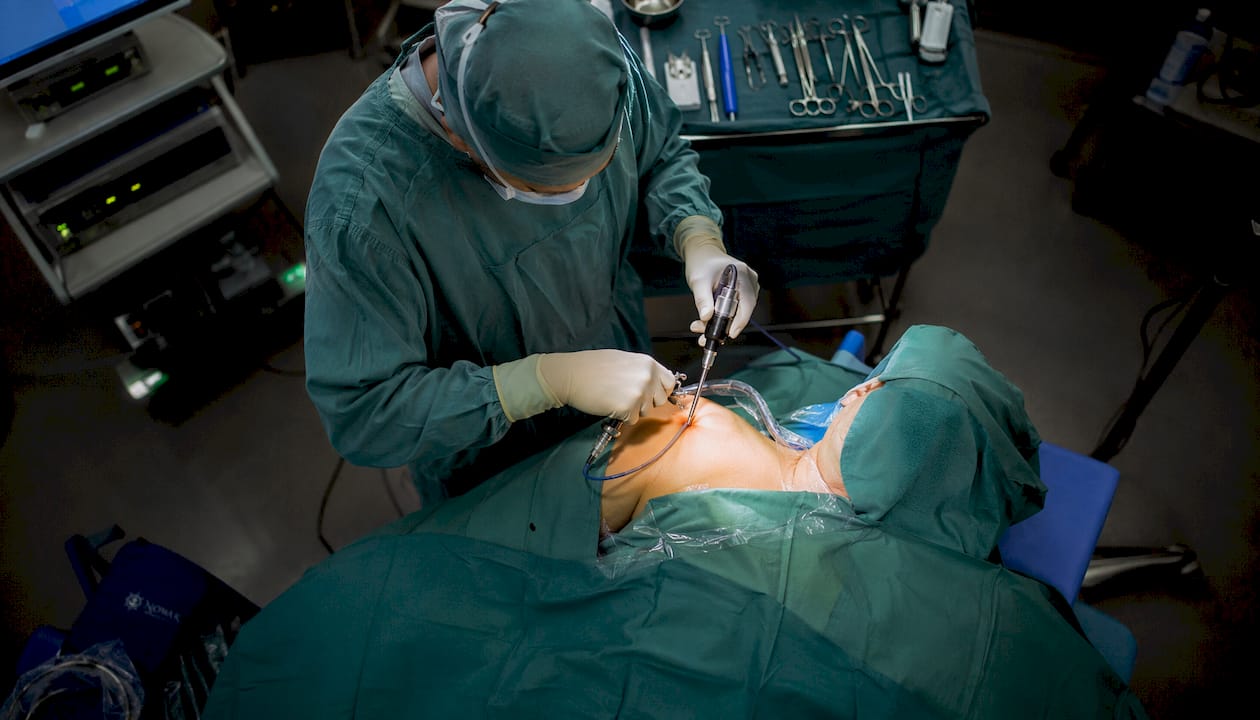
Arthroscopic vs. open surgery. Arthroscopy uses a small camera and thin instruments inserted through tiny incisions, typically less than a centimeter each. Open surgery requires a longer incision to access the joint directly. Arthroscopic procedures have largely replaced open techniques for most soft-tissue repairs because they produce less tissue disruption, lower infection risk, and faster return to function. A Medicare analysis covering 2005 to 2024 found that open shoulder procedures declined significantly while arthroscopic rotator cuff repair increased by 92% over the same period.
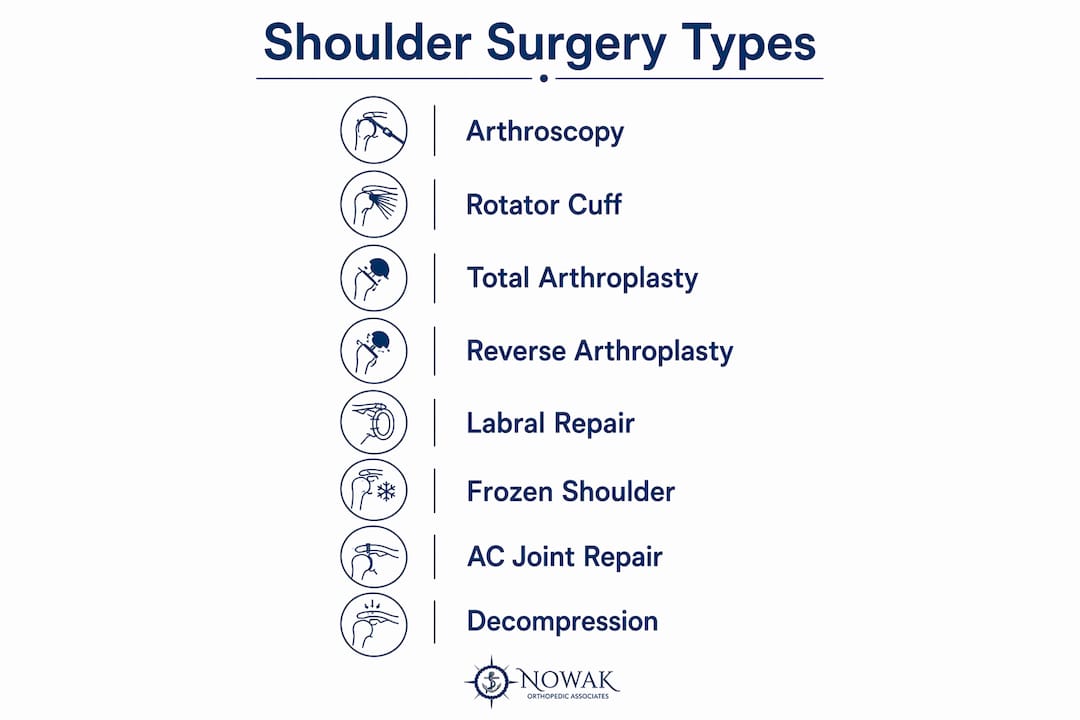
Rotator Cuff Repair. The surgeon reattaches the torn tendon to the bone using suture anchors. Most repairs are now performed arthroscopically. An estimated 272,148 rotator cuff repair procedures were performed annually in the United States as of 2006, making it one of the most frequently performed shoulder surgeries in the country.
Shoulder Arthroscopy. Beyond rotator cuff work, arthroscopy is used for labral repairs, SLAP repairs, subacromial decompression, biceps tenodesis, and capsular release. It is a versatile procedure that can diagnose and treat multiple problems in a single session.
Total Shoulder Arthroplasty. Both the ball (humeral head) and the socket (glenoid) are replaced with prosthetic components. This procedure is best suited for patients with severe glenohumeral arthritis who still have intact rotator cuff muscles. Total shoulder arthroplasty cases have grown steadily in the United States over the past decade, with projections showing continued volume increases.
Reverse Shoulder Arthroplasty. The ball and socket positions are reversed: a metal ball is fixed to the shoulder blade and a plastic socket is attached to the upper arm. This design allows the deltoid muscle to power arm elevation when the rotator cuff is irreparably damaged. It is the preferred replacement option for patients with massive rotator cuff tears combined with arthritis.
Labral Repair (Bankart and SLAP). Torn labral tissue is reattached to the glenoid rim using suture anchors. Bankart repair addresses anterior instability; SLAP repair targets the superior labrum. Both are typically performed arthroscopically.
Frozen Shoulder Release. The surgeon cuts through the thickened, contracted shoulder capsule to restore range of motion. This is usually reserved for patients who have not responded to months of stretching, physical therapy, and injections.
AC Joint Repair and Mumford Procedure. Severe AC joint separations are stabilized with hardware or tendon grafts. The Mumford procedure removes the distal end of the clavicle to relieve pain from AC joint arthritis.
Subacromial Decompression. Bone spurs and inflamed bursa are removed from the space beneath the acromion to stop tendons from being pinched during arm elevation.
| Procedure | Primary indication | Typical recovery |
|---|---|---|
| Rotator cuff repair | Full-thickness tendon tear | 4–6 months for tendon healing |
| Shoulder arthroscopy (soft tissue) | Labral tear, impingement, SLAP | 3–6 months depending on repair |
| Total shoulder arthroplasty | Glenohumeral arthritis, intact cuff | 6–12 months for full strength |
| Reverse shoulder arthroplasty | Arthritis with massive cuff tear | 6–12 months, earlier pain relief |
| Bankart / labral repair | Recurrent instability | 4–6 months before return to sport |
| Frozen shoulder release | Refractory adhesive capsulitis | 3–6 months of guided therapy |
| Subacromial decompression | Chronic impingement | 2 months |
How do surgeons decide between non-surgical and surgical treatment?
Surgery is rarely the first answer. Clinical consensus consistently supports exhausting conservative management before recommending an operation, and most patients benefit from that approach.
Non-surgical options tried first:
- Physical therapy to strengthen the rotator cuff and improve joint mechanics
- Nonsteroidal anti-inflammatory medications to reduce pain and swelling
- Corticosteroid injections for targeted inflammation control
- Platelet-rich plasma (PRP) injections and orthobiologic therapies for tissue healing
- Activity modification and rest during acute flare-ups
When surgery becomes appropriate:
- A full-thickness rotator cuff tear causing significant weakness that does not improve after 3–6 months of therapy
- Recurrent shoulder dislocations due to a Bankart lesion
- Severe arthritis with bone-on-bone contact unresponsive to injections
- Frozen shoulder that has not improved after 6–12 months of conservative care
- Acute fractures or complete tendon avulsions requiring immediate repair
Pre-surgical evaluation typically includes a physical examination, X-rays, and an MRI to map the extent of damage. Blood work and cardiac clearance may be required depending on the patient’s age and health history. Patients should also review all current medications with their surgeon, as blood thinners and certain supplements need to be paused before the procedure. A thorough pre-operative preparation guide can help patients arrive on the day of surgery fully ready.
Pro Tip: Ask your orthopedic surgeon for a written treatment plan that outlines each conservative step, the timeline for reassessment, and the specific criteria that would make surgery the right next move. Individualized plans produce better outcomes than generic protocols.
What does recovery look like after shoulder surgery?
Recovery from shoulder surgery is a gradual process, and the timeline varies considerably depending on the procedure. Tendon healing after rotator cuff repair typically takes 4–6 months, which is longer than most patients expect. Joint replacement patients often experience pain relief relatively quickly but need several months to rebuild strength and coordination.
The recovery process generally moves through three phases:
- Weeks 1–6 (protection phase). The repaired tissue is most vulnerable. The arm is kept in a sling, and motion is limited to gentle pendulum exercises prescribed by the physical therapist. Advanced anchoring techniques used during surgery allow controlled early movement without compromising the repair.
- Weeks 6–12 (motion phase). Active range-of-motion exercises begin. The goal is to recover full or near-full shoulder movement before loading the joint with resistance.
- Months 3–6 and beyond (strength phase). Progressive resistance training rebuilds the rotator cuff and surrounding muscles. Return to sport or heavy labor is cleared only when strength and stability meet objective benchmarks.
Early mobilization after rotator cuff repair produces better outcomes than prolonged immobilization, according to published research. Surgeons now pair early motion protocols with multimodal pain management, including nerve blocks and targeted medications, to keep patients comfortable enough to participate in therapy from the start.
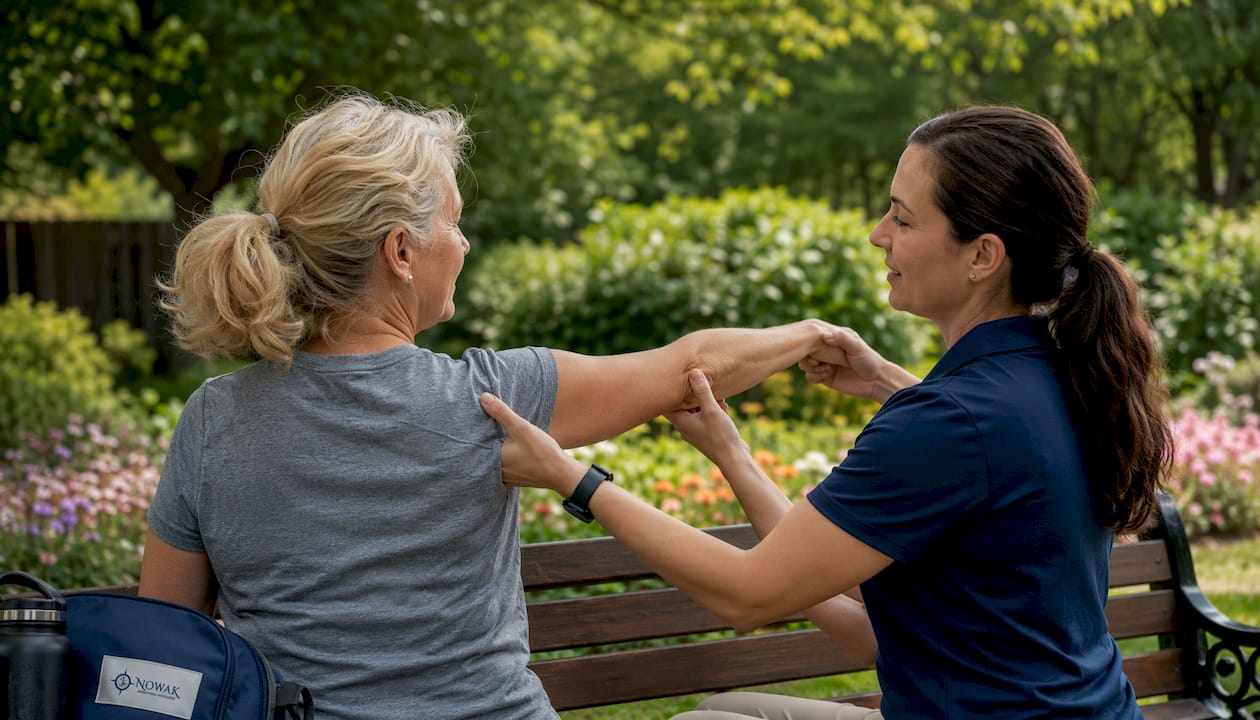
Physical therapy adherence is not optional. Long-term functional recovery depends on specialized rehabilitative protocols that re-educate the shoulder’s muscular structures. Patients who skip or rush through therapy consistently have worse outcomes than those who follow their program closely. For patients managing mobility challenges at home during recovery, exploring mobility solutions for surgery recovery can make the early weeks considerably safer and more manageable.
Expert perspectives on shoulder surgery from board-certified orthopedic surgeons
Board-certified orthopedic surgeons who specialize in shoulder care consistently point to a few principles that separate good outcomes from poor ones.
At Nowak Orthopedic Associates, Dr. Roger B. Nowak performs the full spectrum of shoulder procedures, including rotator cuff repair, SLAP repair, Bankart repair, biceps tenodesis, and the Mumford procedure, using minimally invasive arthroscopic techniques whenever appropriate. The shift toward arthroscopy has been one of the most meaningful advances in shoulder care over the past two decades. Smaller incisions mean less disruption to healthy tissue, lower infection rates, and a faster return to daily activities.
Key clinical principles that guide expert shoulder care:
- Protect the repair early. Tendons reattached to bone are at their weakest in the first six weeks. Surgeons use precise suture anchoring and tensioning strategies to balance early motion with repair integrity, reducing the risk of re-tear.
- Manage pain proactively. Nerve blocks administered before surgery, combined with multimodal oral medications, reduce post-operative pain enough to allow patients to begin gentle movement within 24 hours of the procedure.
- Prioritize rehabilitation over timeline. Patients often want to know when they can return to a specific activity. The honest answer is that readiness is determined by objective strength and stability measures, not by a fixed date on the calendar.
- Consider non-surgical alternatives first. Regenerative therapies such as PRP injections and SoftWave therapy can accelerate tissue healing and reduce inflammation, sometimes allowing patients to avoid surgery entirely or improve their baseline before an operation.
- Individualize the plan. A 35-year-old competitive athlete with a SLAP tear has different goals and different tissue quality than a 68-year-old with end-stage arthritis. Treatment decisions should reflect those differences.
The role of aftercare in mobility recovery extends well beyond the clinic. Patients who plan their home environment before surgery, including sleeping arrangements, bathroom safety, and transportation, recover with fewer setbacks.
Ready to discuss your shoulder with a specialist?
If shoulder pain is limiting your daily life and conservative treatments have not delivered the relief you need, a consultation with a board-certified orthopedic surgeon is the right next step. Nowak Orthopedic Associates offers individualized evaluations, a full range of surgical and non-surgical shoulder treatments, and a Regenerative Medicine Clinic for patients who want to explore options before committing to surgery. Learn more about advanced joint care options or review the full range of services and treatments available at the practice.
Key Takeaways
Shoulder orthopedic surgery produces the best outcomes when the right procedure is matched to the specific condition, conservative treatment has been fully explored, and rehabilitation is followed closely.
| Point | Details |
|---|---|
| Surgery follows conservative care | Clinical consensus supports exhausting physical therapy and injections before recommending surgery. |
| Rotator cuff repair is the most common | An estimated 272,148 rotator cuff repairs were performed annually in the US as of 2006. |
| Tendon healing takes 4–6 months | Patients should expect a 4–6 month healing window for tendon-to-bone repairs, regardless of how they feel. |
| Arthroscopy has largely replaced open surgery | Arthroscopic rotator cuff repair increased 92% from 2005 to 2024 while open procedures declined significantly. |
| Rehabilitation determines long-term outcomes | Physical therapy adherence, not the surgery itself, drives functional recovery after shoulder procedures. |
FAQ
What is the most common surgery performed on the shoulder?
Rotator cuff repair is the most frequently performed shoulder surgery in the United States, with an estimated 272,148 procedures performed annually as of 2006. It involves reattaching a torn tendon to the bone using suture anchors, most often through an arthroscopic approach.
What are the main types of shoulder surgery?
The three most common categories are rotator cuff repair, shoulder arthroscopy (used for labral repairs, SLAP repairs, and impingement treatment), and shoulder arthroplasty, which includes both total shoulder replacement and reverse shoulder replacement for patients with severe arthritis.
What is the hardest shoulder surgery to recover from?
Rotator cuff repair is widely considered the most demanding recovery because tendon-to-bone healing takes 4–6 months and carries a real risk of re-tear if the rehabilitation protocol is not followed carefully. Reverse shoulder arthroplasty can also involve a lengthy recovery, particularly for older patients rebuilding strength after years of limited function.
How do I know if I need shoulder surgery?
Surgery is typically recommended when a structural problem, such as a full-thickness rotator cuff tear, recurrent dislocation, or severe arthritis, has not responded to physical therapy, medications, and injections over time. A board-certified orthopedic surgeon can assess your specific condition and help you understand whether surgery is the appropriate next step. You can also review signs that indicate surgery to better understand what to watch for.